
Best Wood for a Live Edge Dining Table: Walnut, Acacia, Monkey Pod & More
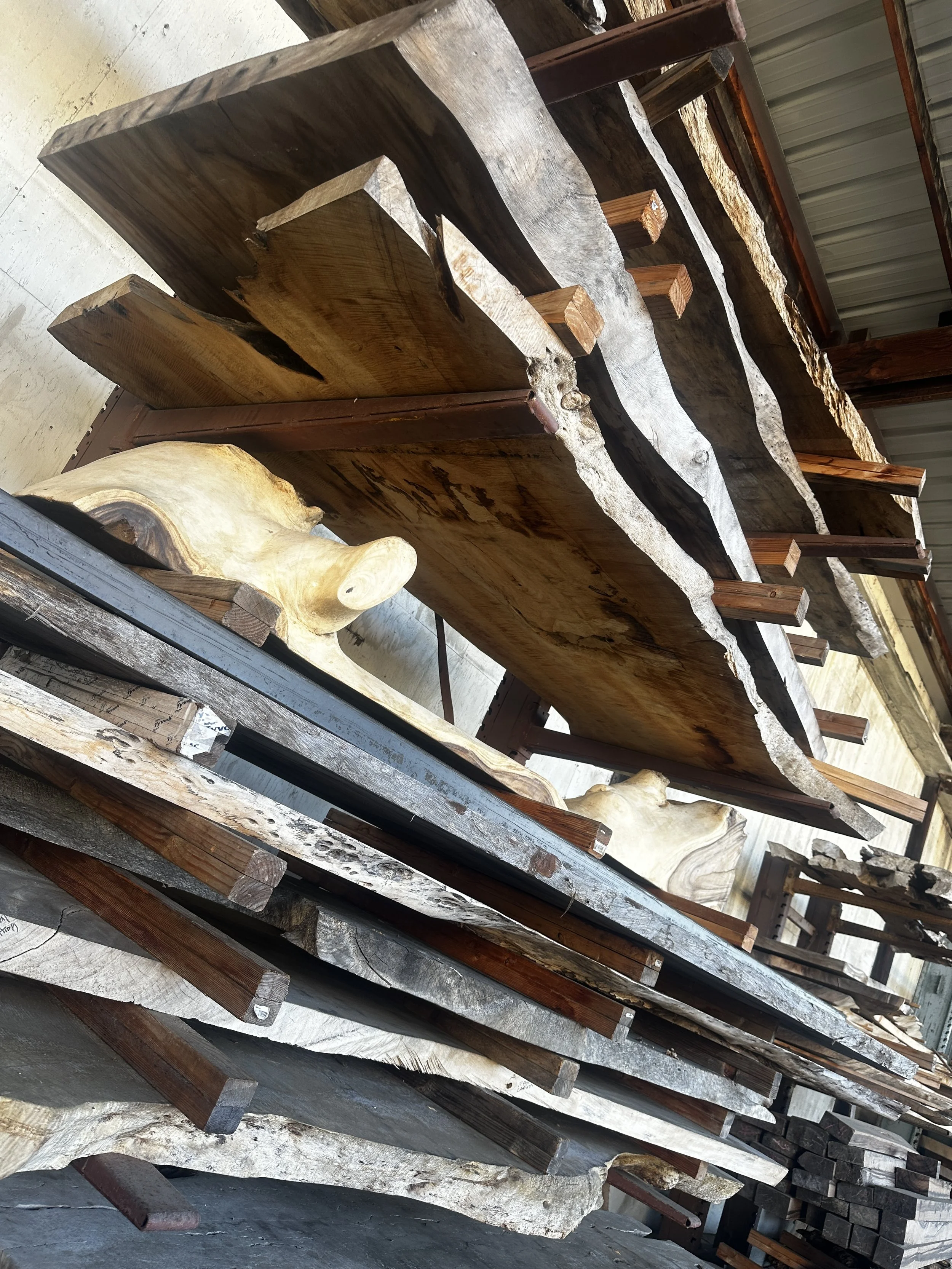
Choosing the right wood is one of the most important decisions when designing a custom live edge dining table.
The species determines far more than color. Grain movement, natural edges, durability, slab width, figure and even the way a piece works with resin can dramatically change the finished table.
At Indigenous by La Rue, we work with distinctive natural slabs to create custom live edge dining tables for homes throughout San Diego and across the country. Some clients arrive knowing exactly which species they want. Others simply know they want an extraordinary table and need help finding the right slab.
So, what is the best wood for a live edge dining table?
There isn't one answer.
The best wood depends on your home, the size of your table and the character you want the finished piece to have.
Here are several of our favorite woods for creating one-of-a-kind live edge tables.
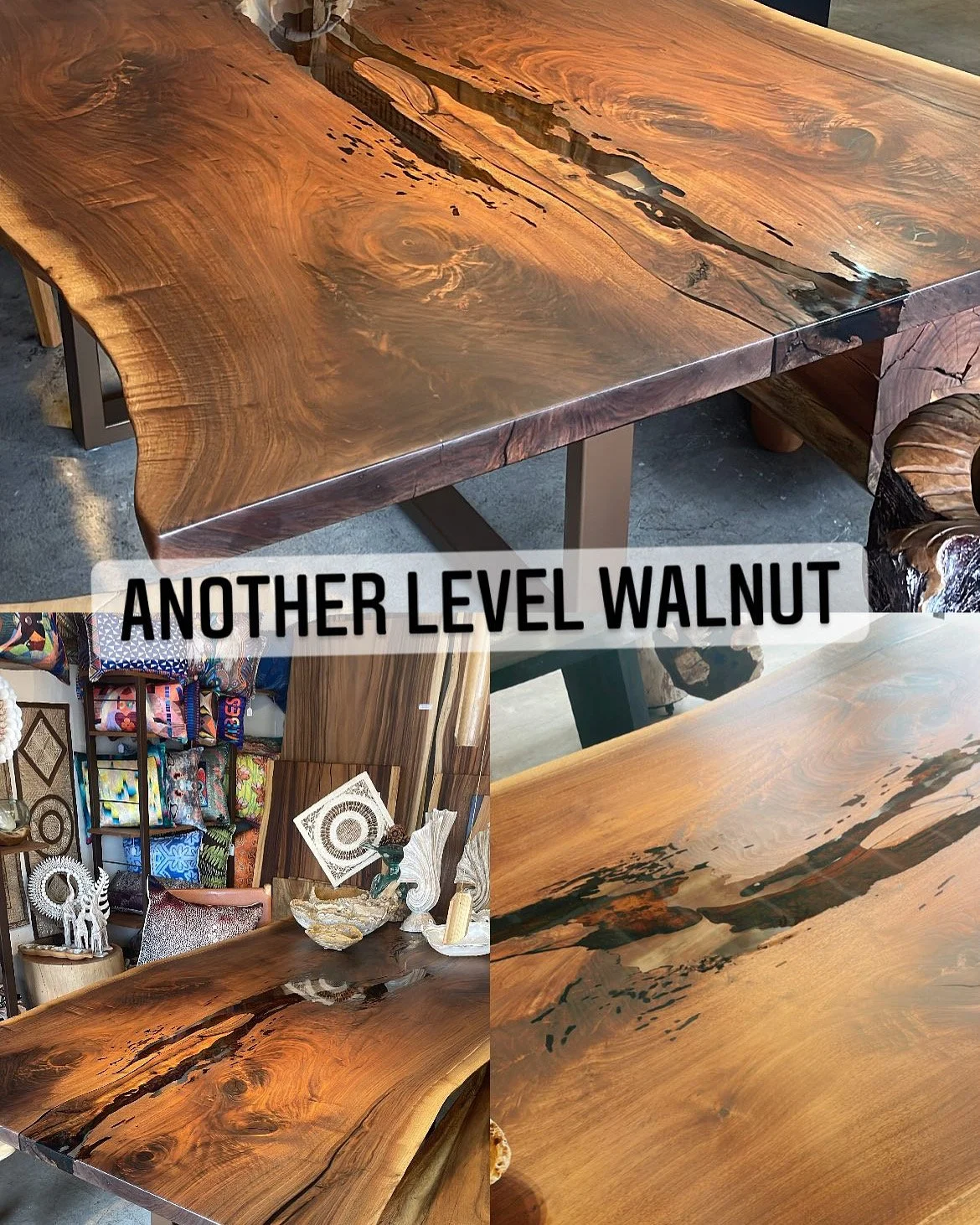
Walnut: Timeless, Sophisticated and Naturally Luxurious
Walnut is one of the most sought-after woods for custom dining tables, and for good reason.
Its naturally rich brown tones can range from warm chocolate to deeper espresso, often accompanied by lighter areas of sapwood. Walnut also develops beautiful grain patterns that give a table visual interest without overwhelming a room.
Walnut works particularly well in contemporary, modern, transitional and organic-modern interiors.
One of its greatest strengths is versatility.
A substantial walnut slab paired with a minimal black metal base can feel architectural and modern, while the same species combined with a sculptural base can create an entirely different statement.
For clients searching for a sophisticated custom live edge dining table in San Diego, walnut is often an excellent place to begin.
Walnut Is Best For:
Modern and contemporary homes
Organic-modern interiors
Clients who prefer darker natural wood
Luxury dining rooms
Executive conference tables
Statement furniture that still feels timeless
Acacia: Dramatic Grain and Incredible Natural Character
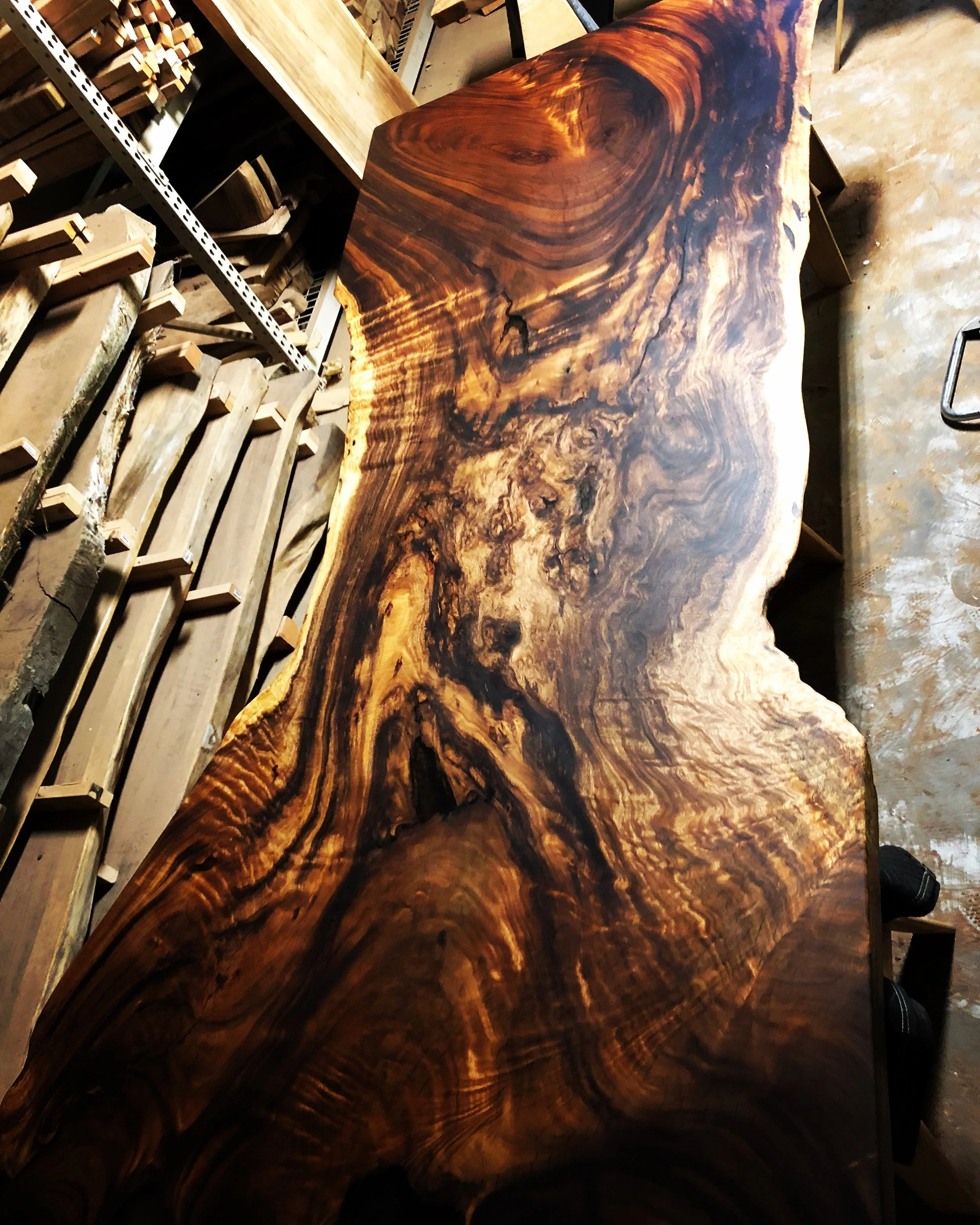
Acacia can be an exceptional choice when the goal is to create a table with movement and personality.
The wood is known for its striking grain patterns and variation in tone. Depending on the individual slab, acacia can contain warm golden shades, rich browns and dramatic darker figuring.
No two slabs look exactly alike.
That individuality is precisely why we love working with natural wood.
Rather than manufacturing hundreds of identical tables, a custom furniture maker can allow the characteristics of a particular slab to determine the design.
Large acacia slabs can be especially impressive for oversized dining tables and statement pieces where the wood itself becomes part of the architecture of the room.
Acacia is Best For:
Large dining tables
Dramatic natural grain
Contemporary coastal interiors
Organic-modern homes
Statement tables
Clients who want significant variation and character
Monkey Pod: Organic, Sculptural and Full of Movement
Monkey pod has become increasingly popular for live edge furniture because of its dramatic natural formations.
Large slabs can feature sweeping grain patterns, irregular edges, natural voids and substantial width — characteristics that make it particularly interesting for custom furniture.
Instead of trying to make the wood perfectly uniform, we often prefer to work with these natural characteristics.
A dramatic opening in a slab, for example, can become an intentional design element. Depending on the project, it may remain part of the natural composition or be incorporated into a custom resin design.
Monkey pod can be especially beautiful in Southern California homes where natural materials are used alongside stone, glass, metal and neutral finishes.
Monkey Pod Is Best For:
Organic-modern interiors
Coastal homes
Oversized dining tables
Resin table designs
Highly sculptural furniture
Clients who want the wood to be the focal point
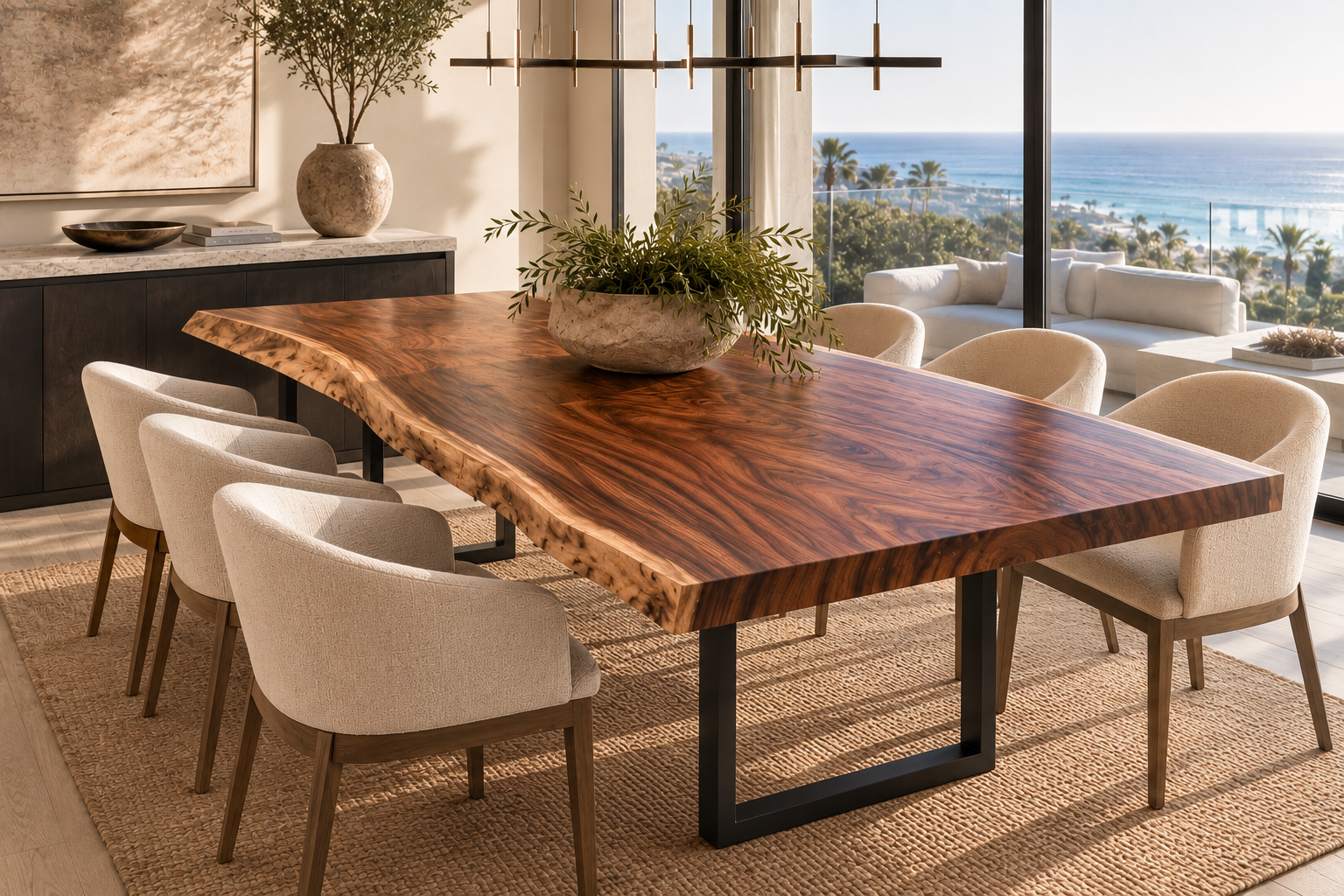
Live Edge Slabs With Resin
Sometimes the most extraordinary slab isn't perfectly rectangular.
It may have a large natural opening, dramatic separation, irregular edges or other characteristics that make it visually spectacular but challenging to turn into a traditional dining table.
That's where resin can become part of the design.
Clear or translucent resin can preserve the natural shape of the wood while creating a functional tabletop. Resin can also be used more dramatically to create contrast between sections of a slab.
The key is restraint.
For many of our designs, we want the resin to complement the wood rather than overpower it.
The natural grain, movement and history of the slab should remain the star.
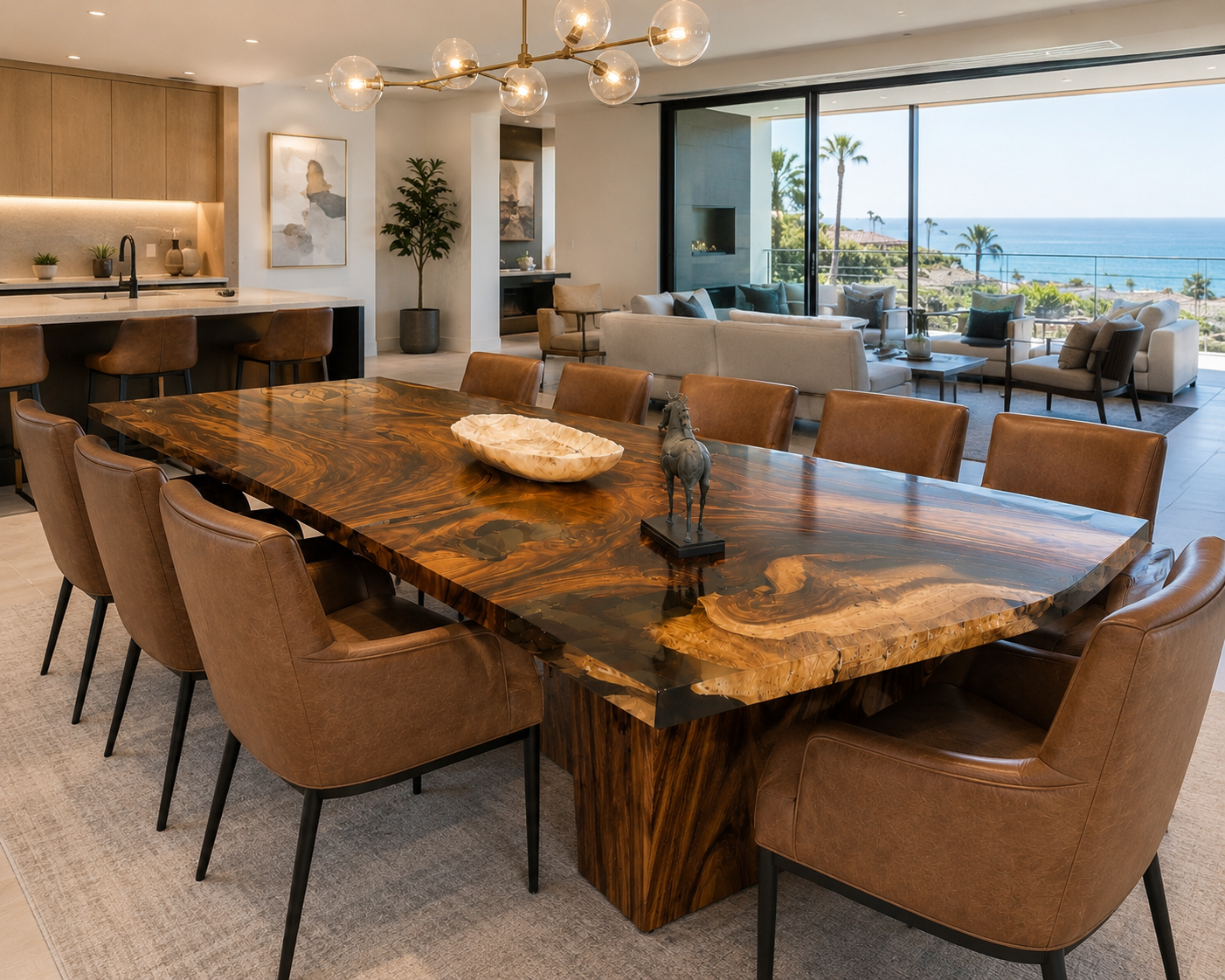
Does Wood Species Matter More Than the Individual Slab?
Not always.
This is one of the most important things to understand when shopping for a live edge table.
Two slabs from the same species can look dramatically different.
One walnut slab may have relatively straight, understated grain while another has extraordinary figure, natural edges and color variation.
The same is true for acacia, monkey pod and other woods.
That's why selecting a specific slab can be so different from choosing furniture from a catalog.
You aren't simply choosing "walnut."
You're choosing your walnut slab.
The grain, dimensions, edges, natural formations and imperfections of that particular piece become part of your finished table.
How to Choose the Right Wood for Your Dining Table
Start with your room rather than the wood species.
Consider the flooring, cabinetry, architectural style, natural light and other materials already present in the space.
Then think about what role you want the table to play.
Should it quietly complement the room?
Or should guests walk through the door and immediately notice it?
For a restrained modern interior, a sophisticated walnut slab may provide exactly the right amount of warmth.
For a large coastal or organic-modern home, an unusually shaped monkey pod or acacia slab might create the dramatic focal point the room needs.
Size matters too.
If you're designing a 10-, 12- or even 14-foot dining or conference table, slab availability becomes an important part of the process. Finding extraordinary wood at those dimensions requires access to substantial slabs and careful selection.
Why Selecting the Actual Slab Matters
One of the advantages of commissioning custom furniture is being able to participate in the material-selection process.
At Indigenous by La Rue, clients can select wood based on the actual grain, color, dimensions and natural characteristics of an individual slab.
From there, we can determine the appropriate finished dimensions, edge treatment, resin details when applicable, base design and finish.
Our goal isn't to force every piece of wood into the same furniture design.
It's to determine what the wood can become.
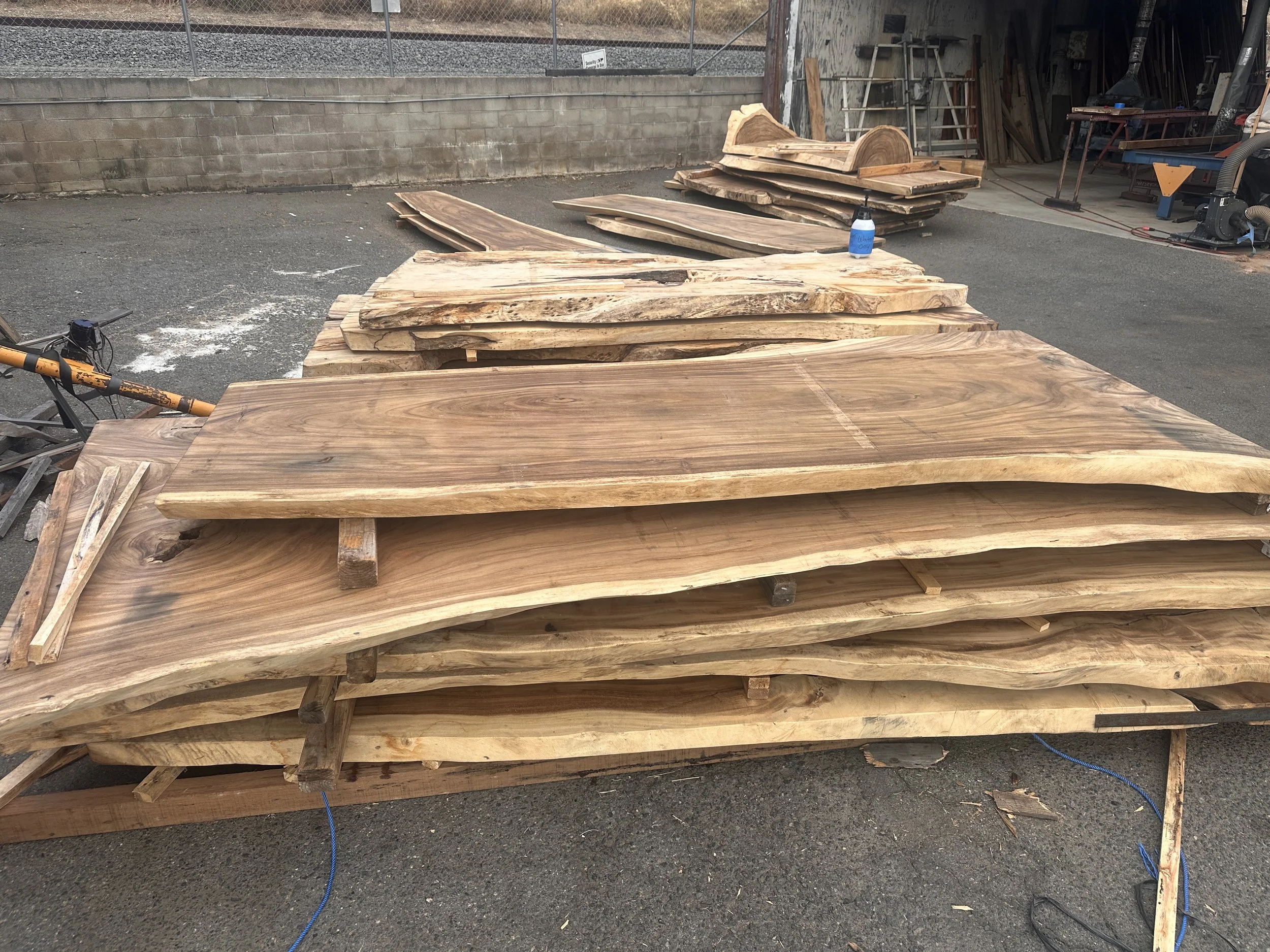
From Raw Slab to Finished Live Edge Table
Creating a custom live edge table is a process.
It begins with selecting the wood and establishing the design. The slab is then transformed through preparation, flattening, sanding, resin work when required, detailed finishing and final assembly.
Indigenous by La Rue maintains a San Diego County lumberyard for slab selection as well as a dedicated workshop in San Marcos, California, where much of our detailed finishing work takes place.
Clients can also visit our La Jolla and Solana Beach showrooms to experience finished Indigenous by La Rue furniture in person and discuss a custom project.
This connection between raw material, craftsmanship and finished furniture is central to what we do.
What Is the Best Wood for a Live Edge Dining Table?
Walnut is difficult to beat for timeless sophistication.
Acacia offers beautiful color variation and dramatic grain.
Monkey pod can deliver extraordinary scale, movement and organic character.
But ultimately, the best wood for your live edge dining table is the slab that works with your home and makes you stop when you see it.
That's the difference between buying a dining table and creating one.
Create a Custom Live Edge Dining Table in San Diego
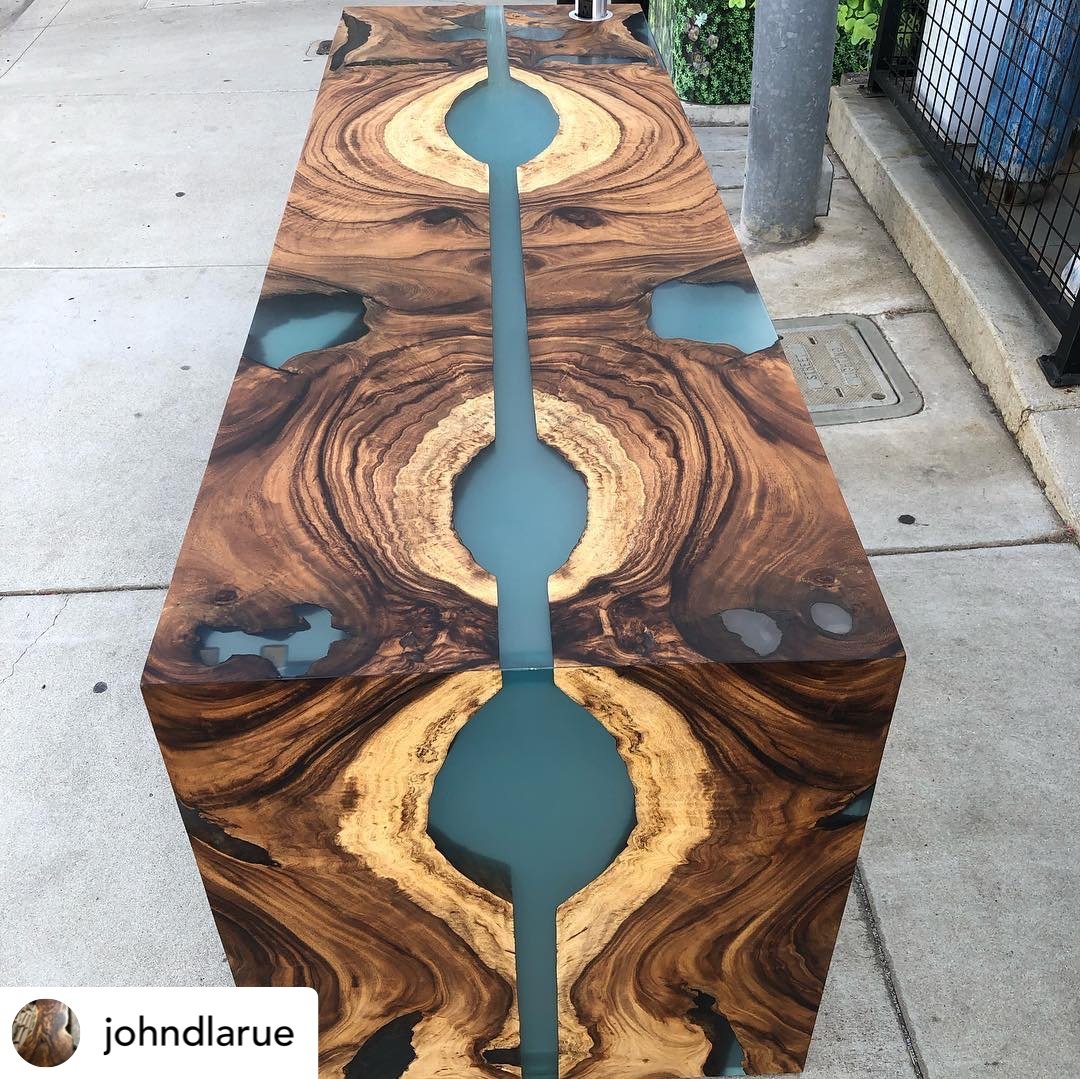
If you're looking for a custom live edge dining table in San Diego, Indigenous by La Rue can help you select the wood, determine the ideal dimensions and create a one-of-a-kind table specifically for your space.
Explore our collection of live edge dining tables, visit our La Jolla or Solana Beach showroom, or schedule an opportunity to select a slab from our San Diego County lumberyard.
From the raw slab to the final finish, your table is created to become a piece you'll live with for years to come.