
Custom Walnut Tables in San Diego of Oversized Live Edge Dining Table & Conference Tables
Discover what sets a truly custom walnut table apart. Indigenous by La Rue maintains an extensive in-house selection of walnut slabs and oversees every step from milling and drying to fabrication and finishing. Explore oversized walnut dining tables, live edge designs, conference tables, and our direct-to-consumer, designer and builder options in San Diego.
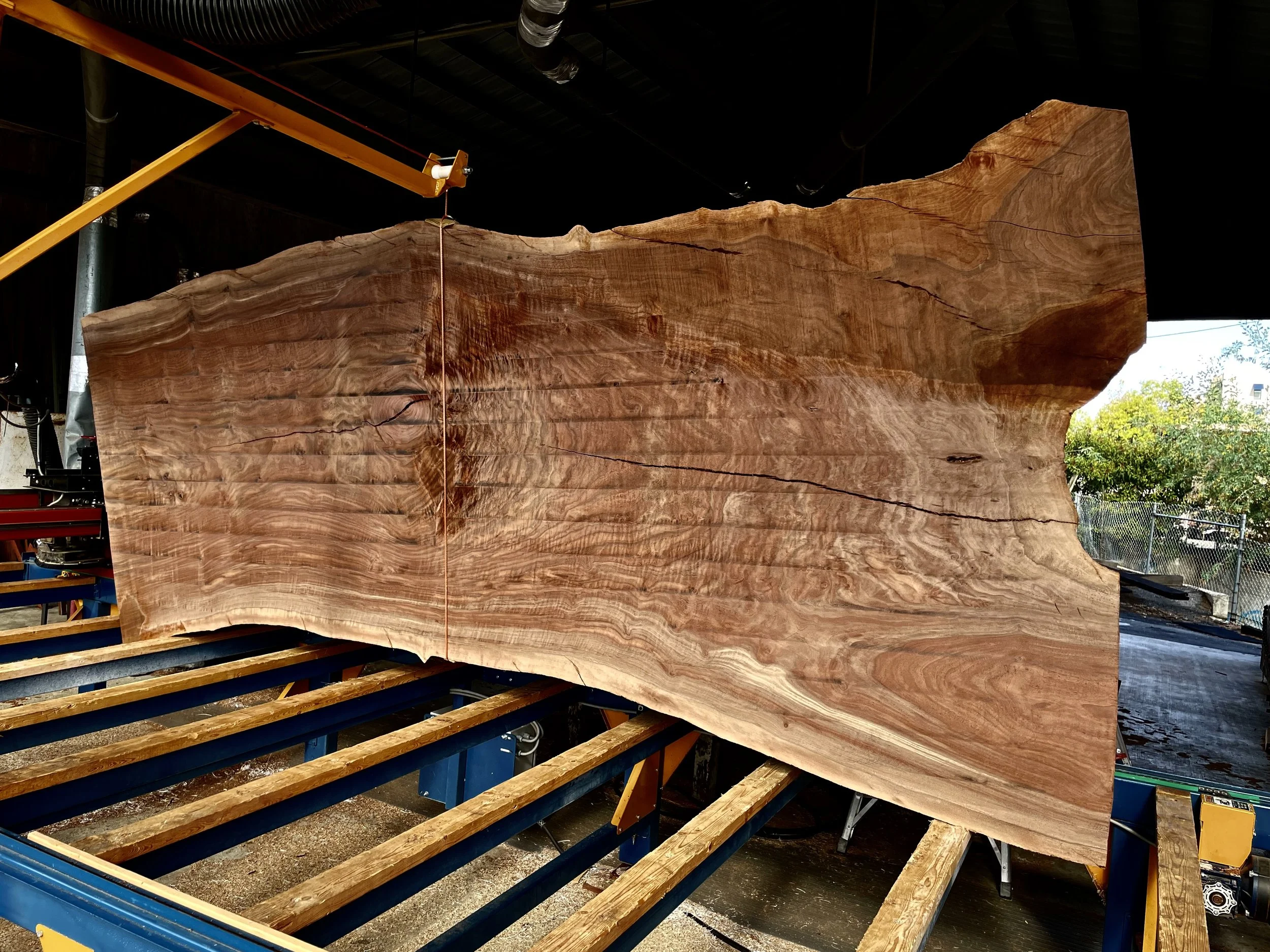
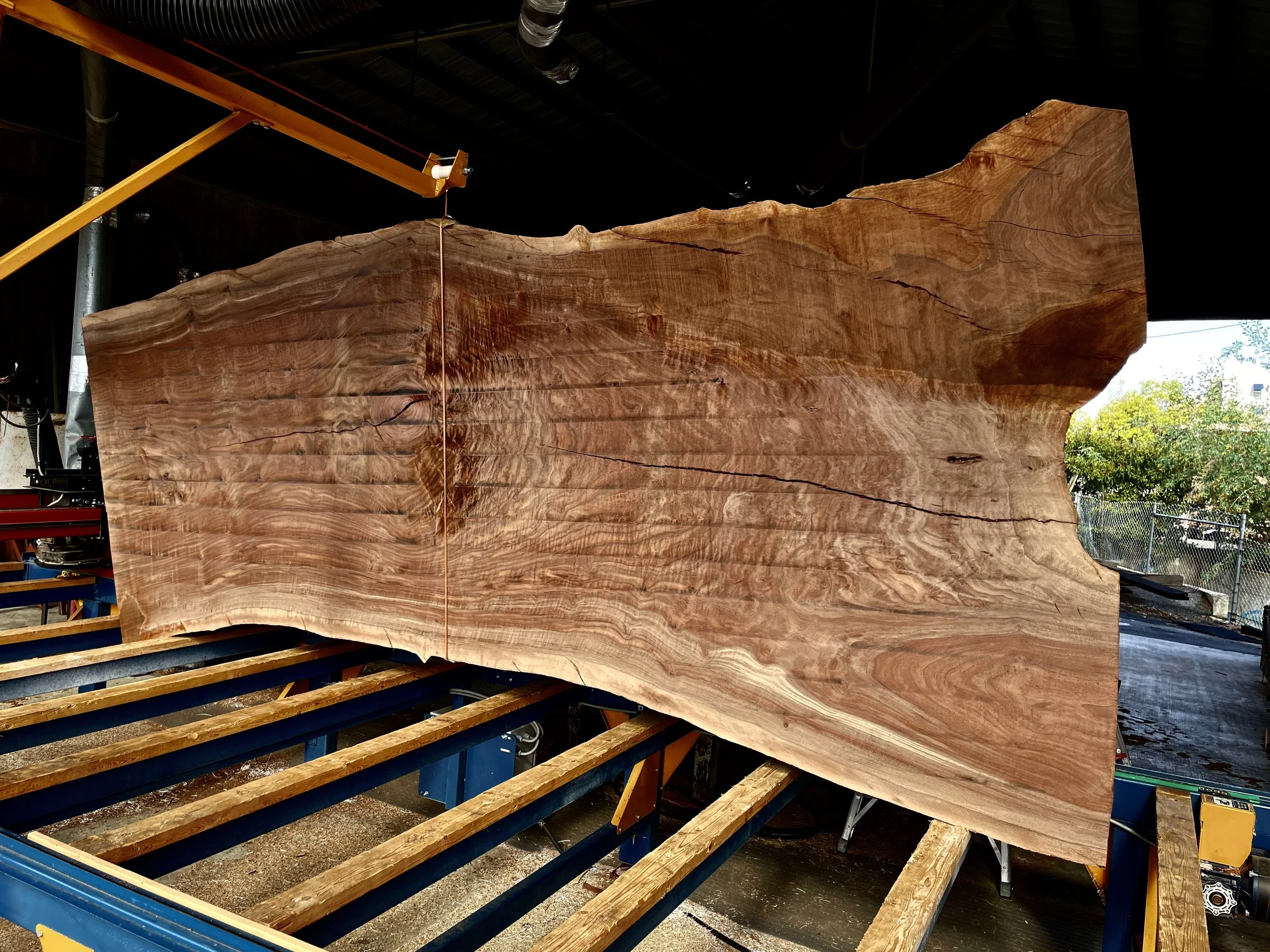
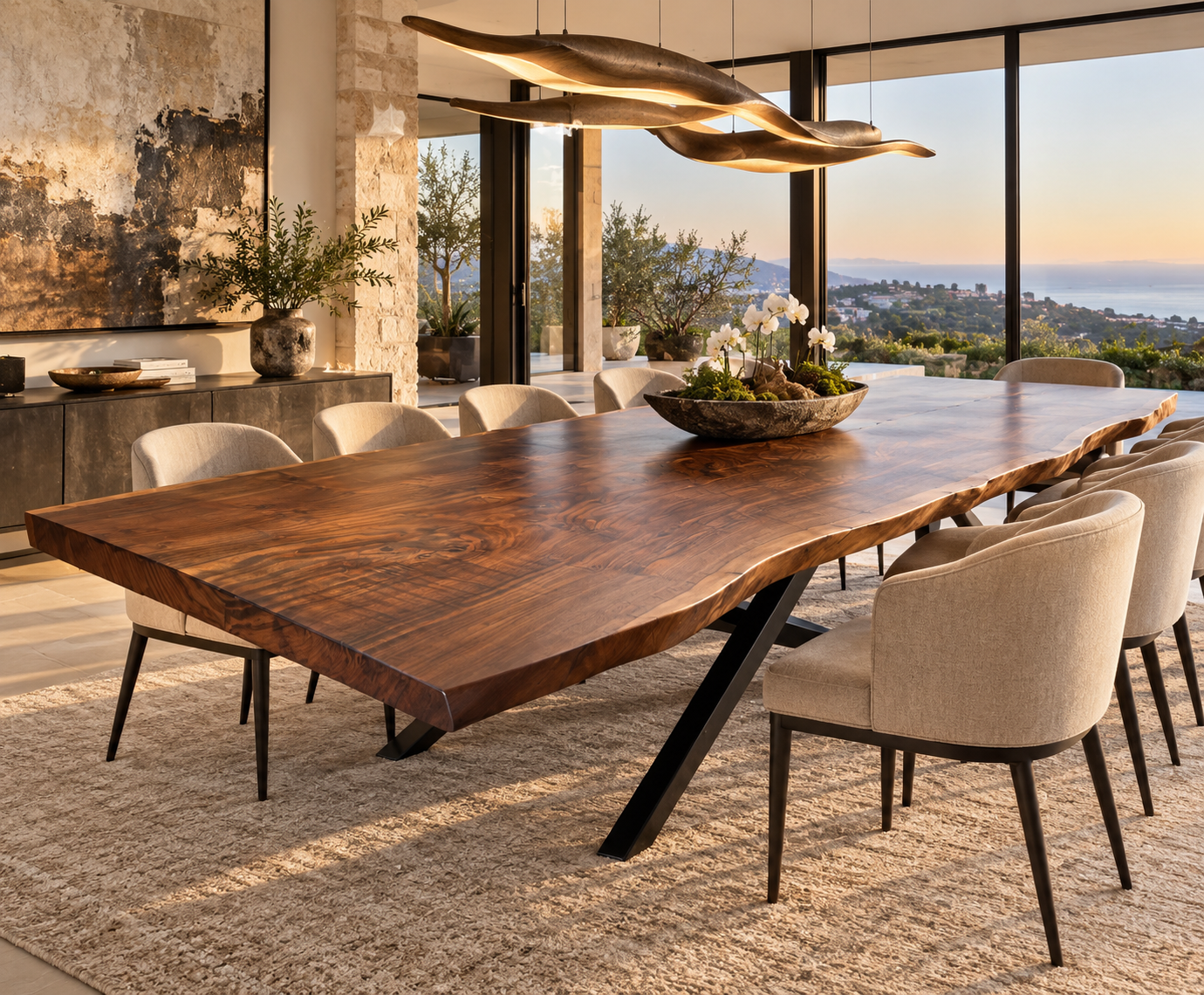
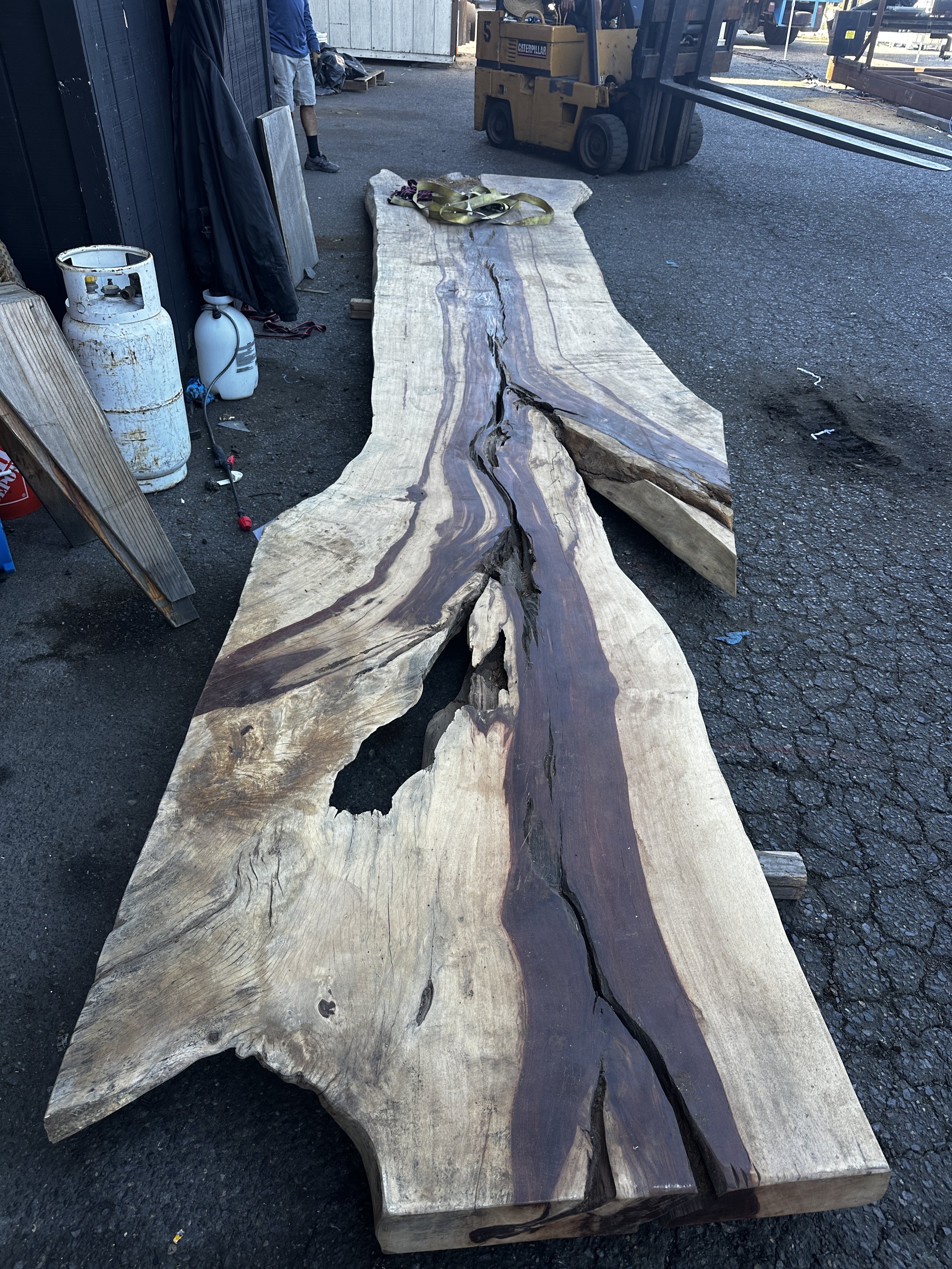
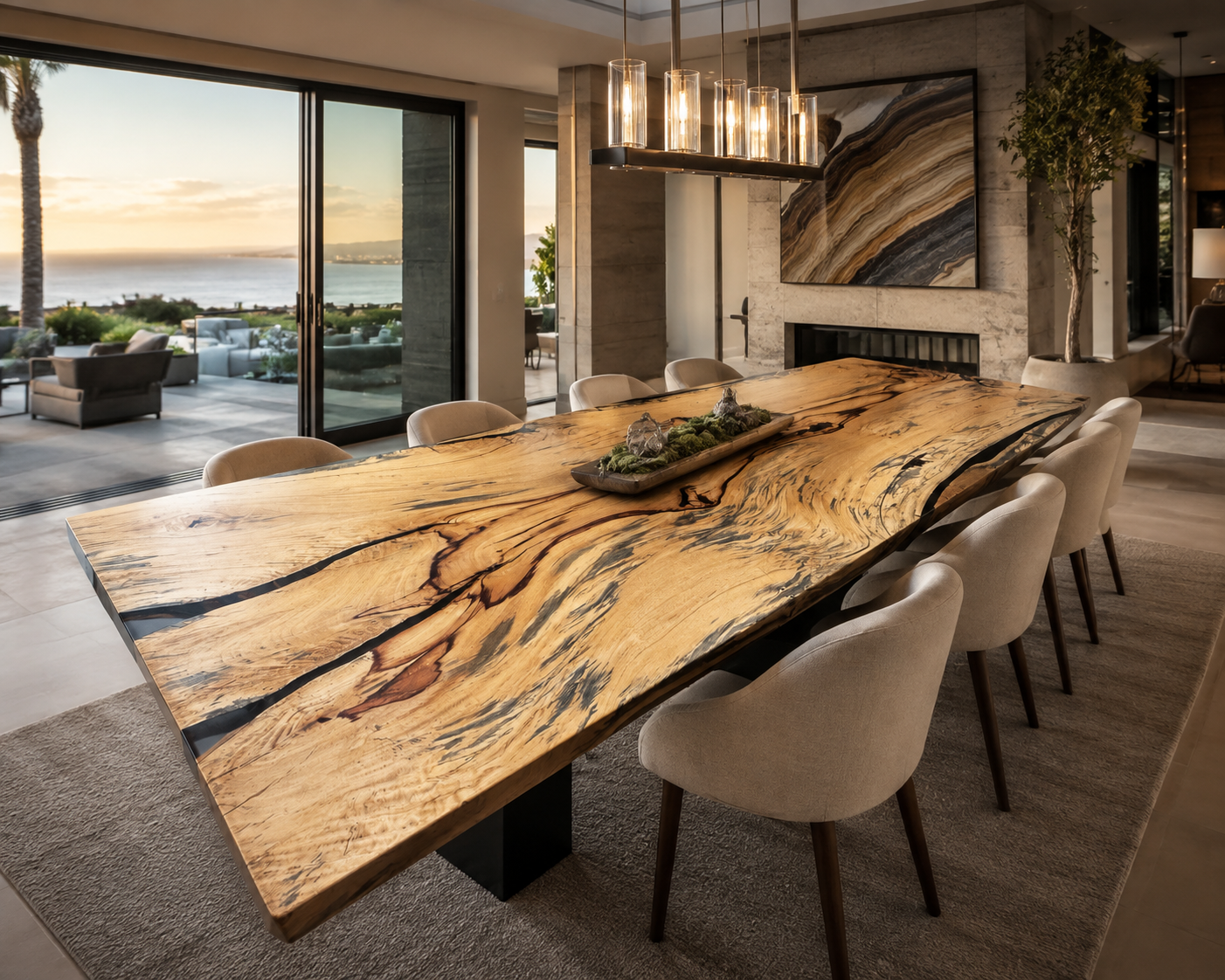
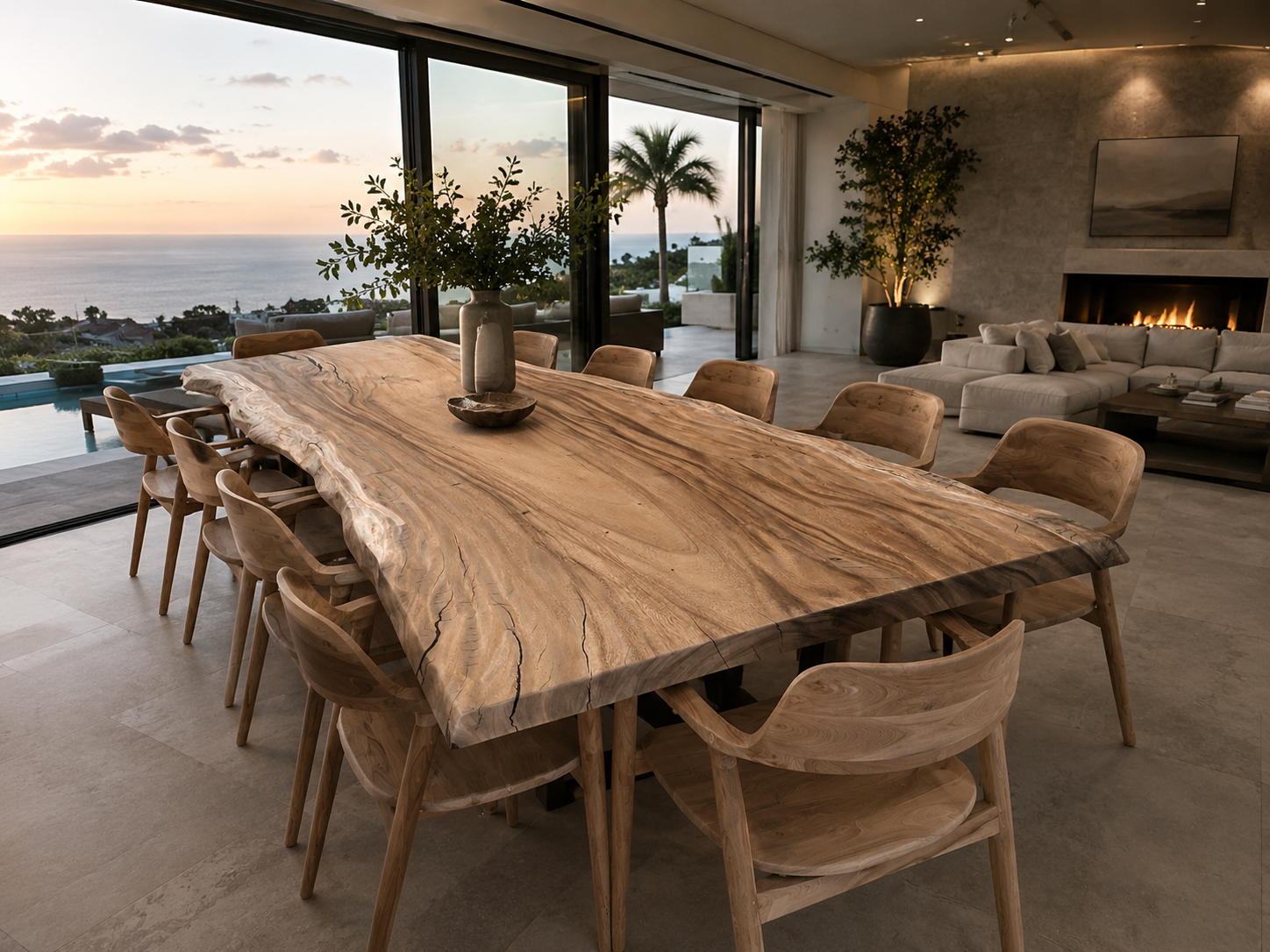
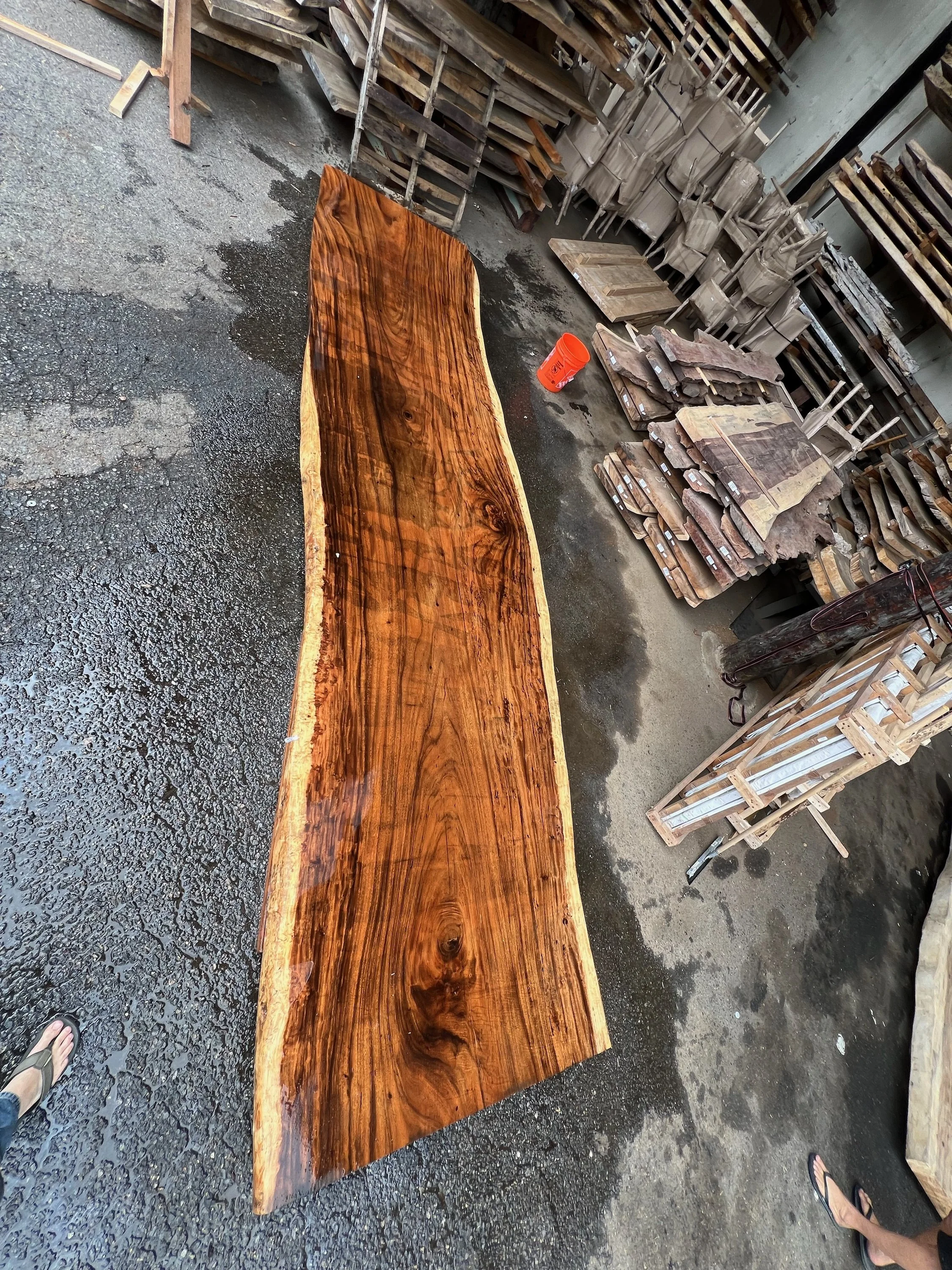
A 15-foot Claro Walnut slab selected for a one-of-a-kind custom table, milled and crafted by Indigenous by La Rue in San Diego.
Custom Walnut Tables in San Diego: From Our Slab Inventory to Your Finished Table
A truly custom walnut table begins long before the base is designed or the final finish is applied. It begins with the wood itself.
At Indigenous by La Rue, we maintain our own extensive inventory of walnut slabs and oversee the process from raw material to finished furniture. Our team selects, mills, dries, prepares, fabricates and finishes our pieces in-house, giving us control over the quality of the table at every stage.
That matters—especially when creating an oversized walnut dining table, live edge table or conference table intended to last for generations.
Why Owning the Material Matters
Not every custom furniture maker begins with raw material.
Some furniture makers purchase slabs from outside suppliers after the wood has already been dried, flattened or otherwise prepared. There is nothing inherently wrong with that approach, but it means portions of the material's preparation happened before the furniture maker ever received it.
Our process is different.
At Indigenous by La Rue, our walnut inventory is part of our workshop—not simply something we order after a client commissions a table.
Because we work with the material throughout its preparation and fabrication, we understand the history of the slab we're building with.
That level of involvement is one of the reasons we're confident standing behind the quality of our finished work.
We know our tables because we've had our hands on them from slab to finished piece.
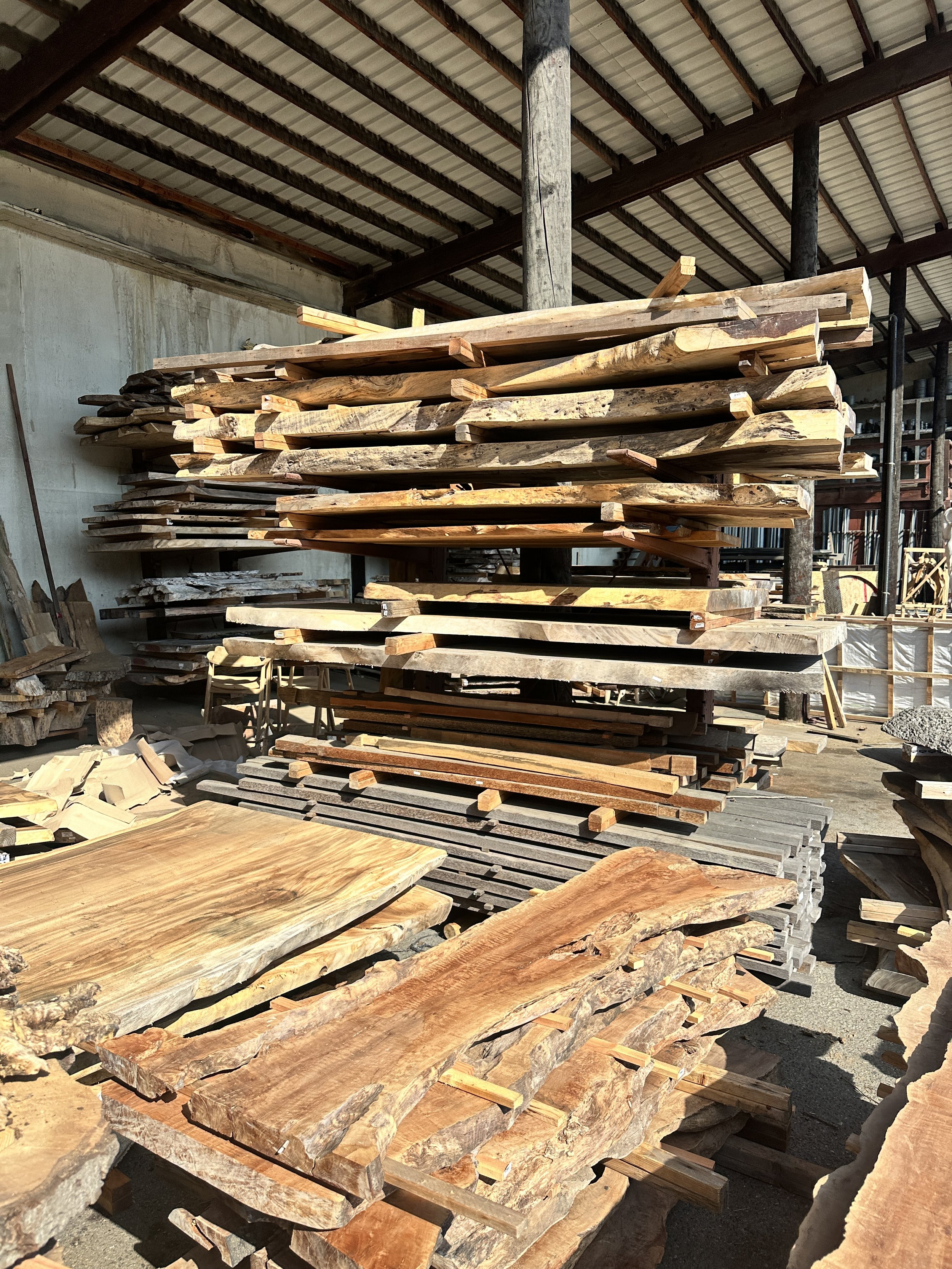
A Vast Selection of Walnut Slabs in San Diego
Walnut remains one of the most sought-after materials for luxury custom furniture because of its rich coloration, sophisticated grain patterns and ability to work beautifully in both contemporary and traditional interiors.
Our in-house inventory allows clients, interior designers, architects and builders to select from a wide range of walnut slabs rather than designing a table around whatever material happens to be available from an outside supplier.
Depending on the project, we can help select material based on:
overall dimensions and scale
grain and figuring
natural edge characteristics
coloration
bookmatching possibilities
single-slab versus multi-slab construction
resin integration
architectural base design
the surrounding interior
For clients commissioning a significant piece, selecting the actual material is part of the experience.
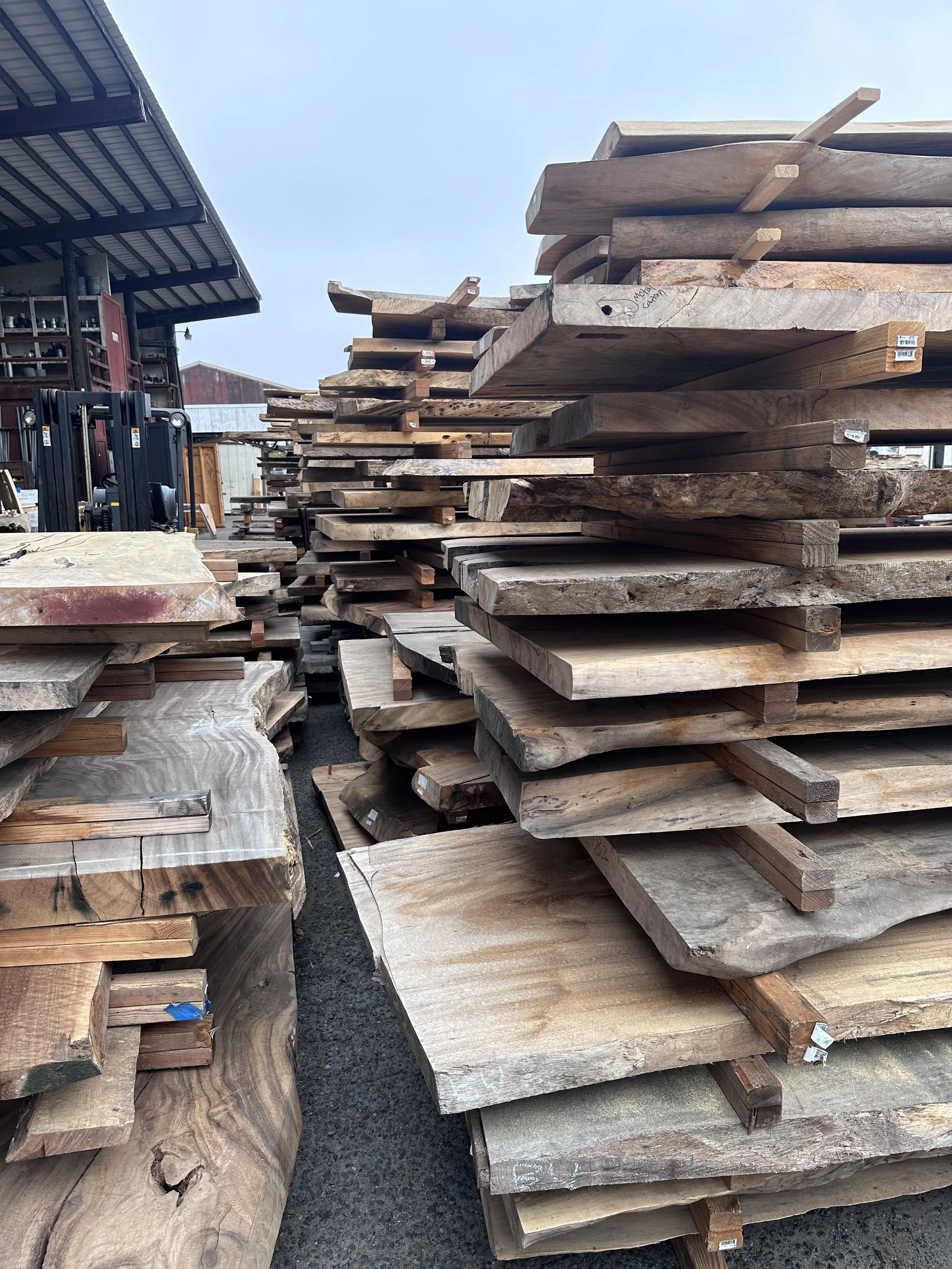
Our in-house selection of walnut slabs gives clients, designers and builders the opportunity to select the actual material for their custom table.
Oversized Walnut Dining Tables: 10, 12, 16 and 20+ Feet
Large-scale tables require a different level of planning than a standard dining table.
Once a table reaches 10, 12, 16 or even 20+ feet, material selection is only the beginning. Moisture stability, structural engineering, slab preparation, base placement, finishing, transportation and final installation all become critical considerations.
Indigenous by La Rue specializes in substantial custom furniture and can fabricate tables at virtually any size the project requires.
That includes oversized walnut dining tables for luxury residences as well as large conference and boardroom tables for commercial environments.
Our capabilities are not limited to walnut. We work with exceptional woods and materials from around the world and currently maintain extraordinary oversized material in our inventory, including exotic slabs reaching approximately 22 feet.
For a designer, architect or homeowner searching for an unusually large table, starting with access to the right material can dramatically expand what is possible.
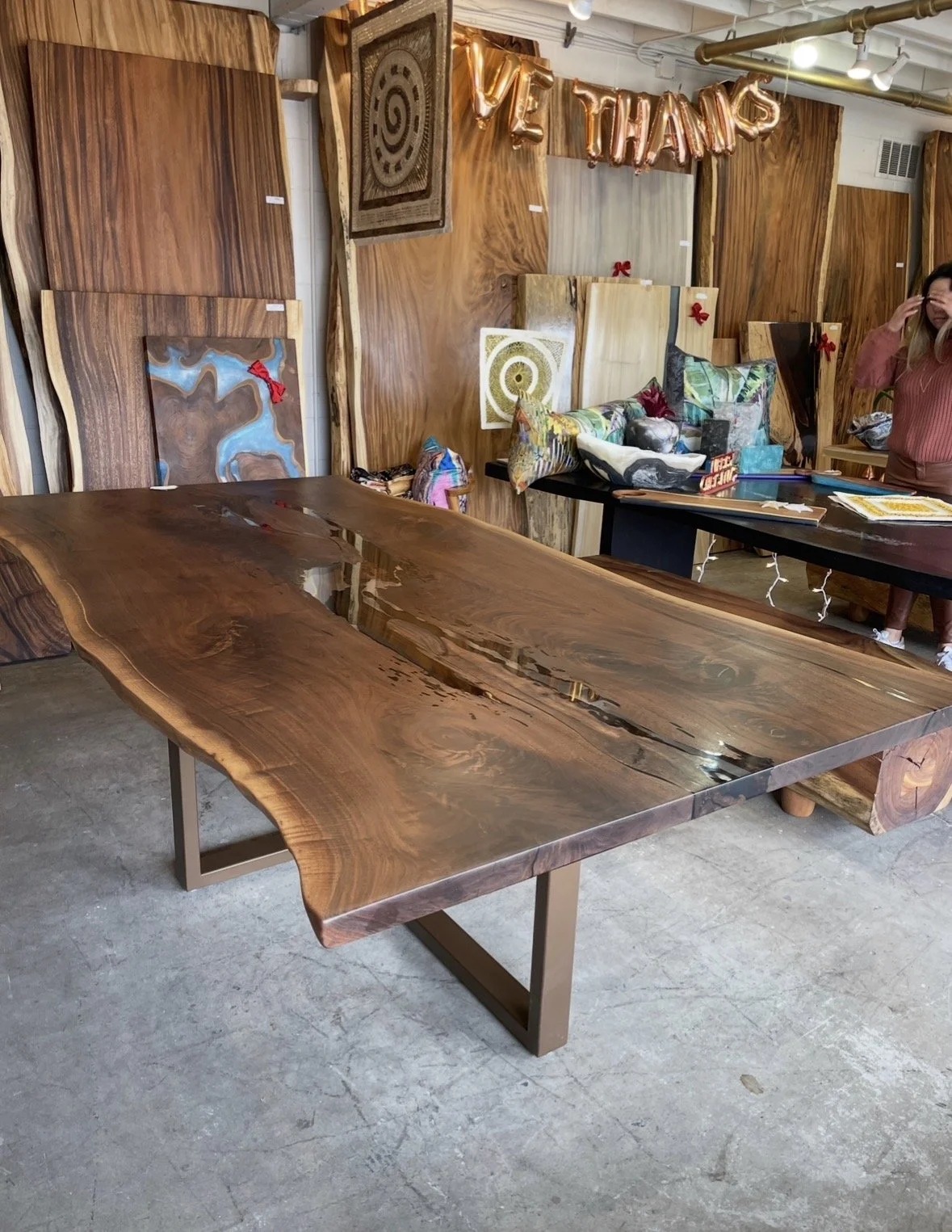
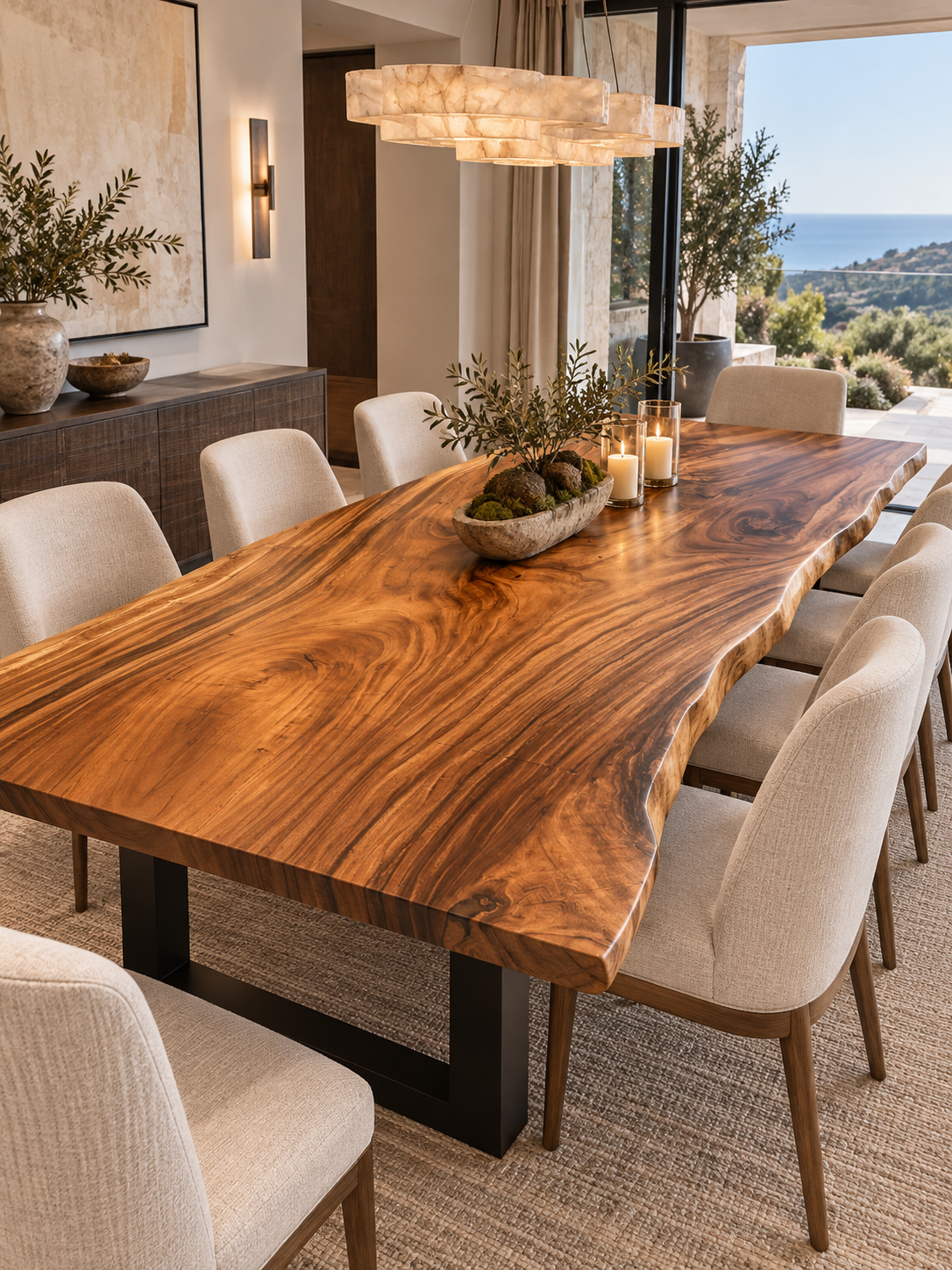
From raw walnut slab to finished statement piece-an oversized live edge walnut table handcrafted by Indigenous by La Rue.
Direct-to-Consumer Custom Walnut Furniture
Because we maintain our own material inventory and fabricate our furniture ourselves, clients can work directly with the people creating their table.
That direct relationship is particularly valuable on large custom commissions.
Instead of choosing a predetermined table from a showroom floor, clients can participate in decisions involving the slab, dimensions, edge profile, base, resin, coloration and finish.
Our direct-to-consumer model also allows us to offer competitive pricing on exceptional custom walnut furniture while maintaining control over craftsmanship and material quality.
Designer and Builder Pricing
We also work directly with interior designers, architects, luxury home builders and developers throughout San Diego, Southern California and beyond.
Trade relationships are an important part of our business, and we offer designer and builder pricing for qualified projects and ongoing partnerships.
For professionals working on custom residences, hospitality projects, executive spaces or large-scale installations, having access to both material inventory and fabrication through one source can simplify the custom furniture process considerably.
Our team can collaborate from initial material selection through fabrication and installation.
More Than Walnut
Although walnut is extraordinary, the best material is ultimately the one that serves the architecture, scale and personality of the project.
Our inventory and sourcing capabilities extend far beyond walnut.
We work with rare and exotic woods, oversized slabs, petrified wood and specialized resin applications. Our crystallized resin process alone required approximately two years of development, allowing us to create pieces that combine natural material with a distinctive contemporary finish.
This gives designers and homeowners considerably more freedom than simply selecting a species from a catalog.
Sometimes the right table is walnut.
Sometimes it is an extraordinary exotic slab.
Sometimes it is a piece of petrified wood.
And sometimes the project calls for something that has never existed before.
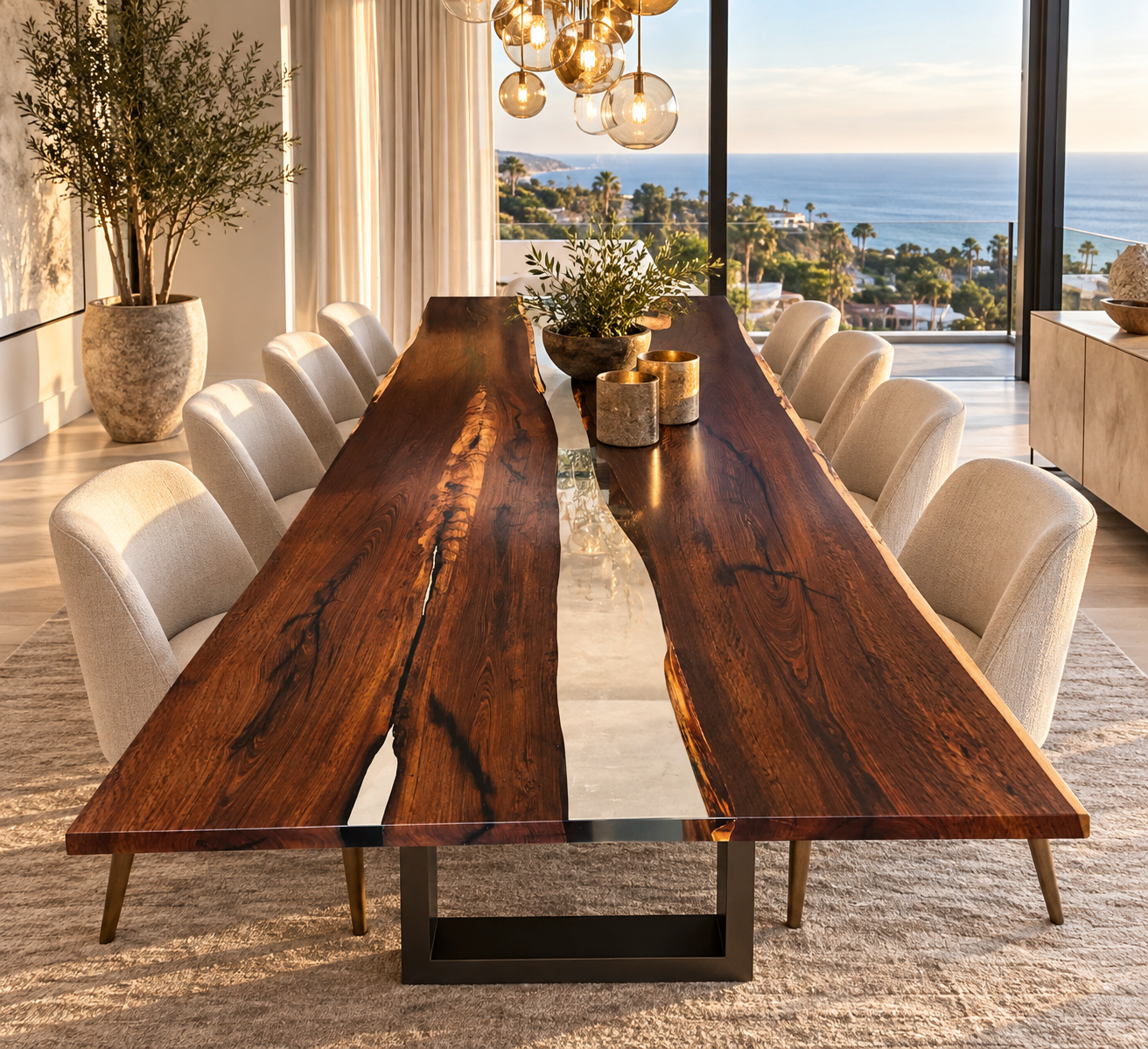
Built by Indigenous by La Rue, From Beginning to End
For us, luxury is not simply an expensive material or an impressive dimension.
It is knowing how a piece was made.
It is understanding the material.
It is controlling the preparation.
It is having the ability to solve problems rather than outsourcing them.
And it is being willing to stand behind the finished result.
At Indigenous by La Rue, the same team responsible for the material is responsible for transforming it into the finished table.
That is why we can confidently guarantee the quality of our work.
If you are considering a custom walnut dining table, oversized live edge table or custom conference table in San Diego, we invite you to see our available slabs and finished work in person.
Start with the slab. Design the table around you. Build it once—and build it exceptionally well.
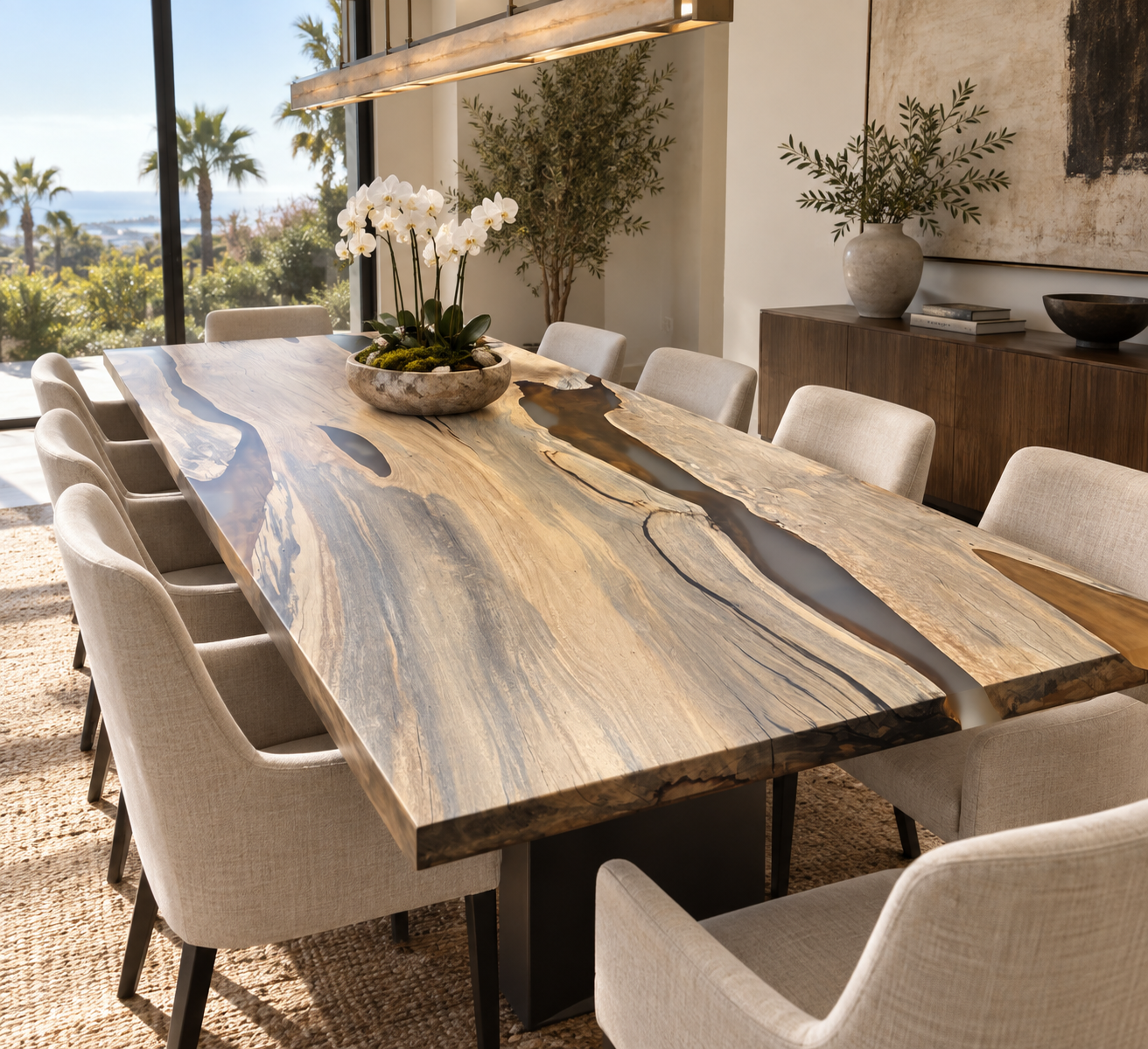
How to Choose a Custom Dining Table in San Diego: Size, Wood, Design & What to Know Before Ordering
Planning a custom dining table in San Diego? Discover how to choose the right size, wood, live edge, resin, custom base and finish for a one-
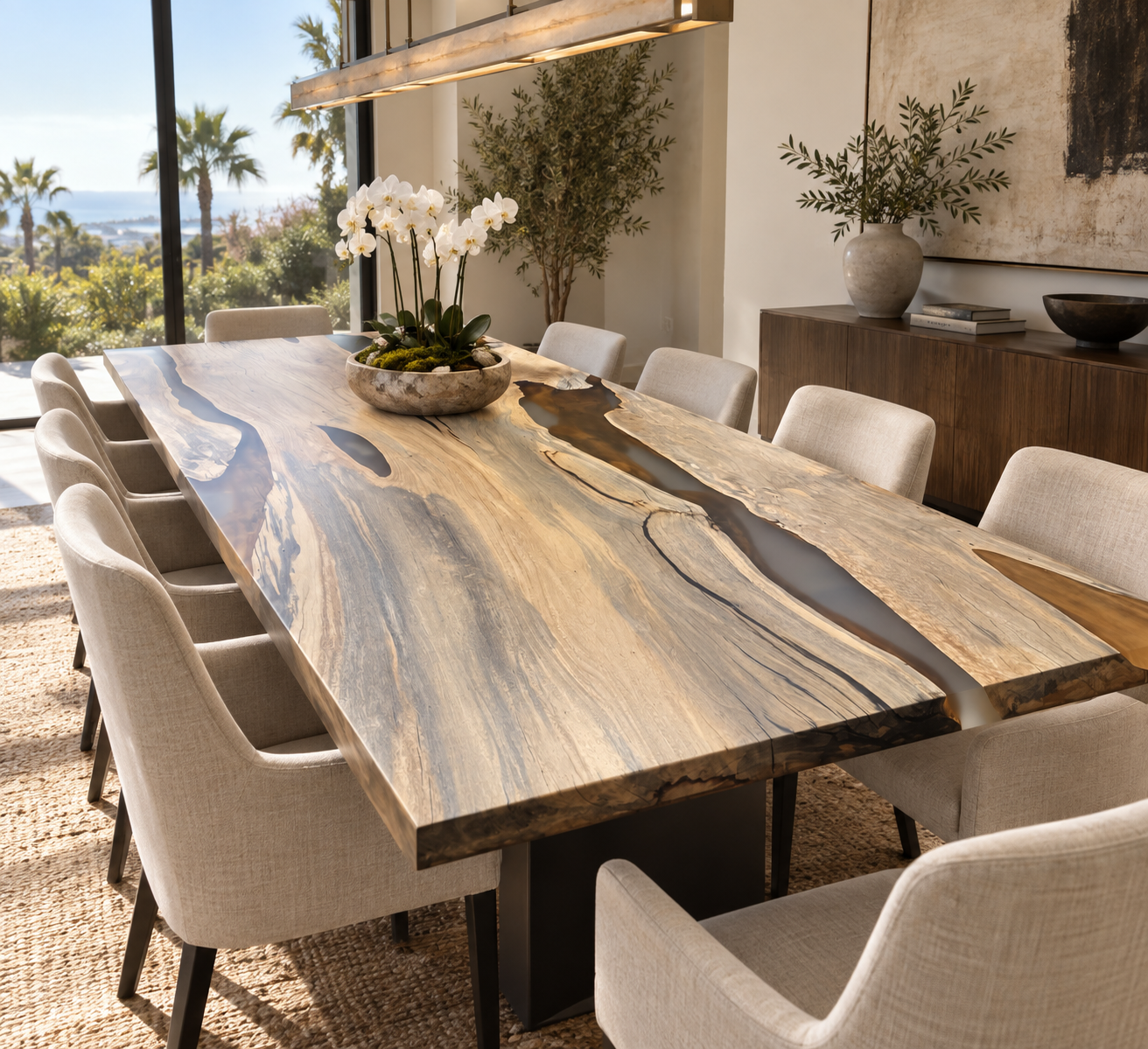
A dining table is one of the largest and most-used pieces of furniture in a home. And when you're having one custom made, the possibilities extend far beyond choosing between a few standard sizes and finishes.
At Indigenous by La Rue, we design and build custom dining tables for homes throughout San Diego County, from contemporary coastal homes in La Jolla and Del Mar to organic modern interiors in Rancho Santa Fe and North County.
Because we work with the material from the beginning of the process—not simply after a slab arrives in a workshop—we can help our clients make decisions based on the actual wood, proportions and character of their piece.
We mill, kiln dry, prepare, fabricate and finish our wood in-house, giving us control over the process from raw material to finished table.
If you're considering a custom dining table in San Diego, these are some of the most important decisions to make before your table is built.
1. Start With the Room—Not a Standard Table Size
One of the biggest advantages of commissioning a custom dining table is that you don't have to design your room around a predetermined furniture size.
The table can be designed for the room.
Think about how you actually use the space.
How many people sit at the table every day? How many do you want to accommodate when entertaining? Are you using substantial dining chairs or narrow ones? Is there a walkway behind the chairs? Does the room connect to a kitchen island or another high-traffic area?
A custom table can be built to dimensions that make sense for the architecture of the home rather than forcing a standard 72-, 84- or 96-inch table into the space.
And for unusually large rooms, we can go considerably bigger. Our inventory includes exotic slabs up to approximately 22 feet long, allowing us to create oversized dining and conference tables that simply aren't available through conventional furniture retailers.
2. Choose the Wood for More Than Its Color
Wood species influences far more than whether a table appears light or dark.
Grain movement, natural edge character, figuring, density and the dimensions available in individual slabs all influence the finished design.
Some clients immediately fall in love with dramatic grain. Others want something quieter and architectural.
That's why we prefer selecting the actual slab whenever possible.
Rather than ordering a table from a photograph and hoping the wood resembles it, our clients can choose from our inventory of slabs and see the grain, natural edge and characteristics that will ultimately become their table.
No two are identical.
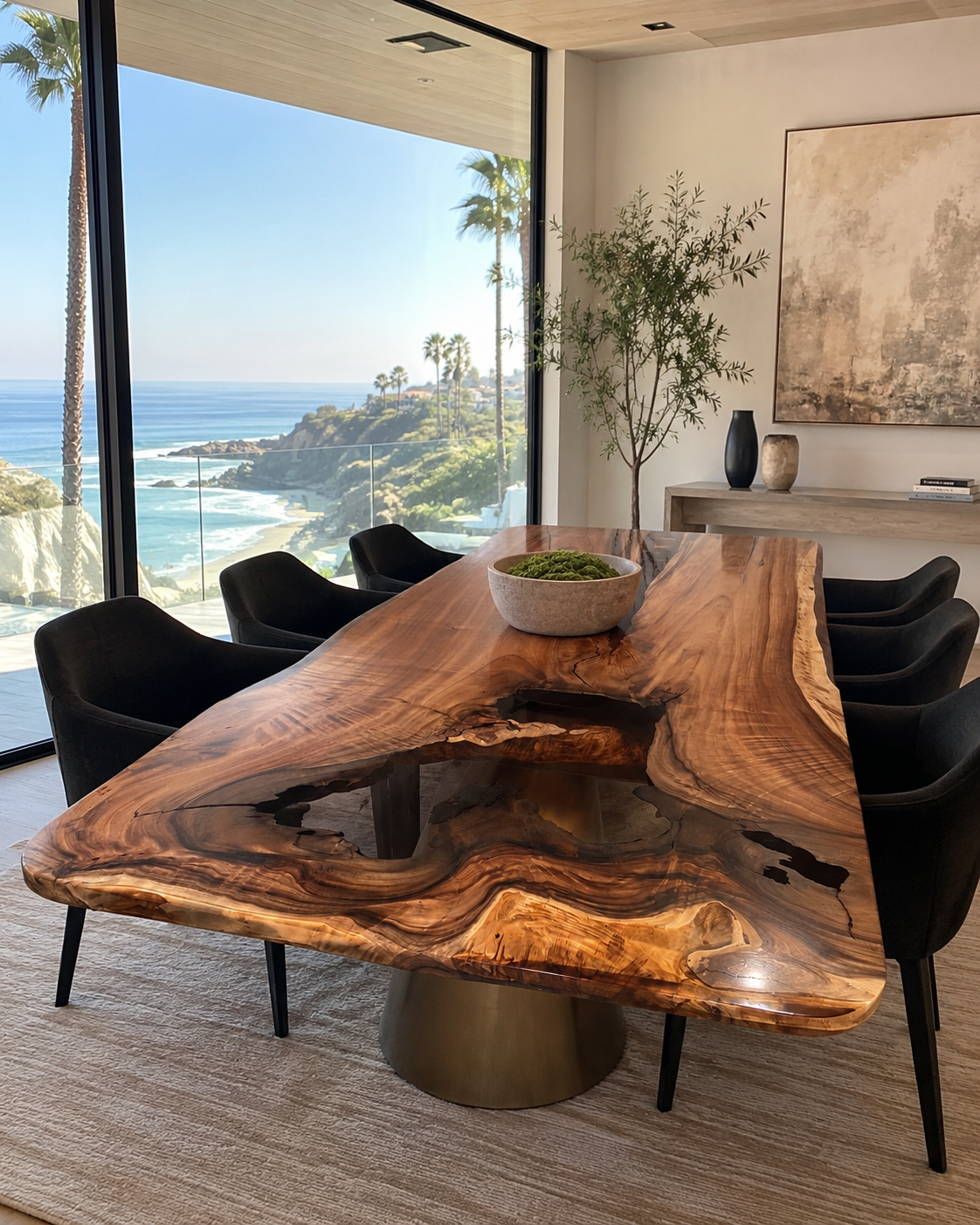
3. Decide Whether You Want Live Edge, Straight Edge—or Somewhere Between
A custom table doesn't have to fall neatly into “rustic” or “modern.”
A live edge dining table preserves more of the natural contour of the tree and can introduce an organic element into an otherwise highly contemporary room.
A refined or straightened edge creates a more architectural silhouette.
And sometimes the right answer lies between the two.
We can soften or refine the natural edge while preserving enough movement to make the origin of the material visible.
The goal isn't to force a slab into a particular style. It's to determine how much of its natural character belongs in the finished room.
4. Resin Should Have a Purpose
Resin can be beautiful, but we don't believe every slab needs it.
Sometimes the most striking design is a complete piece of wood with nothing competing with its grain.
Other times resin allows us to work with natural openings, join extraordinary pieces of material or create a dramatic river-table design.
Clear, frosted, translucent and colored resin can each completely change the personality of a table.
For us, the question isn't simply:
It's:
“Does resin make this particular piece better?”
That distinction matters when creating furniture intended to remain in a home for generations.
5. The Base Changes the Entire Table
The base is often treated as an afterthought. It shouldn't be.
A sculptural wood base can make the table feel organic and artistic.
A minimal metal base can allow an extraordinary slab to remain the visual focus.
Pedestal configurations can provide cleaner sightlines and, depending on the design, greater flexibility for chair placement.
We design the base around the slab, the room and the way the table will actually be used.
The top and base should feel like they were always intended to exist together.
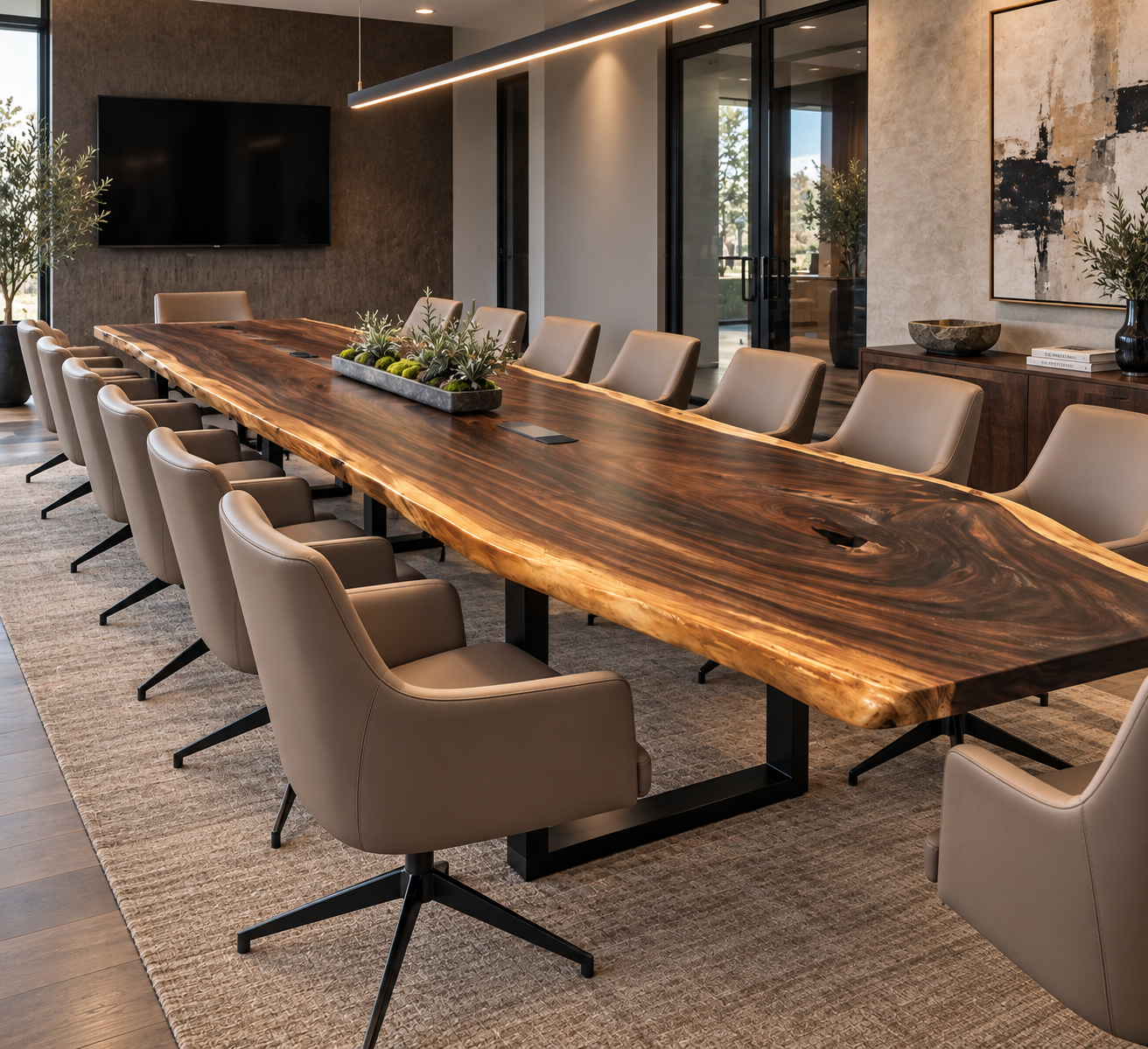
6. Ask What Happened to the Wood Before It Became a Table
This is one of the most overlooked questions when shopping for custom wood furniture in San Diego.
A beautiful slab isn't automatically ready to become furniture.
Proper drying and preparation affect the long-term stability of a finished table.
At Indigenous by La Rue, our process begins well before fabrication. We mill and kiln dry our material in-house before it becomes a finished piece of furniture.
We also prepare, fabricate and professionally finish our pieces ourselves.
Having control over those stages allows us to understand the history of the material we're building with instead of simply purchasing an unknown slab and beginning fabrication.
For a piece expected to last decades, what happens before the table reaches the showroom matters enormously.
7. Think About the Finish as Part of Everyday Life
A dining table isn't sculpture behind glass.
People eat on it.
Children do homework on it.
Wine gets poured around it. Friends gather around it. Holidays happen around it.
The finish needs to respect the wood while also making sense for real life.
We use professional finishing systems selected for durability and for the appearance we want to achieve, whether that's a natural matte surface or a richer finished tone.
A luxury table should be beautiful enough to command a room—and functional enough to actually live with.
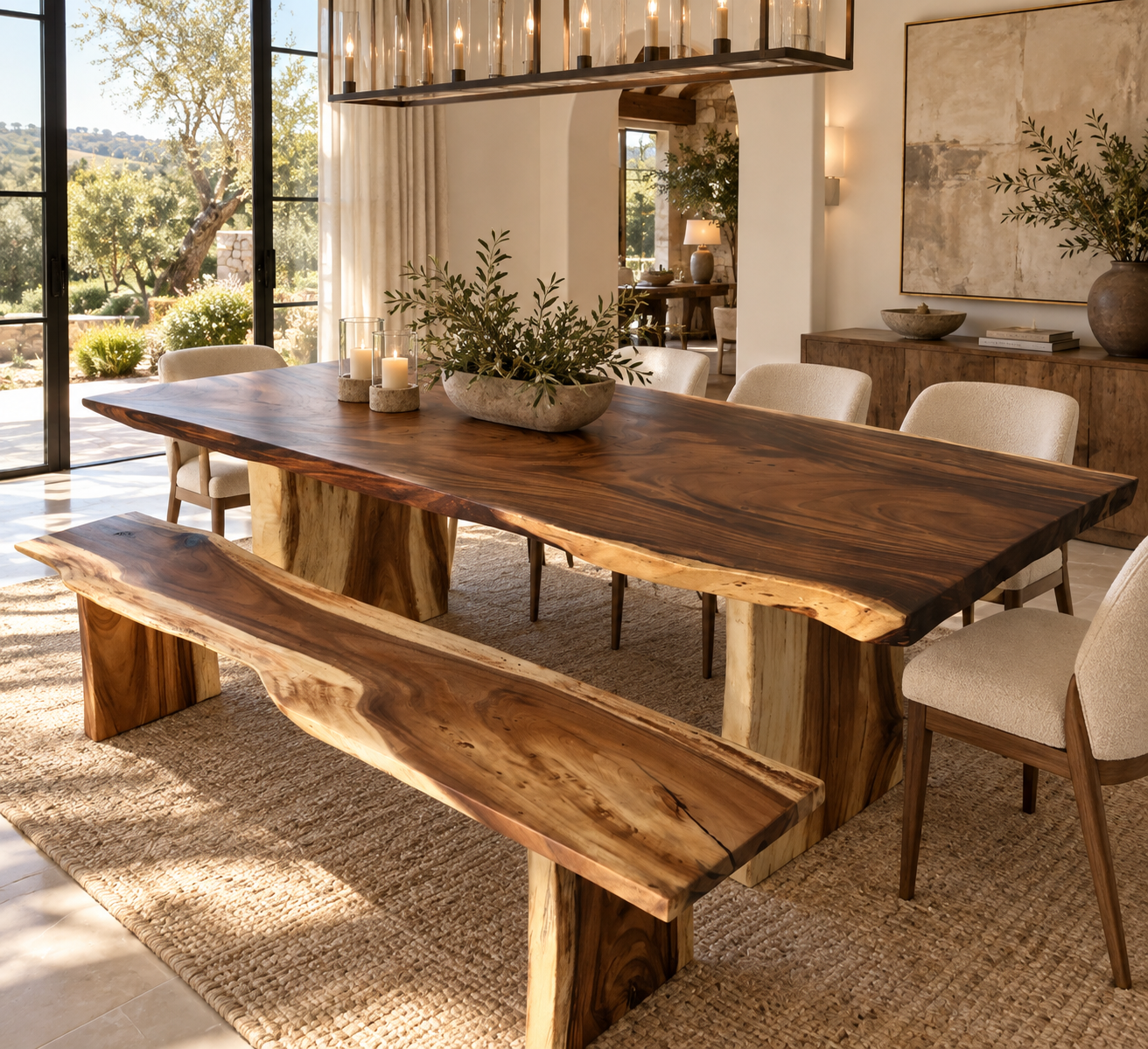
Custom Dining Tables Made in San Diego
There is something different about choosing the material that will eventually become part of your home.
Our clients aren't limited to selecting a model from a catalog.
They can choose the slab.
They can determine the dimensions.
They can select the edge treatment, resin, base and finish.
And because we work with projects from raw material through final fabrication, those decisions aren't being passed between unrelated suppliers and manufacturers.
They stay with us.
For clients searching for custom dining tables, live edge tables, resin tables or custom furniture in San Diego, our goal is simple: create a piece specifically for the home, the people who live there and the way they'll use it.
From tree to table.
Built in San Diego. Made for your home
Single-Slab vs. Multi-Slab Live Edge Tables: Which Is Right for Your Space?
Choosing between a single-slab and multi-slab live edge table? Discover the differences in appearance, size, stability and design, and learn which option is best for your custom live edge dining or conference table in San Diego.
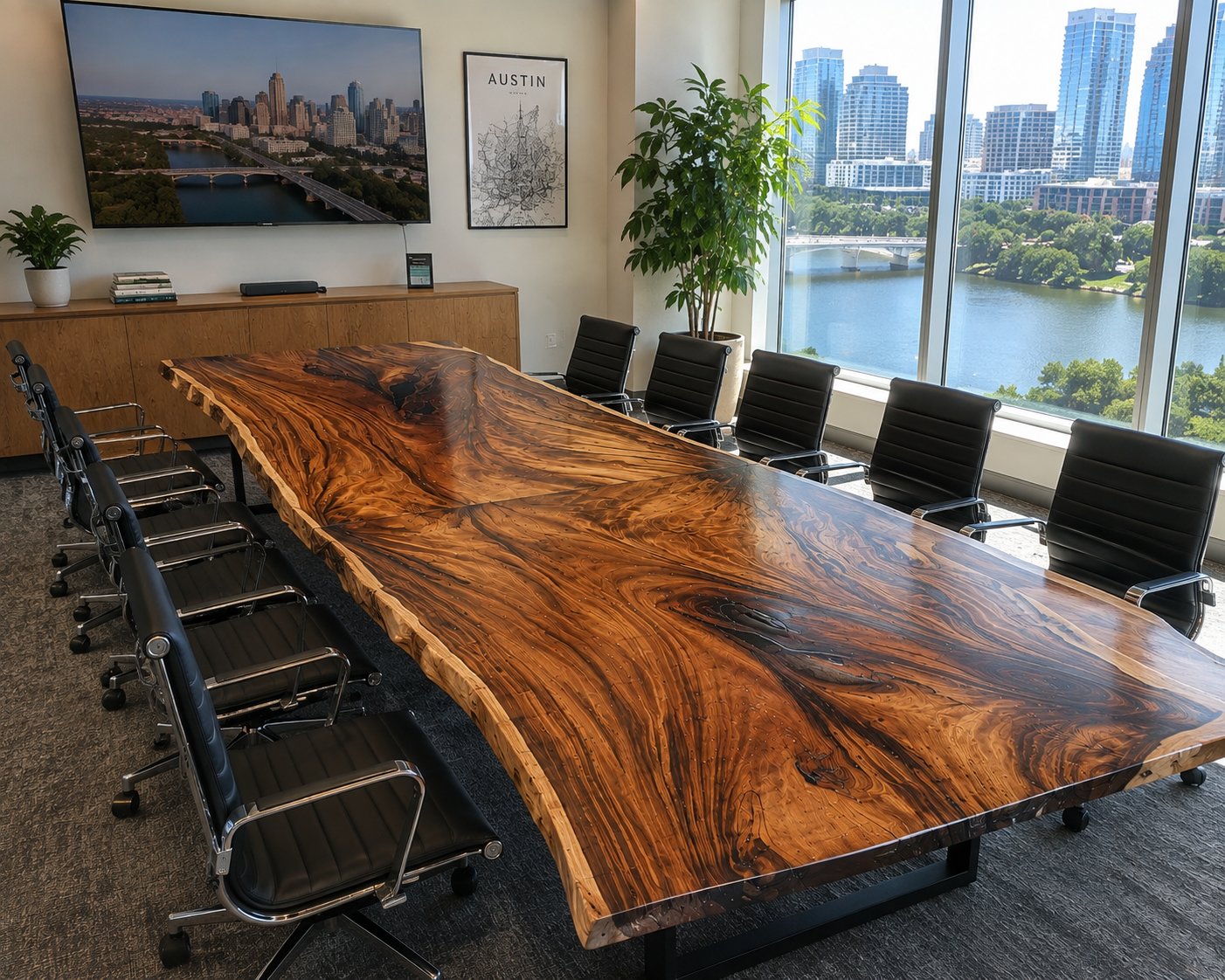
When choosing a custom live edge table, one of the first decisions is whether the tabletop should be created from one extraordinary slab of wood or from multiple carefully selected slabs.
At first glance, a single-slab table may seem like the obvious choice. There is something remarkable about seeing the uninterrupted grain, natural edge and history of one tree stretching across an entire dining table.
But single-slab construction is not automatically better.
At Indigenous by La Rue, we believe the best live edge table begins with the wood, the dimensions of the finished table, the intended use and the space where it will ultimately live.
For homeowners, interior designers and businesses searching for custom live edge tables in San Diego, understanding the difference between single-slab and multi-slab construction can help you choose a table that is both beautiful and appropriately built for your space.
What Is a Single-Slab Live Edge Table?
A single-slab live edge table is made from one continuous piece of wood rather than multiple boards joined together to create the tabletop.
The natural grain travels uninterrupted through the length of the table, while the organic edges preserve much of the character of the original tree.
Exceptional slabs can contain dramatic figuring, spalting, color variation, natural voids and other characteristics that make the finished table completely unique.
For many of our custom live edge dining tables, preserving that natural character is one of the most important parts of the design.
When the right slab exists for the dimensions of the project, a single slab can create an extraordinary statement piece.
Are Single-Slab Live Edge Tables Better?
Not necessarily.
A beautiful piece of wood is only the beginning of a well-made table.
The quality of a live edge wood table also depends on factors including how the wood was dried, its moisture content, the preparation of the slab, structural considerations, fabrication, finishing and the way the table will be used.
A poorly prepared single slab does not become a superior table simply because it came from one tree.
Likewise, a thoughtfully designed table made from multiple complementary slabs can be an exceptional piece of custom furniture.
The goal should not simply be to find the largest slab possible.
The goal is to choose the right wood and construction method for the table you are creating.
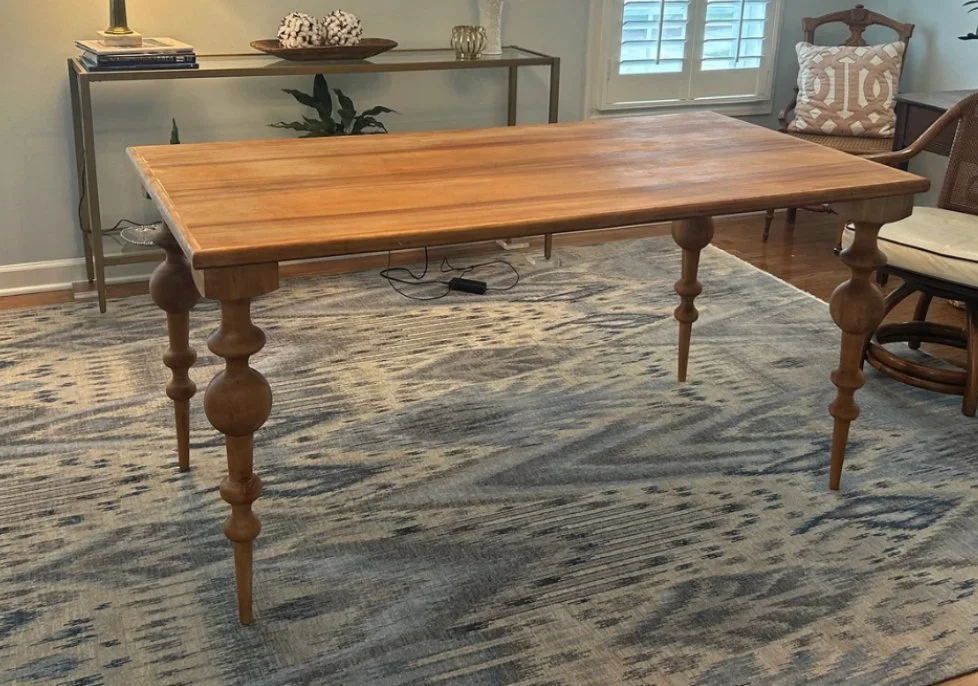
When Does a Single Slab Make Sense?
Single slabs are particularly compelling when the wood itself is intended to become the focal point of the room.
For a live edge dining table, a wide natural slab can showcase uninterrupted grain from one end of the table to the other.
Single slabs can also work beautifully for console tables, desks, coffee tables and certain conference tables.
But dimensions matter.
A table designed to seat six people has very different requirements from a 10-foot dining table, a 12-foot statement table or an oversized conference table.
As tables become larger, slab availability becomes more limited and proper preparation becomes increasingly important.
This is one reason we prefer to begin a custom project by understanding the space rather than starting with a predetermined tabletop.
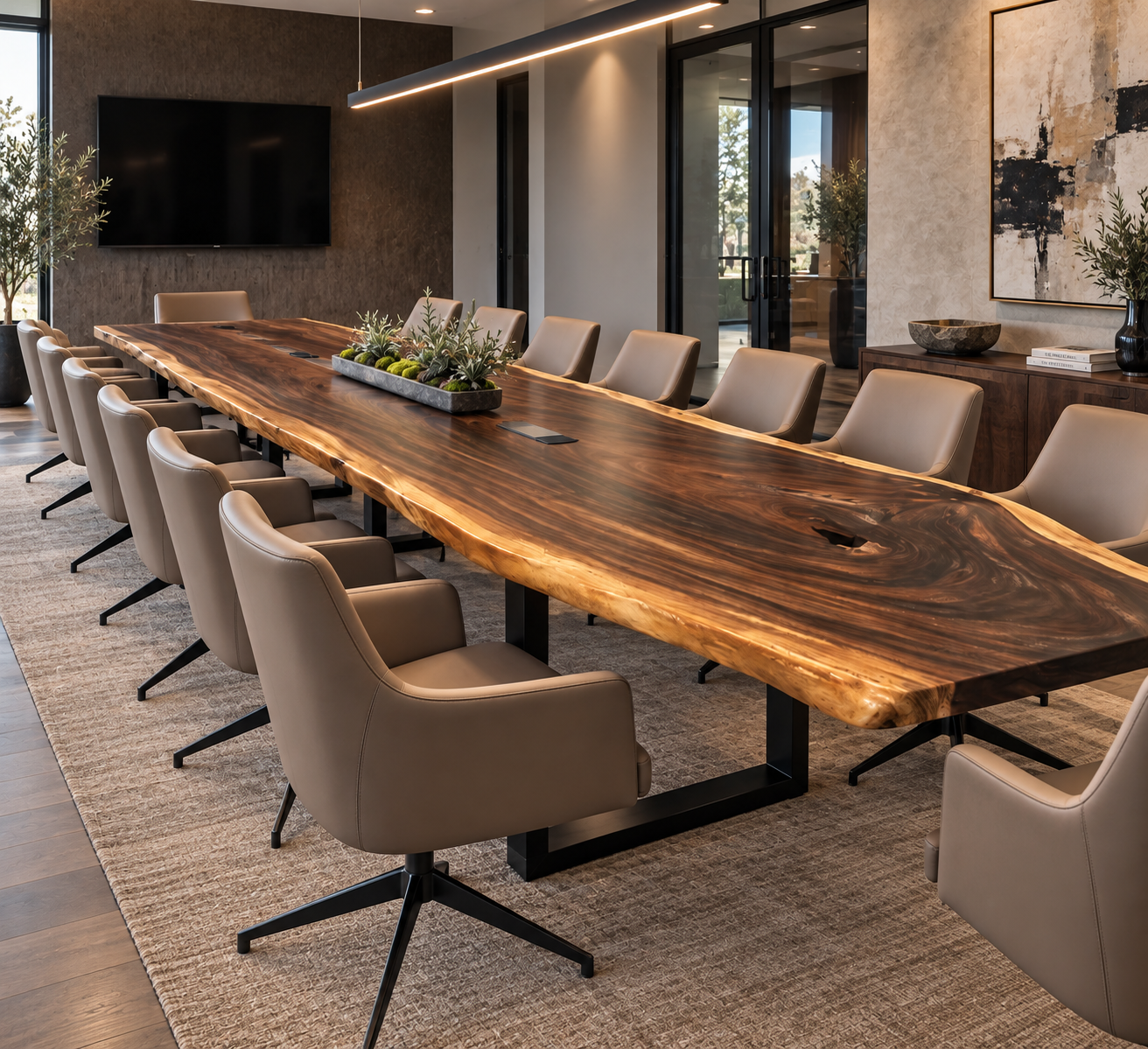
What Is a Multi-Slab Live Edge Table?
A multi-slab table uses two or more pieces of wood to create the finished tabletop.
That doesn't mean simply joining random pieces of lumber together.
For a high-quality custom table, slabs can be selected according to their grain, coloration, dimensions and natural characteristics so that they work together visually.
Depending on the design, the pieces may create a more symmetrical composition, allow for greater finished width or make a very large table possible when an appropriate single slab isn't available.
Natural openings between slabs can also provide opportunities to incorporate resin when it complements the design.
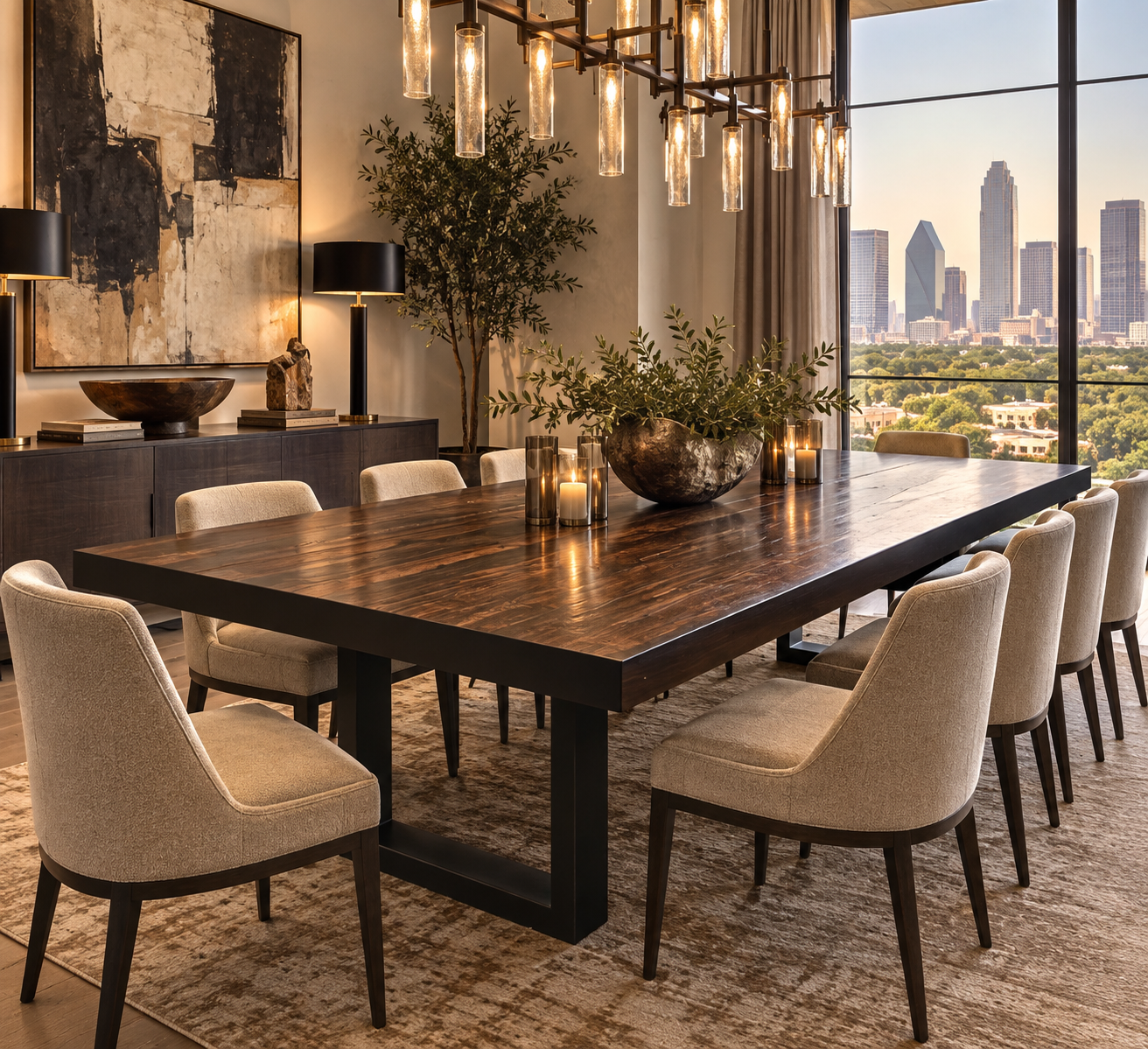
Single Slab vs. Multi-Slab: The Grain Matters
One of the greatest advantages of a single slab is visual continuity.
There are no interruptions in the grain created by joining separate pieces of wood.
But visual continuity isn't the only way to create a beautiful tabletop.
When multiple slabs are thoughtfully selected, their grain patterns can complement one another and create an entirely different composition.
This is where custom furniture should truly be custom.
Instead of deciding that one construction method is universally superior, we look at the individual wood and determine what allows its natural character to become the strongest part of the finished design.
Properly Dried Wood Matters More Than the Number of Slabs
Whether a table is made from one slab or several, the preparation of the wood is critical.
Wood naturally contains moisture, and its relationship with moisture continues after the tree has been milled.
Proper drying helps prepare a slab for an interior environment and reduces the amount of movement that can occur after fabrication.
This is especially important with thick slabs and large-format live edge tables.
At Indigenous by La Rue, the beauty of a slab is only one consideration. How the material has been prepared matters too.
That's why shoppers comparing live edge furniture should ask more than:
“Is this a single slab?”
They should also ask:
“How was this wood prepared before the table was built?”
What About Resin?
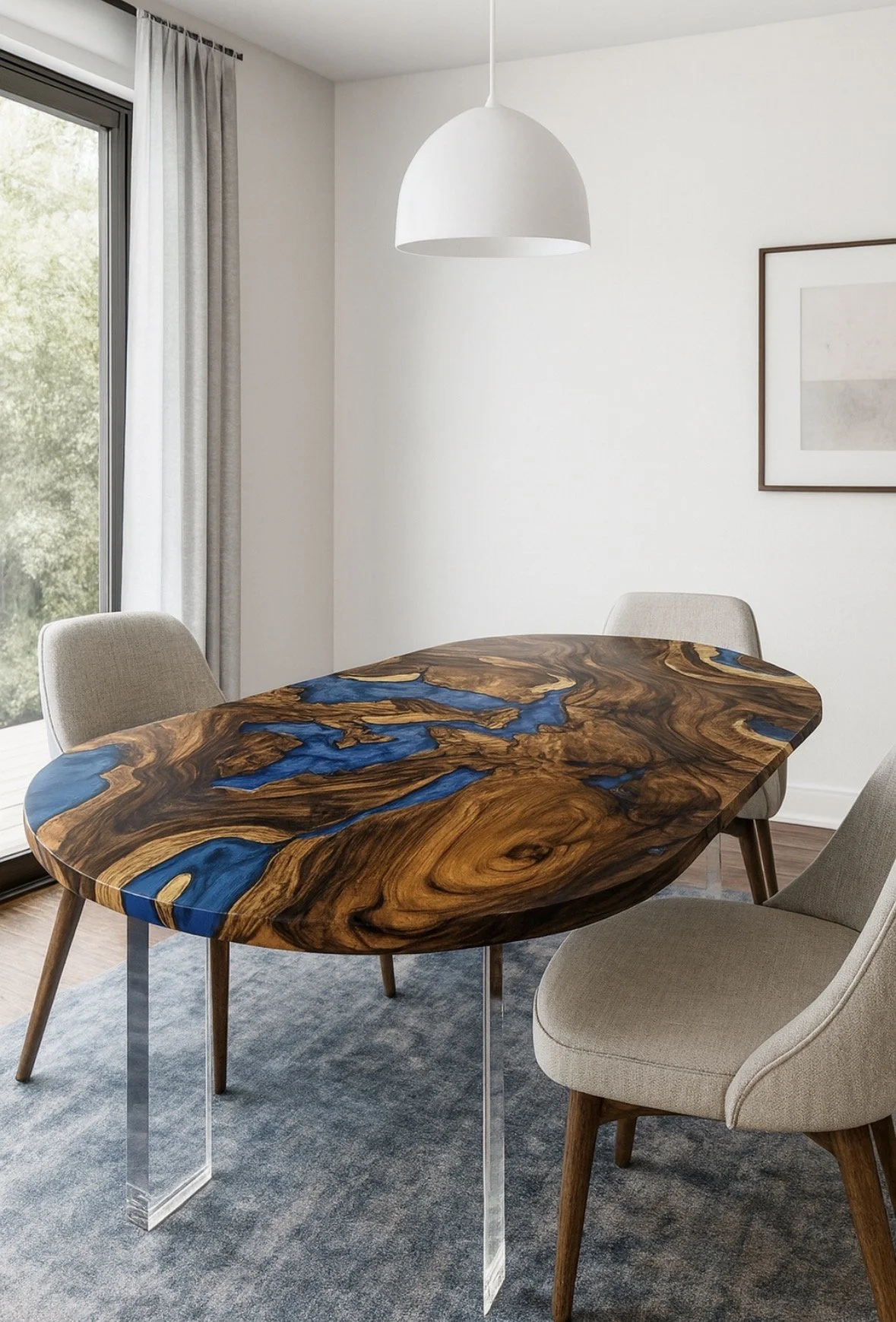
Resin can serve both a functional and an aesthetic role in a custom table.
Natural voids, cracks and openings are part of what makes live edge wood distinctive. Depending on the slab and the desired design, resin can be incorporated into these areas while allowing the original character of the wood to remain visible.
With multi-slab designs, resin can also be used between carefully positioned slabs to create a larger tabletop.
But we don't believe every piece of wood needs resin.
Sometimes the most beautiful choice is simply allowing an exceptional slab to speak for itself.
The decision should be driven by the wood and the design—not by a trend.
Large Live Edge Tables Require More Than a Large Piece of Wood
The difference becomes especially important when designing large custom live edge tables.
A 10-foot or 12-foot dining table must be considered differently from a standard dining table. Conference and boardroom tables can become substantially larger still.
At those dimensions, we consider the proportions of the slab, tabletop width, base placement, structural support, room dimensions, seating requirements and intended use.
A table should look substantial without overwhelming its environment.
It also needs to function properly once people actually sit around it.
For oversized projects, the best construction method is the one that allows us to achieve the appropriate proportions and performance while preserving the character of the wood.
The Finish Is Part of the Construction
A custom table is not finished when fabrication ends.
The finishing system affects the appearance, feel and everyday usability of the surface.
We use professional-grade finishes selected according to the application, including commercial-grade finishes when the project requires them.
That becomes especially important for dining tables, conference tables and hospitality or commercial installations where the surface may experience frequent use.
Our objective is to protect the table appropriately while allowing the natural grain and character of the wood to remain the visual focus.
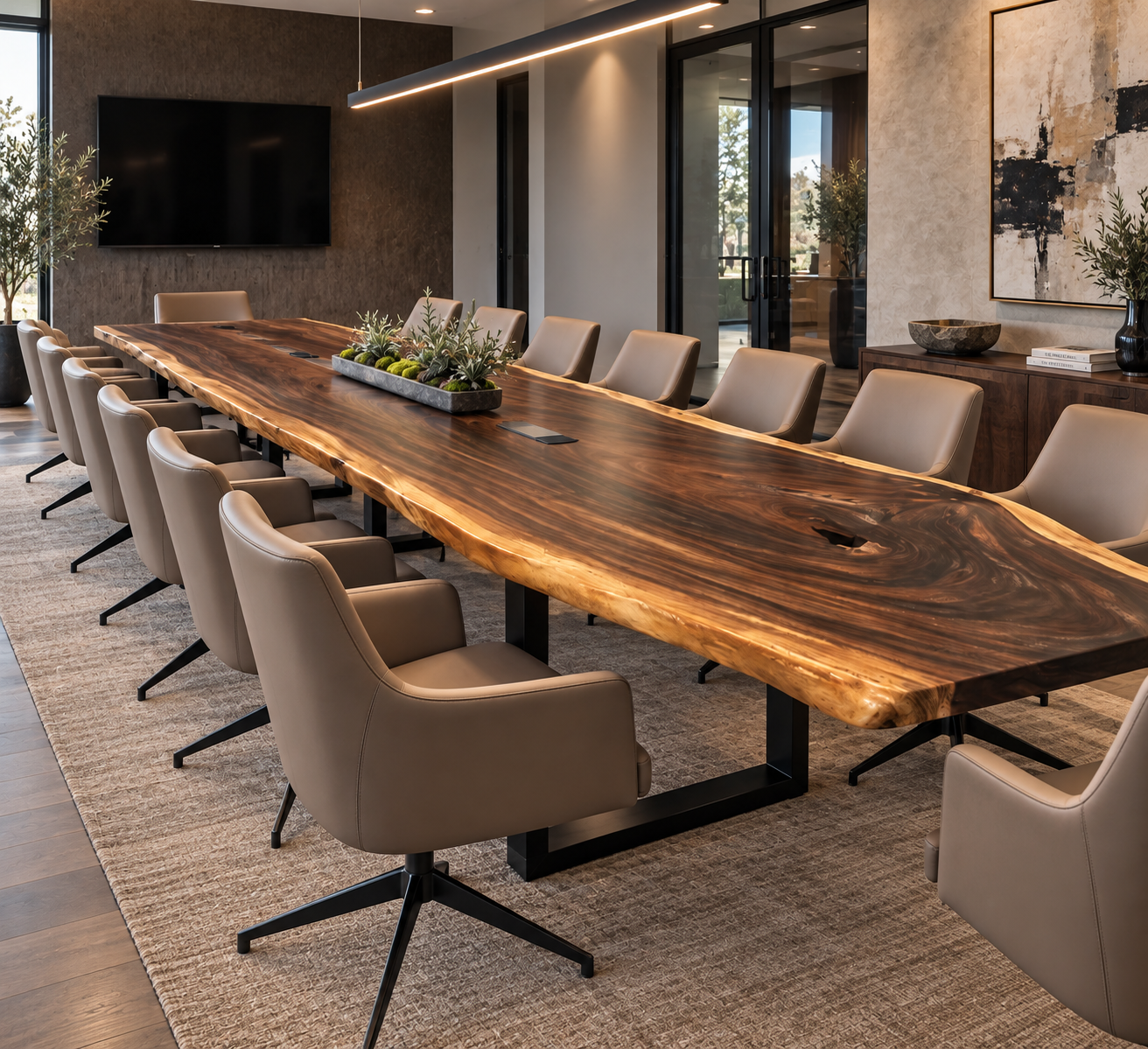
Choosing a Live Edge Dining Table for a San Diego Home
San Diego architecture gives us an enormous range of environments in which to design.
A sculptural live edge dining table in a contemporary La Jolla residence may call for a very different slab and base than a large dining table for a Rancho Santa Fe home.
Coastal homes may benefit from lighter, more restrained designs, while larger interiors can accommodate exceptionally wide slabs and substantial table proportions.
That's one of the reasons we don't believe in designing every table according to the same formula.
When creating a custom live edge dining table in San Diego, we consider the room, architecture, seating requirements and client's personal style alongside the wood itself.
The table should feel as though it belongs in the home—not as though it was selected from a catalog and placed there afterward.
From Wood Slab to Finished Table
At Indigenous by La Rue, our involvement extends beyond designing the finished piece.
We work directly with the materials and oversee the process that transforms a raw wood slab into finished furniture.
That connection between material, fabrication and design allows us to make decisions based on the individual piece of wood rather than forcing every slab into a standardized product.
It's part of what we mean when we talk about going from tree to table.
For us, craftsmanship isn't simply what happens at the final stage.
It begins with the wood.
Custom Live Edge Tables in San Diego
So, should you choose a single-slab or multi-slab live edge table?
There isn't one answer.
If an extraordinary single slab has the dimensions, character and stability appropriate for your project, preserving it as one continuous tabletop can produce an exceptional piece.
For other projects, carefully selected multiple slabs may allow us to achieve dimensions, proportions or design details that wouldn't otherwise be possible.
What matters most is that the construction serves the wood, the space and the way the table will be used.
At Indigenous by La Rue, we create custom live edge tables in San Diego for dining rooms, residences, offices, conference rooms and commercial spaces. Clients can work with us to select the wood, determine dimensions, explore base designs and finishes, and create a table specifically for their space.
Because when you're investing in a custom table, the question shouldn't simply be whether it was made from one slab or two.
The question is whether it was made well.
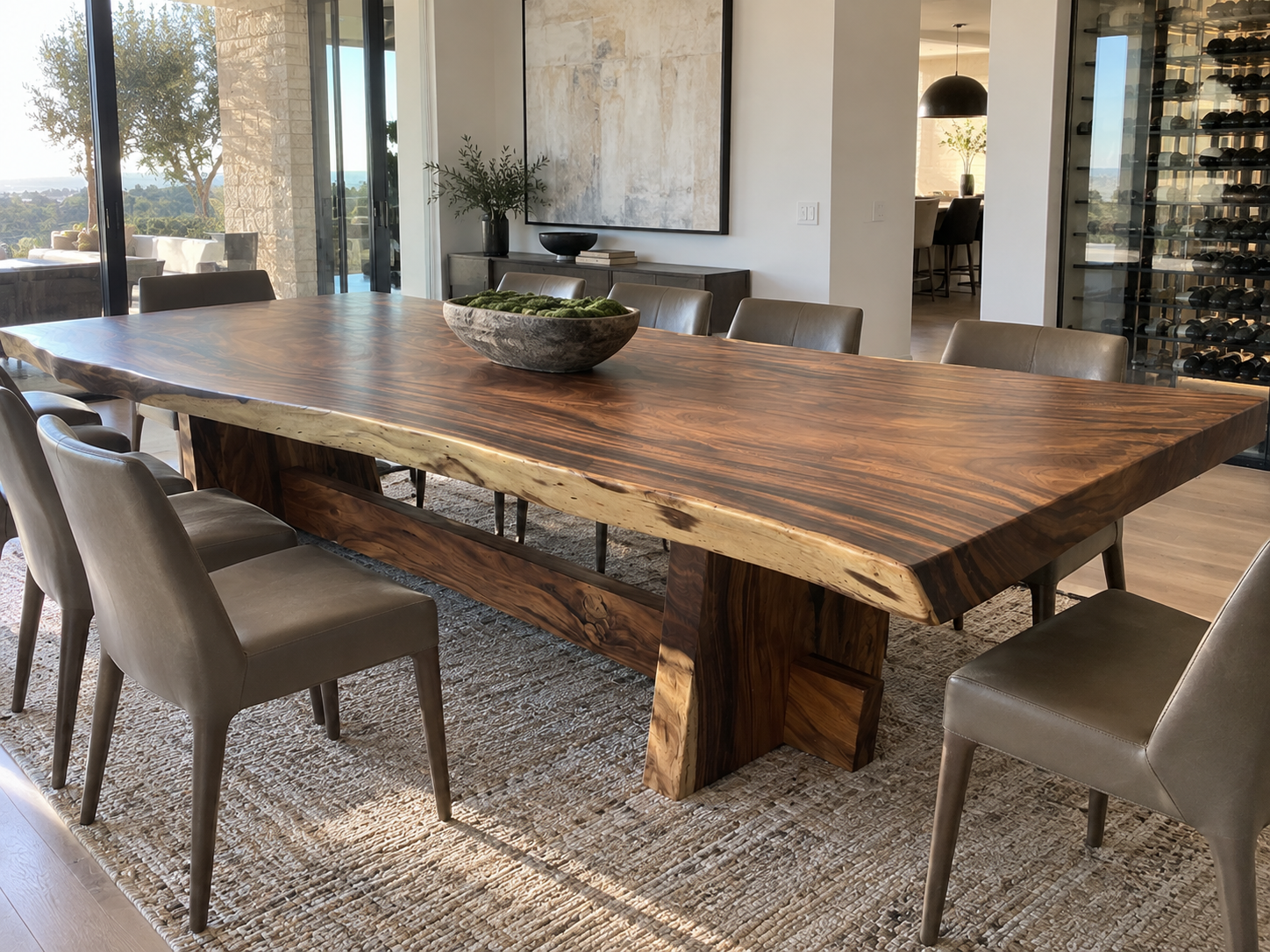
Large Custom Live Edge Tables in San Diego: 10-Foot, 12-Foot & Conference Tables Built to Last
Discover how Indigenous by La Rue creates large custom live edge tables in San Diego, including 10-foot and 12-foot dining tables and oversized conference tables. Explore custom wood species, resin options, commercial-grade finishes, and handcrafted tables built for luxury homes, offices, restaurants, and commercial spaces.
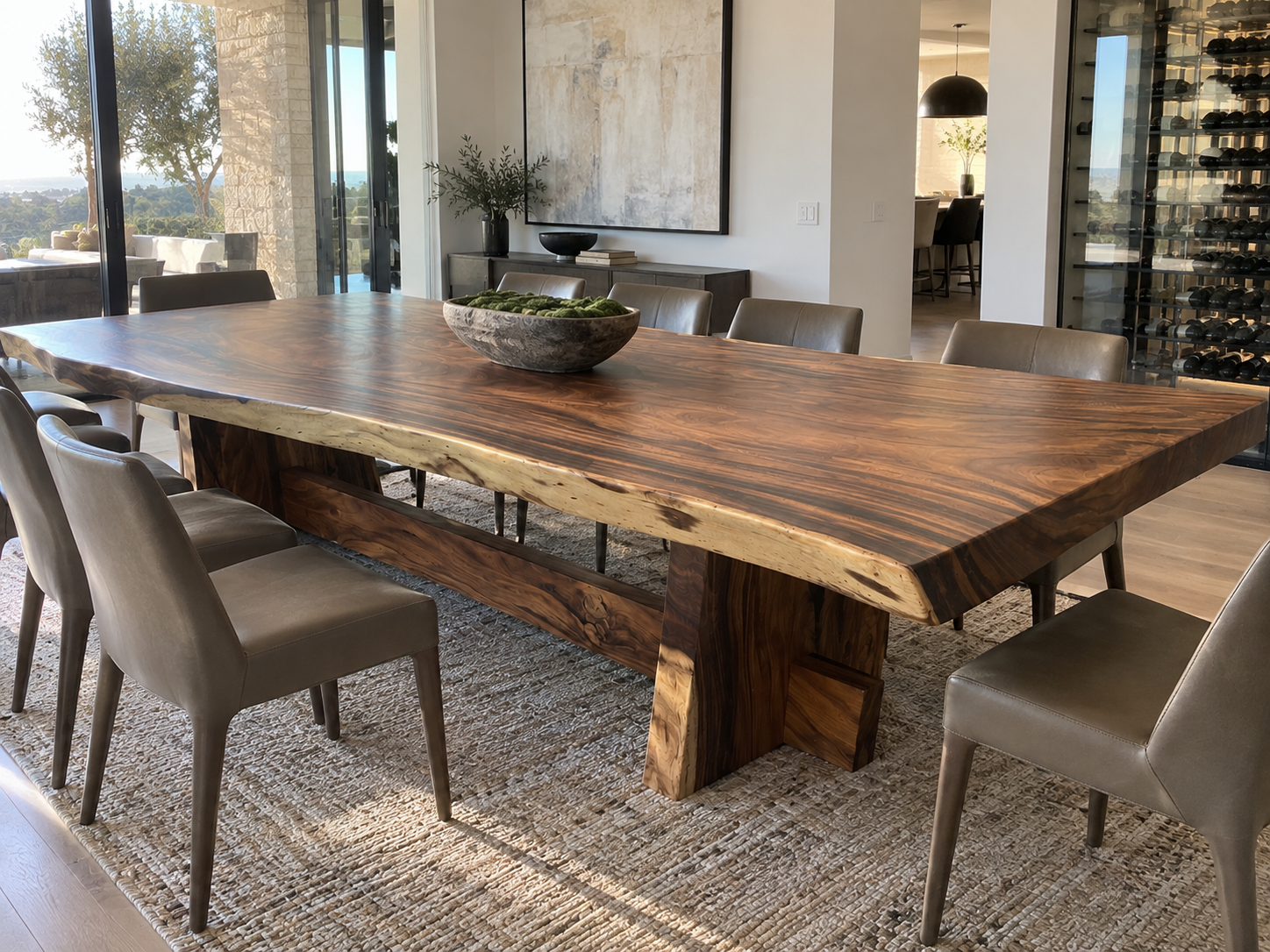
When a room calls for a truly substantial table, standard furniture simply doesn’t work.
At Indigenous by La Rue, we specialize in designing and building large custom live edge tables in San Diego, including 10-foot dining tables, 12-foot dining tables, oversized conference tables, and one-of-a-kind statement pieces created from exceptional slabs of wood.
These are tables designed for large-scale spaces—luxury homes, executive offices, conference rooms, hospitality projects, restaurants, and commercial interiors—where size, craftsmanship and durability all matter.
And when we build a table of this scale, we don’t believe the finish should be an afterthought.
Our tables are professionally finished using commercial-grade finishing systems selected to protect the wood and provide the durability expected from a piece designed for real, long-term use.
10-Foot Live Edge Tables for Large Dining Spaces
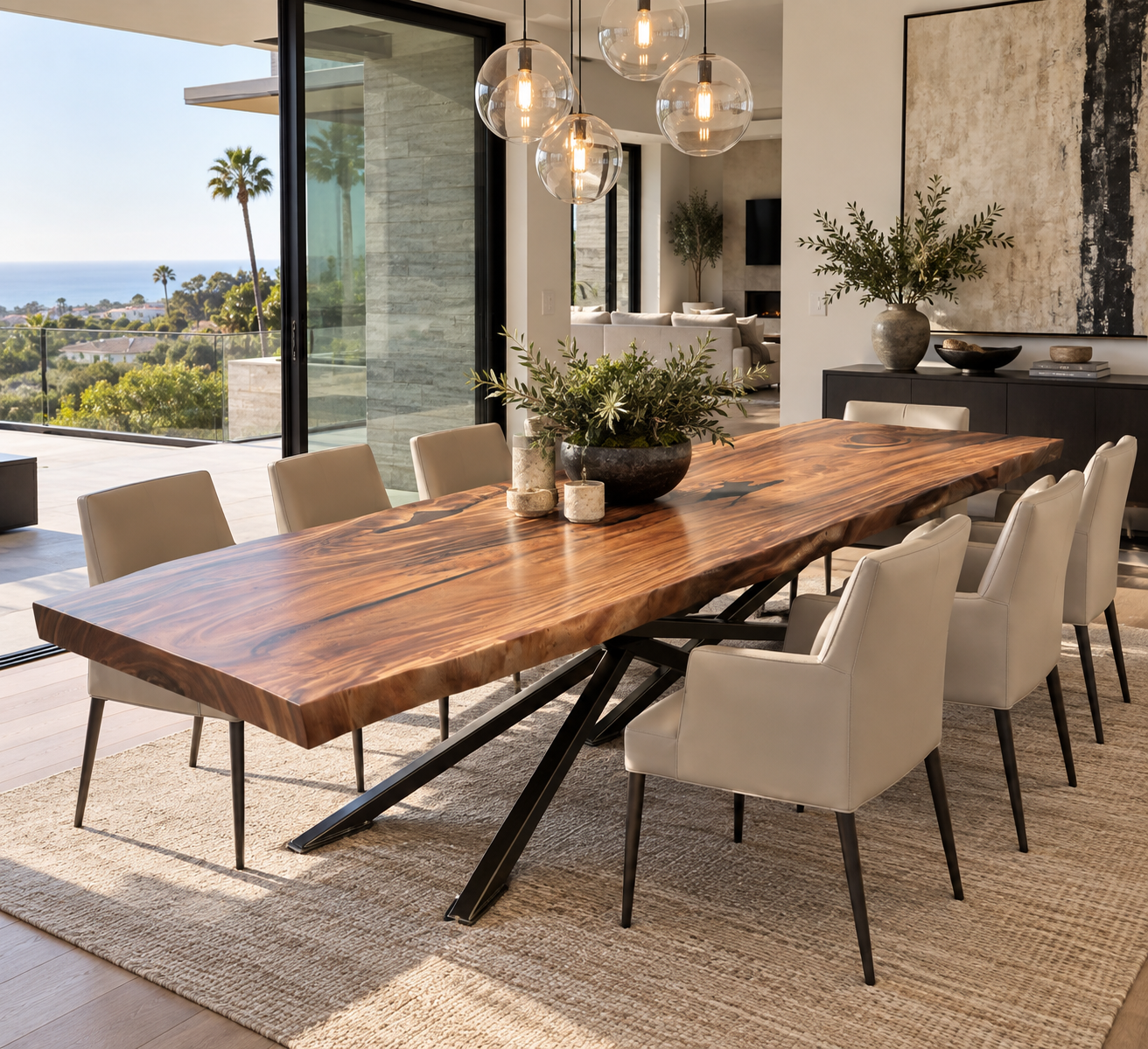
A 10-foot live edge dining table creates an entirely different presence than a standard dining table.
For homeowners with large dining rooms, open-concept living spaces or homes designed for entertaining, a 10-foot table can provide generous seating while allowing the natural character of the slab to become part of the architecture of the room.
At Indigenous by La Rue, each table begins with the wood itself. We hand select each tree and reclaimed slab for its grain, figure and size.
Rather than forcing a slab into a predetermined design, we consider its grain, movement, natural edges, figuring and proportions before determining how the finished table should look.
Depending on the project, clients can choose from woods such as walnut, acacia, monkey pod, ebony and many more distinctive and exotic species available through our collection and lumber inventory.
The result is not a mass-produced table enlarged to fit a room.
It is a custom 10-foot live edge table designed around the individual slab and the space where it will live.
12-Foot Live Edge Dining Tables
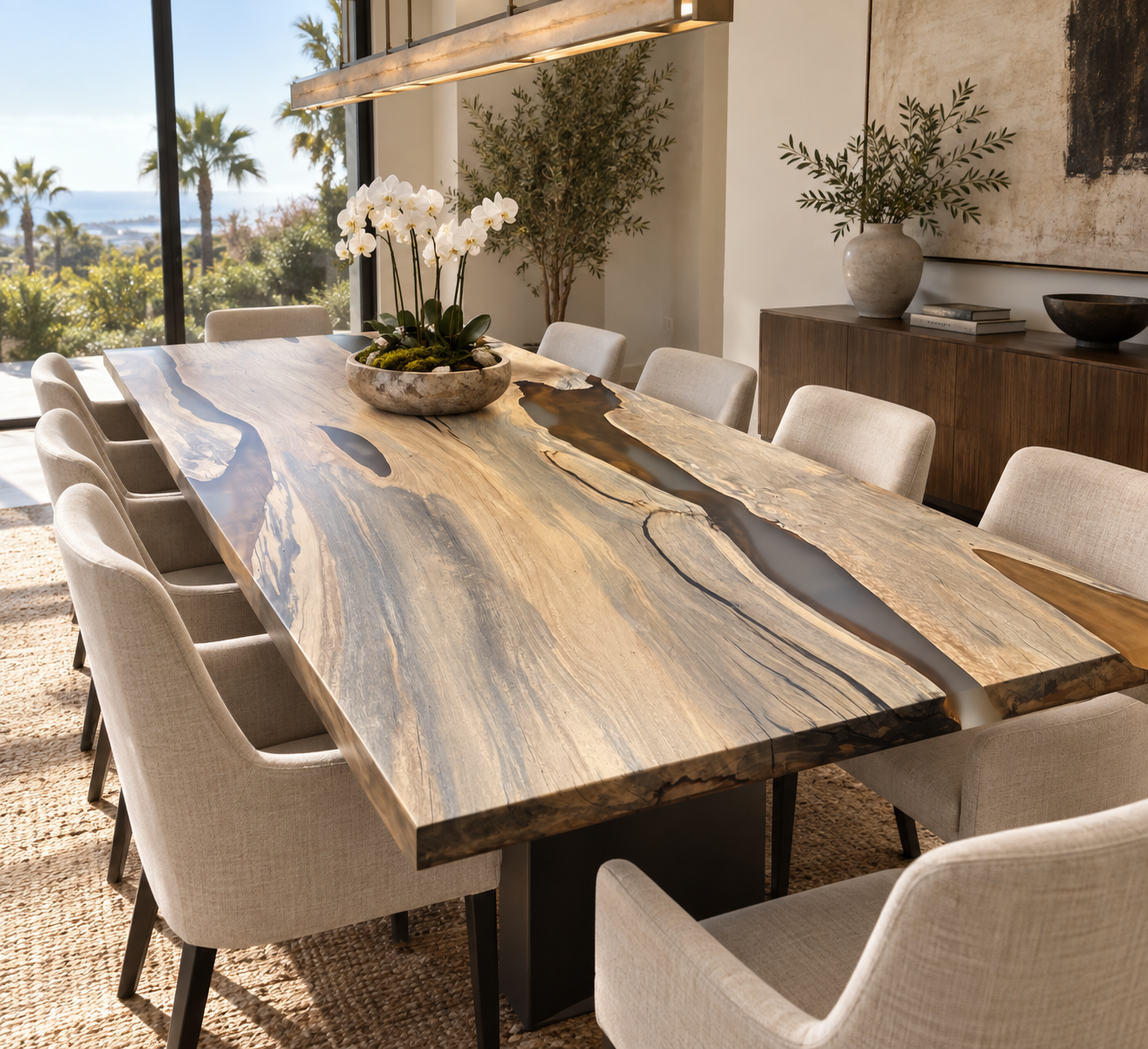
Once a dining table reaches approximately 12 feet, construction becomes especially important.
A 12-foot custom dining table needs to look beautiful, but it also needs to be engineered appropriately for its size and intended use.
Slab selection, moisture content, drying, preparation, base placement, structural support and finishing all become critical considerations. Which is why it’s of great importance to us that we are the only ones
Our process includes careful slab preparation and professional finishing so that the completed table isn't simply impressive on delivery day—it is built with long-term use in mind.
For large residences throughout San Diego, La Jolla, Rancho Santa Fe, Del Mar and Southern California, an oversized live edge table can become the centerpiece of the home.
A 12-foot table also provides something increasingly valuable: a place large enough for everyone to gather.
Family dinners, holidays, celebrations and everyday life all happen around the same piece of furniture.
That is one reason we view these tables as more than furniture. A well-made solid wood table can become part of a family's story for generations.
Custom Conference Tables in San Diego
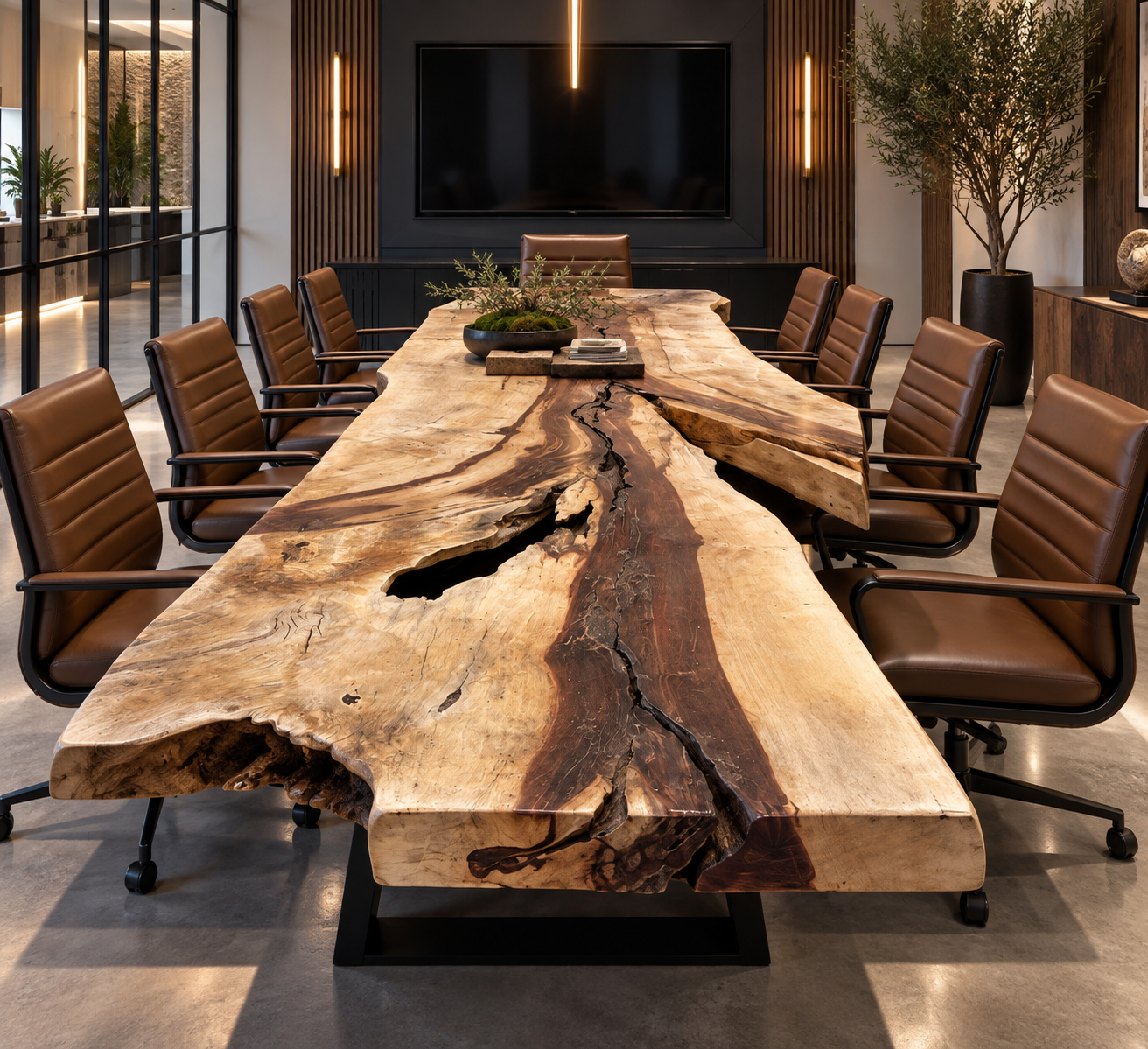
The same materials and craftsmanship can be taken to an even larger scale for commercial environments.
Indigenous by La Rue designs and builds custom conference tables in San Diego for offices, executive boardrooms, design firms, hospitality spaces and other commercial interiors.
Conference tables can be created from single slabs, bookmatched slabs, multiple-slab configurations or designs incorporating resin.
For companies looking for something especially dramatic, oversized slabs can create conference tables well beyond typical residential dimensions.
A large natural wood conference table immediately gives a boardroom character that manufactured office furniture rarely achieves.
Every natural edge, grain pattern and characteristic of the wood is unique.
That means another company cannot simply order an identical table.
Why Commercial-Grade Finishes Matter
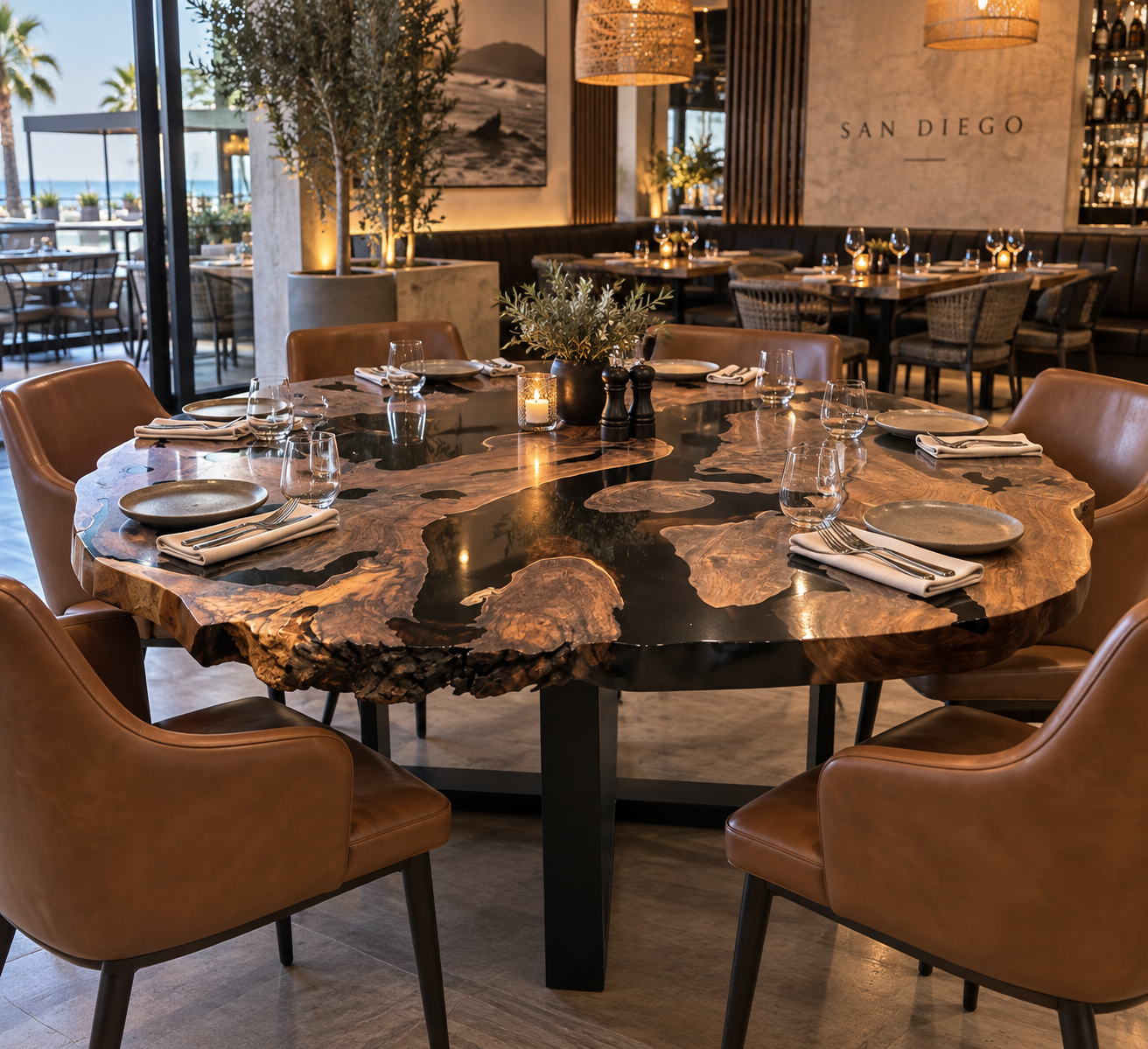
The finish is one of the most important—and frequently overlooked—parts of building a high-quality custom wood table.
A beautiful slab deserves more than a finish chosen simply because it is fast or inexpensive to apply.
At Indigenous by La Rue, we use professional commercial-grade finishing systems appropriate for furniture expected to see regular use.
This is particularly important for:
Large family dining tables
Executive conference tables
Restaurant and hospitality tables
Commercial furniture
High-use residential furniture
Proper finishing helps protect the wood while maintaining the beauty, depth and natural character that made the slab worth selecting in the first place.
For us, craftsmanship isn't finished when the table looks good.
The table also needs to be prepared for the life it will actually have.
Large Resin and Epoxy Tables
Not every oversized table needs resin.
But when resin is appropriate for the slab or the client's design, it can be an extraordinary addition.
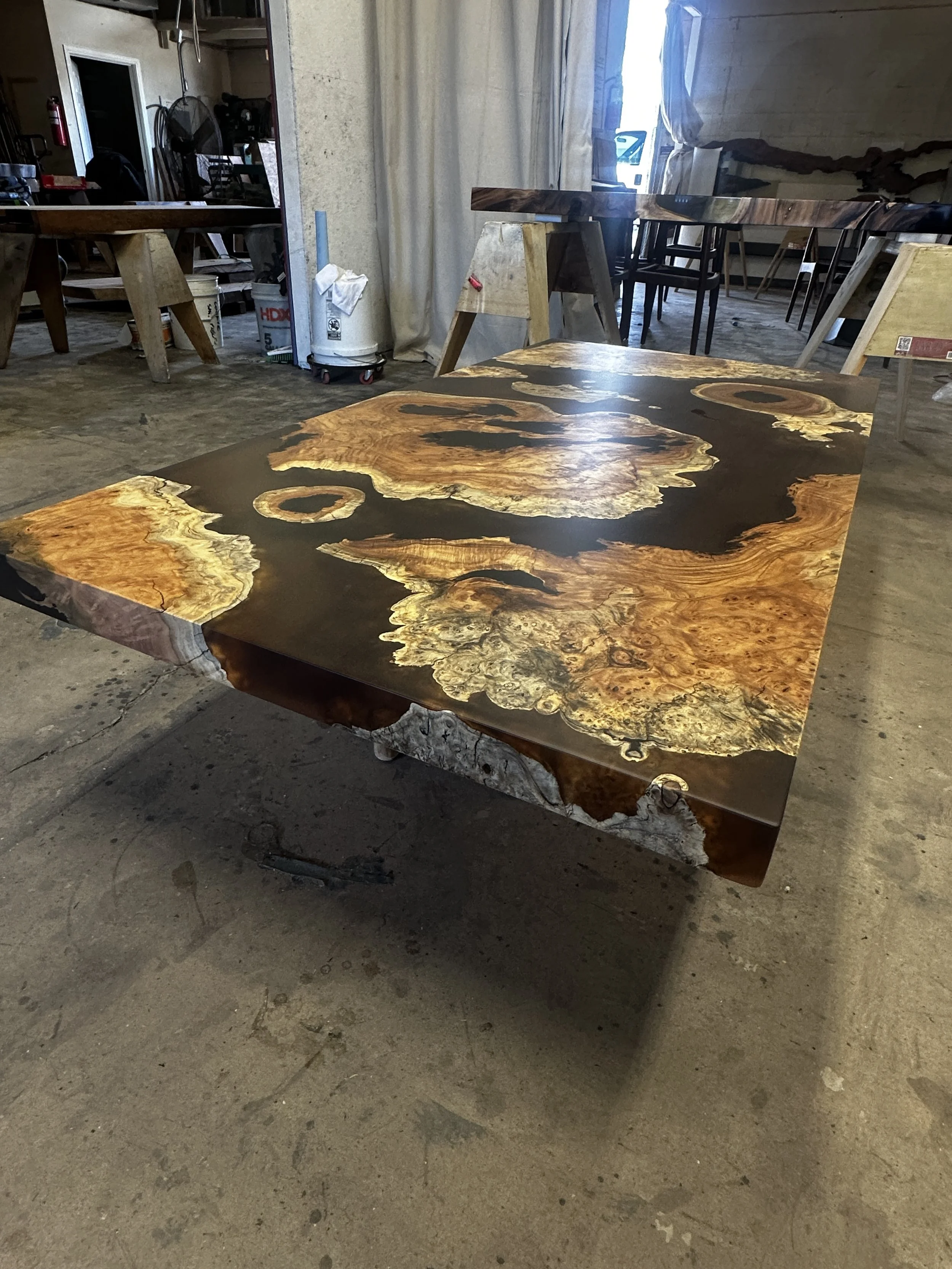
We create custom resin tables in San Diego using resin to fill natural voids, stabilize certain characteristics or become an intentional part of the design.
Depending on the project, resin can be understated and nearly transparent or used to create a dramatic contrast against the wood.
For large conference tables, resin can also allow multiple slabs or highly figured pieces of wood to become part of a unified composition.
The goal should never be to cover the beauty of the wood.
The resin should complement it.
What Should You Look for When Buying a Large Live Edge Table?
When comparing builders for a 10-foot, 12-foot or oversized custom table, don't judge the piece from photographs alone.
Ask about the process behind it.
How was the wood dried?
Has its moisture content been evaluated?
How was the slab prepared?
What type of finish is being used?
Is the base engineered for a table of that size?
How will the table be transported and installed?
And who is actually building it?
These questions become increasingly important as the dimensions and value of the project increase.
Built in San Diego, Designed for Projects Nationwide
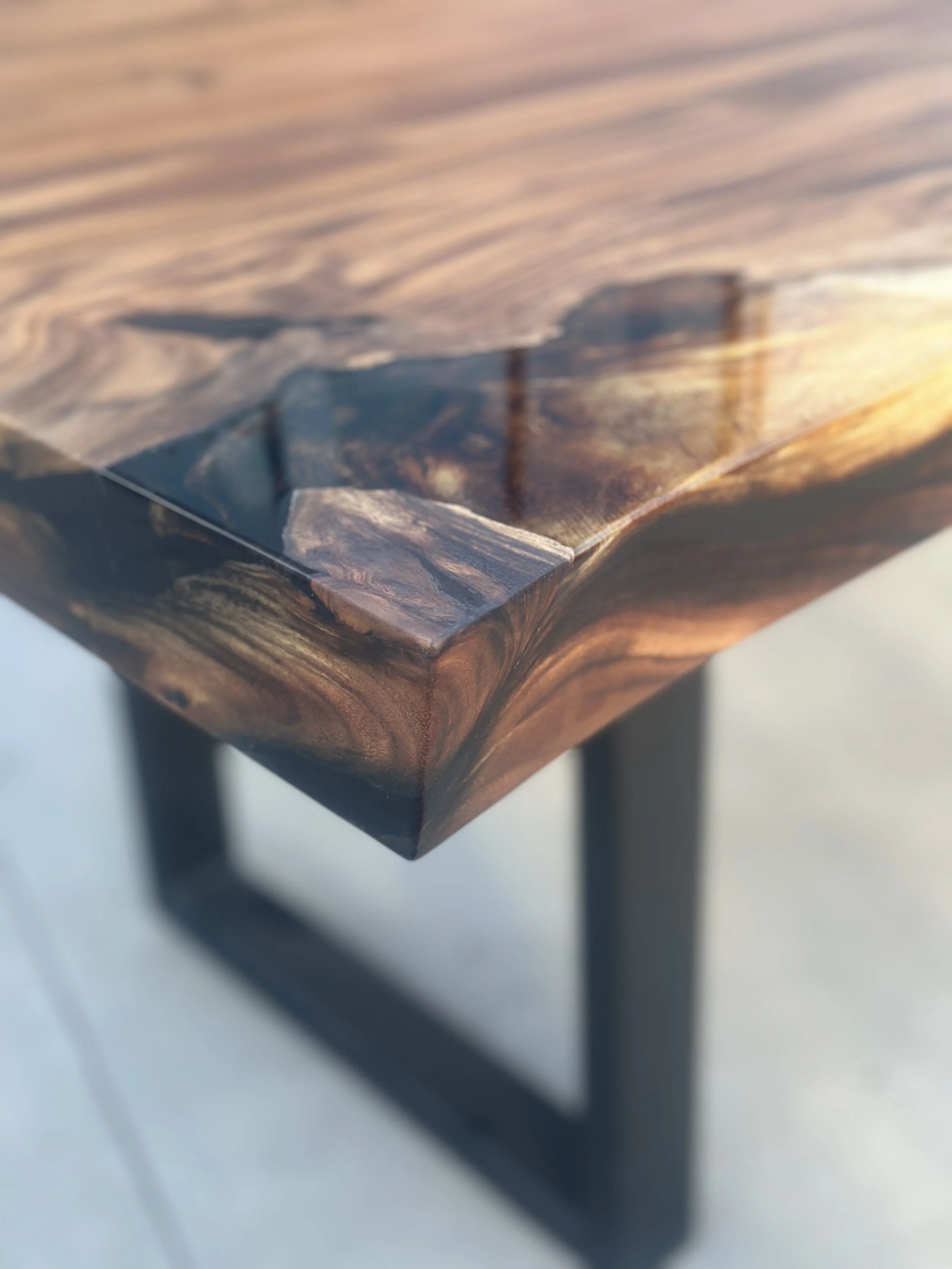
Indigenous by La Rue is a San Diego custom furniture company specializing in live edge dining tables, resin tables, oversized conference tables and luxury custom furniture.
Our clients can visit us in La Jolla and Solana Beach to explore finished pieces and discuss custom projects, with access to additional slabs and materials through our lumber inventory.
We also build for clients outside San Diego and can coordinate professional crating and delivery for projects throughout the United States.
Whether you're searching for a 10-foot live edge table, a 12-foot dining table, or a custom conference table in San Diego, the process begins with finding the right material for the project.
Frequently Asked Questions
Can you make a 10-foot live edge dining table?
Yes. Indigenous by La Rue creates custom oversized dining tables, including 10-foot tables, based on available slabs, desired seating capacity and the dimensions of the room.
Can you build a 12-foot dining table?
Yes. We design large custom dining tables for residential and commercial projects. For tables of this scale, slab selection, structural support, base design and finishing are especially important.
Do you make custom conference tables in San Diego?
Yes. We design custom conference and boardroom tables for San Diego businesses as well as projects outside Southern California.
What finish do you use on your custom tables?
We use professional commercial-grade finishing systems selected according to the wood, design and intended use of the piece. Our goal is to protect the table while preserving the natural appearance and character of the wood.
Do you make large epoxy or resin conference tables?
Yes. Resin can be incorporated into oversized dining and conference tables when it complements the slab and design. Options can range from subtle fills to more dramatic resin features.
How many people can sit at a 10-foot or 12-foot table?
Seating capacity depends on table width, base placement, chair dimensions and whether seating is desired at the ends. We design each table around the client's space and seating requirements rather than relying on a single standard configuration.
Can you ship a large custom table outside San Diego?
Yes. Large custom furniture projects can be professionally prepared for transportation, including insured custom crating and delivery coordination when appropriate.
Start Your Custom Table
If you're planning a large dining room, executive conference room or commercial space and need a table that standard furniture sizes simply can't accommodate, we can build around your dimensions, design and material preferences.
Explore our Live Edge Tables San Diego, Custom Furniture San Diego, Custom Resin Tables San Diego, and Custom Conference Tables collections, or contact Indigenous by La Rue to begin a custom project.
Indigenous by La Rue — custom furniture designed around extraordinary wood.
How Long Does a Custom Live Edge Table Last? What Determines Heirloom Quality
How long does a live edge table last? The answer depends on much more than the wood itself. Learn how proper drying, stabilization, resin preparation, finishing and craftsmanship can turn a custom live edge table into an heirloom built for generations.
A well-made live edge table shouldn’t be something you replace in a few years. It should be a piece that becomes part of your home, your family, and eventually your family’s story.
At Indigenous by La Rue, we believe a truly custom table should be built with that kind of longevity in mind.
But not every live edge table is built the same way.
Two tables can look beautiful in photographs and be made from the same species of wood, yet perform very differently over time. The difference often comes down to what happened to the wood long before the table entered the showroom: how it was dried, stabilized, prepared, finished, and—when resin is involved—how carefully that resin was mixed and poured.
So how long should a quality live edge table last?
When it is properly built and cared for, a solid wood live edge table can last for generations. The more important question is: what makes one table worthy of becoming an heirloom while another begins cracking, warping, separating, or failing?
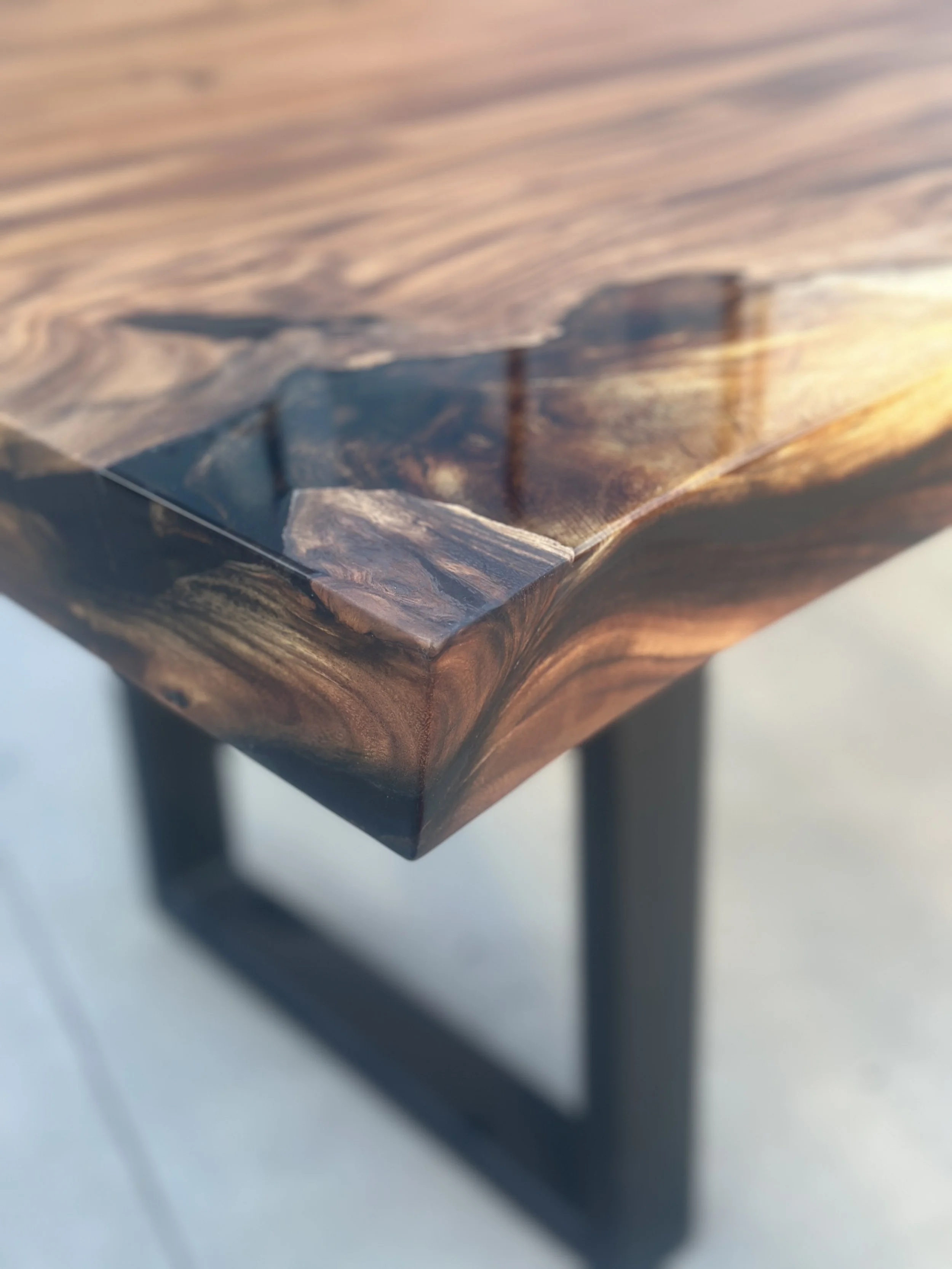
It Starts With the Slab
For us, the process doesn't begin when we start building the table. It begins with the wood.
Wood is a natural material, and even after a tree has been cut, the wood continues responding to moisture, temperature, and its environment.
That is why we don't believe in rushing this part of the process.
Many of our slabs are allowed to dry and stabilize for approximately three to five years, depending on the species, thickness, environment, and individual piece. Even at a minimum, our slabs may spend around a year and a half drying and stabilizing before becoming finished furniture.
Why so long?
Because bringing wood down too quickly can create problems inside the slab that aren't always immediately visible. A table may look beautiful when it leaves the shop, but improperly prepared wood can reveal those problems later through movement, cracking, checking, twisting, or warping.
We would rather give the wood the time it needs.
Wood Will Always Move—The Goal Is to Understand It
One of the misconceptions about solid wood furniture is that properly dried wood will never move again.
That's simply not how natural wood works.
Wood responds to its environment throughout its life. Seasonal humidity changes, indoor heating, air conditioning, and climate can all affect it.
The goal isn't to turn wood into something it isn't.
The goal is to understand the material and build with its natural characteristics in mind.
That includes evaluating moisture, stability, grain, existing checks and movement before deciding how a particular slab should be used.
This is also why we don't treat every slab exactly the same. Each piece of wood has its own history and personality, and part of craftsmanship is knowing how to work with it rather than forcing it into a standardized process.
The Difference Between a Table That Looks Good and One That's Built Well
Some of the most important steps in building a custom live edge table are the ones you'll never see in the finished photographs.
Proper slab preparation matters.
Sanding matters.
Moisture matters.
Joinery and structural support matter.
The products used on the wood matter.
The finish matters.
And the amount of time given to each stage matters.
Shortcuts can save time during production, but the consequences may not become obvious until months or years later.
For us, quality isn't simply about how beautiful a table looks on the day it is delivered. It's about how it performs as it becomes part of someone's home.
Resin Tables Require Another Level of Precision
Resin can create extraordinary possibilities with natural wood.
We use it to fill natural voids, stabilize certain areas, create river-style designs, and sometimes preserve elements that tell the history of a piece.
But resin isn't simply something you pour into wood and wait for it to harden.
The environment matters.
Our resin pouring rooms are temperature and humidity controlled because both conditions can affect how resin cures and how well it adheres to the wood.
The ratio between resin and hardener also needs to be precise.
If the hardener is measured incorrectly, the ratio can be compromised. The resin may remain soft, cure inconsistently, or fail to maintain the strength and form expected from a properly produced table.
These are the kinds of problems a buyer may not recognize when looking at a brand-new piece.
They become important later.
Professional Finishes Protect the Wood
The finish on a live edge table isn't simply there to make the grain look beautiful.
It is part of the table's protection.
A professionally applied finish helps protect the surface from normal use while allowing the character of the wood to remain the focus.
At Indigenous by La Rue, most of the finishes we use are zero-VOC, with the remaining finishes and resins selected as low-VOC options whenever appropriate for the project.
We choose finishing systems based on the piece itself and how it will actually be used.
A dining table that will become the center of everyday family life has different demands than a sculptural console or occasional table.
The goal is always the same: preserve the natural beauty of the material while creating furniture designed for real life.
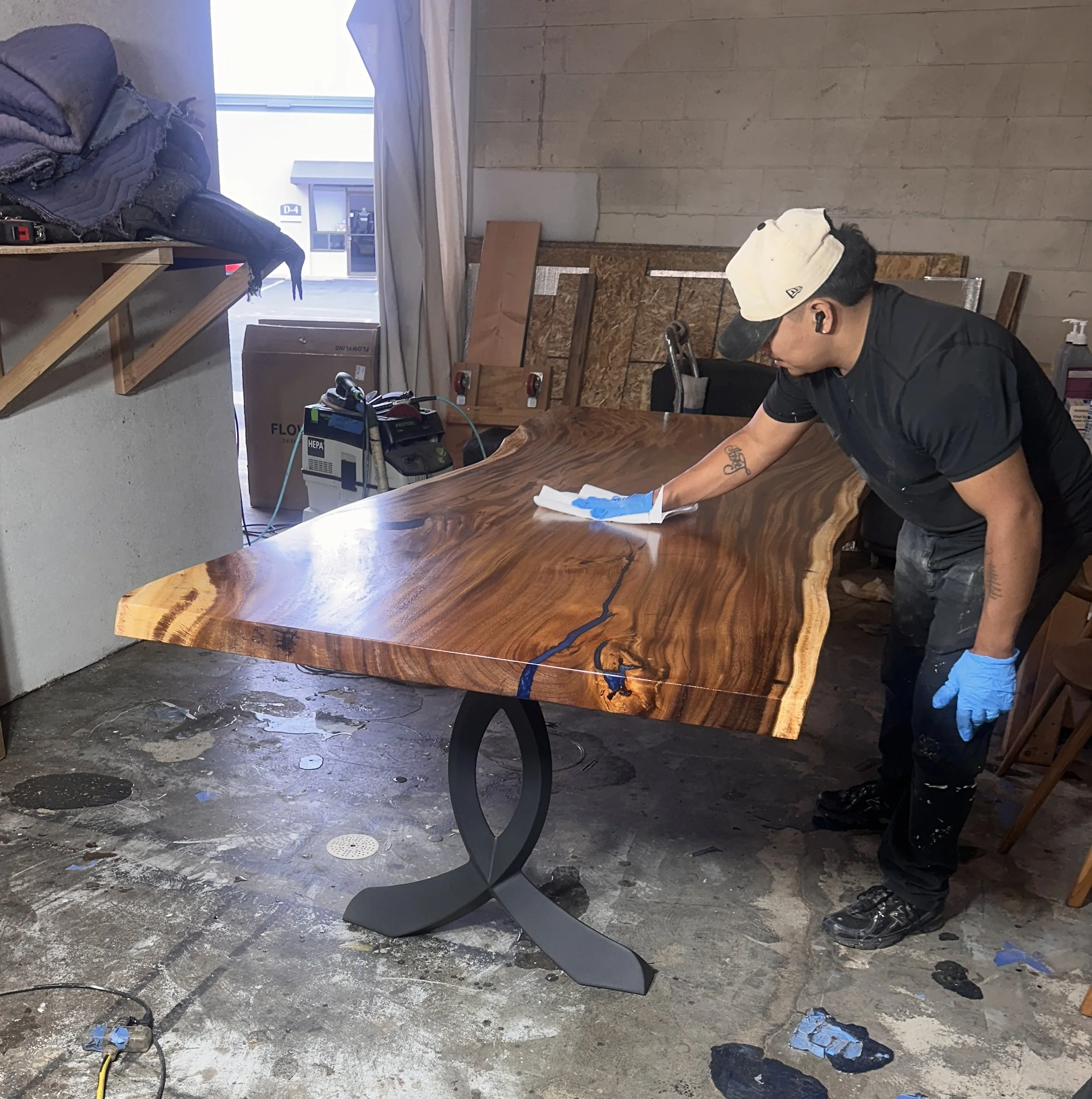
Why Some Live Edge Tables Crack or Warp
Seeing a small natural check in solid wood doesn't automatically mean something is wrong. Natural movement is part of owning real wood furniture.
Significant warping, twisting, separation, or structural cracking, however, can sometimes point to problems earlier in the process.
Potential causes can include wood that wasn't adequately dried or stabilized, improper moisture conditions, rushed production, insufficient structural preparation, dramatic environmental changes, or a construction method that didn't account for the natural movement of the slab.
This is why shopping for a live edge table based only on appearance or price can be misleading.
The most important questions are often about the process behind it.
What Should You Ask Before Buying a Live Edge Table?
If you're investing in a custom live edge dining table, conference table, or statement piece, ask where the wood came from and how it was prepared.
Ask how long the slab was allowed to dry and stabilize.
Ask whether moisture and movement were evaluated before fabrication.
If resin is involved, ask how the pouring environment is controlled and what steps are taken to ensure the resin cures correctly.
Ask what type of finish is being used and why it was selected for your particular table.
And perhaps most importantly, ask who is actually building it.
Luxury furniture should have a story beyond its price tag.
A Table Should Become Part of Your Family's Story
We don't look at a slab and see something that needs to be made perfect.
We look at its grain, edges, spalting, knots, voids, color variations, and natural movement and ask how we can preserve what makes that particular piece extraordinary.
Sometimes that means leaving the slab almost entirely natural.
Sometimes resin allows us to preserve something that otherwise couldn't have become functional furniture.
Sometimes a base is designed specifically around the proportions and movement of one individual slab.
That's what makes custom furniture different.
There may never be another table exactly like yours.
And years from now, the marks of family dinners, holidays, celebrations, conversations, and everyday life become part of its history too.
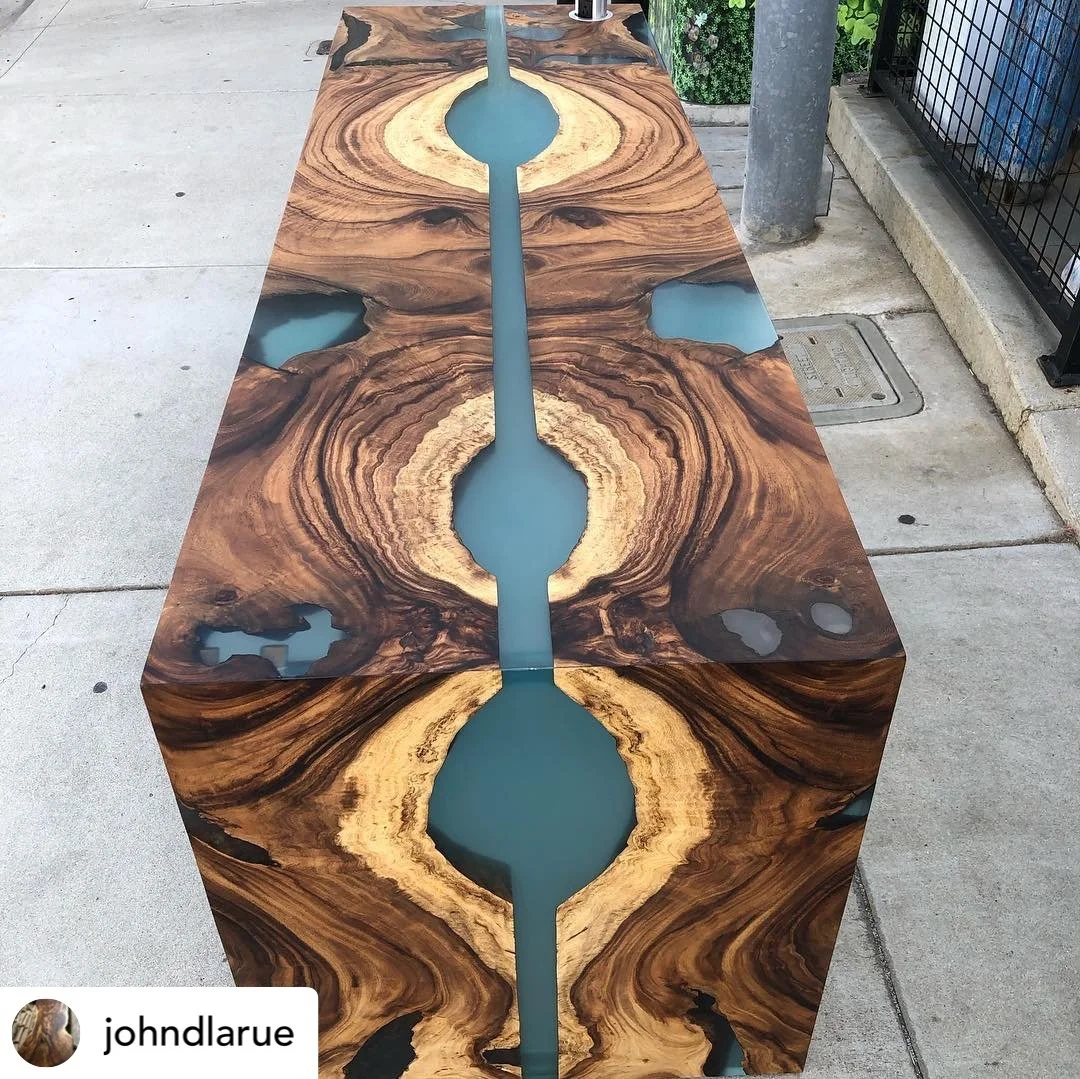
Custom Live Edge Tables in San Diego
Indigenous by La Rue designs and builds custom live edge tables and luxury wood furniture in San Diego for clients locally and throughout the country.
From selecting the slab to determining dimensions, resin, base design, and finish, each table is created around both the material and the home it will eventually live in.
Clients can explore our finished pieces in our La Jolla and Solana Beach showrooms or work with us to select a slab and create something completely custom.
Because the goal isn't simply to build a table that looks beautiful today.
It's to build one worth keeping.
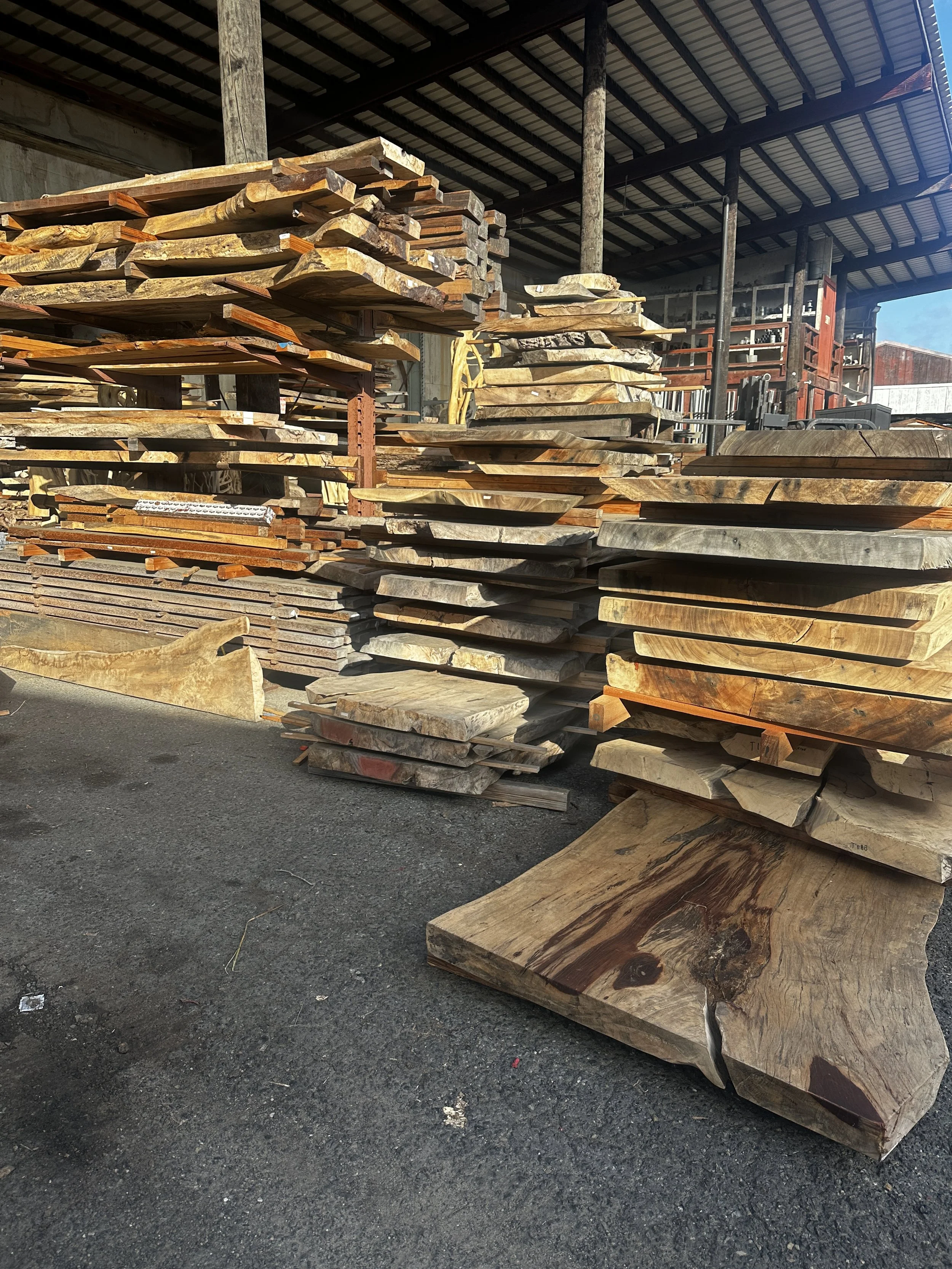
Why Properly Dried Wood Matters: The Secret to a Live Edge Table That Lasts
A beautiful live edge table starts long before sanding and finishing. Learn why properly drying and stabilizing a wood slab is essential to creating custom furniture designed to last for generations.
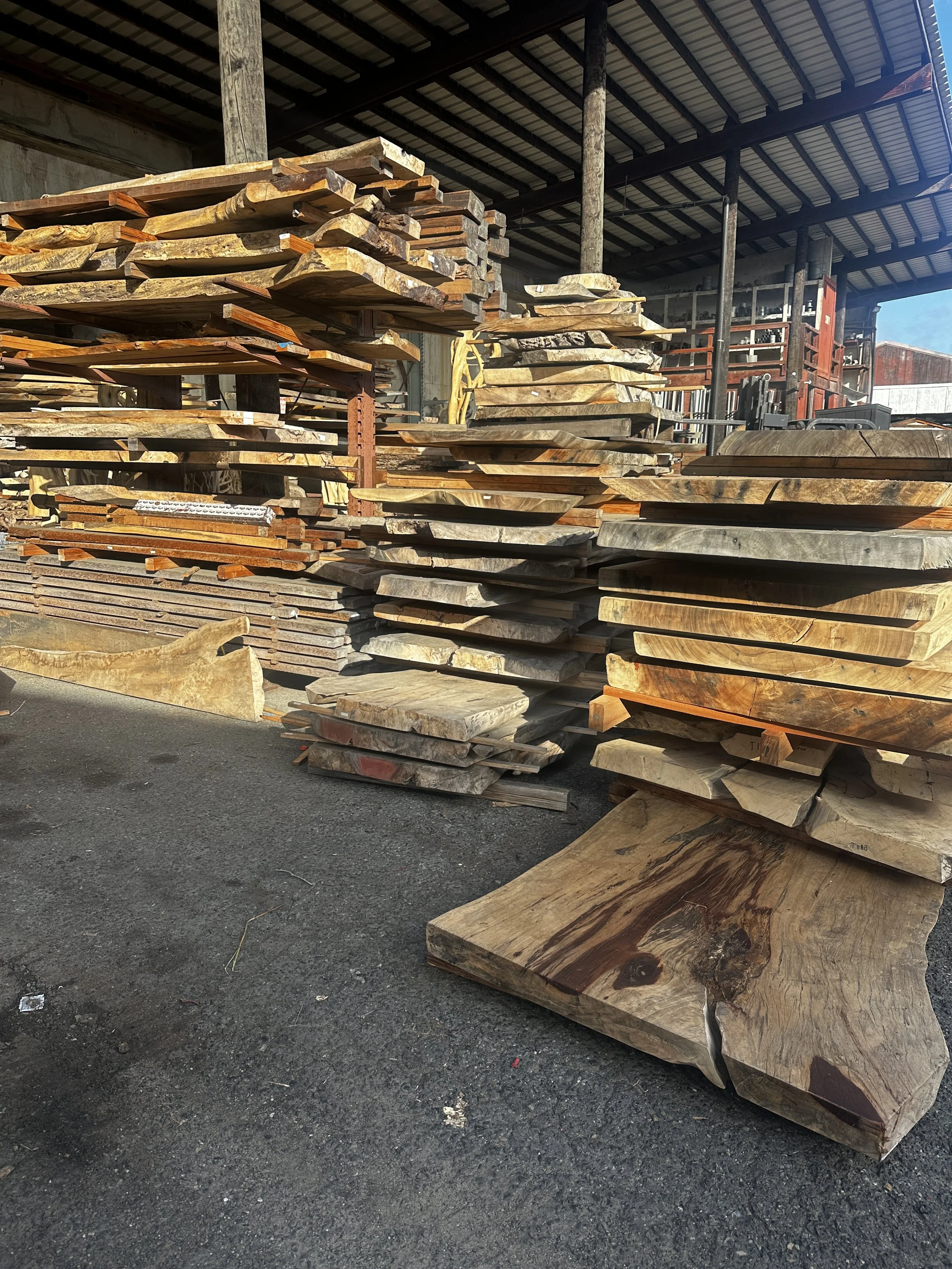
A beautiful slab of wood can catch your attention immediately. The grain, movement, natural edge and character may be exactly what you’ve been looking for.
But there is something you cannot see in a photograph that may be far more important to the life of your table:
How that wood was dried and stabilized before the table was ever built.
At Indigenous by La Rue, we believe the quality of a live edge table begins long before sanding, finishing or choosing a base. It begins with the slab itself—and giving that wood the time it needs.
Wood Is Always Responding to Its Environment
Even after a tree has been cut into slabs, wood continues to respond to moisture and changes in its environment.
A thick live edge slab can hold a tremendous amount of moisture. As that moisture leaves the wood, the slab can move, shrink, check, twist or develop cracks.
That doesn't mean something is wrong with natural wood. Movement is part of working with a natural material.
The goal of proper drying and stabilization is to allow as much of that movement as possible to occur before the slab becomes furniture, rather than after it enters your home.
And that takes time.
Why We Don't Rush Our Slabs
At Indigenous by La Rue, our slabs are allowed to dry for a minimum of approximately a year and a half, while many of our slabs are given three to five years to dry and stabilize before becoming finished furniture.
There is a reason we're willing to wait.
When you are creating a piece intended to last for generations, speed should never be more important than stability.
Wood needs time to adjust. Trying to force that process too quickly can create stresses within a slab, particularly with the large, thick pieces of wood we use for our dining and conference tables.
For us, patience isn't an inconvenience in the furniture-making process. This careful preparation is part of (how we build a live edge table) from raw slab to finished furniture.
It's part of the craftsmanship.
Kiln-Dried Doesn't Automatically Mean Ready
“Kiln-dried” sounds reassuring—and kiln drying can be an important part of preparing wood for furniture.
But those two words alone don't tell you the entire story.
The thickness and species of the slab, its starting moisture level, how it was dried, and what happened to the wood before and after the kiln all matter.
A massive live edge slab isn't the same thing as a thin piece of lumber.
That is why we look at drying as a process of stabilization, rather than simply a box that needs to be checked.
What Can Happen When a Slab Is Rushed?
If too much moisture remains within a slab when furniture is built, the wood may continue changing significantly afterward.
That can contribute to problems such as cracking, excessive checking, cupping, twisting, warping or movement that affects the overall structure of the table.
Some natural movement should always be expected with real wood. In fact, many of the characteristics people love most about live edge furniture come from the fact that it is a natural material rather than something manufactured to be perfectly uniform.
But there is an important difference between natural character and preventable instability.
That distinction is one of the things an experienced furniture maker learns to recognize.
San Diego Makes Wood Stability Especially Interesting
Here in San Diego, a table can ultimately live in very different environments.
We create furniture for coastal homes in areas such as La Jolla and Solana Beach, where humidity and ocean air can influence the environment, as well as homes farther inland where conditions can be considerably warmer and drier.
And because we ship our furniture throughout the country, a slab may eventually live in an environment completely different from where it began.
That makes proper preparation even more important.
A custom table should be built with an understanding that wood will continue interacting with its environment throughout its life.
Drying Is Only the Beginning
Properly preparing a slab doesn't end when the drying process is complete.
Before a piece becomes one of our finished tables, we evaluate the individual slab and determine what it needs.
From slab preparation and sanding to filling, resin work when appropriate, base design and professional finishing, every step affects the finished piece.
Our finishes are primarily zero-VOC, with the remainder of our finishing products and resins selected as low-VOC options. When we create resin pieces, our resin pouring rooms are temperature- and humidity-controlled to help create the conditions necessary for proper adhesion and a high-quality pour.
Because quality isn't one step.
It is the accumulation of dozens of decisions that most people will never see.
The Parts You Can't See Often Matter Most
When you're comparing two live edge tables online, they may both look beautiful in photographs.
One may even cost considerably less.
But a photograph cannot tell you how long the slab was allowed to stabilize. It cannot show you how carefully moisture was managed, how the wood was prepared beneath the finish or whether shortcuts were taken during construction.
Those invisible decisions often determine how a piece performs years from now.
That is why we encourage people shopping for a custom live edge table to ask questions—not only about the species of wood and the dimensions, but about how the slab was prepared before the furniture-making process began.
We Build Furniture for the Life It Will Have
When we select a slab, we don't simply see a tabletop.
We think about the home it will live in, the people who will gather around it and how that piece will change over time.
A dining table may become the place where your family celebrates birthdays, shares holidays, works, talks, laughs and eventually gathers with another generation.
That is a very different philosophy from building something simply to look beautiful on the day it leaves the workshop.
At Indigenous by La Rue, our goal is to create custom furniture worthy of becoming part of a home for generations.
And sometimes, one of the most important ingredients in creating that kind of furniture is also the simplest:
time. Explore our custom dining tables or work with us to create a piece specifically for your home.
How to Tell if a Live Edge Table Is High Quality: 10 Things to Look For Before You Buy
Not all live edge tables are created equal. Learn what to look for before you buy—from proper kiln drying and slab stabilization to precision flattening, resin pouring, professional finishes, and the craftsmanship that separates a beautiful table from one truly built to last.
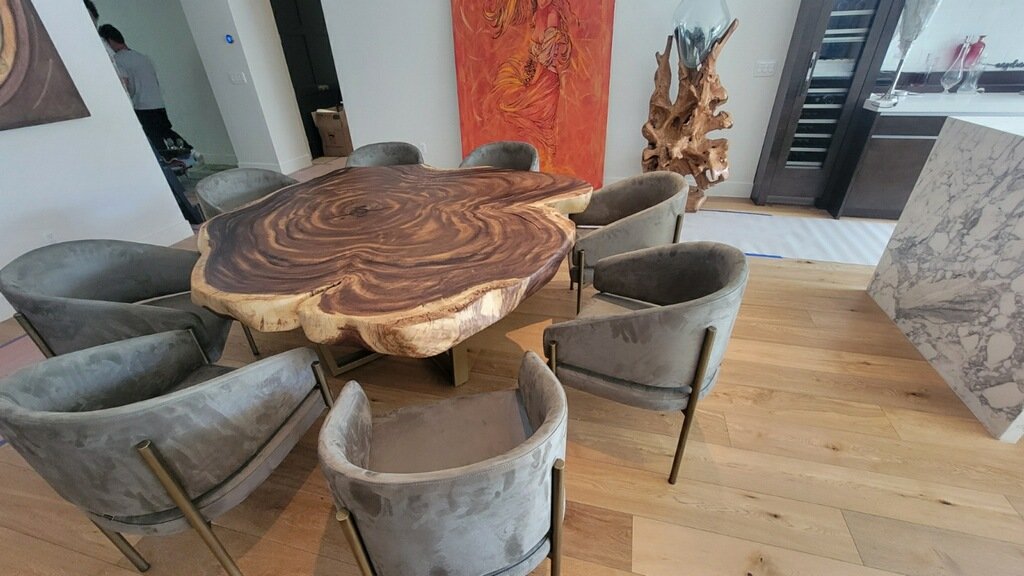
Not all live edge tables are created equally.
Two tables can look remarkably similar in a photograph and be completely different in how the wood was dried, prepared, flattened, filled, finished, and ultimately built.
When you're investing in a custom live edge dining table, it's natural to focus first on what you can see. Do you love the grain? Is it the right size? Does the base work with your home? Do you want natural wood or resin?
Those things matter.
But after years of working with natural slabs, I've learned that some of the most important indicators of quality are the things you can't see in the finished photograph.
Before you invest in a live edge table, these are 10 things I believe every buyer should look for—and questions worth asking the person who made it.
1. Ask How Long the Wood Was Allowed to Dry
This would be one of my first questions.
Wood is a natural material, and even after a tree is cut, the slab still contains moisture. As that moisture leaves, the wood can continue to move.
Trying to dry a large hardwood slab too aggressively can contribute to unwanted movement, including warping, checking, splitting, or twisting.
That's why we believe time matters.
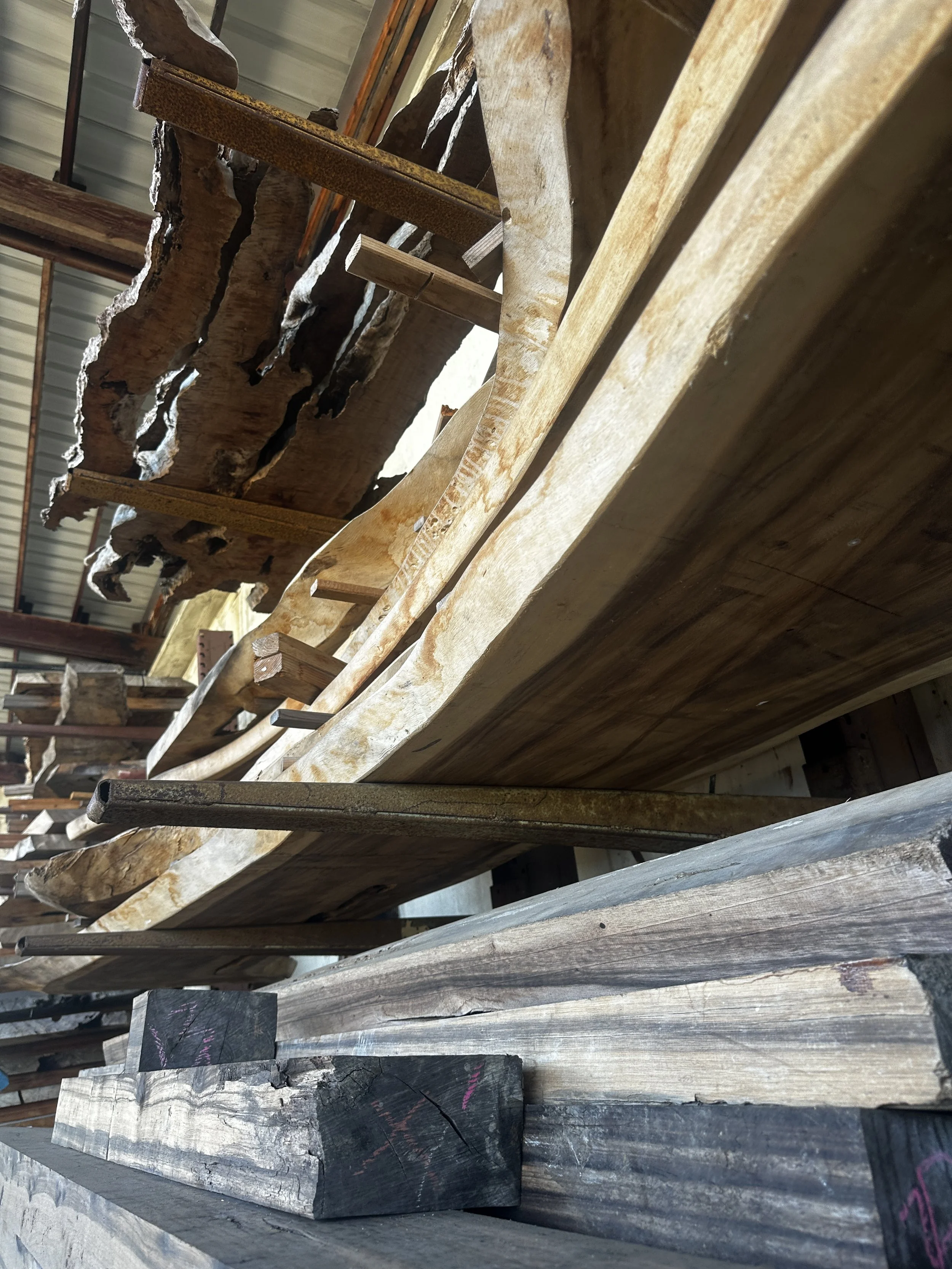
At Indigenous by La Rue, our slabs are allowed to dry for a minimum of approximately a year and a half. For most of our slabs, the process is considerably longer—typically three to five years of drying and stabilization before they go into production. You can see more about how we build our live edge tables from raw slab to finished furniture.
We slowly dry and prepare the wood rather than trying to rush a newly cut slab straight into a kiln.
When you're shopping for a live edge table, ask:
How long has this particular slab actually been drying?
2. Ask About the Kiln-Drying Process
Hearing that a slab is "kiln dried" is a good start.
But I would ask what that actually means.
At Indigenous by La Rue, our slabs are gradually prepared for their final kiln cycle. Once they're ready, they typically undergo a final kiln-drying cycle of approximately three to four months before production.
Why don't we simply put a freshly cut slab into a kiln and dry it as quickly as possible?
Because we're working with massive pieces of natural hardwood. We want to slowly prepare and stabilize that material rather than subject it to a sudden drying process that could contribute to unwanted movement or splitting.
For us, kiln drying isn't about making the wood ready to sell as quickly as possible.
It's about preparing it for its next life as furniture. Clients can select their own live edge wood slab from our available inventory.
3. Find Out Whether the Wood Was Sanitized
This is something many furniture buyers never think to ask.
A live edge slab came from a tree, and trees live outdoors. Natural wood can potentially contain insects or larvae.
Our kiln process therefore serves another important purpose: sanitation to eliminate wood-eating insects that may be within the slab.
And our process doesn't end after that first sanitation.
If a fully prepared slab isn't immediately selected for a project, it goes into our ready stack, where clients can choose from wood that has already gone through our drying process.
While it waits, every year it returns to the kiln for approximately one week for another sanitation cycle.
By the time one of our clients selects a slab, that piece of wood may have already spent three, four, or five years being dried, stabilized, maintained, and prepared.
So before bringing a natural slab into your home, I think it's perfectly reasonable to ask:
How was this wood sanitized?
4. Make Sure the Table Is Actually Flat
This sounds obvious.
It's a table. Of course it should be flat.
But a large natural slab doesn't begin as a precision-flat surface. It has to be made that way.
At Indigenous by La Rue, we use our 26-foot-long by 6-foot-wide planer to machine-plane our slabs flat on both sides.
You may hear furniture makers emphasize that their slabs are hand planed. Hand craftsmanship absolutely has an important place in furniture making, but when we're establishing the geometry of an enormous tabletop, our standards require precision.
A variation approaching 3/4 of an inch isn't acceptable by our standards.
Why am I so particular about this?
Because eventually someone needs to eat dinner on it.
No one wants a wobbling plate, glass, cup, or saucer.
A dining table isn't only a piece of art. It needs to function beautifully too.
5. Look at How Cracks, Knots & Natural Voids Were Handled
Cracks, knots, spalting, voids, and irregular natural edges don't automatically mean there's something wrong with a slab.
In fact, they can be some of the reasons we choose one slab over another.
The important question is how those characteristics were handled.
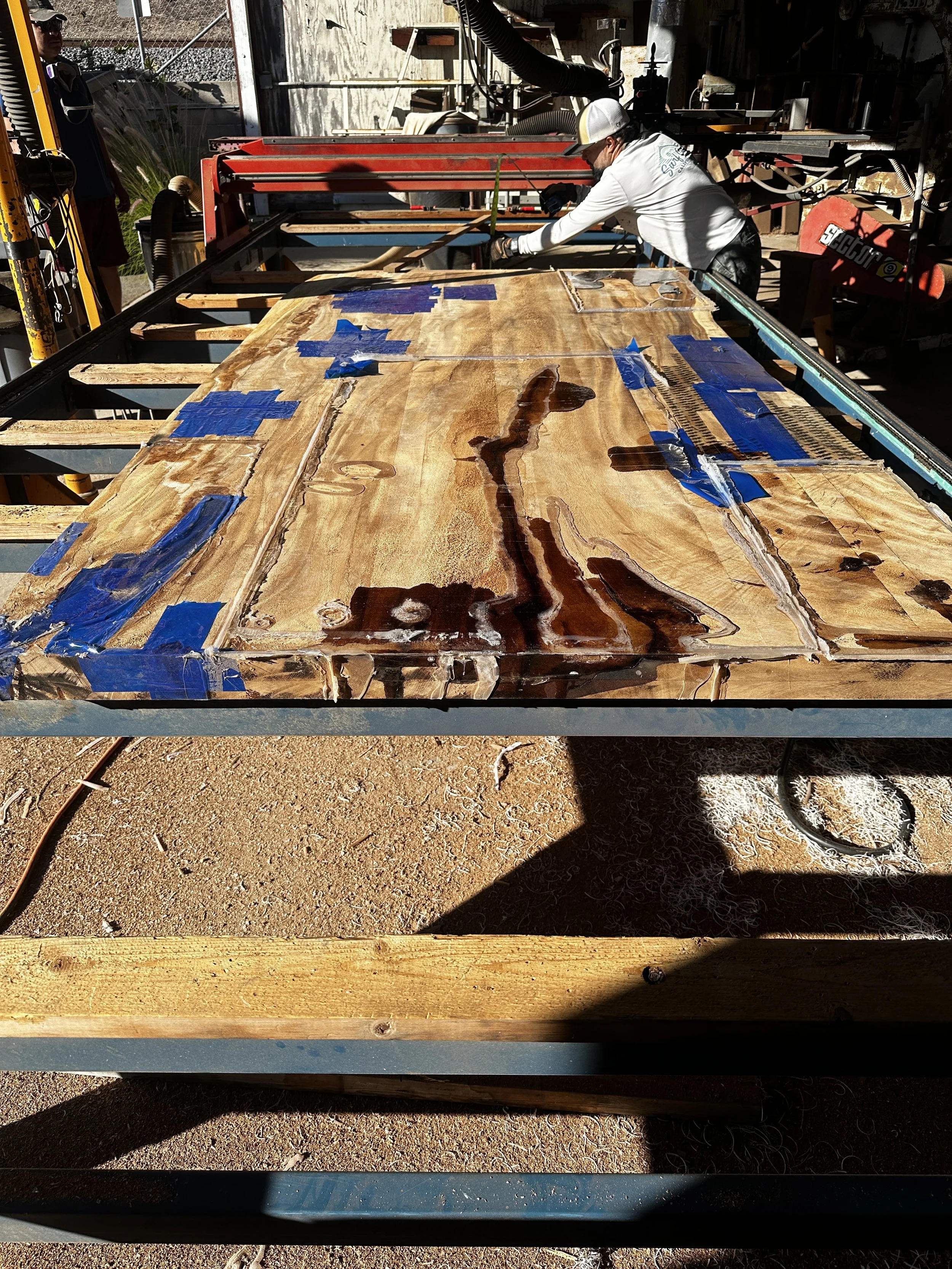
Once our wood is flattened, we evaluate the individual slab and determine what needs stabilization and what should remain part of its natural character.
Smaller cracks and voids can be carefully filled by hand.
Larger openings or dramatic natural edges may make a slab appropriate for resin.
The goal isn't to erase every indication that this material came from a tree.
I don't want our wood to look manufactured.
I want to preserve what made us fall in love with the slab while transforming it into functional furniture.
6. If It Has Resin, Ask How the Resin Was Mixed and Poured
This is a big one.
A beautiful resin table depends on much more than choosing the right resin color.
The resin-to-hardener ratio, temperature, humidity, pouring conditions, and curing time all matter.
Resin systems require the components to be measured according to the manufacturer's specified ratio.
This isn't a place for guessing.
If the resin and hardener aren't measured in the proper proportions, the material may not cure as intended. Depending on the system and error involved, improperly cured resin can remain soft, tacky, overly flexible, or fail to maintain the hardness and form expected of the finished table.
And that's something you may not recognize from a photograph taken immediately after a table was made.
At Indigenous by La Rue, we carefully measure our resin systems according to their required ratios.
We also have temperature- and humidity-controlled resin pouring rooms.
Why?
Because the environment surrounding the pour matters.
Controlling those conditions gives us a more consistent environment during pouring and curing and helps us achieve the quality of adhesion and pour we're looking for between the resin and wood.
Depending on the resin system and amount being poured, curing can take approximately one day to a week.
We give it the time it requires.
After curing, excess resin is removed. Depending on the project, we may sand it down or flatten the tabletop again so the resin and hardwood return to the same precise plane.
If you're considering a resin table, ask the maker:
How do you measure your resin and hardener?
Do you follow the manufacturer's required ratio?
Are temperature and humidity controlled during pouring?
How long is the resin allowed to cure?
Those questions tell you much more about a resin table than simply asking what color it is.
7. Run Your Hand Across the Table
Photographs can hide a lot.
Your hands don't.
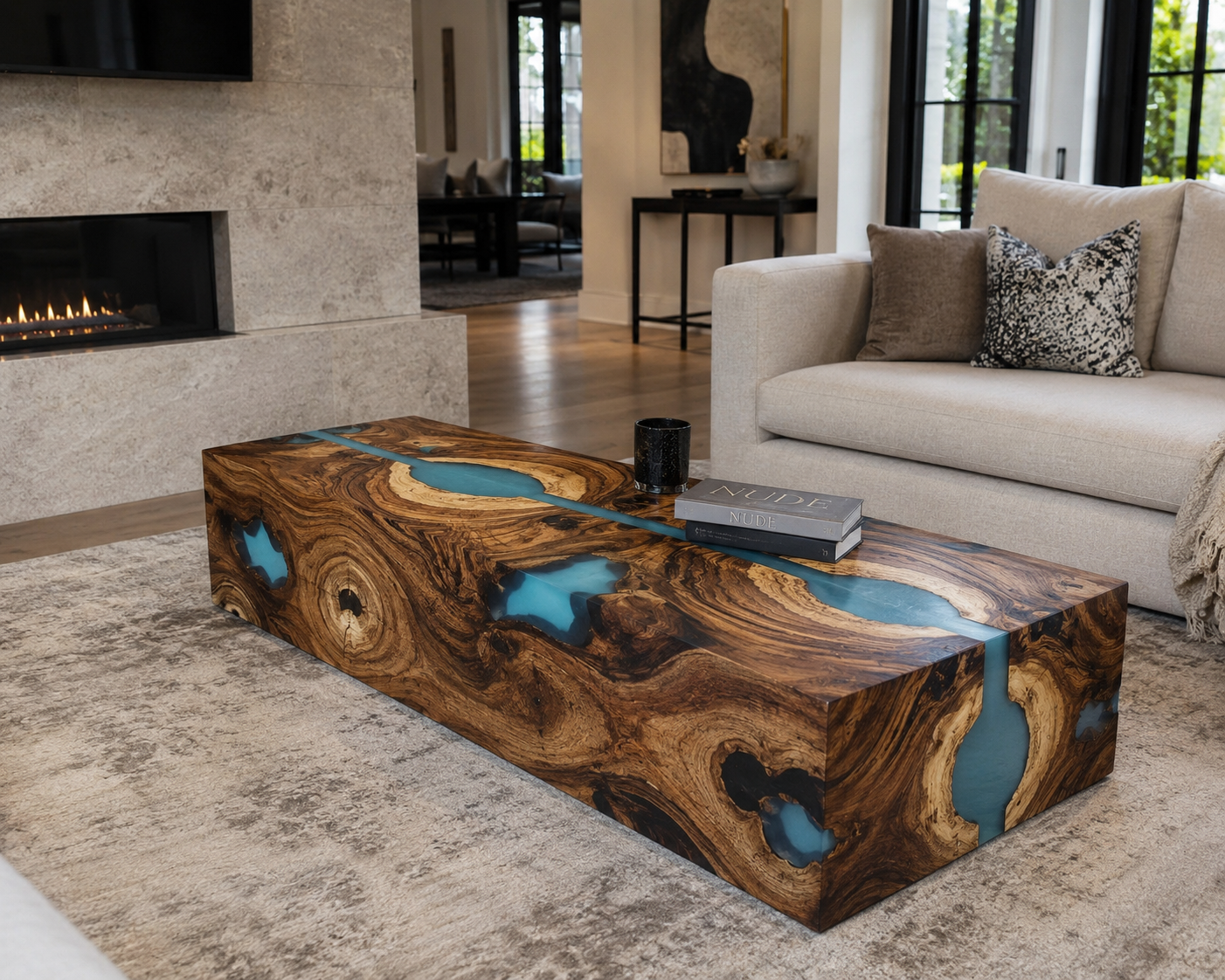
If you have the opportunity to see a live edge table in person, touch it.
Run your hand across the wood.
Feel the live edge.
Feel where the wood transitions into resin.
Look across the tabletop as light moves over the surface.
Flattening establishes the geometry of our tables, but progressive sanding creates the refinement.
A beautifully made table shouldn't become less impressive when you get closer.
I believe it should become more impressive. See more of our custom resin tables and available designs.
8. Ask What Finish Was Used
The finish is one of the most overlooked parts of a dining table.
It's also the part your family actually lives with.
Hands touch it.
Plates and glasses sit on it.
Food is served over it.
Spills happen.
The table gets cleaned.
Sunlight reaches it.
That's why we're particular about the finishing products we use.
At Indigenous by La Rue, most of our finishes are zero-VOC, while the remaining finishes—as well as our resin systems—are low-VOC.
We choose high-quality professional finishing products with both performance and the materials being used in the process in mind.
But being zero- or low-VOC isn't enough by itself.
A finish still has to perform.
It needs to protect the wood while allowing the grain, coloration, figuring, spalting, and natural character of the slab to remain the focus.
Our goal isn't to build a table that looks fantastic only on delivery day.
We're building it for everything that happens after delivery.
9. Look Underneath the Table
Yes, really.
Get underneath it.
The tabletop gets all the attention, but the base is part of both the design and engineering of the table.
Large hardwood and resin slabs can be extremely heavy.
The base needs to provide appropriate support while remaining proportional to the top.
Placement matters too.
Can chairs sit comfortably around it?
Will guests hit their knees against the base?
Does the table feel stable?
Does the base look as though it was designed for that particular slab?
A spectacular piece of wood sitting on an inadequate base doesn't make a spectacular table.
The base should feel like part of the design from the beginning—not something selected as an afterthought.
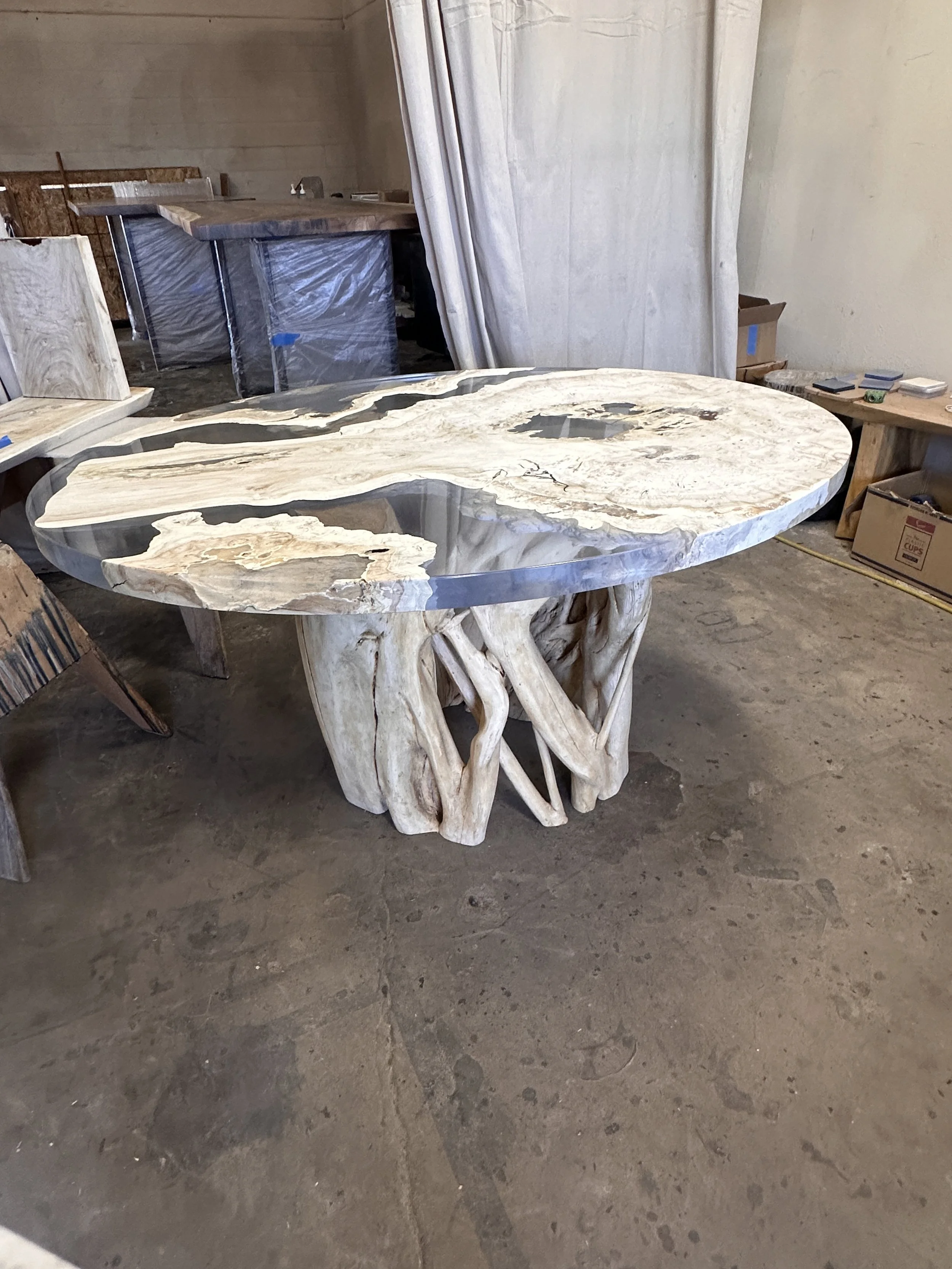
10. Ask Who Actually Made the Table
This may be the most revealing question of all.
Who dried the slab?
Who kiln-dried and sanitized it?
Who flattened it?
Who performed the resin work?
Who sanded and finished it?
Who designed the base?
And if you ever have a question after purchasing it, who stands behind the finished piece?
At Indigenous by La Rue, the final stages of our furniture are completed at our San Marcos workshop in San Diego County.
This is where years of preparation finally come together—the slab, flattening, filling, resin, sanding, finishing, base, and final details.
Knowing who is responsible for those steps helps distinguish a genuinely custom piece of furniture from something that simply looks custom online. Our custom furniture in San Diego is created around the individual slab, space, and client.
Don't Compare Live Edge Tables on Price Alone
Of course price matters.
But if you're comparing two live edge tables, make sure you're actually comparing the same thing.
One slab may have spent years drying and stabilizing before undergoing months of final kiln preparation.
Another may not have.
One may receive continuing sanitation while waiting to be selected.
One tabletop may have been precision-flattened using specialized large-format equipment.
One resin system may have been precisely measured and poured in a temperature- and humidity-controlled environment.
One piece may have undergone extensive sanding and been protected with professional-quality finishing products.
You can't necessarily see those differences in an Instagram photo.
Some of the things that determine the quality of a live edge table happened years before you ever saw the finished piece.
What Makes a Live Edge Table Worth the Investment?
For me, it comes down to three things:
The wood. The craftsmanship. And the story.
The wood should be extraordinary enough that you want to live with it.
The craftsmanship should respect the material and properly prepare it for life as furniture.
And the finished piece should feel personal enough that you can't imagine replacing it when the next furniture trend arrives.
A truly custom table isn't something I believe you should buy simply because live edge furniture happens to be popular.
You should choose it because that particular piece of wood belongs in your home.
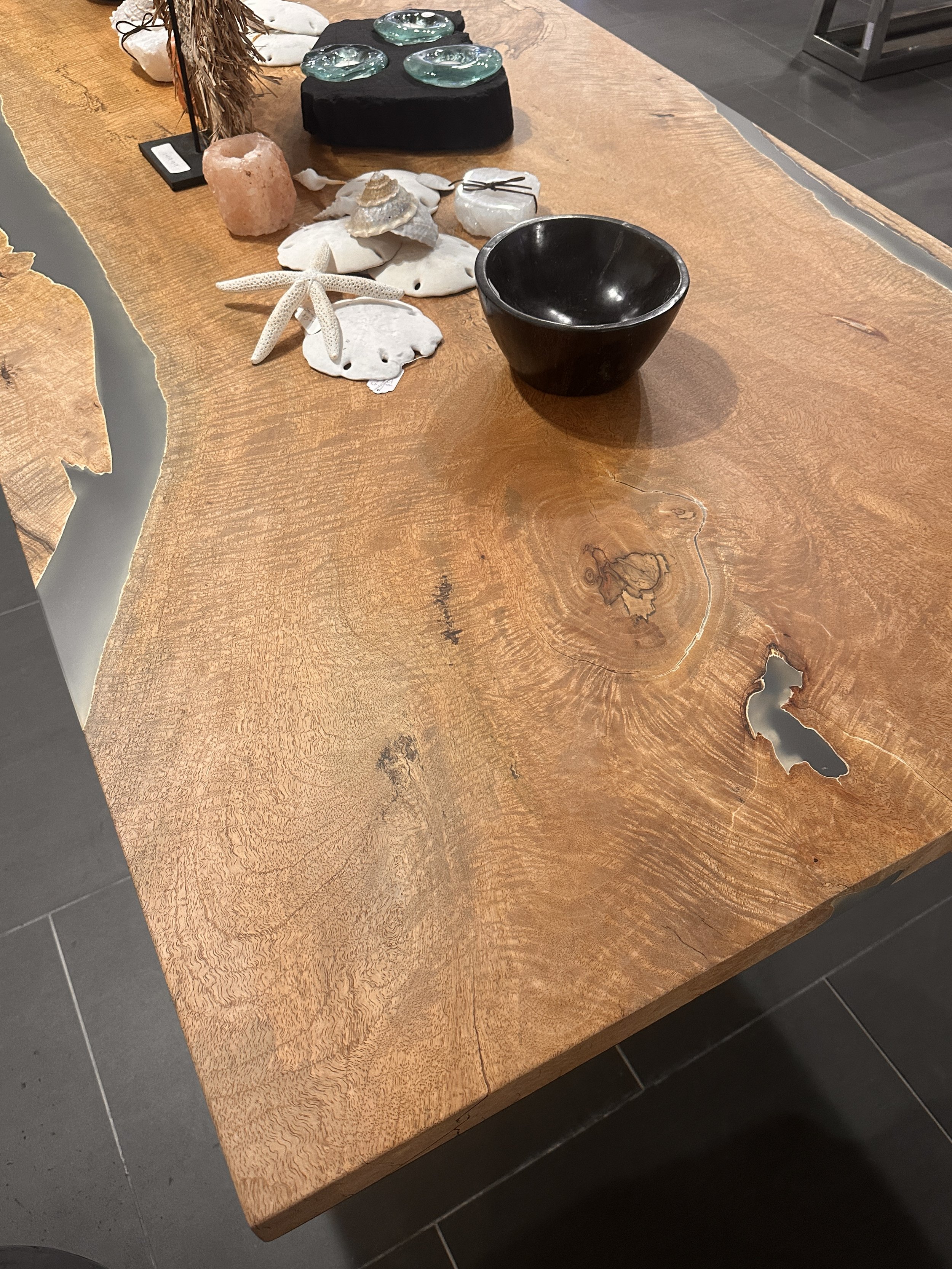
Buying a Custom Live Edge Table in San Diego
Indigenous by La Rue creates custom live edge dining tables, resin tables, conference tables, coffee tables, and one-of-a-kind furniture in San Diego County.
We work with clients throughout San Diego, La Jolla, Del Mar, Rancho Santa Fe, Solana Beach, Encinitas, Coronado, and throughout the United States.
Our clients can participate in selecting the actual slab that becomes their table and customize its dimensions, resin, base, and overall design around their home or project.
If you're shopping for a custom live edge table in San Diego, I encourage you to look beyond the finished photograph.
Look at the slabs.
Ask about the drying process.
Ask about the kiln.
Ask how the table was flattened.
Ask how the resin was measured and poured.
Ask what finishing products were used.
Ask who actually made it.
When you're investing in a piece of furniture intended to become part of your family's home for decades, you deserve to understand exactly how it was made.
Ready to Find Your Slab?
For me, this is still the most exciting part.
Every tree produces something different.
The grain, live edge, knots, spalting, figuring, coloration, and natural movement belong to that particular piece of wood.
Come see the slabs, learn about how they've been prepared, and find the one that speaks to you.
Then we'll build the table around it.
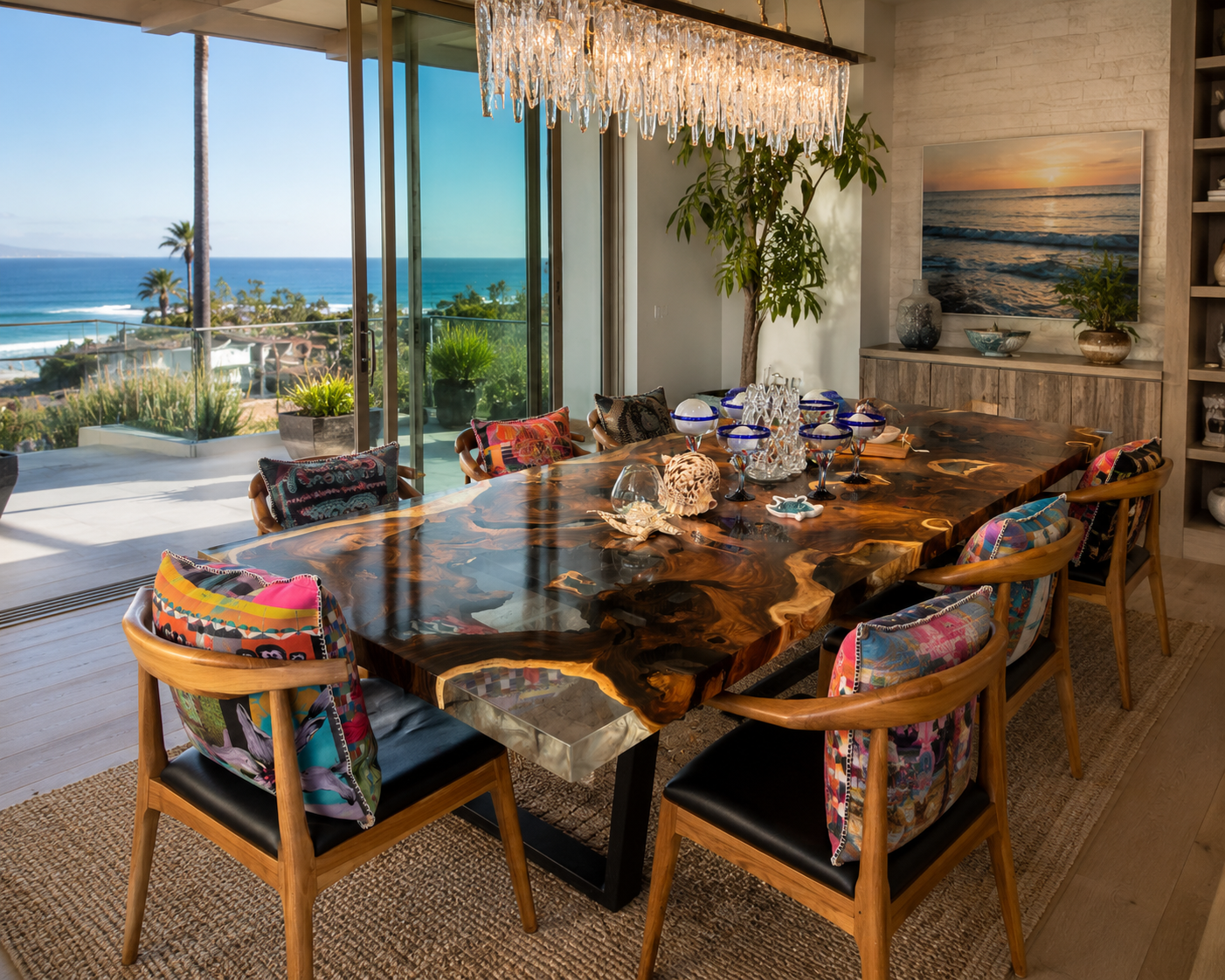
How We Build a Live Edge Table: From Raw Slab to Heirloom Furniture
Follow the journey of a custom live-edge table from carefully dried raw slab to heirloom furniture. Discover how Indigenous by La Rue selects, stabilizes, sanitizes, crafts, finishes and transforms exceptional wood into lasting custom tables in San Diego.
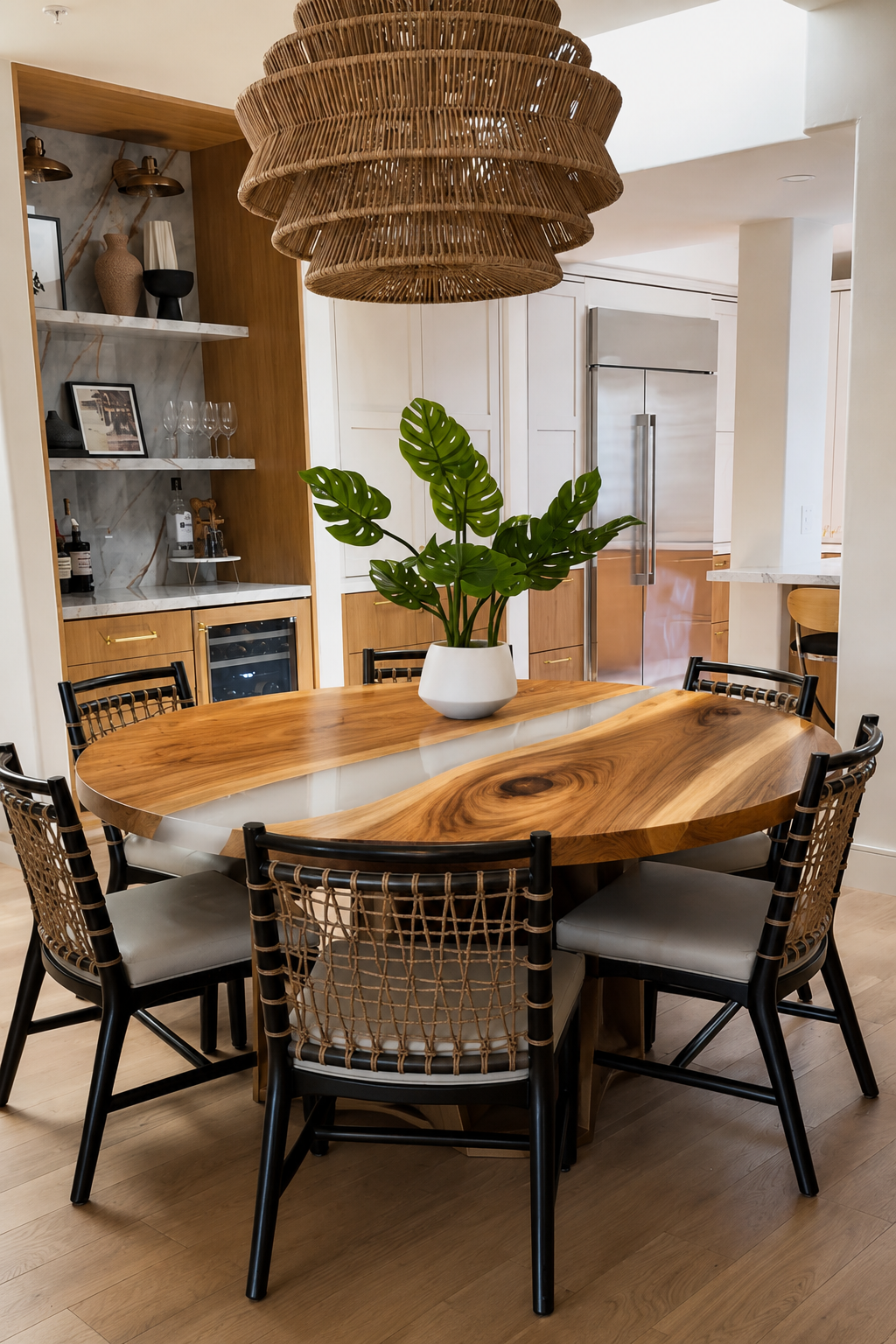
A beautiful slab of wood does not automatically make a beautiful—or well-made—table.
When most people shop for a custom live edge table, they naturally focus on what they can see: the grain, natural edge, color of the wood, resin, and base.
But some of the most important differences in a live edge table are found in the things you can't see once the table is finished.
How long was the slab allowed to dry?
Was the wood gradually stabilized before kiln drying?
Was it properly sanitized?
Is the tabletop actually flat?
Were cracks and voids properly prepared?
Was the resin poured under controlled conditions?
What type of finishing products were used?
At Indigenous by La Rue, our process can begin years before a client ever selects their slab.
For many of our pieces, transforming a tree into heirloom furniture is a slow process of drying, stabilizing, kiln cycling, sanitizing, precision flattening, filling or resin work, sanding, finishing, and final fabrication.
We don't believe that process should be rushed.
Here's how we do it.
Step 1: It Begins With Selecting an Exceptional Slab
Every Indigenous by La Rue table begins with the wood.
We work with distinctive hardwoods including walnut, acacia, monkey pod, tamarind, and other exceptional species, but species is only the beginning.
We look at the entire slab:
Grain • movement • coloration • live edges • knots • natural voids • figuring • spalting • width • length • thickness • overall character
We also consider what the wood could eventually become.
A spectacular slab for a coffee table isn't necessarily the right slab for a 12-foot dining table.
For a custom project, we consider the client's desired dimensions, seating requirements, architecture, design preferences, resin choices, and base before determining which slabs make sense.
That's why one of our favorite parts of the process is allowing clients to select the actual slab that will become their table.
But long before that selection happens, the wood has already begun one of the most important stages of its journey.
Step 2: We Give Our Slabs Time to Dry
Wood moves.
Even after a tree has been cut, the wood still contains moisture. As that moisture leaves, the slab can shrink and change.
Trying to move a large hardwood slab too quickly into an aggressive drying environment can increase the risk of warping, splitting, checking, and other unwanted movement.
So we give our wood time.
At Indigenous by La Rue, our slabs are allowed to dry for a minimum of approximately a year and a half.
For most of our slabs, however, the process is considerably longer.
Many spend approximately three to five years drying and stabilizing before they ever go into production.
During this period, we slowly dry and prepare the wood rather than attempting to force the process.
We are not trying to make a slab ready to sell as quickly as possible.
We are preparing it for its eventual life as furniture.
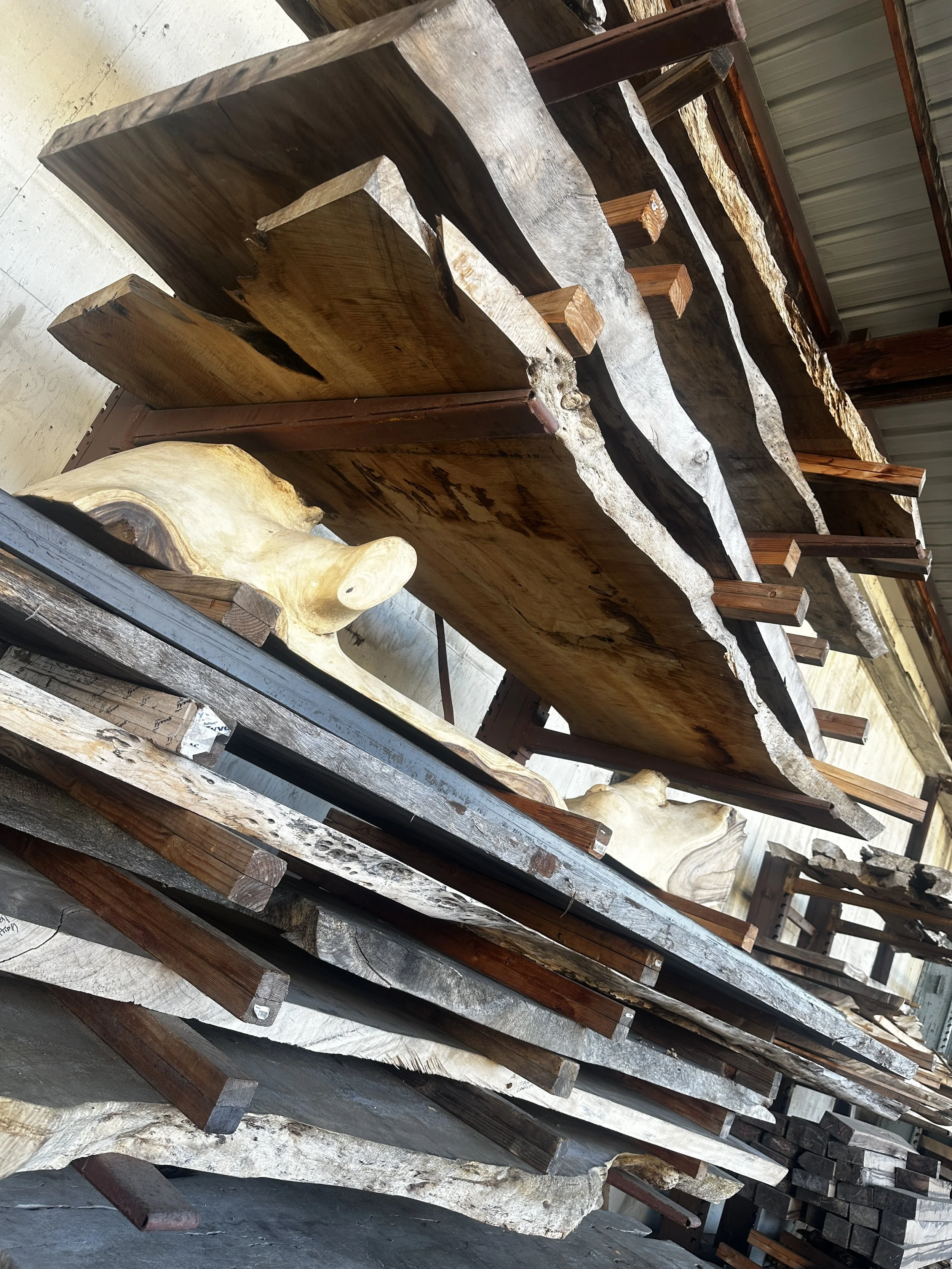
Step 3: We Gradually Prepare the Wood for Its Final Kiln Cycle
Kiln drying is important, but how the wood reaches the kiln matters too.
We don't want to take a large slab that has not been adequately prepared and suddenly subject it to an extreme change in environment.
Instead, our slabs are slowly dried and prepared for their final kiln cycle.
Once the wood has reached the appropriate stage, it goes through a final kiln-drying cycle that generally lasts approximately three to four months before production.
This allows us to continue reducing and stabilizing moisture under controlled conditions.
That final kiln cycle has another extremely important purpose.
Step 4: Kiln Drying Also Sanitizes the Wood
A live edge slab came from nature.
That is part of its beauty—but it also means insects or larvae can potentially exist within natural wood.
Our kiln process isn't only about moisture.
It also provides a sanitation cycle designed to eliminate wood-eating insects within the slab.
A homeowner may never think about this when looking at photographs of finished furniture.
We do.
Because when you're bringing a massive piece of natural hardwood into someone's home, what is happening inside that wood matters too.
Step 5: Our Ready Slabs Continue Receiving Annual Sanitation
Once a slab has completed our drying process, it doesn't necessarily become a table immediately.
If it hasn't been designated for a specific project, the slab goes into our ready stack, where clients can choose from wood that has already gone through our preparation process.
But even then, we're not finished maintaining it.
Every year, slabs remaining in our ready inventory go back into the kiln for approximately one week for another sanitation cycle.
Think about what that means when you walk through our slabs looking for your table.
The piece you select may have already spent three, four, or five years being dried, stabilized, maintained, and prepared before you ever laid eyes on it.
To us, that history is part of the furniture.
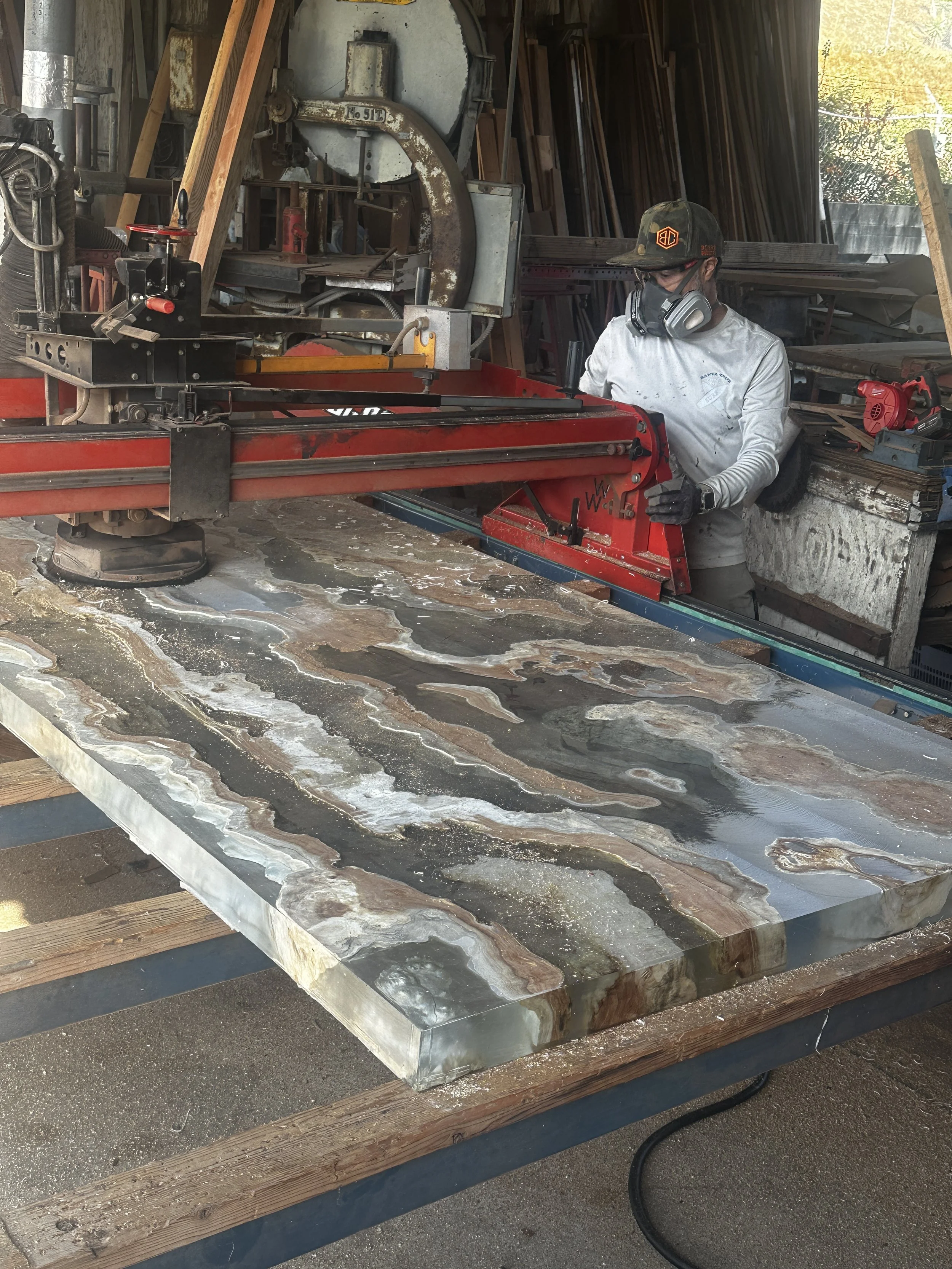
Step 6: Then Comes Precision Flattening
Once a slab has been selected for production, we need to create a truly functional tabletop.
This is one of the areas where our standards are particularly important.
At Indigenous by La Rue, we use a 26-foot-long by 6-foot-wide planer to machine-plane our slabs flat on both sides.
There are furniture makers who describe large slabs as being hand planed. Hand craftsmanship absolutely has an important place in furniture making, but for establishing the geometry of an enormous tabletop, our standard requires greater precision.
A variation approaching 3/4 of an inch is not acceptable by our standards.
Because ultimately, this isn't just a sculpture.
It's a table.
And no one wants a wobbling plate, glass, cup, or saucer.
Our large-format planer allows us to create a consistent, flat foundation across very large pieces of natural wood before we begin the detailed filling, resin, sanding, and finishing work.
The bigger the table, the more important that precision becomes.
Step 7: We Evaluate Every Crack, Void & Natural Characteristic
Once the slab is flat, we can determine exactly what it needs.
This is where live edge furniture is fundamentally different from standardized manufacturing.
Every slab presents a different set of characteristics.
There may be small cracks.
Natural voids.
Knots.
Spalting.
Irregular edges.
Openings within the wood.
Some characteristics need stabilization. Others deserve to remain prominent because they're precisely what makes that slab extraordinary.
Our objective is not to make nature perfectly uniform.
It is to refine and stabilize the wood without erasing the story of the tree.
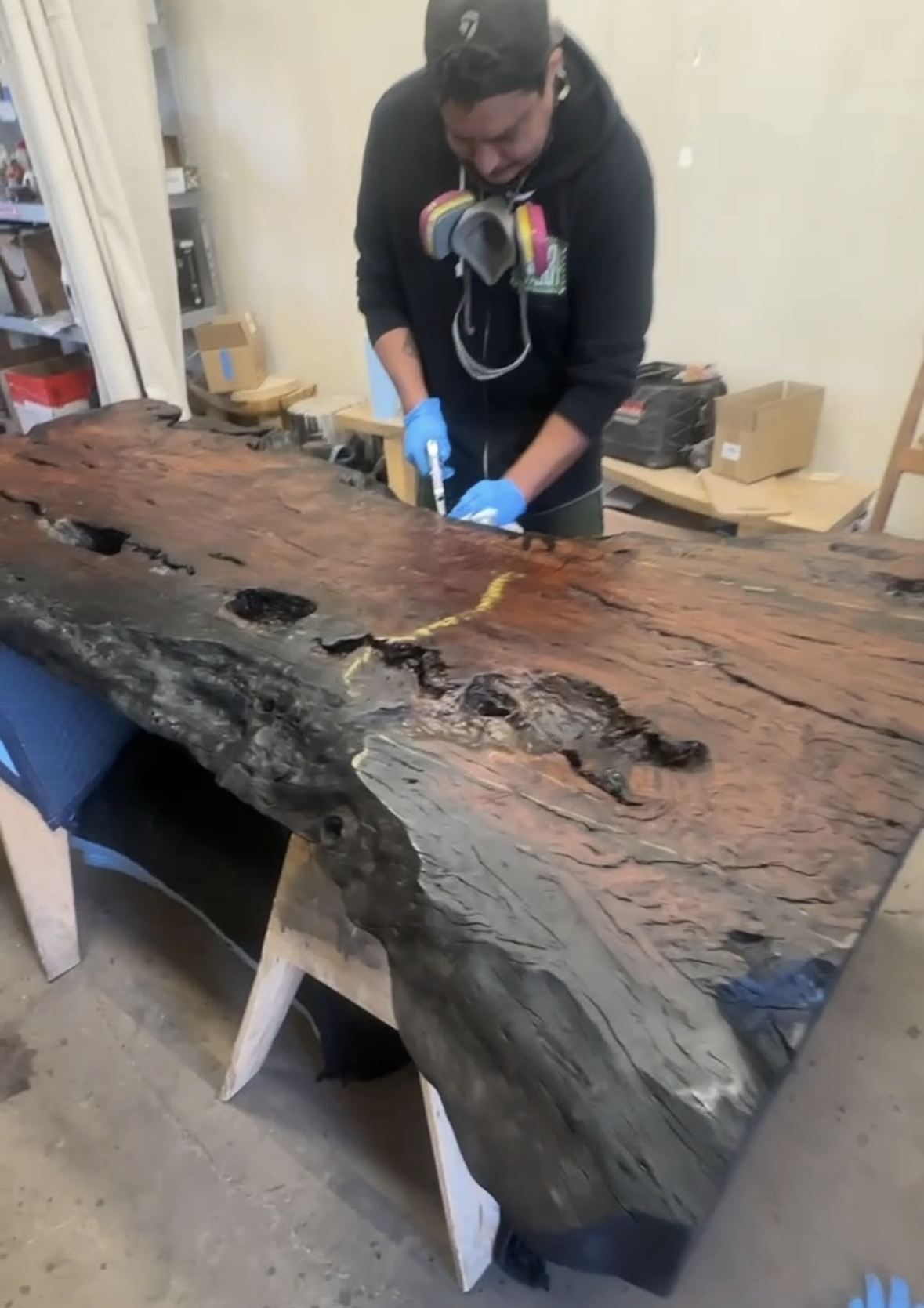
Step 8: Small Cracks Are Hand Filled
If a slab will remain predominantly natural wood, smaller cracks and voids can be carefully filled by hand.
This allows us to address individual areas while preserving the organic character surrounding them.
We don't believe every knot, line, void, or imperfection needs to disappear.
Some of the most interesting features in a finished live edge table are characteristics that would have been considered imperfections in mass-produced furniture.
In a one-of-a-kind slab, they become identity.
Step 9: Other Slabs Are Prepared for Resin
Some slabs call for a different approach.
Large natural openings, dramatic edges, or a client's specific design may lead us to prepare the slab for a resin mold.
Depending on the piece, we can incorporate clear, black, smoked, or other resin treatments.
Resin doesn't have to dominate the table.
One of our favorite uses is clear resin because it allows us to preserve extraordinary natural architecture within the wood.
Instead of cutting away a dramatic edge or filling a void with something visually heavy, clear resin can allow you to see the original form of the tree through a smooth, functional surface.
Resin can also make a table deeply personal.
Objects and mementos that represent a family's history can sometimes be incorporated into a design, transforming the table into something beyond furniture.
It can become a tribute to a person, place, memory, or family legacy.
That is when resin stops being a trend and becomes storytelling.
Step 10: Our Resin Rooms Are Temperature & Humidity Controlled
A quality resin pour isn't simply about selecting a good resin.
The environment matters.
At Indigenous by La Rue, our resin pouring rooms are temperature and humidity controlled.
Maintaining controlled conditions allows us to create a more consistent environment during the pour and curing process, supporting proper interaction and adhesion between the resin and wood and helping us achieve a higher-quality pour.
This becomes particularly important when working with large natural slabs, deep voids, and substantial amounts of resin.
Instead of allowing changing shop temperatures and humidity to dictate the conditions of the pour, we control the environment around it.
It's another step that completely disappears by the time you see the finished table.
But it matters to us.
Step 11: Resin Needs Time to Cure
Once resin has been poured, we wait.
Depending on the amount and type of resin used, curing can take anywhere from approximately one day to a week.
Again, our philosophy is not to rush the material simply to move the table into the next stage.
Once the resin has properly cured, the excess needs to be removed.
Depending on the project, we may sand away that excess or flatten the tabletop again, bringing the resin and hardwood back into the same precise plane.
Only then do we begin the progressively finer surface work.
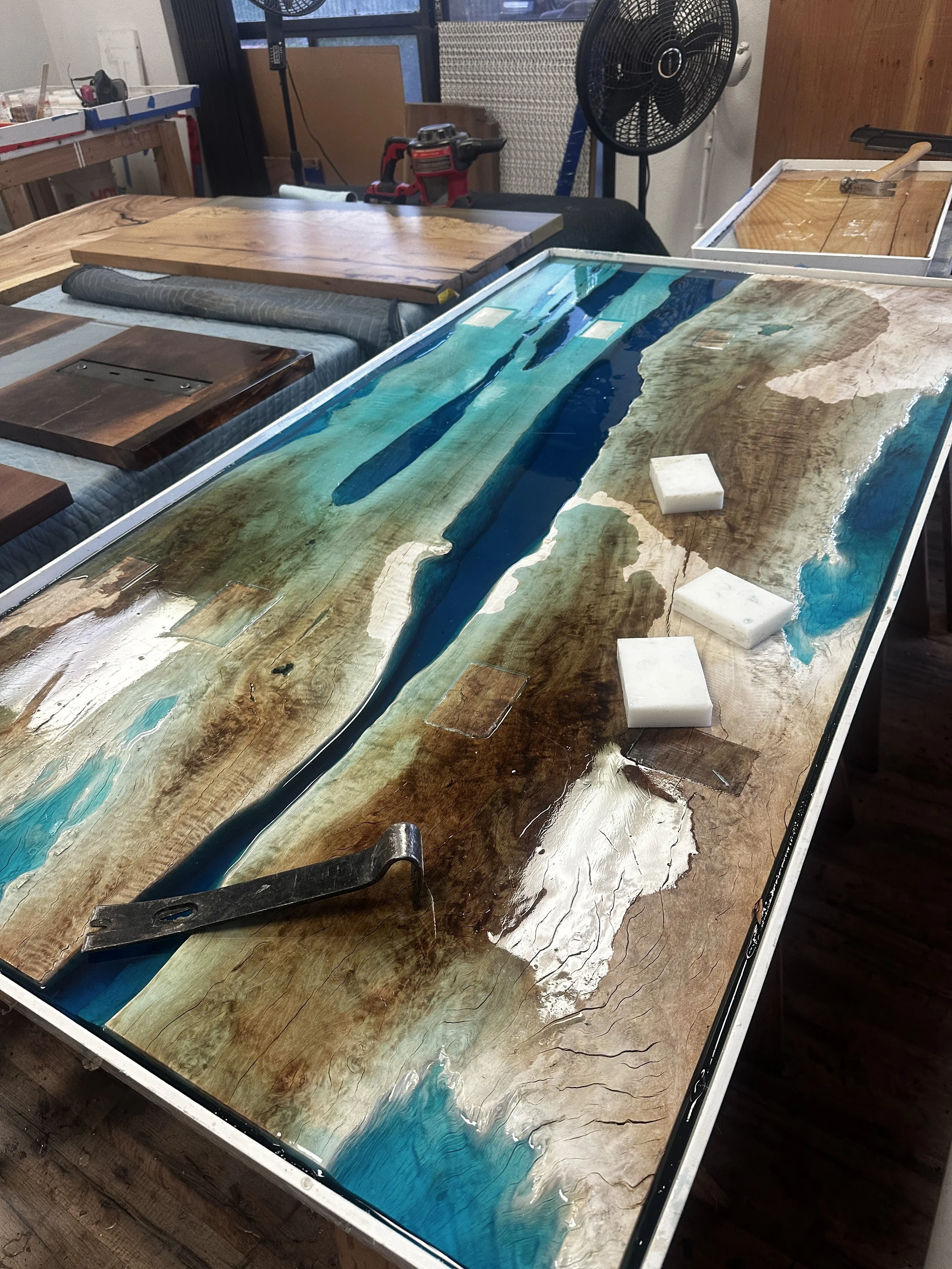
Step 12: Sanding Creates the Surface You Actually Feel
Flattening and sanding are not the same thing.
Our large-format planer establishes the geometry of the tabletop.
Sanding creates the refinement.
After machining, filling, and resin work, the table is progressively sanded to remove machining marks, refine the wood, smooth transitions, and prepare the entire surface for finishing.
This is particularly important where wood meets resin.
Run your hand across a finished table and those transitions should feel intentional.
Look across the surface as light moves over it and it should feel refined.
We believe a luxury table shouldn't only look impressive from across the room.
It should become even more impressive when you walk up and touch it.
Step 13: The Finish Has to Survive Real Life
The finish may be one of the least glamorous parts of discussing a custom table, but it is one of the most important.
Because the finish is the part your family actually lives with.
Hands touch it.
Dinner plates sit on it.
Glasses get set down.
Food is served.
Spills happen.
The table gets cleaned.
Sunlight reaches it.
Children grow up around it.
That surface needs to be considered for life beyond the showroom.
At Indigenous by La Rue, most of the finishes we use are zero-VOC, while the remaining finishes—as well as our resin systems—are low-VOC.
VOC stands for volatile organic compounds.
We choose high-quality professional finishing products with both performance and the materials used in the process in mind.
But a zero- or low-VOC designation alone isn't enough.
The finish still needs to perform.
It needs to protect the wood while allowing its natural grain, coloration, figuring, and character to remain the focus.
We don't choose a finishing product simply because it is inexpensive or quick to apply.
Our goal isn't to create a table that looks fantastic only on the day it's delivered.
We're building it for everything that happens after delivery.
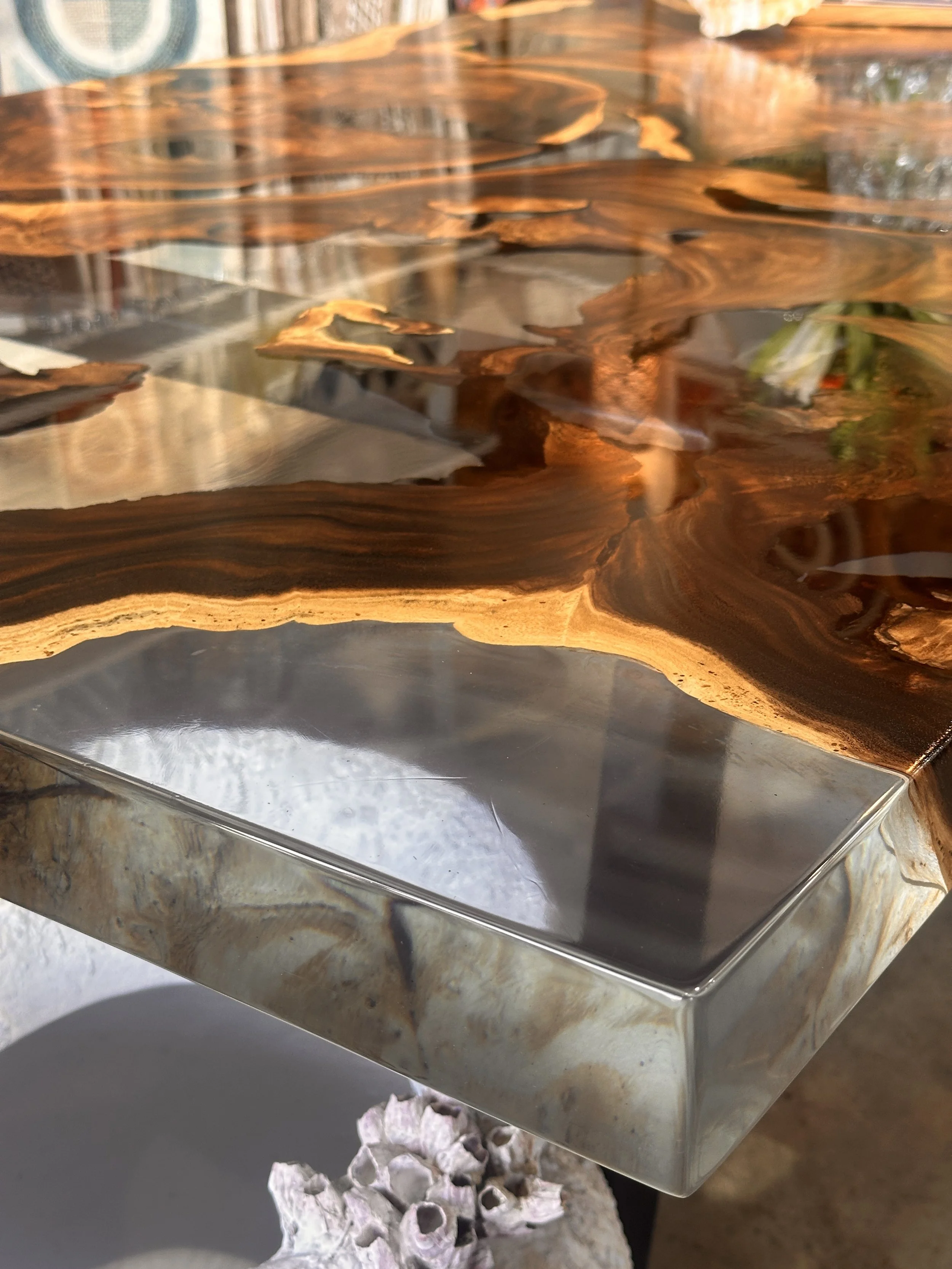
Step 14: The Base Is Engineered Around the Table
A table base has two jobs.
It needs to look right.
And it needs to work.
Large hardwood and resin tabletops can carry substantial weight. The base therefore needs to provide appropriate support while remaining proportional to the slab.
Placement matters as well.
An extraordinary base isn't very extraordinary if everyone sitting at the table keeps hitting it with their knees.
Depending on the project, we can incorporate metal, wood, pedestal, architectural, or sculptural bases.
The dimensions, weight, seating requirements, and overall design of the table all influence that decision.
The base should look as though it belongs to the table—not as though someone chose it afterward.
Step 15: Final Finishing Happens in Our San Marcos Workshop
Eventually, a slab that may have spent years in preparation reaches its final stages.
Our finishing work is completed at our San Marcos workshop in San Diego County.
This is where all of those individual decisions finally come together:
The slab.
The flattening.
The natural edges.
The fills.
The resin.
The sanding.
The finish.
The base.
The proportions.
The details.
Before the table leaves us, we examine the completed piece as furniture—not simply as a slab of beautiful wood.
Because once it reaches the client's home, it needs to do something much more important than photograph well.
It needs to live there.
What Should You Ask Before Buying a Live Edge Table?
If you are comparing custom live edge tables, don't judge them only by photographs or price.
Ask the maker about the process.
How long was the wood allowed to dry?
Was it gradually stabilized before kiln drying?
How long was the final kiln cycle?
Was the slab sanitized for wood-eating insects?
How was the tabletop flattened?
How are cracks and voids stabilized?
If resin is used, are temperature and humidity controlled during pouring?
What finishing products are used?
How is the base designed for the size and weight of the slab?
Those questions tell you far more about a piece of furniture than a photograph ever could.
Two live edge tables can look remarkably similar online when they're brand new.
The processes behind them can be completely different.
Why the Things You Can't See Matter So Much
By the time one of our tables reaches a client's dining room, most of our process has disappeared.
You cannot see the minimum year and a half of drying.
You cannot see the three to five years many of our slabs spend drying and stabilizing.
You cannot see the final three- to four-month kiln cycle.
You cannot see the annual sanitation cycle a slab receives while waiting in our ready inventory.
You cannot see it passing through our 26-foot-long by 6-foot-wide planer.
You cannot see the temperature and humidity being controlled while its resin cures.
You may never know from looking at the table that most of our finishes are zero-VOC and the remaining finishes and resin are low-VOC.
But all of those decisions are part of the finished piece.
That is why we don't believe you can accurately compare custom live edge furniture based solely on a picture and a price.
The quality of a table is determined as much by what happened before you saw it as by what you see when it arrives.
A Live Edge Table Should Outlast a Trend
We don't think of our tables as disposable décor.
The tree existed for decades—sometimes much longer—before the wood ever reached us.
Then the slab may spend several more years in our care before becoming furniture.
We believe that deserves respect.
Our job isn't to erase everything nature created and force the wood into a standardized shape.
It is to stabilize it, refine it, protect it, and turn it into something functional without losing the characteristics that made the slab extraordinary in the first place.
A truly custom dining table eventually becomes part of the history of a home.
Birthdays happen around it.
Holidays happen around it.
Children grow up around it.
Friends gather around it.
Stories are told around it.
Eventually, the table begins carrying memories that have nothing to do with the people who originally built it.
That is the difference between making furniture for a trend and building furniture with the intention of becoming an heirloom.
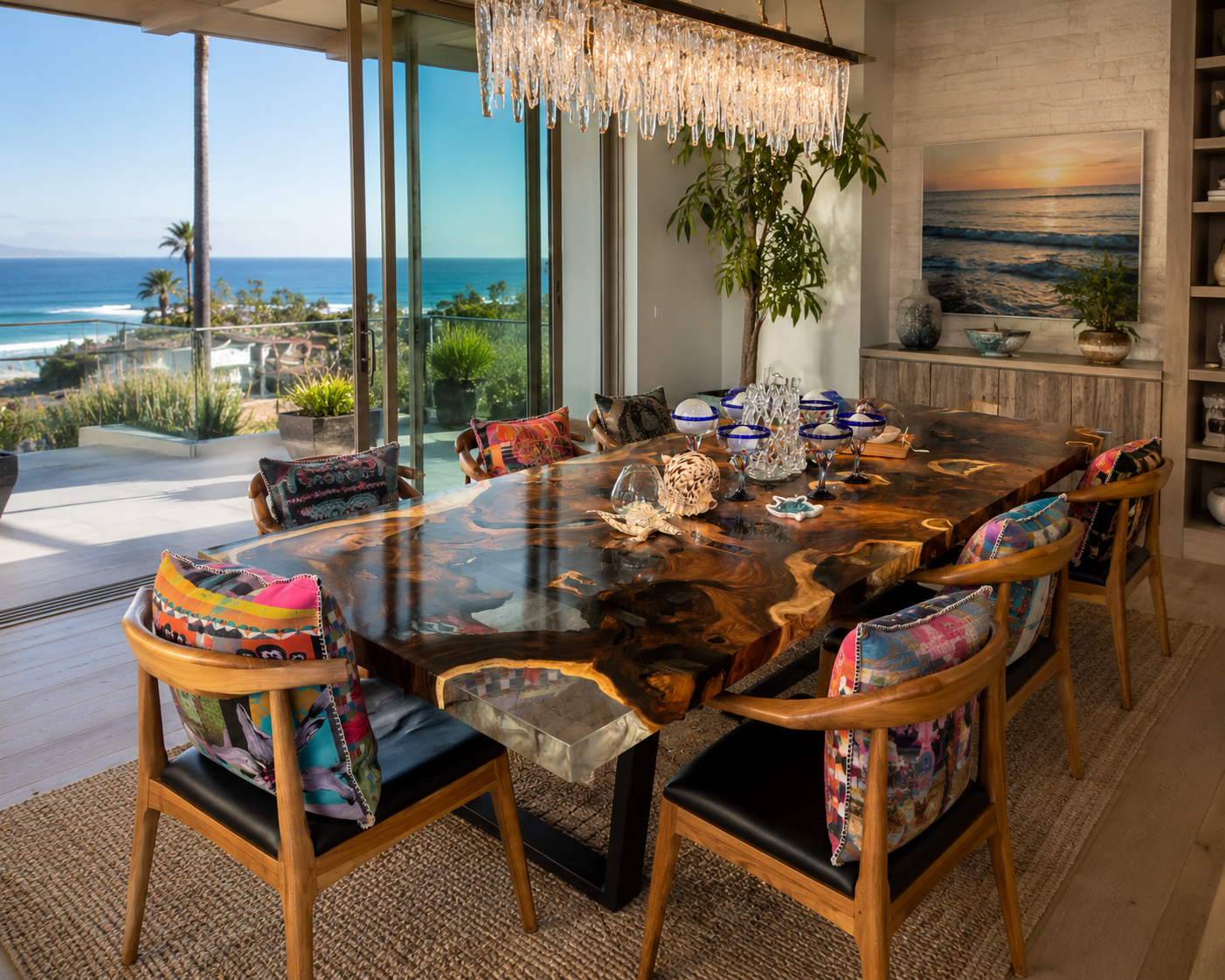
Custom Live Edge Tables Made in San Diego
Indigenous by La Rue creates custom live edge dining tables, resin tables, conference tables, coffee tables, and one-of-a-kind furniture from our San Diego County operation.
We serve clients throughout San Diego, La Jolla, Del Mar, Rancho Santa Fe, Solana Beach, Encinitas, Coronado, and beyond, and create custom furniture for clients throughout the United States.
Homeowners, interior designers, architects, builders, and commercial clients can participate in selecting an individual slab and customizing the dimensions, resin, base, and overall design.
Because the process begins with an actual tree instead of a standardized manufacturing template, no two finished pieces can ever be exactly alike.
Ready to create your own table? Explore Indigenous by La Rue's available live edge tables and slabs, or contact us to begin designing a one-of-a-kind piece.
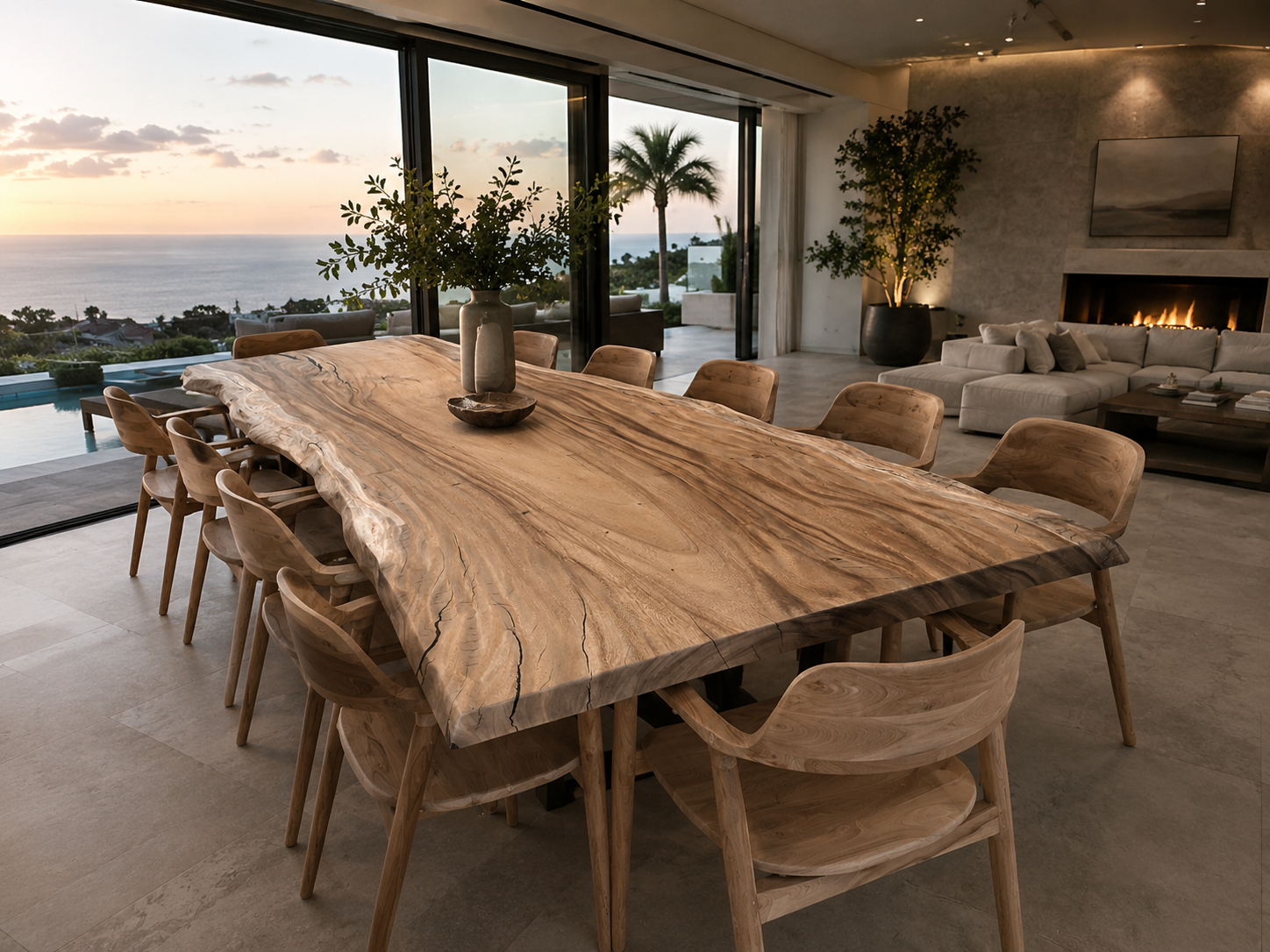
Live Edge vs. Resin Tables: Choosing a Table That Tells Your Story
Resin or natural wood? Discover how live edge and resin tables create completely different feelings in a home - from the grou ding beauty of a solid wood slab to personalized resin designs that can preserve memories, family history, and meaningful pieces for generations.
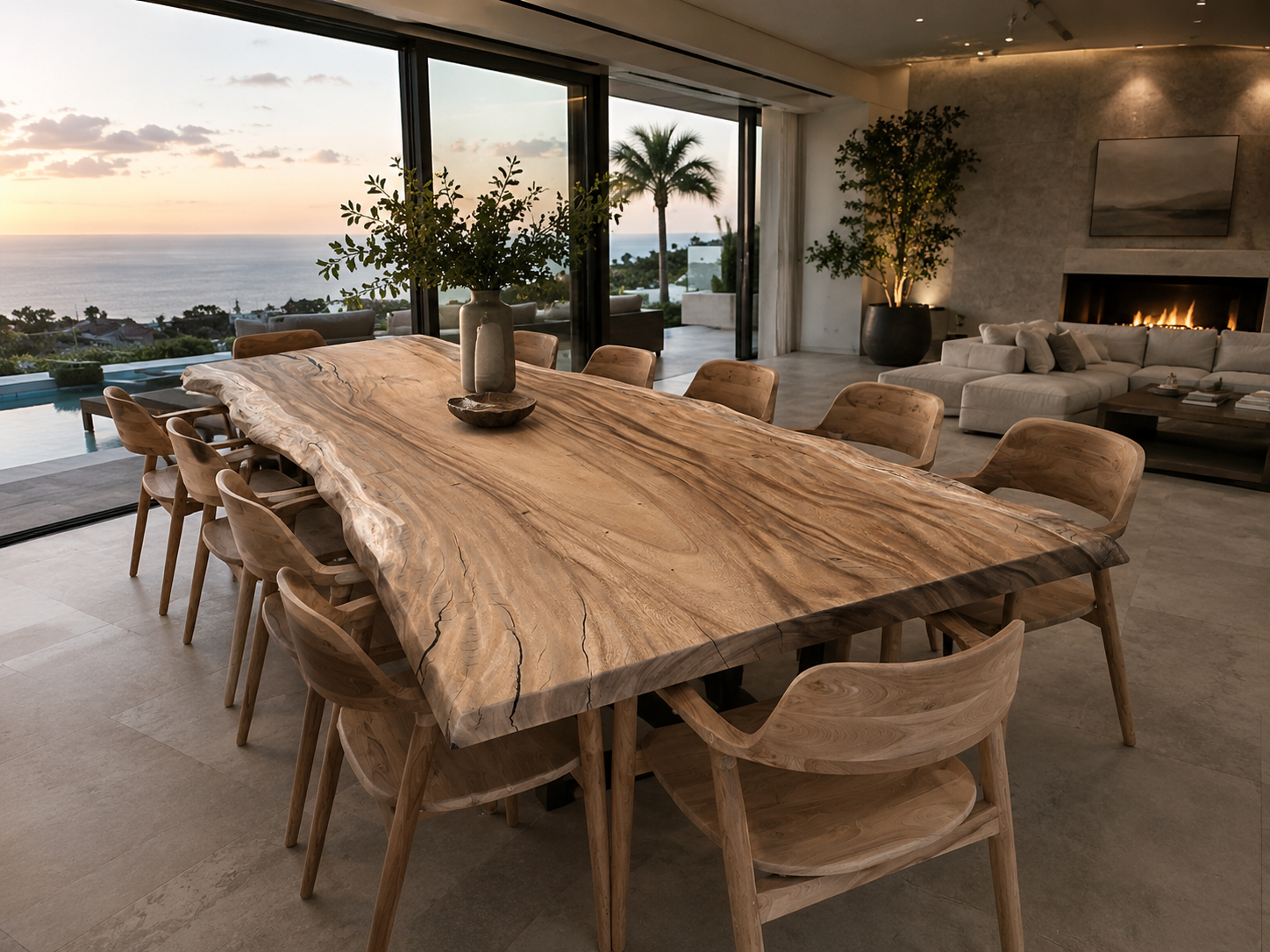
When someone asks me whether they should choose a live edge table with resin or a natural solid wood slab, my answer isn't that one is better than the other.
I don't believe the question is really, “Which one is right for my home?”
Either one can be right for your home.
I believe your home should be a reflection of who you are—your personal style, your experiences, your family and the things that bring you the greatest sense of comfort and joy. The furniture you choose to live with every day should be part of that story.
And few pieces of furniture have the ability to tell that story quite like a table made specifically for you.
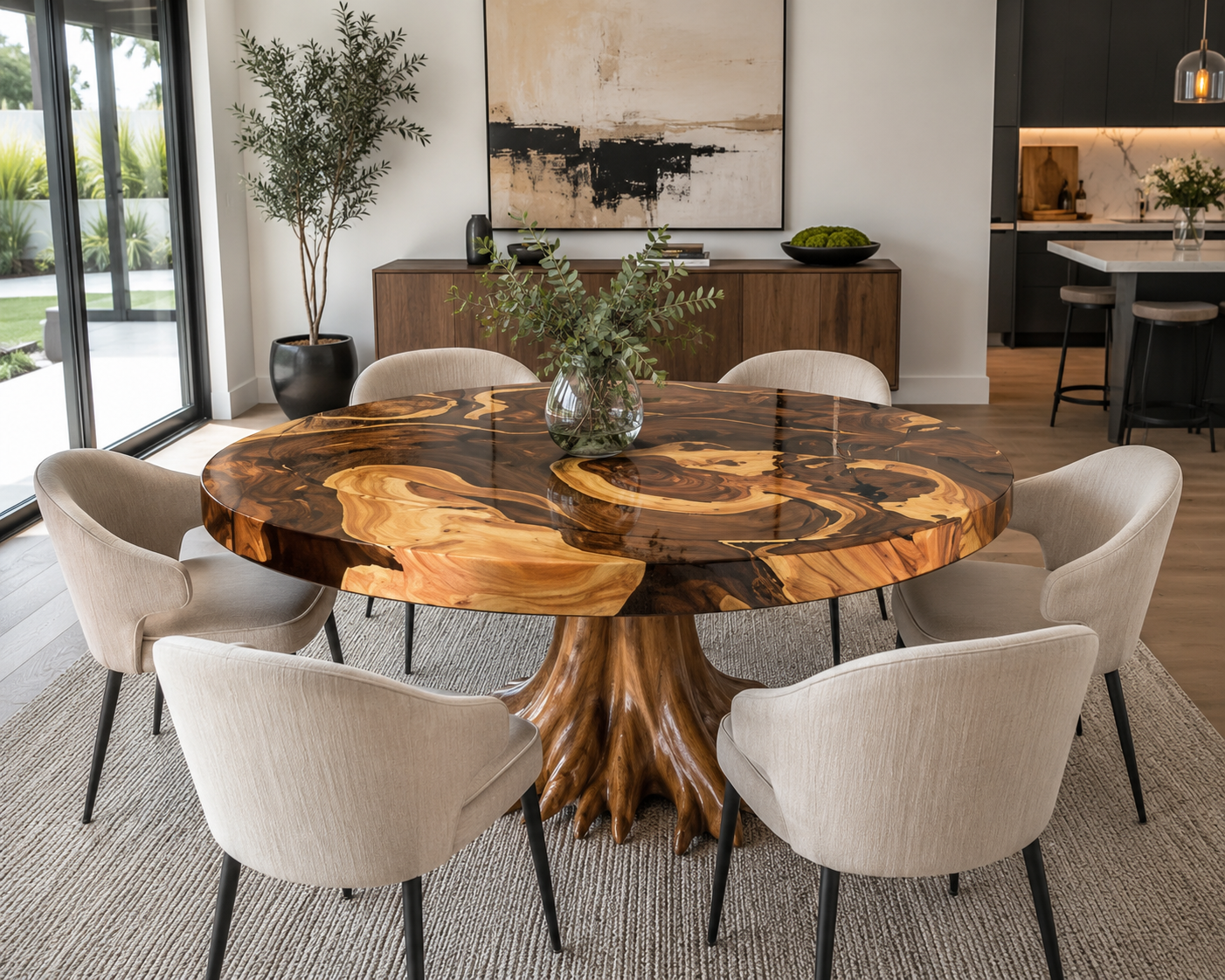
What Resin Can Bring to a Custom Table
Resin gives us an opportunity to take a beautiful piece of wood and make it deeply personal.
Sometimes that means choosing a resin color that complements the architecture, artwork or personality of a home. Other times, it can mean incorporating meaningful mementos into the table itself—objects that represent a family, a place, a memory or a piece of someone's history.
At that point, we aren't simply designing furniture.
We're creating a tribute.
Imagine sitting around a dining table that contains something connected to your family's history. Something your children recognize and perhaps one day explain to their own children.
That idea, to me, becomes much bigger than a furniture trend.
Trends eventually disappear. Stories don't.
A thoughtfully designed custom table can preserve part of that story and turn an everyday object into something that honors a legacy.
That is what resin can do.
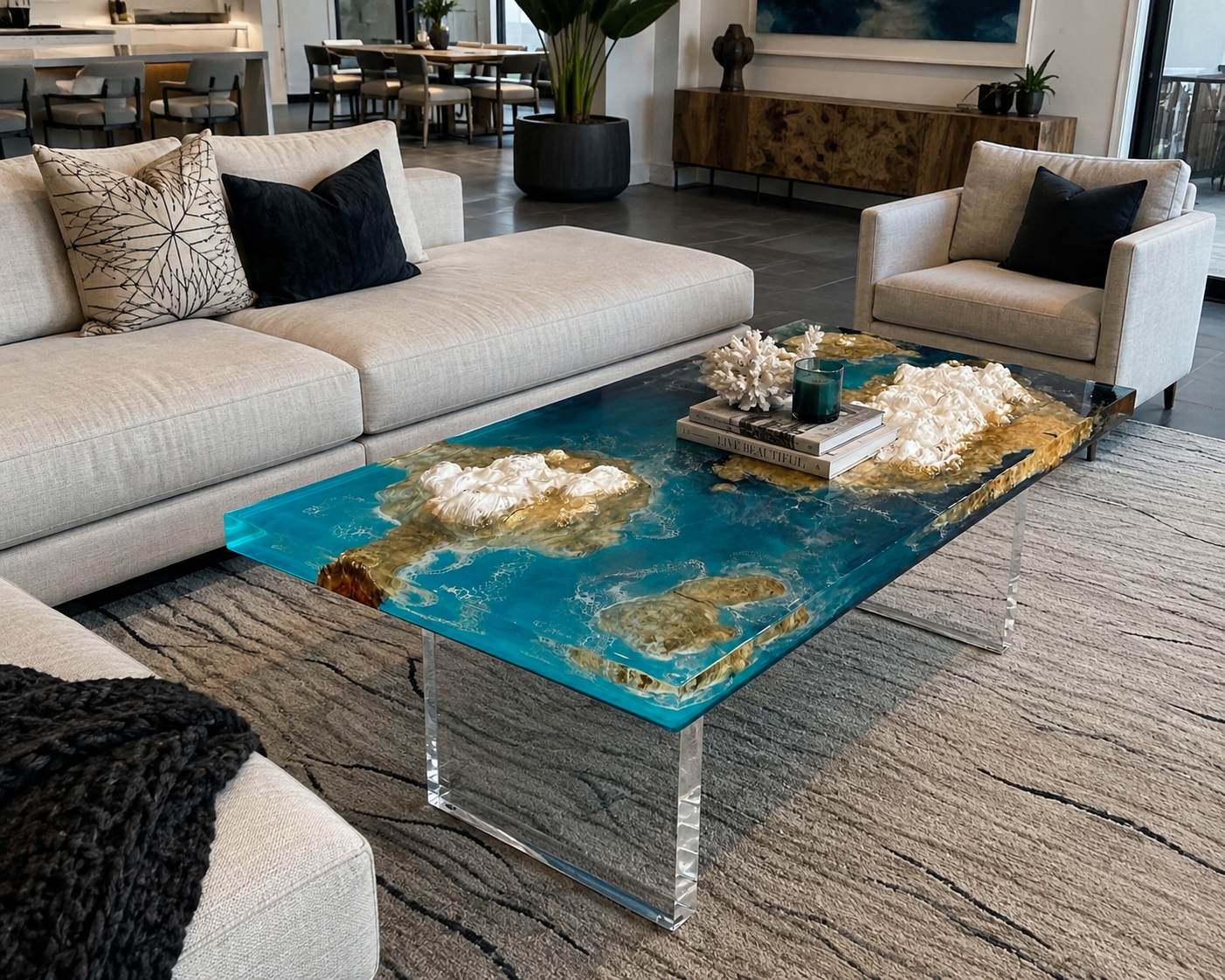
The Grounding Beauty of a Full Slab of Wood
Then there is the completely different experience of a magnificent, uninterrupted slab of wood.
There is something incredibly grounding about it.
A beautiful full slab doesn't need embellishment to command a room. The grain, natural edges, movement, knots, figuring and imperfections already tell the story of the tree.
You aren't trying to make nature perfect.
You're allowing what took decades—sometimes generations—to grow to become the centerpiece of your home.
For me, a substantial natural wood table brings a feeling of stability and permanence to a space. There is a warmth and quiet strength to solid wood that is difficult to reproduce with anything manufactured.
You can walk into a room filled with beautiful things, but your eye still finds that slab.
It anchors the room.
And over the years, something else happens: the table begins collecting your family's history.
Birthday dinners. Holidays. Conversations that went late into the night. Homework spread across one end. Celebrations. Difficult conversations. Wine with friends. Sunday mornings.
Eventually, the tree's story and your family's story become intertwined.
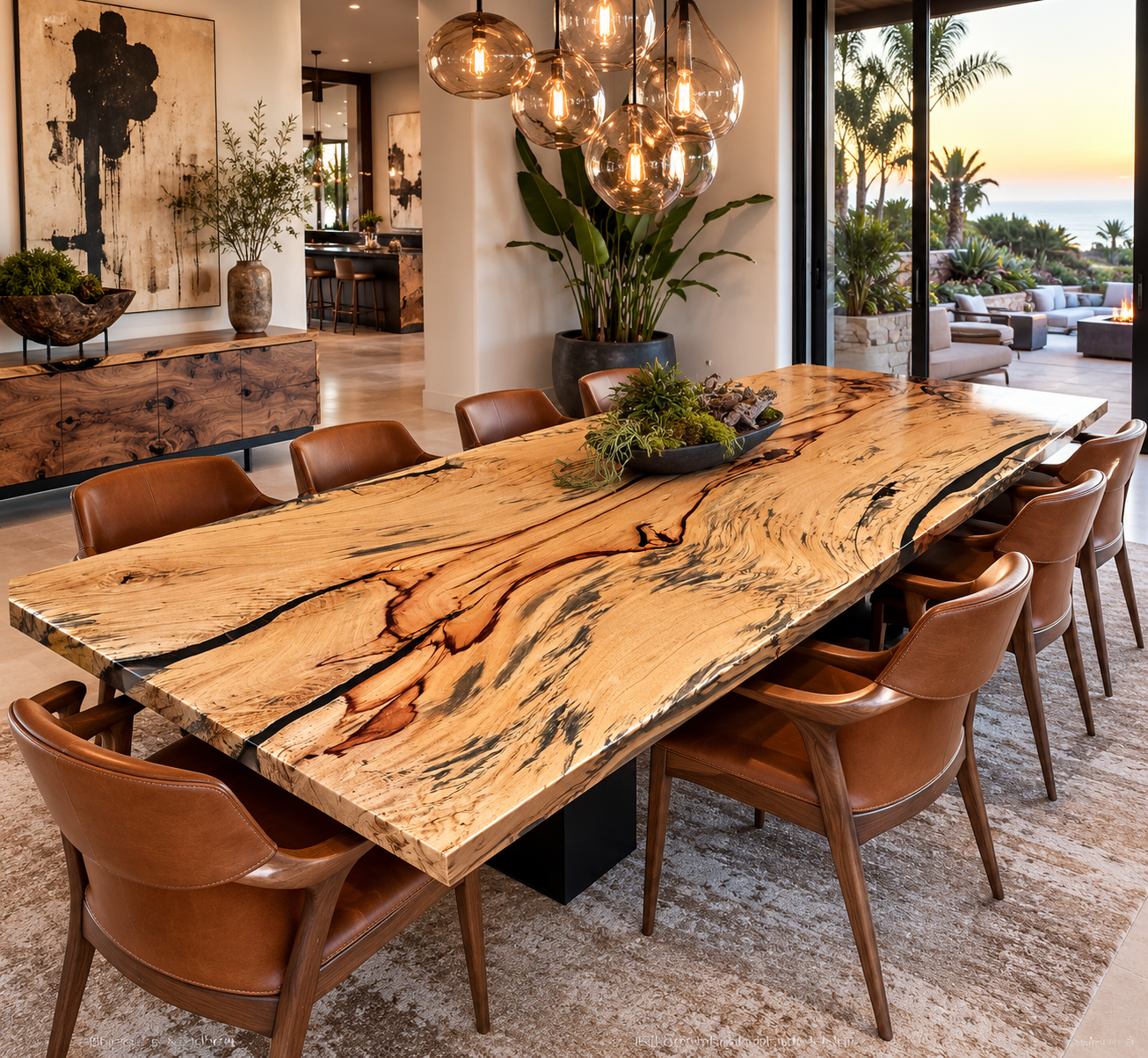
Resin or No Resin? Start With What Moves You
This is why I don't believe choosing between a resin table and a natural live edge table should begin with what's fashionable.
Start with what moves you.
When you see an extraordinary slab of wood and immediately feel that you don't want to change a thing, listen to that instinct.
When you look at a slab and begin imagining color, movement, meaningful objects or a design that could represent something personal to your family, listen to that too.
The goal isn't to create the table everyone else has.
It's to create the table that feels like it has always belonged in your home.
Because when custom furniture is done well, it should never feel disposable.
It should feel personal.
It should feel permanent.
And perhaps, many years from now, someone in your family will look at that table and remember exactly where it came from, why you designed it the way you did and what it meant to you.
That, to me, is what makes a table an heirloom.
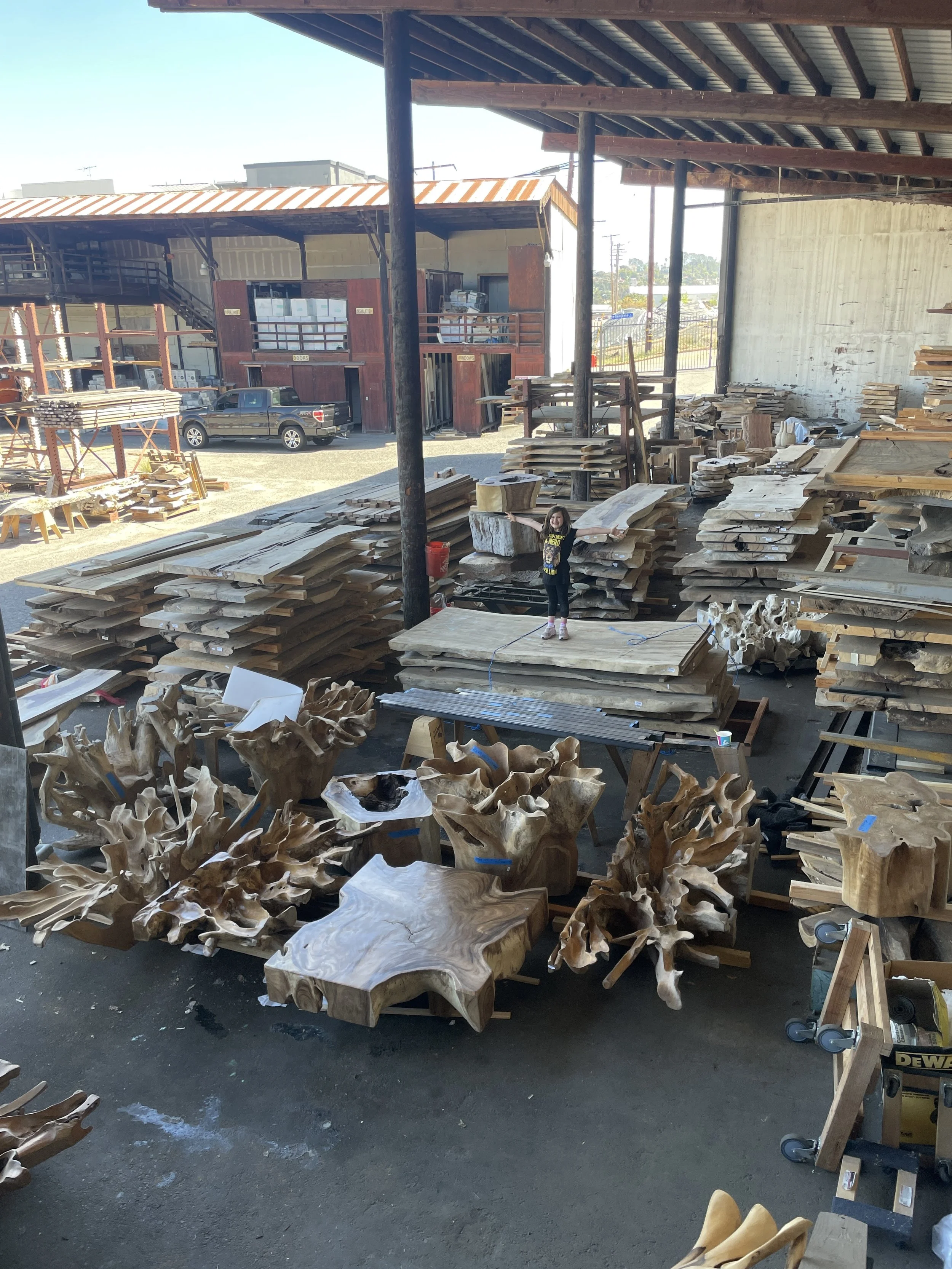
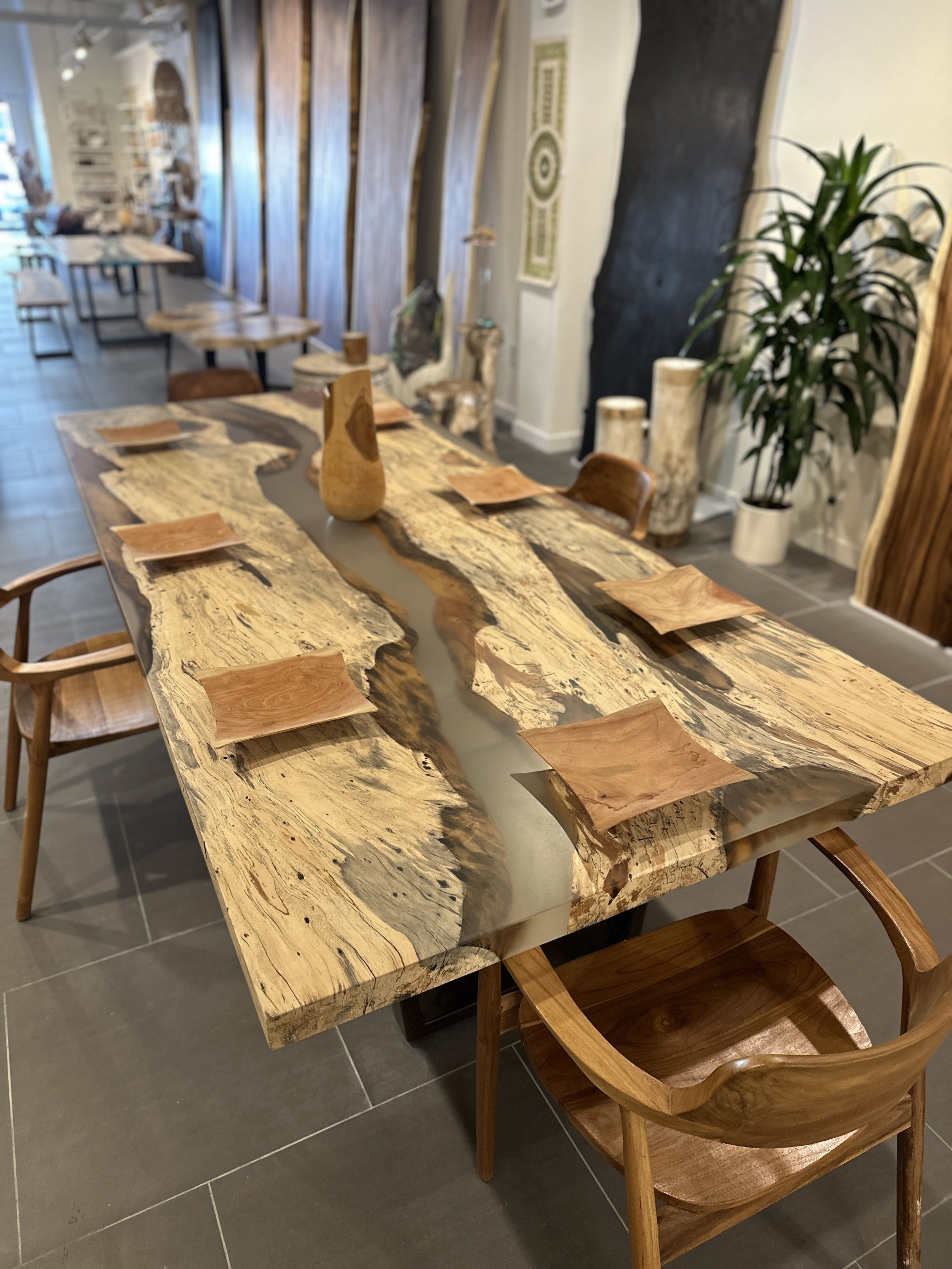
Best Wood for a Live Edge Dining Table: Walnut, Acacia, Monkey Pod & More
Discover the best wood for a live edge dining table, including walnut, acacia, monkey pod, and other distinctive hardwoods. Learn how grain, durability, color and slab selection affect your custom table - and howIndigenous by La Rue creates one-of-a-kind live edge dining tables in San Diego.
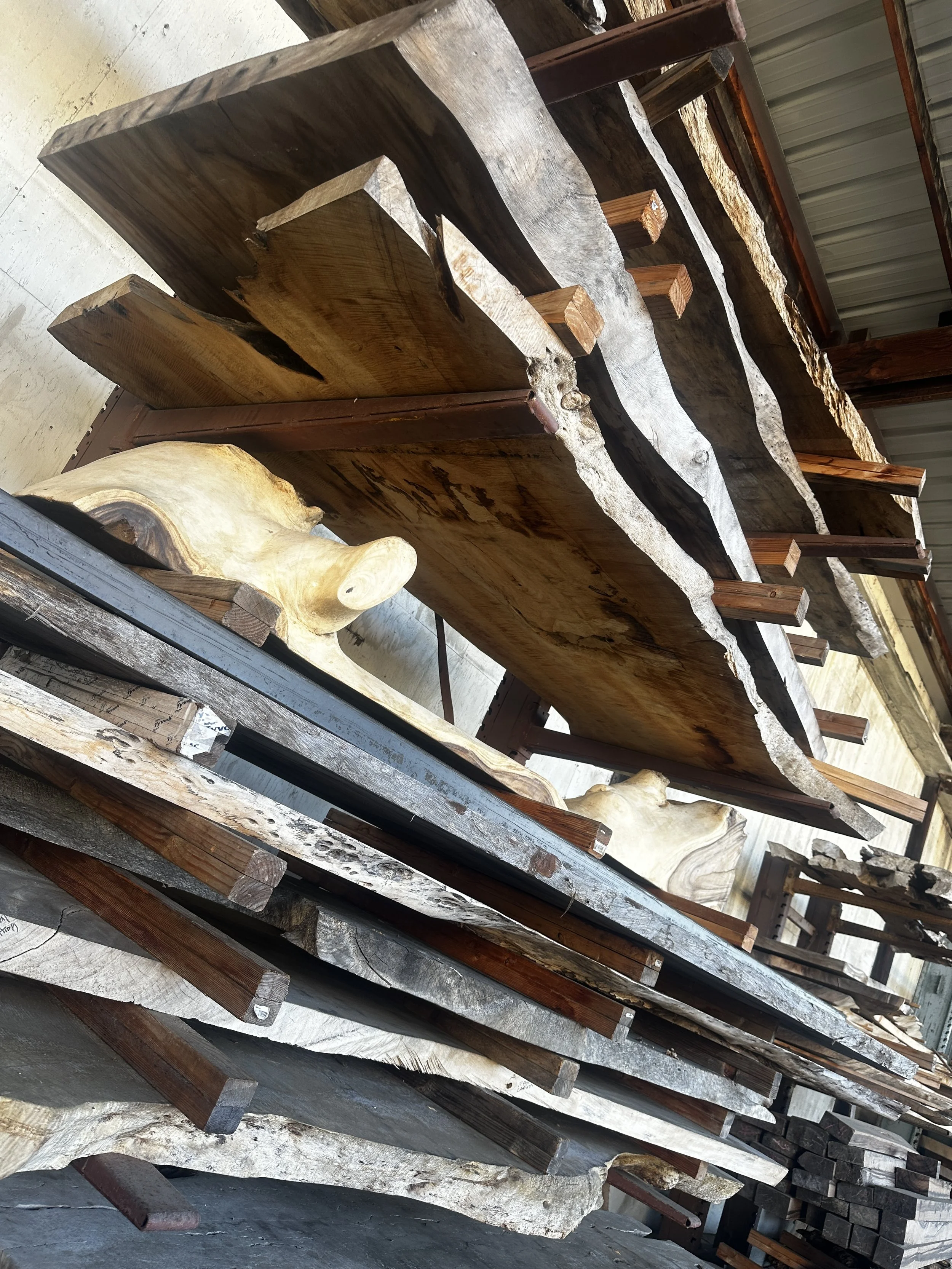
Choosing the right wood is one of the most important decisions when designing a custom live edge dining table.
The species determines far more than color. Grain movement, natural edges, durability, slab width, figure and even the way a piece works with resin can dramatically change the finished table.
At Indigenous by La Rue, we work with distinctive natural slabs to create custom live edge dining tables for homes throughout San Diego and across the country. Some clients arrive knowing exactly which species they want. Others simply know they want an extraordinary table and need help finding the right slab.
So, what is the best wood for a live edge dining table?
There isn't one answer.
The best wood depends on your home, the size of your table and the character you want the finished piece to have.
Here are several of our favorite woods for creating one-of-a-kind live edge tables.
Walnut: Timeless, Sophisticated and Naturally Luxurious
Walnut is one of the most sought-after woods for custom dining tables, and for good reason.
Its naturally rich brown tones can range from warm chocolate to deeper espresso, often accompanied by lighter areas of sapwood. Walnut also develops beautiful grain patterns that give a table visual interest without overwhelming a room.
Walnut works particularly well in contemporary, modern, transitional and organic-modern interiors.
One of its greatest strengths is versatility.
A substantial walnut slab paired with a minimal black metal base can feel architectural and modern, while the same species combined with a sculptural base can create an entirely different statement.
For clients searching for a sophisticated custom live edge dining table in San Diego, walnut is often an excellent place to begin.
Walnut Is Best For:
Modern and contemporary homes
Organic-modern interiors
Clients who prefer darker natural wood
Luxury dining rooms
Executive conference tables
Statement furniture that still feels timeless
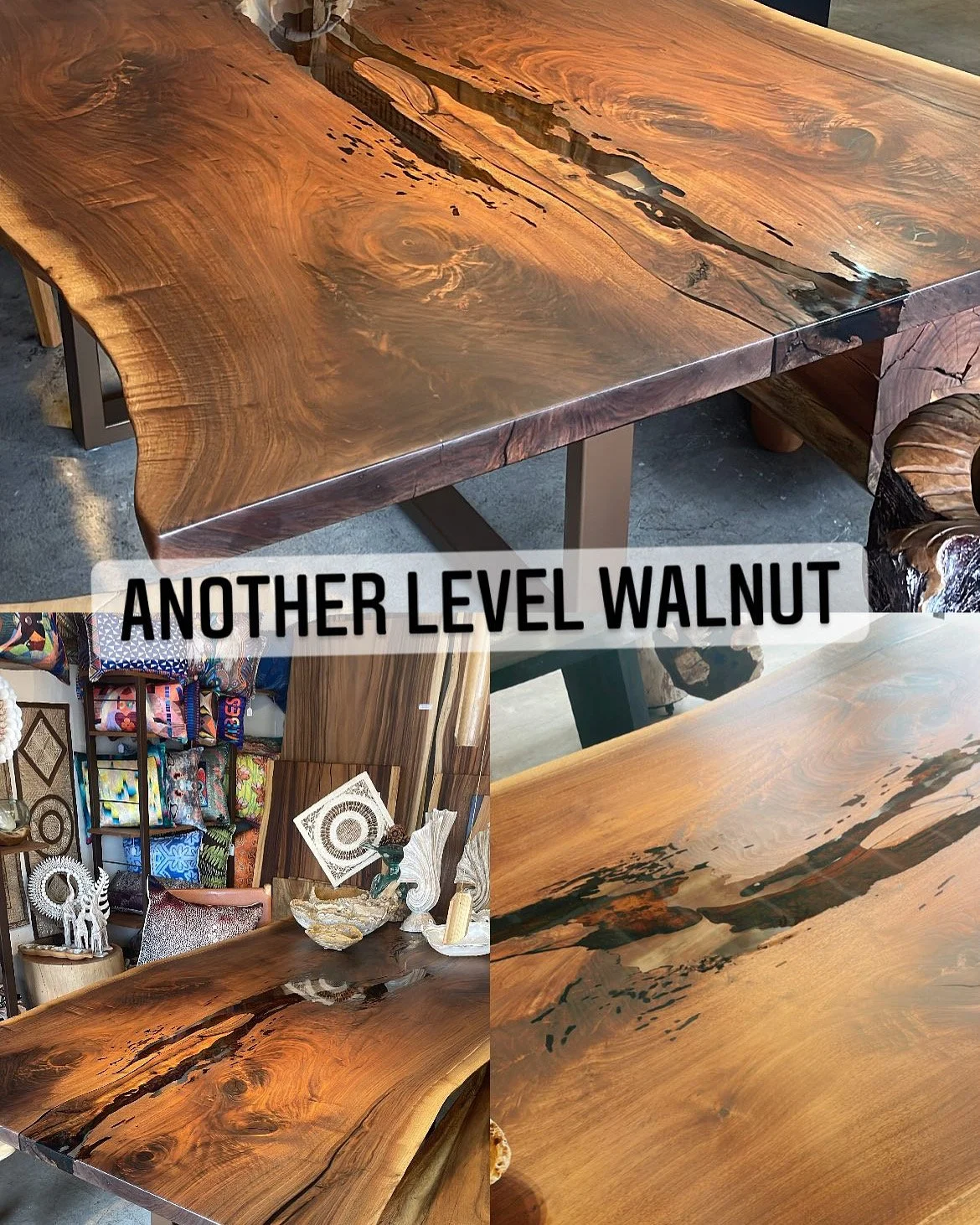
Acacia: Dramatic Grain and Incredible Natural Character
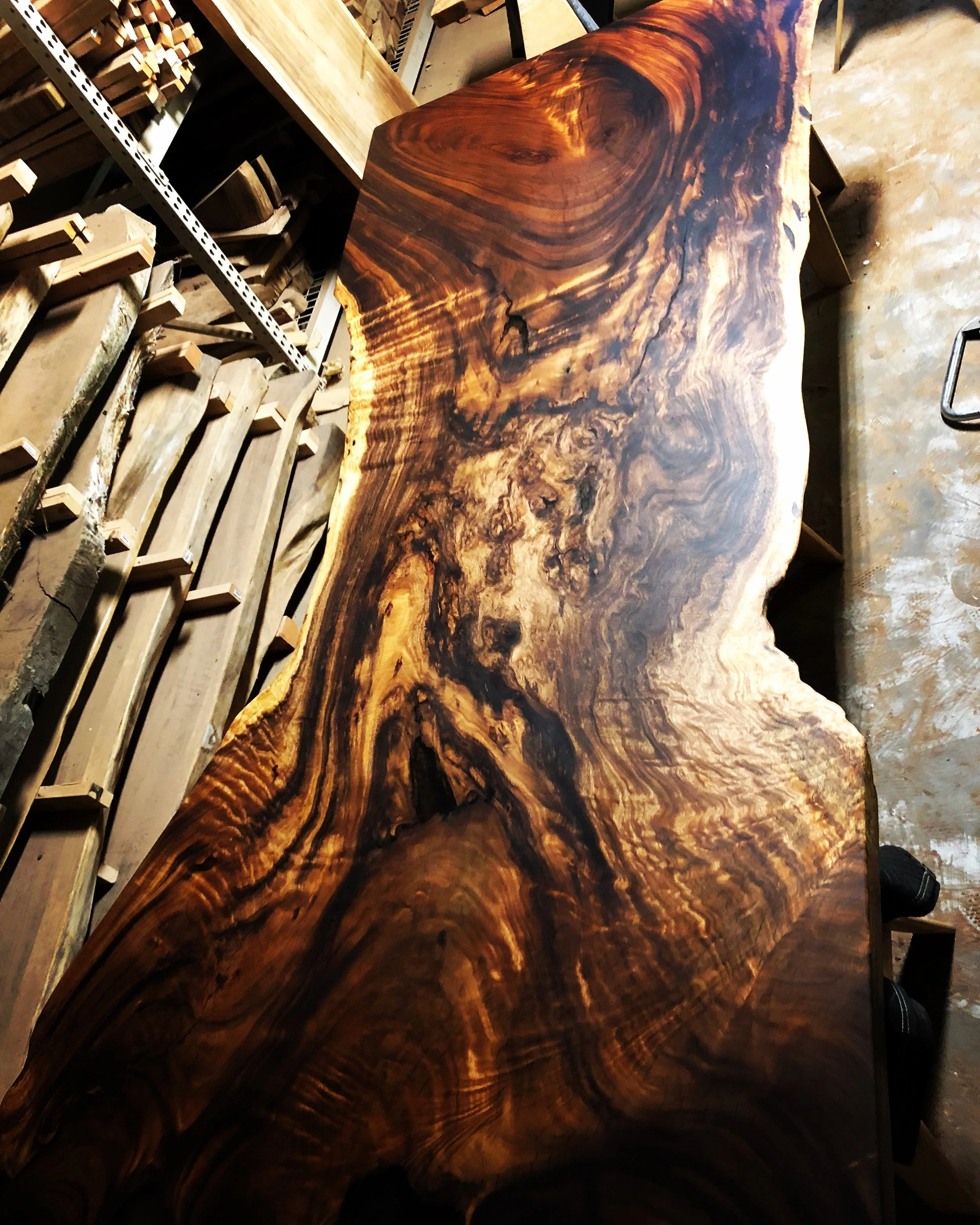
Acacia can be an exceptional choice when the goal is to create a table with movement and personality.
The wood is known for its striking grain patterns and variation in tone. Depending on the individual slab, acacia can contain warm golden shades, rich browns and dramatic darker figuring.
No two slabs look exactly alike.
That individuality is precisely why we love working with natural wood.
Rather than manufacturing hundreds of identical tables, a custom furniture maker can allow the characteristics of a particular slab to determine the design.
Large acacia slabs can be especially impressive for oversized dining tables and statement pieces where the wood itself becomes part of the architecture of the room.
Acacia is Best For:
Large dining tables
Dramatic natural grain
Contemporary coastal interiors
Organic-modern homes
Statement tables
Clients who want significant variation and character
Monkey Pod: Organic, Sculptural and Full of Movement
Monkey pod has become increasingly popular for live edge furniture because of its dramatic natural formations.
Large slabs can feature sweeping grain patterns, irregular edges, natural voids and substantial width — characteristics that make it particularly interesting for custom furniture.
Instead of trying to make the wood perfectly uniform, we often prefer to work with these natural characteristics.
A dramatic opening in a slab, for example, can become an intentional design element. Depending on the project, it may remain part of the natural composition or be incorporated into a custom resin design.
Monkey pod can be especially beautiful in Southern California homes where natural materials are used alongside stone, glass, metal and neutral finishes.
Monkey Pod Is Best For:
Organic-modern interiors
Coastal homes
Oversized dining tables
Resin table designs
Highly sculptural furniture
Clients who want the wood to be the focal point
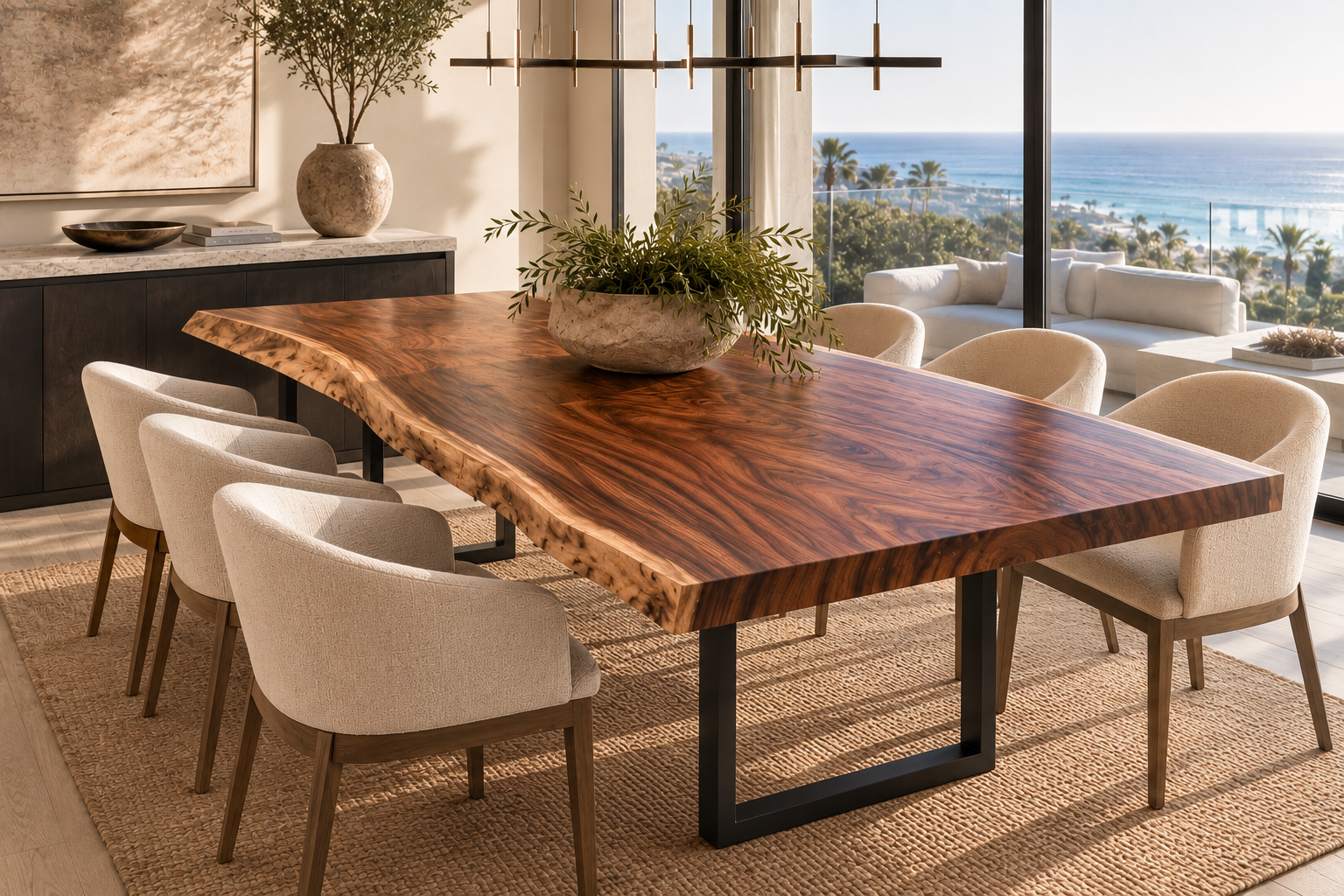
Live Edge Slabs With Resin
Sometimes the most extraordinary slab isn't perfectly rectangular.
It may have a large natural opening, dramatic separation, irregular edges or other characteristics that make it visually spectacular but challenging to turn into a traditional dining table.
That's where resin can become part of the design.
Clear or translucent resin can preserve the natural shape of the wood while creating a functional tabletop. Resin can also be used more dramatically to create contrast between sections of a slab.
The key is restraint.
For many of our designs, we want the resin to complement the wood rather than overpower it.
The natural grain, movement and history of the slab should remain the star.
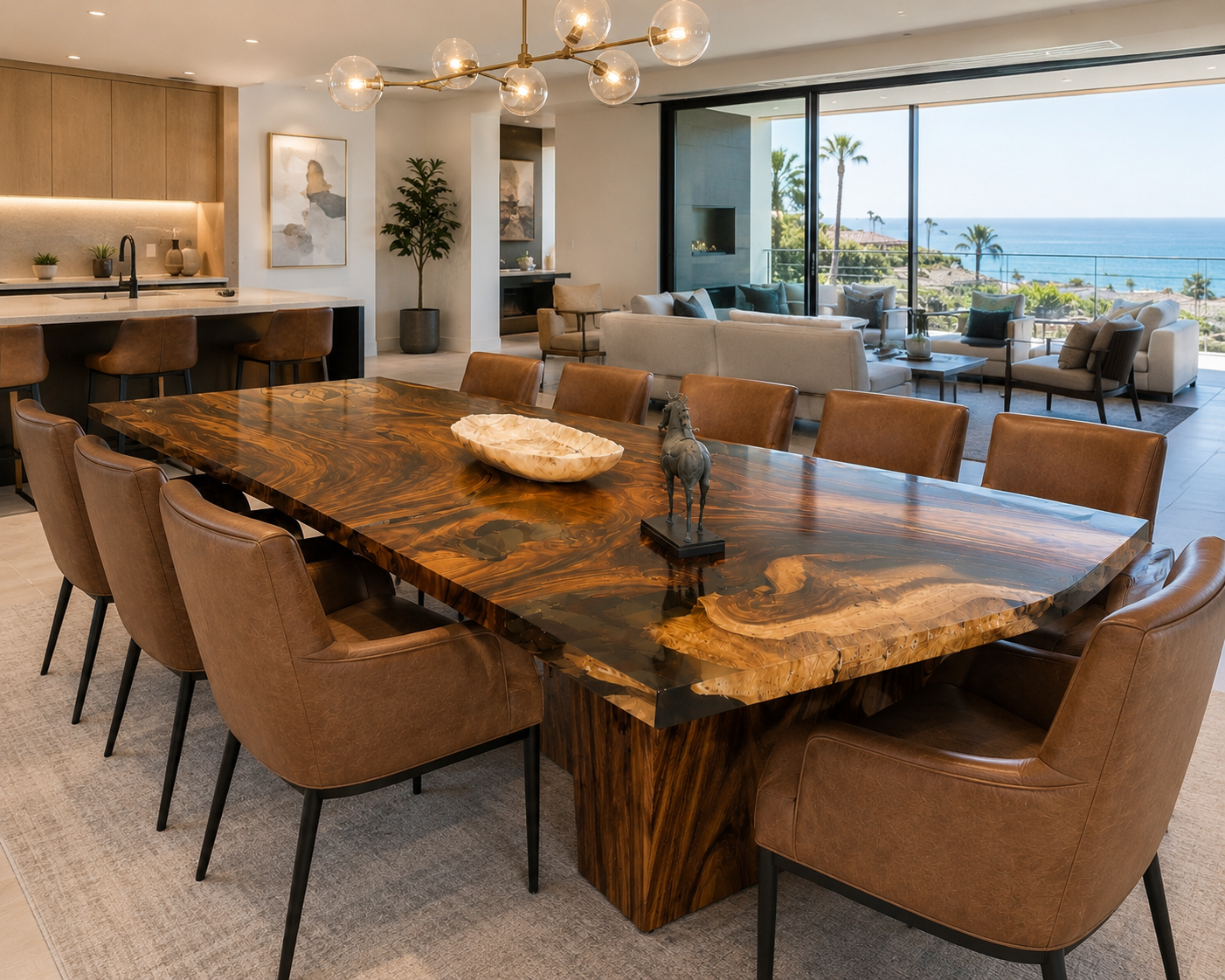
Does Wood Species Matter More Than the Individual Slab?
Not always.
This is one of the most important things to understand when shopping for a live edge table.
Two slabs from the same species can look dramatically different.
One walnut slab may have relatively straight, understated grain while another has extraordinary figure, natural edges and color variation.
The same is true for acacia, monkey pod and other woods.
That's why selecting a specific slab can be so different from choosing furniture from a catalog.
You aren't simply choosing "walnut."
You're choosing your walnut slab.
The grain, dimensions, edges, natural formations and imperfections of that particular piece become part of your finished table.
How to Choose the Right Wood for Your Dining Table
Start with your room rather than the wood species.
Consider the flooring, cabinetry, architectural style, natural light and other materials already present in the space.
Then think about what role you want the table to play.
Should it quietly complement the room?
Or should guests walk through the door and immediately notice it?
For a restrained modern interior, a sophisticated walnut slab may provide exactly the right amount of warmth.
For a large coastal or organic-modern home, an unusually shaped monkey pod or acacia slab might create the dramatic focal point the room needs.
Size matters too.
If you're designing a 10-, 12- or even 14-foot dining or conference table, slab availability becomes an important part of the process. Finding extraordinary wood at those dimensions requires access to substantial slabs and careful selection.
Why Selecting the Actual Slab Matters
One of the advantages of commissioning custom furniture is being able to participate in the material-selection process.
At Indigenous by La Rue, clients can select wood based on the actual grain, color, dimensions and natural characteristics of an individual slab.
From there, we can determine the appropriate finished dimensions, edge treatment, resin details when applicable, base design and finish.
Our goal isn't to force every piece of wood into the same furniture design.
It's to determine what the wood can become.
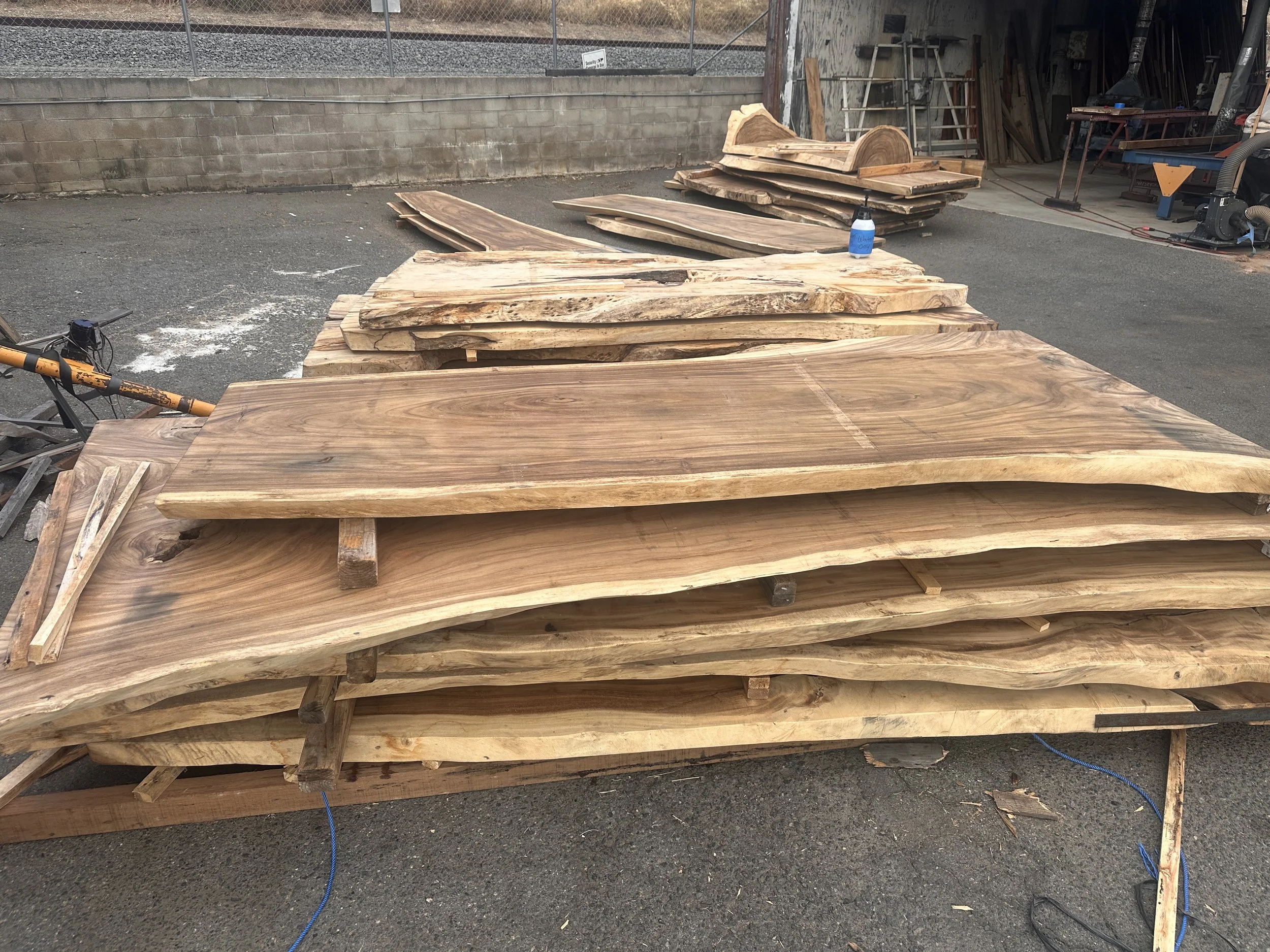
From Raw Slab to Finished Live Edge Table
Creating a custom live edge table is a process.
It begins with selecting the wood and establishing the design. The slab is then transformed through preparation, flattening, sanding, resin work when required, detailed finishing and final assembly.
Indigenous by La Rue maintains a San Diego County lumberyard for slab selection as well as a dedicated workshop in San Marcos, California, where much of our detailed finishing work takes place.
Clients can also visit our La Jolla and Solana Beach showrooms to experience finished Indigenous by La Rue furniture in person and discuss a custom project.
This connection between raw material, craftsmanship and finished furniture is central to what we do.
What Is the Best Wood for a Live Edge Dining Table?
Walnut is difficult to beat for timeless sophistication.
Acacia offers beautiful color variation and dramatic grain.
Monkey pod can deliver extraordinary scale, movement and organic character.
But ultimately, the best wood for your live edge dining table is the slab that works with your home and makes you stop when you see it.
That's the difference between buying a dining table and creating one.
Create a Custom Live Edge Dining Table in San Diego
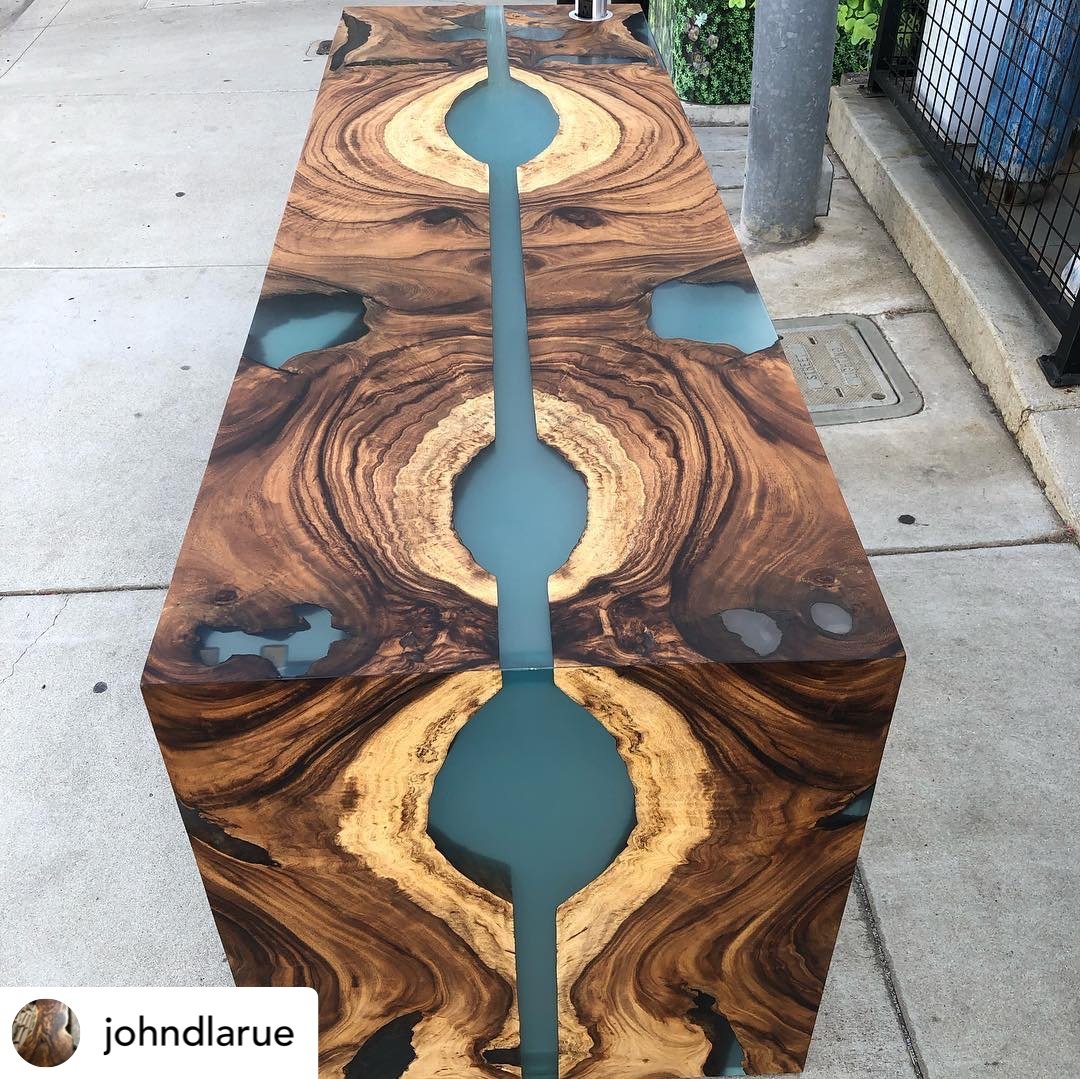
If you're looking for a custom live edge dining table in San Diego, Indigenous by La Rue can help you select the wood, determine the ideal dimensions and create a one-of-a-kind table specifically for your space.
Explore our collection of live edge dining tables, visit our La Jolla or Solana Beach showroom, or schedule an opportunity to select a slab from our San Diego County lumberyard.
From the raw slab to the final finish, your table is created to become a piece you'll live with for years to come.
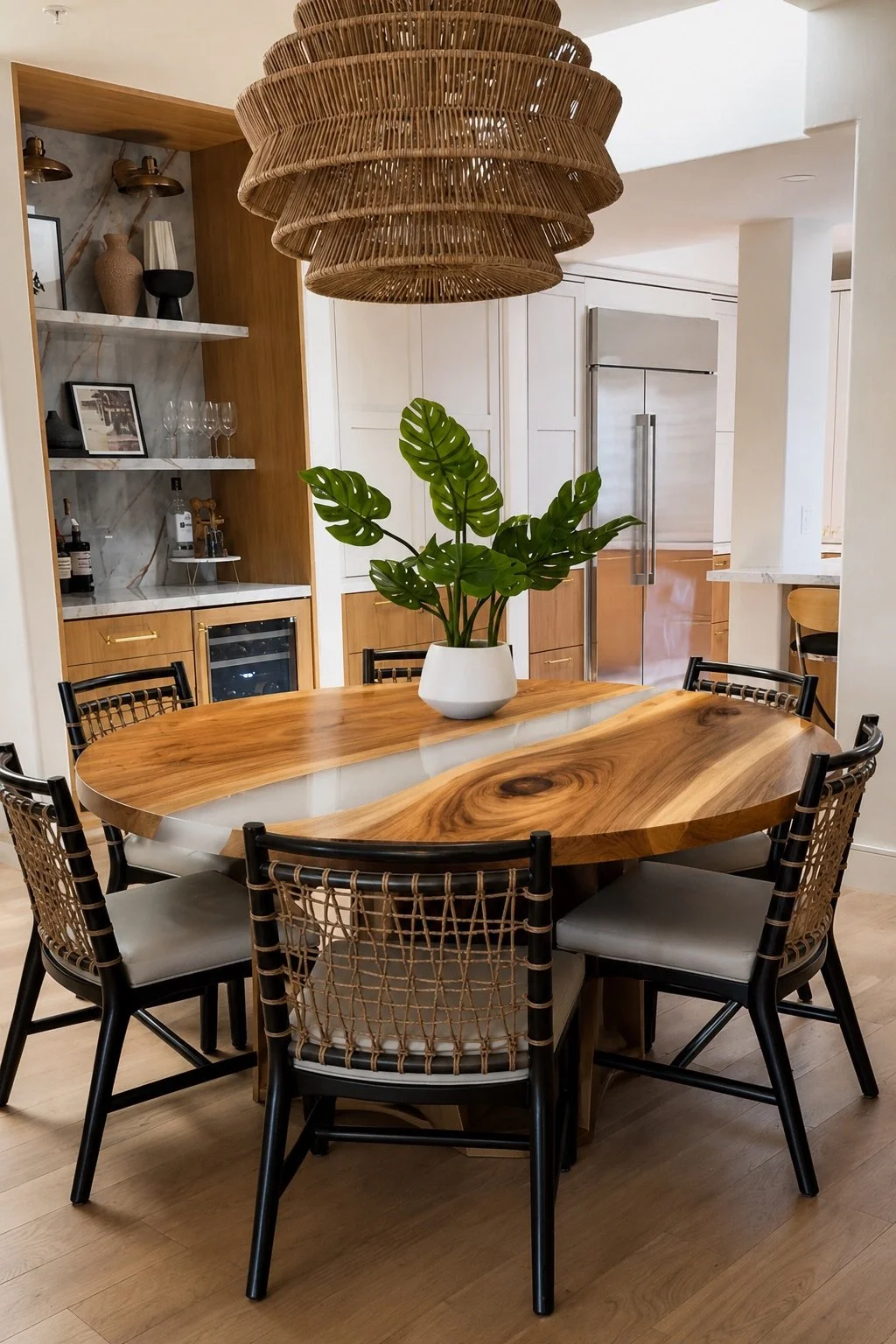
How Much Does a Custom Live Edge Dining Table Cost in San Diego?
How Much does a custom live edge dining table cost in San Diego? Explore typical pricing, wood species, slab sizes, resin options and the craftsmanship that determines the cost of a one-of-a-kind custom table.
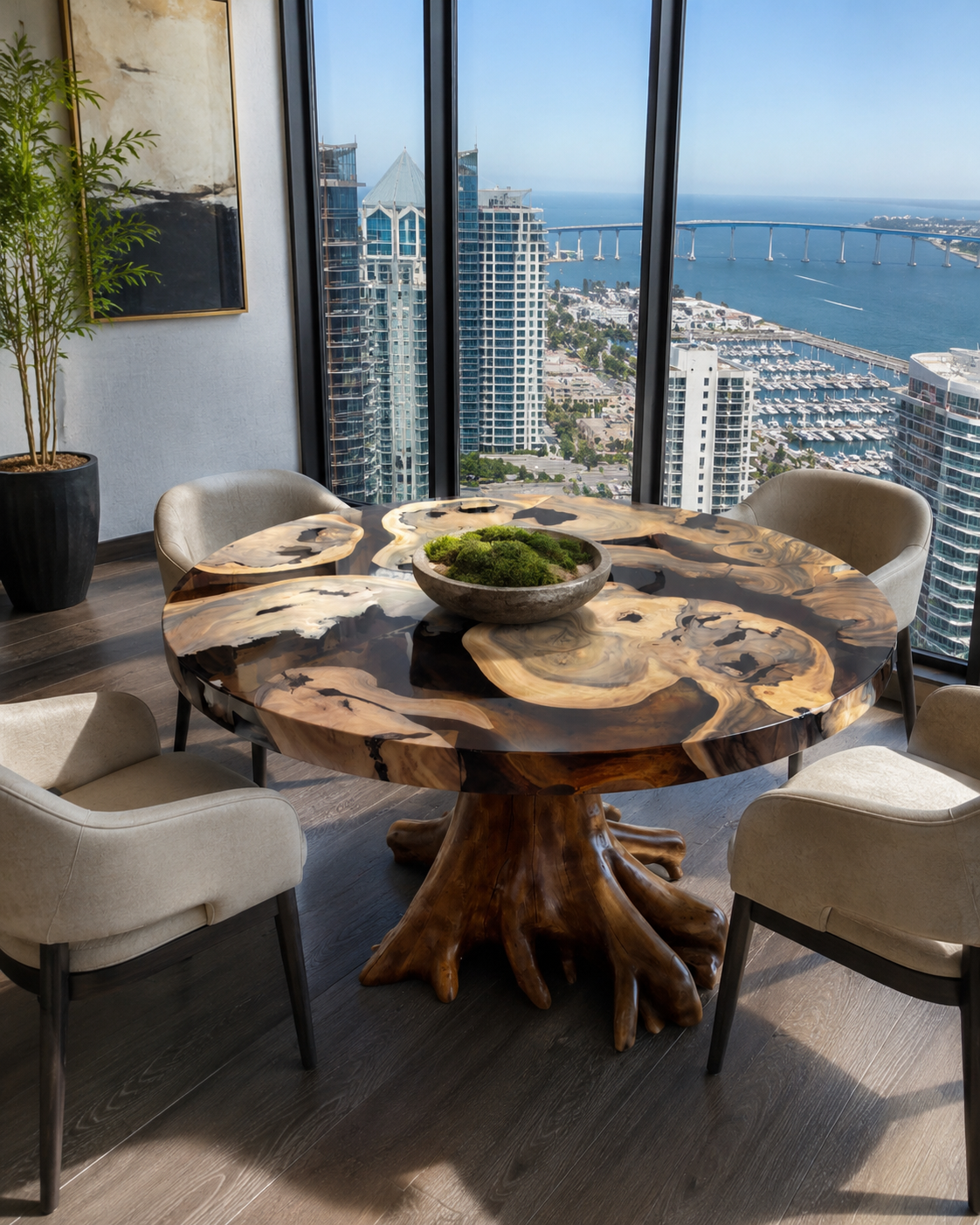
If you are considering a custom live edge dining table in San Diego, one of the first questions you are likely to have is simple: how much should a truly custom table cost?
The answer depends on much more than length and width.
Wood species, slab quality, size, thickness, resin work, base design, finishing, craftsmanship, and installation can all influence the final investment.
At Indigenous by La Rue, we believe understanding those differences is important—especially when comparing a handcrafted, one-of-a-kind table with furniture that may simply have a "live edge" appearance.
Here are some of the biggest factors that determine the cost of a custom live edge table in San Diego.
1. Wood Slab Species and Quality
The slab itself is one of the most important factors in both the appearance and cost of a custom table.
No two trees produce identical wood.
Species, width, thickness, grain, figuring, coloration, natural edges, burl, spalting, and overall rarity can significantly affect the value of an individual slab.
A relatively narrow slab with simple grain is very different from an exceptionally wide, highly figured slab capable of becoming a 10- or 12-foot dining table.
We work with hardwoods including walnut, acacia, monkey pod, tamarind, and other distinctive species, selecting slabs for their individual character rather than simply treating wood as a commodity.
For our clients, selecting the actual slab is one of the most exciting parts of commissioning a custom table.
2. Table Size
Size matters considerably when pricing a custom dining table.
A table designed for six people requires very different material than an oversized dining table intended to seat 12 or 14.
Long, wide slabs suitable for large dining tables are naturally more difficult to source.
Large tables can also require additional structural engineering, specialized bases, additional finishing work, resin, handling, and installation considerations.
For San Diego homes with expansive dining rooms and open-concept entertaining spaces, custom dimensions allow the table to be proportioned to the architecture instead of settling for a standard retail size.
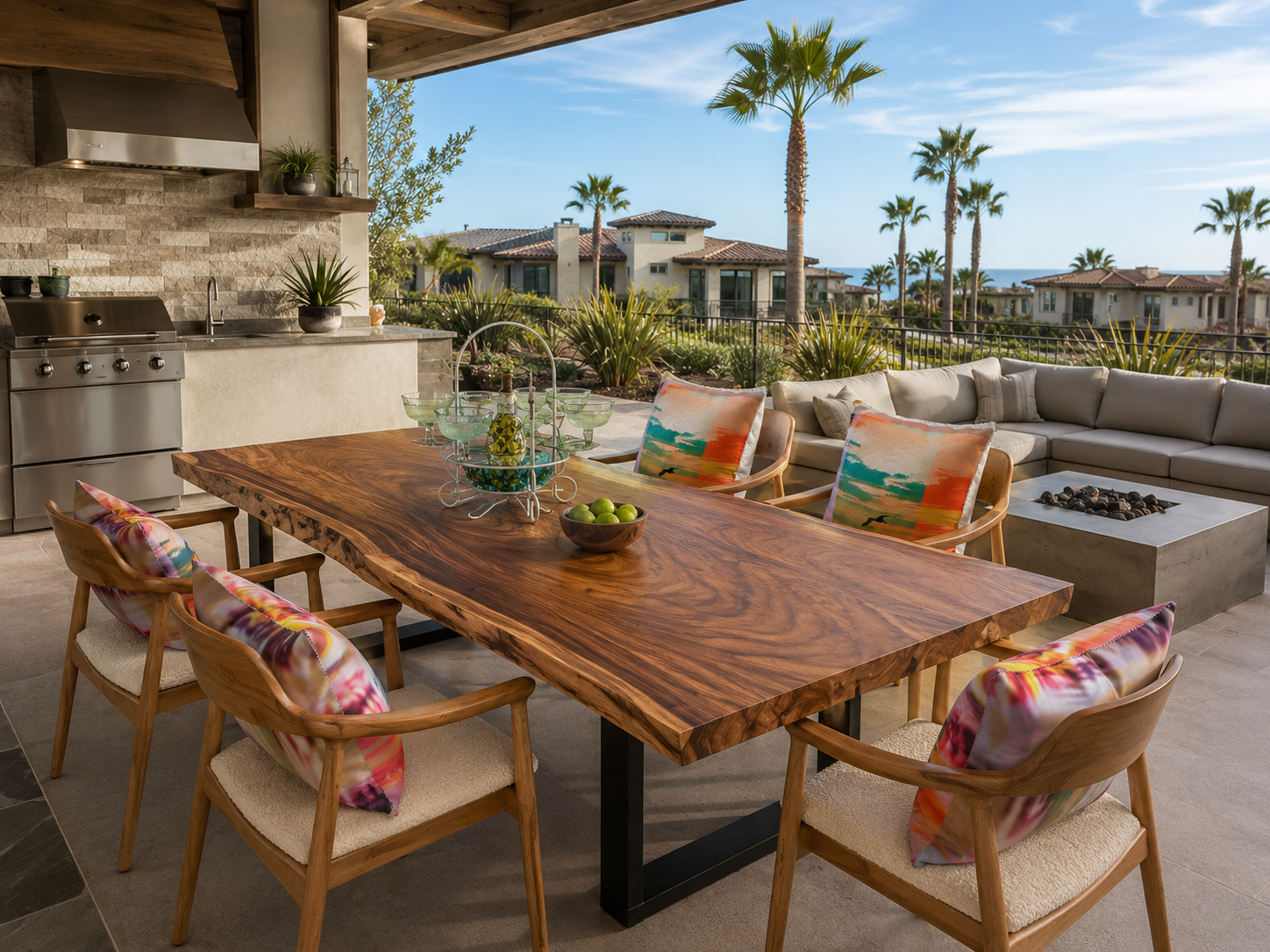
3. Single Slab vs. Book-Matched Table
A single-slab live edge dining table is created primarily from one exceptional piece of wood.
When the dimensions are substantial, finding a single slab with the necessary width, length, stability, and visual character can make it particularly special.
Another option is a book-matched or multi-slab design.
Carefully selected slabs can be paired to create additional width while producing dramatic symmetry and movement through the center of the table.
Neither approach is automatically better.
The right choice depends on the wood, desired dimensions, aesthetic, and individual project.
4. Resin Can Change the Cost
Resin can transform the appearance and functionality of a natural wood slab.
Some tables need relatively small areas filled to stabilize natural voids.
Others incorporate substantial amounts of clear, smoked, black, or custom resin as a major part of the design.
The amount of resin, depth of the pour, preparation required, curing process, and finishing all influence the work involved.
Clear resin is particularly striking when the goal is to preserve irregular natural edges while creating a smooth, functional dining surface.
For contemporary San Diego interiors, this combination of organic hardwood and transparent resin can create a sophisticated appearance without making the table feel rustic.
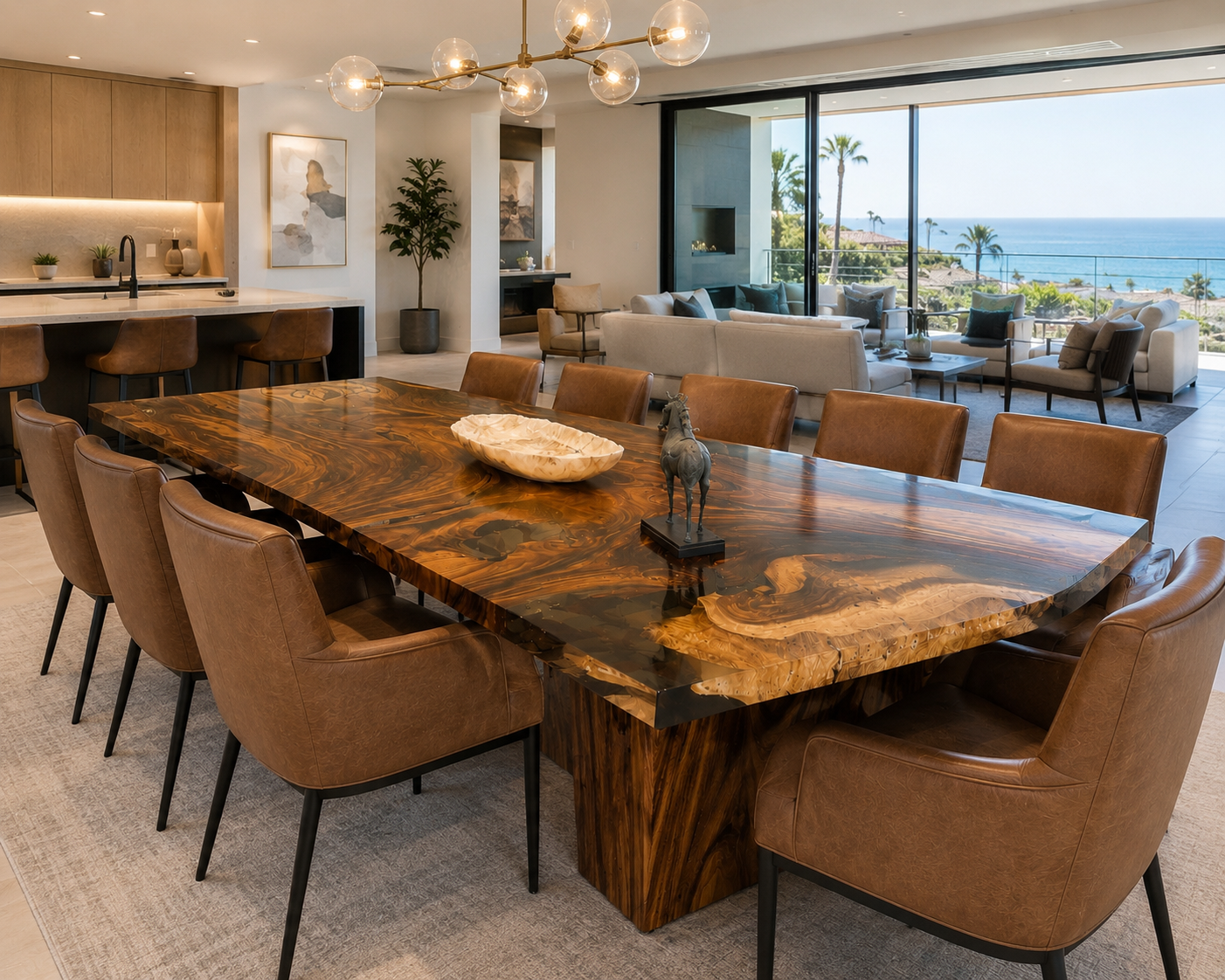
5. The Base Is Part of the Design
The base should never feel like an afterthought.
A dramatic slab requires a base that provides the correct structural support while complementing the architecture of the table.
Depending on the project, that might mean a minimal matte-black metal base, a pedestal design, a sculptural wood base, or another custom configuration.
The dimensions and weight of the tabletop also determine where supports need to be positioned.
A properly designed base should provide stability while allowing guests to sit comfortably without constantly encountering table legs.
6. Finishing & Craftsmanship
A great slab is only the beginning.
Transforming raw wood into refined furniture requires numerous stages of preparation and finishing.
Flattening, stabilizing, filling, sanding, edge refinement, resin work, finishing, polishing, base fabrication, and final assembly all contribute to the finished piece.
These details are especially important with live edge furniture because the goal is not simply to make the wood look perfect.
It is to preserve what makes the wood extraordinary while refining it enough to belong in a sophisticated interior.
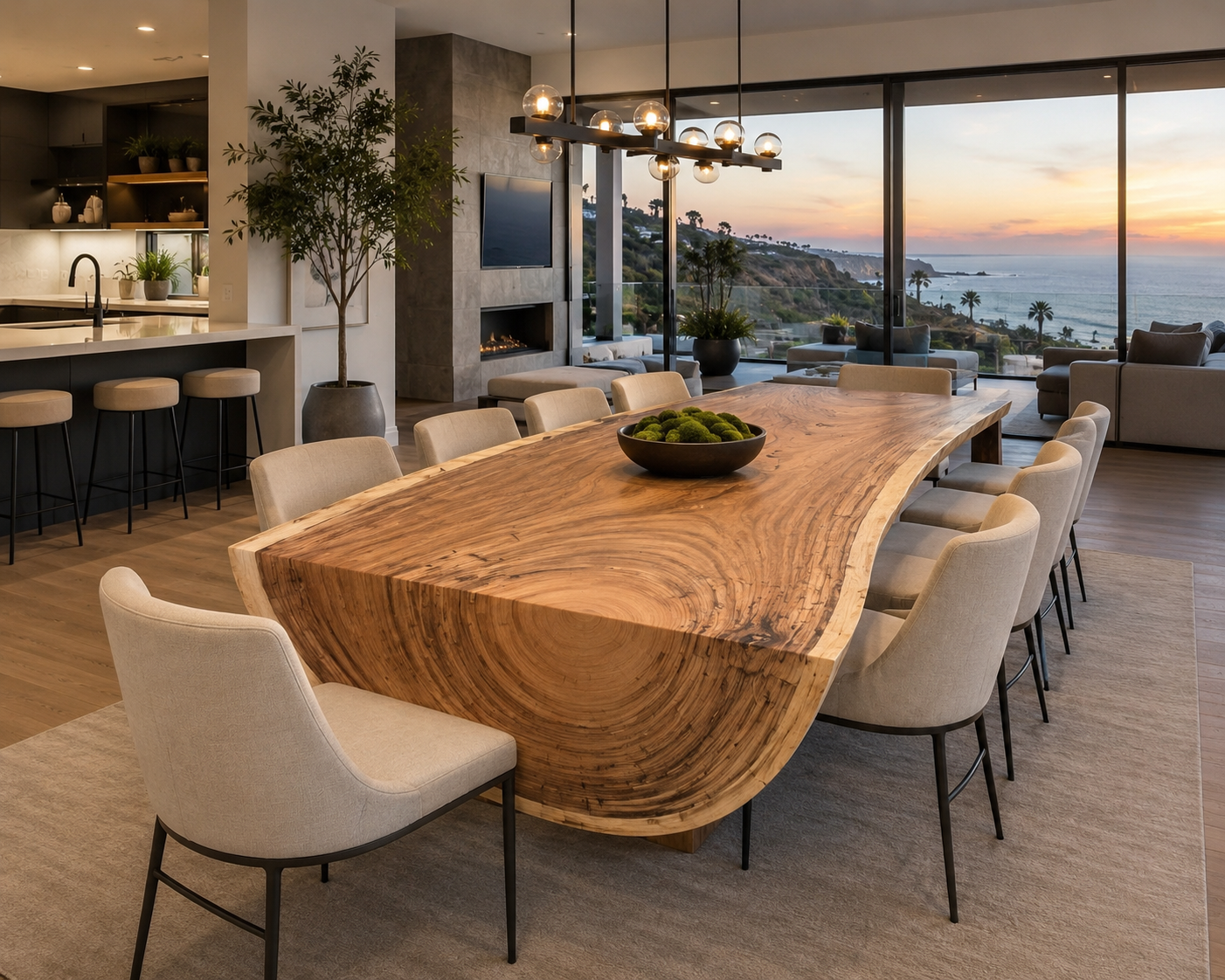
7. Delivery & Installation
Large live edge tables can be extremely heavy.
An oversized hardwood and resin dining table may require specialized handling, multiple installers, careful access planning, and professional placement inside the home.
Stairs, elevators, narrow doorways, flooring, table dimensions, and base assembly can all affect installation.
For larger custom projects, thinking about delivery before the table is completed can prevent surprises later.
So, What Should You Budget for a Custom Live Edge Table?
There is no single price that accurately represents every custom live edge dining table.
A smaller, relatively straightforward design and an enormous museum-quality slab with extensive resin work are fundamentally different projects.
Rather than beginning with a generic table and adding upgrades, we prefer to begin with the client's space, desired dimensions, aesthetic, and individual wood slab.
That allows the investment to reflect the actual piece being created.
When comparing prices, it is also worth asking exactly what you are comparing.
Is the table made from solid hardwood?
Are you selecting the actual slab?
Is it genuinely custom sized?
Who is completing the resin and finishing work?
Is the base designed appropriately for the slab?
How will the table be delivered and installed?
Those answers often explain why two tables that appear similar in a photograph can be very different pieces of furniture.
Is a Custom Live Edge Table Worth It?
For the right client, absolutely.
A custom table is not simply about having somewhere to eat.
It provides the opportunity to choose the material, dimensions, character, and design of a piece that may remain in the home for decades.
Natural wood also ensures that another client cannot order an identical table.
The grain, edge, knots, figuring, coloration, and movement within your slab belong to that particular tree.
Once it becomes your table, there will never be another one exactly like it.
Custom Live Edge Tables for San Diego Homes
Indigenous by La Rue creates custom live edge dining tables for San Diego, La Jolla, Del Mar, Rancho Santa Fe, Encinitas, Solana Beach, Coronado, and surrounding Southern California communities.
We work with homeowners as well as interior designers, architects, builders, and commercial clients to create tables appropriate for everything from intimate dining spaces to expansive luxury homes and executive conference rooms.
Clients can participate in selecting the actual slab and customizing dimensions, resin, base design, and finishing details around their project.
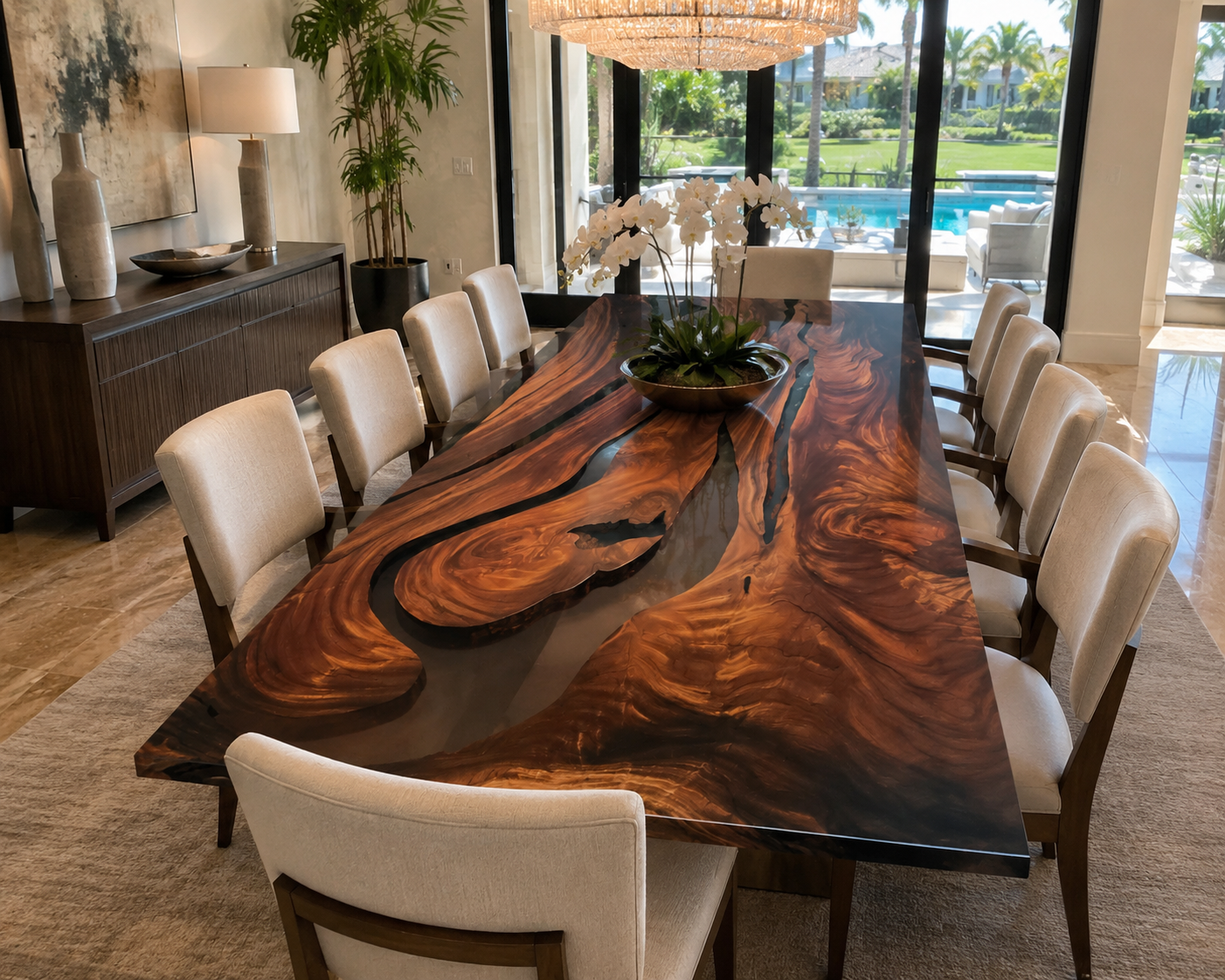
Start Designing Your Custom Table
If you are researching the cost of a custom live edge table in San Diego, the best place to begin is not with a generic price chart.
Begin with the table you actually want.
Consider your room dimensions, desired seating capacity, preferred wood character, and whether you are drawn to natural live edge wood, clear resin, or a more architectural design.
From there, we can help identify slabs and design possibilities appropriate for your project.
Looking for a custom live edge dining table in San Diego? Contact Indigenous by La Rue to explore available slabs and begin designing a one-of-a-kind table for your home or project.
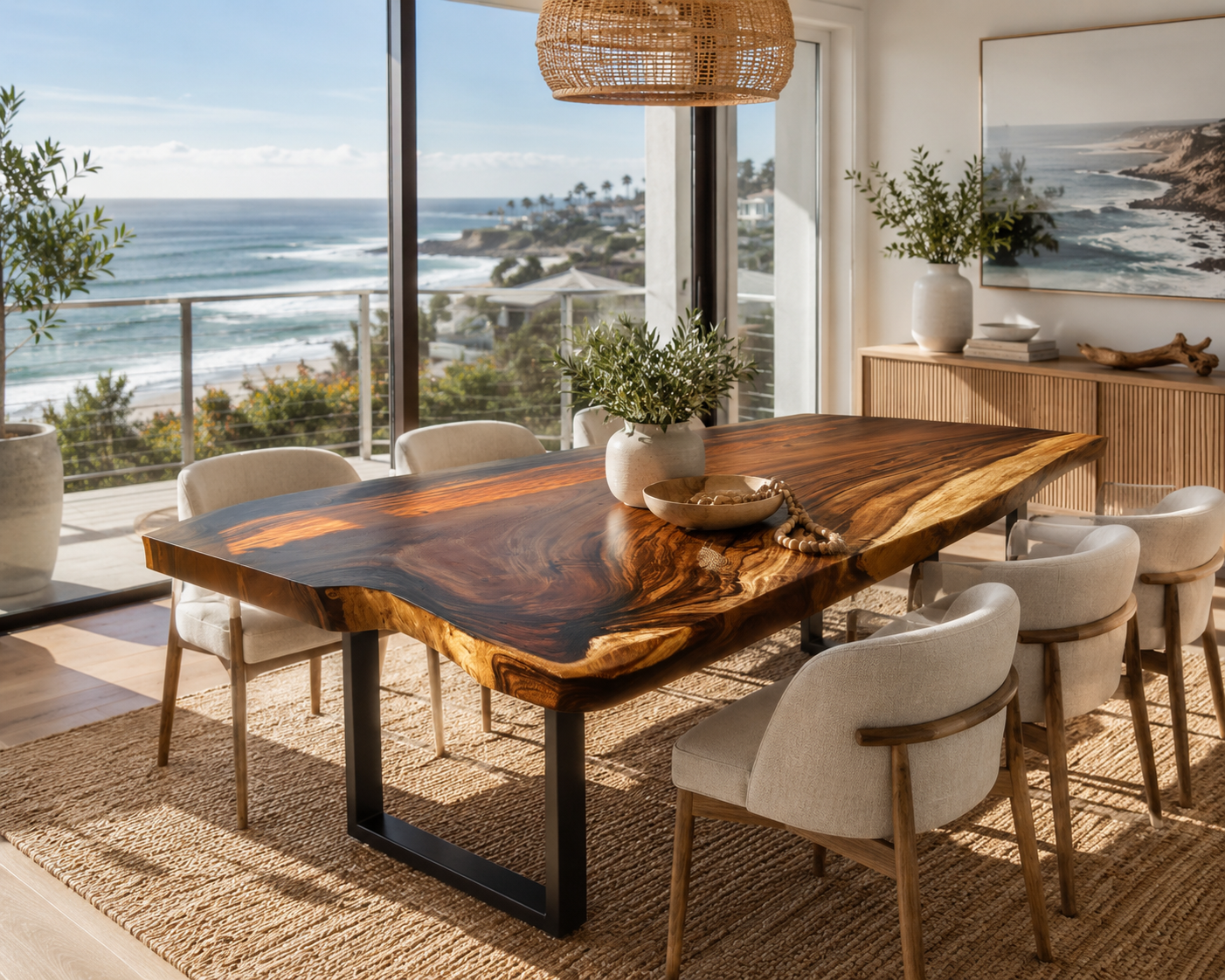
Where to Buy a Live Edge Table in San Diego: What to Look for Before you Buy
Shopping for a live edge table in San Diego? Discover what to look for in a slab selection, craftsmanship, materials, sizing and design when choosing a custom live edge table for your home or business.
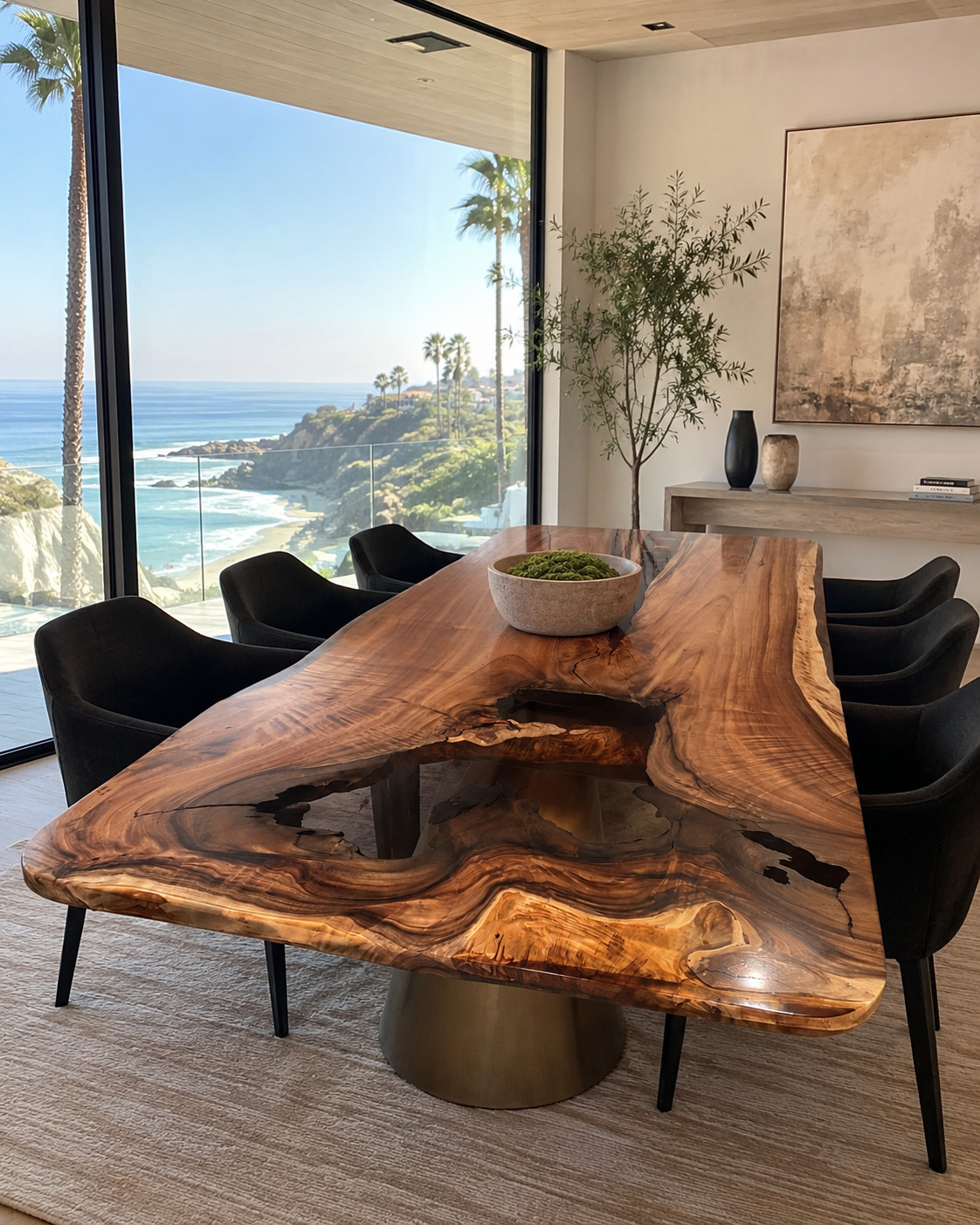
A live edge table is more than a piece of furniture. When it is made well, it becomes an architectural element of the room—one that highlights the natural character of the wood while being designed specifically for the way you live.
For San Diego homeowners, designers, and businesses looking for a live edge table in San Diego, there are more options than ever. But not all live edge furniture is created the same way.
Before investing in a custom table, it helps to understand what separates a truly handcrafted piece from mass-produced furniture designed to simply look handmade.
At Indigenous by La Rue, we design and build custom live edge furniture here in San Diego, working with distinctive slabs, natural edges, resin, sculptural bases, and custom dimensions to create pieces specifically for each space.
Here are some of the most important things to consider before choosing your table.
1. Start With the Slab
The wood itself should be the foundation of the design.
Every slab has its own grain, coloration, knots, figuring, natural edges, and imperfections. Those characteristics are what make a live edge table impossible to duplicate exactly.
When shopping for a custom live edge table in San Diego, ask whether you will be able to select the actual slab used for your table.
Choosing the slab allows you to consider details such as:
Wood species
Grain and figuring
Natural edge movement
Color variation
Width and length
Knots and organic characteristics
Whether natural openings will remain visible or incorporate resin
For many of our custom projects, the design begins with the client seeing the available material and choosing the slab that speaks to them.
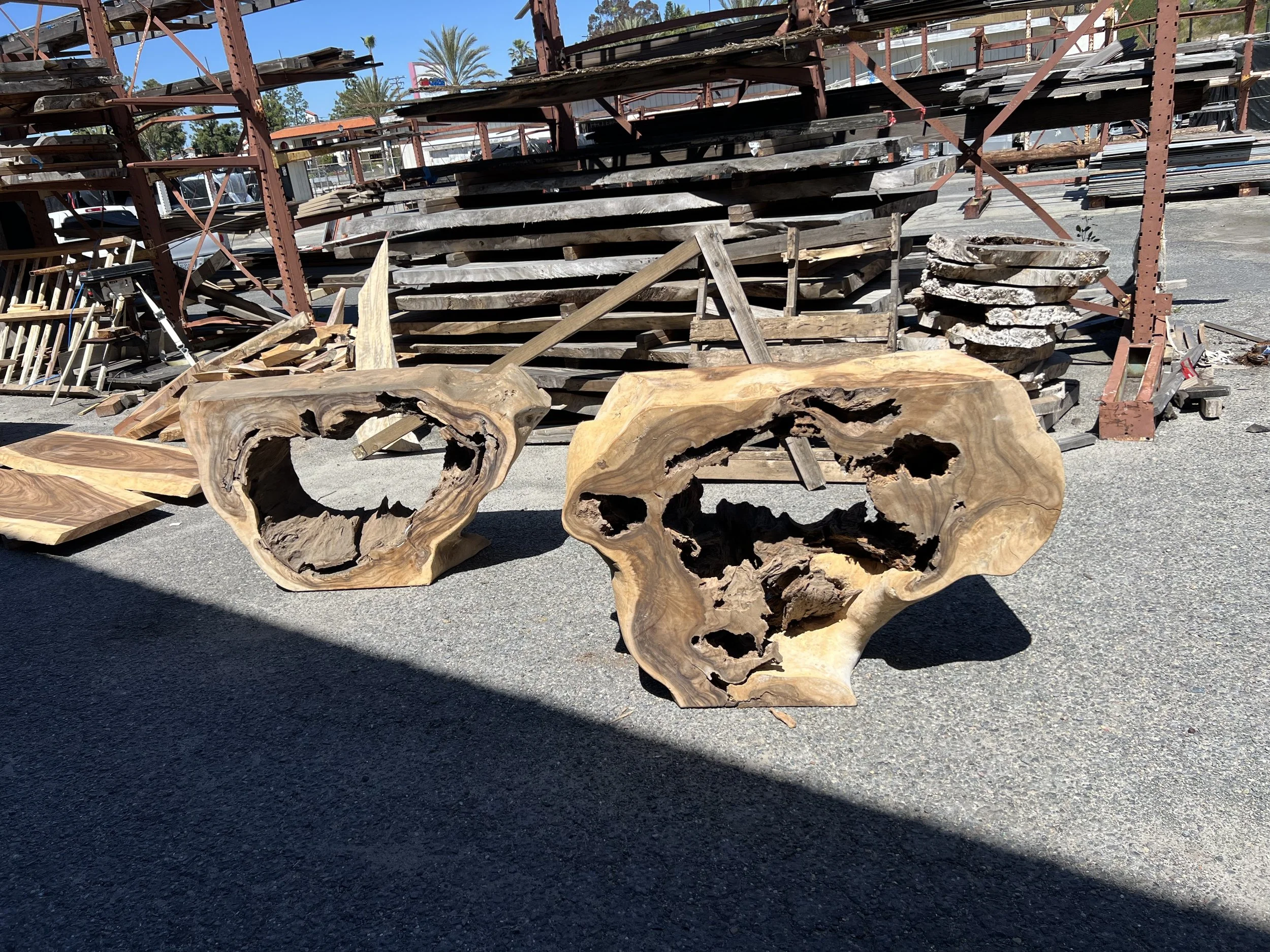
2. Understand How the Wood Has Been Prepared
Beautiful wood is only the beginning.
Proper drying and preparation are critical when creating furniture from large solid-wood slabs. Wood naturally responds to changes in humidity and temperature, which means moisture content and proper preparation matter enormously when building a table intended to last.
Ask your furniture maker about how the slabs are dried, stored, prepared, flattened, and finished.
A well-built live edge table should be designed with the natural movement of solid wood in mind.

3. Look Closely at the Craftsmanship
Two tables made from the same species of wood can look dramatically different depending on how they are constructed and finished.
Look beyond the slab itself.
Pay attention to the surface preparation, edge work, joinery, resin work when applicable, base construction, stability, and finish.
A quality finish should enhance the wood rather than make it look artificial. The goal is to preserve the depth and character of the grain while creating a surface capable of handling everyday use.
These details are particularly important when commissioning a custom dining table in San Diego, where the piece may be used every day for decades.
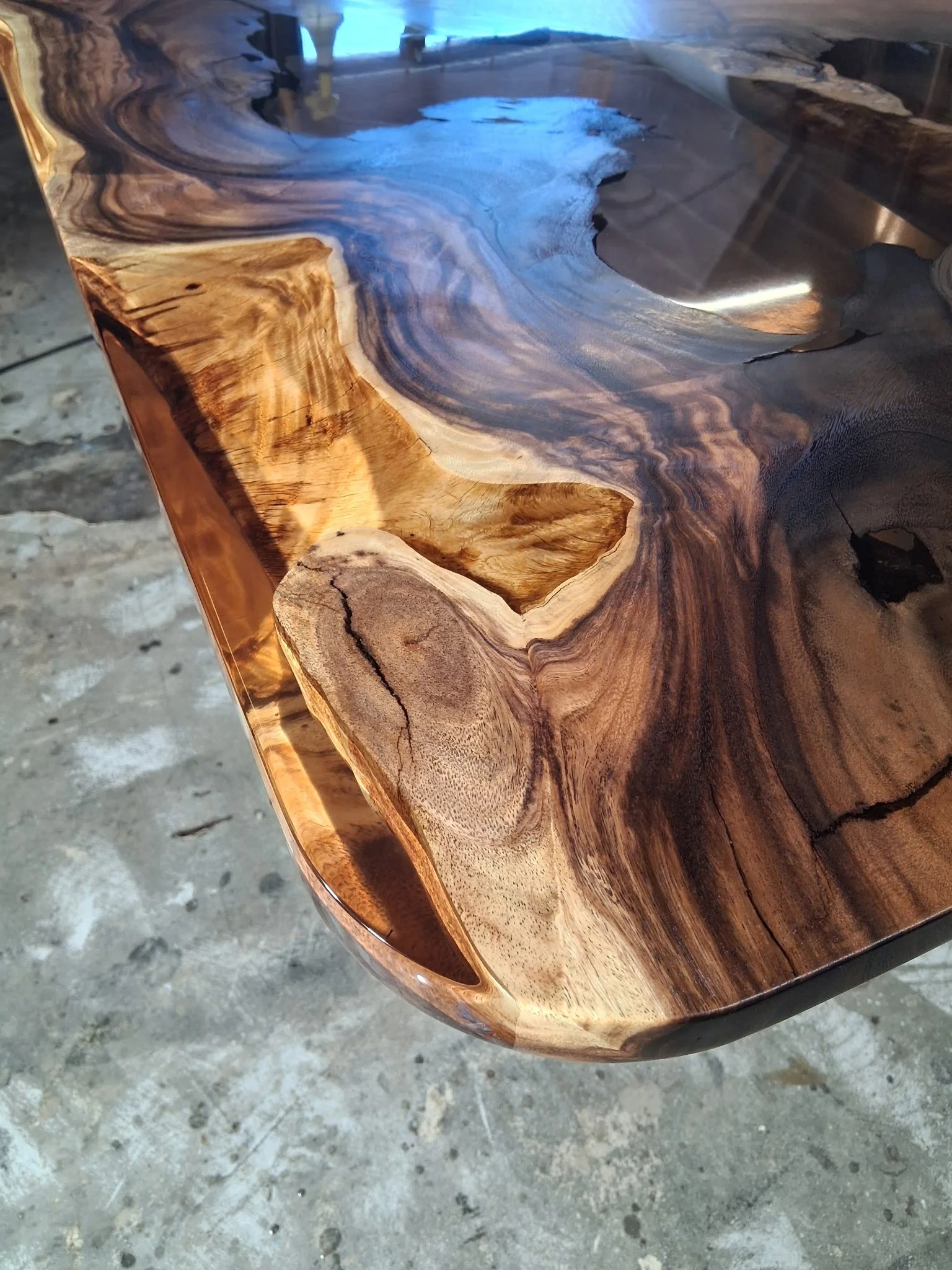
4. Decide Between Natural Live Edge and Resin
Live edge furniture does not necessarily mean a river table.
Some clients want the wood to remain as natural as possible, allowing the shape and movement of the slab to become the focus.
Others prefer clear, tinted, or opaque resin incorporated into natural voids or between slabs.
Neither approach is inherently better.
The right choice depends on the wood, the architecture of the home, and the overall design direction.
In contemporary San Diego interiors, we often find that restraint creates the strongest result. Resin can be incredibly beautiful when it complements the slab rather than overpowering it.
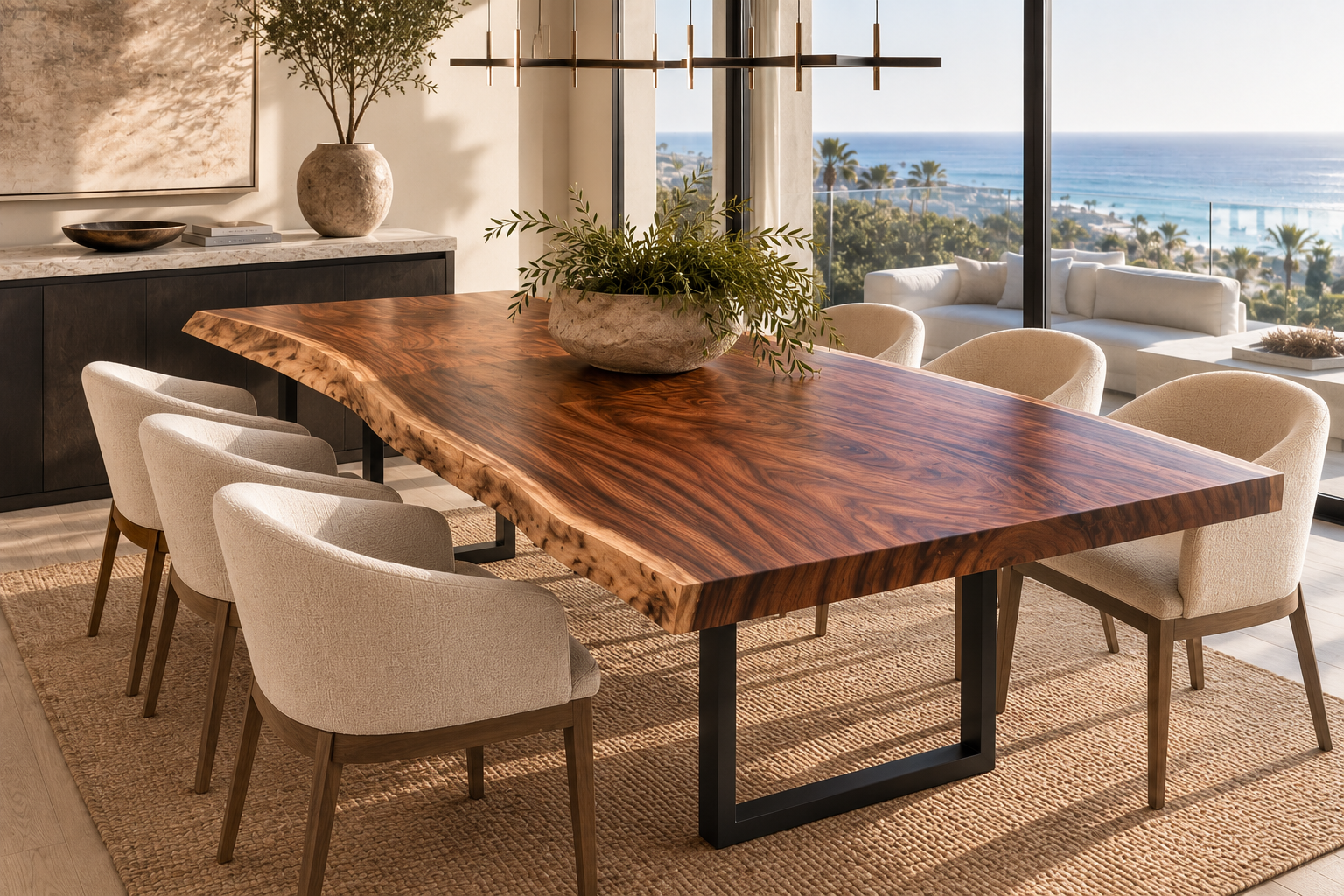
5. Make Sure the Table Is Designed for Your Space
One of the biggest advantages of purchasing custom furniture is the ability to design around the room rather than trying to make a predetermined size work.
Before ordering a table, consider:
Overall room dimensions
Number of seats needed
Chair width
Clearance around the table
Lighting placement
Nearby architectural features
Table height
Base placement and legroom
A custom table can then be proportioned specifically for the space.
This is especially helpful in San Diego homes where architecture can range from coastal contemporary properties in La Jolla and Del Mar to larger estates in Rancho Santa Fe and modern homes throughout the county.
6. Don't Overlook the Base
The base can completely change the personality of a live edge table.
A sculptural wood base can make the table feel organic and artistic. A refined metal base can create a cleaner contemporary profile. Transparent or resin elements can allow the slab itself to remain visually dominant.
More importantly, the base needs to be engineered for the size and weight of the tabletop while still providing comfortable seating.
For a custom piece, the base should be part of the overall design—not an afterthought.
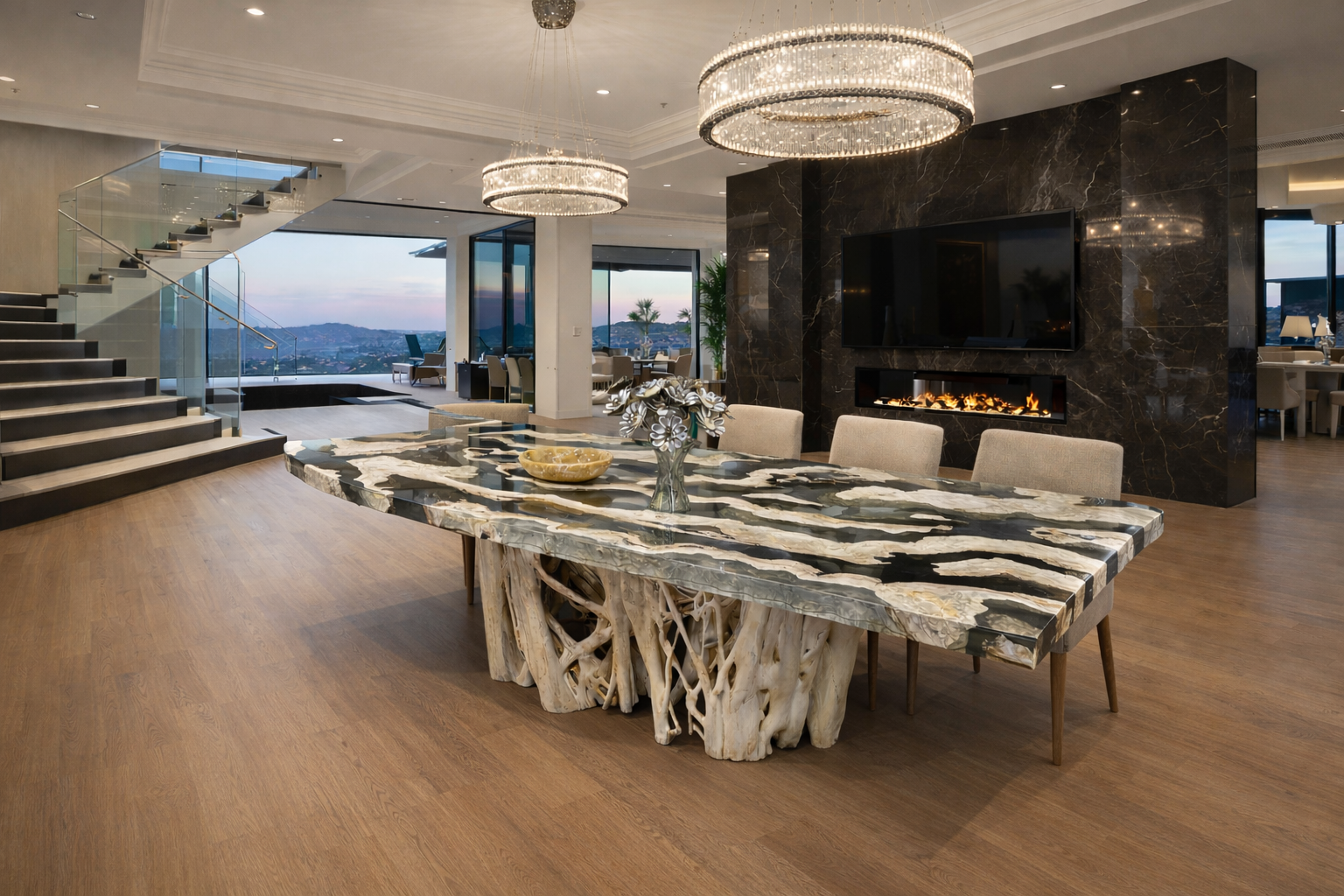
7. See the Materials in Person When Possible
Photography is incredibly helpful, but wood is tactile.
Grain, depth, texture, scale, and natural movement can look very different in person.
One advantage of working with a San Diego custom furniture maker is the opportunity to see finished pieces and available materials locally.
At Indigenous by La Rue, our clients can experience our furniture in our San Diego-area showrooms and explore material options for custom projects.
For clients commissioning a one-of-a-kind table, seeing the craftsmanship and wood firsthand can make the selection process much easier.
8. Ask Who Is Actually Building the Table
“Custom” has become a widely used word in the furniture industry.
Sometimes it means choosing a finish or size from a predetermined menu. Other times, it means designing and building a piece individually from the slab forward.
If you are investing in a true custom table, ask who is making it, where it is being built, and how involved you can be in the design process.
Knowing the people behind the work gives you a much better understanding of what you are purchasing.
Where to Buy a Live Edge Table in San Diego
If you're searching for live edge tables in San Diego, look for a maker that gives you the opportunity to understand the materials, construction, and design process before you purchase.
At Indigenous by La Rue, we specialize in custom live edge tables and one-of-a-kind furniture designed around both the material and the space it will ultimately inhabit.
Our work includes natural live edge dining tables, resin tables, conference tables, coffee tables, consoles, and other custom furniture created for residential and commercial spaces throughout San Diego and beyond.
Clients can explore finished pieces in our San Diego-area showrooms or work with us to create a completely custom piece beginning with the slab itself.
Looking for a Custom Live Edge Table in San Diego?
Whether you already know exactly what you want or you're beginning with nothing more than a room and an idea, the process should start with the right material.
Explore our Live Edge Tables San Diego collection, learn more about our Custom Furniture San Diego services, or contact Indigenous by La Rue to begin designing a custom table for your space.
A great live edge table shouldn't simply fill a room.
It should be the piece the room is built around.
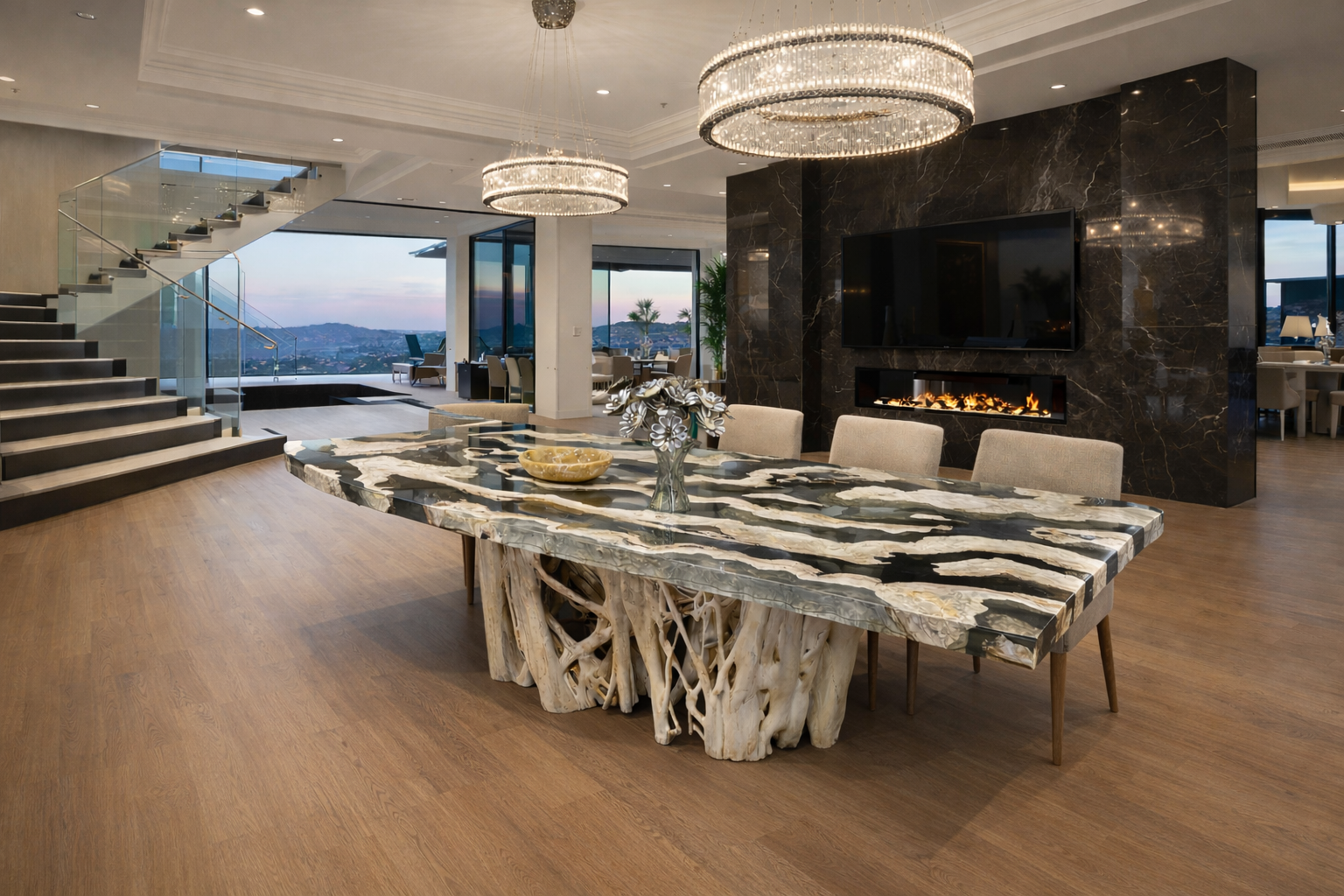
How to Choose a Custom Live Edge Table in San Diego
Discover how to choose the perfect custom live edge dining table for your San Diego home, from selecting the right wood slab and size to finishes, resin details and custom bases.
A live edge dining table is more than a piece of furniture. The natural shape, grain and character of the wood make every table unique, especially when the piece is designed specifically for the home it will live in.
At Indigenous by La Rue, we design and build custom live edge tables in San Diego using carefully selected slabs, handcrafted finishes and bases chosen to complement each individual piece of wood.
If you're considering a custom live edge dining table, here are some of the most important things to consider before choosing your slab and design.
1. Start With the Right Wood Slab
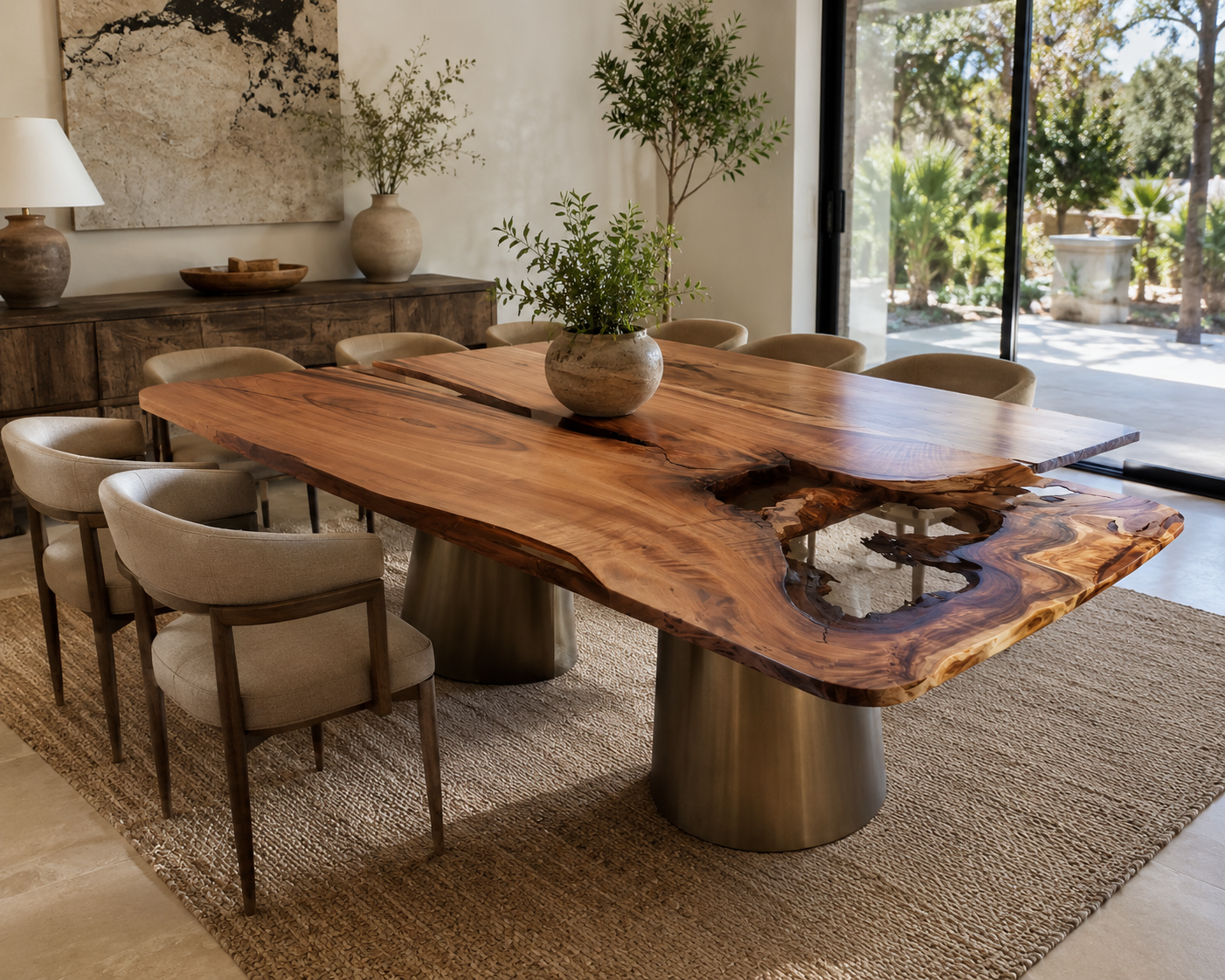
The slab is the foundation of the entire table.
Walnut is a favorite for its rich color and sophisticated grain, while other woods can offer lighter tones, dramatic figuring or more organic edges.
Beyond wood species, look at the personality of the individual slab. Knots, grain movement, natural edges and variations aren't imperfections—they're what make a live edge table one of a kind.
For many of our San Diego clients, selecting the actual slab is one of the most exciting parts of creating their table.
2. Choose the Right Size for Your Space
A custom table should feel as though it was designed for the room rather than simply placed inside it.
Consider the dimensions of the dining area, the number of people you normally seat and how much clearance you have around the table.
Large open-concept homes may accommodate substantial statement tables, while a narrower dining space may benefit from a more streamlined slab.
Because we build our tables to order, the dimensions can be tailored to the room.
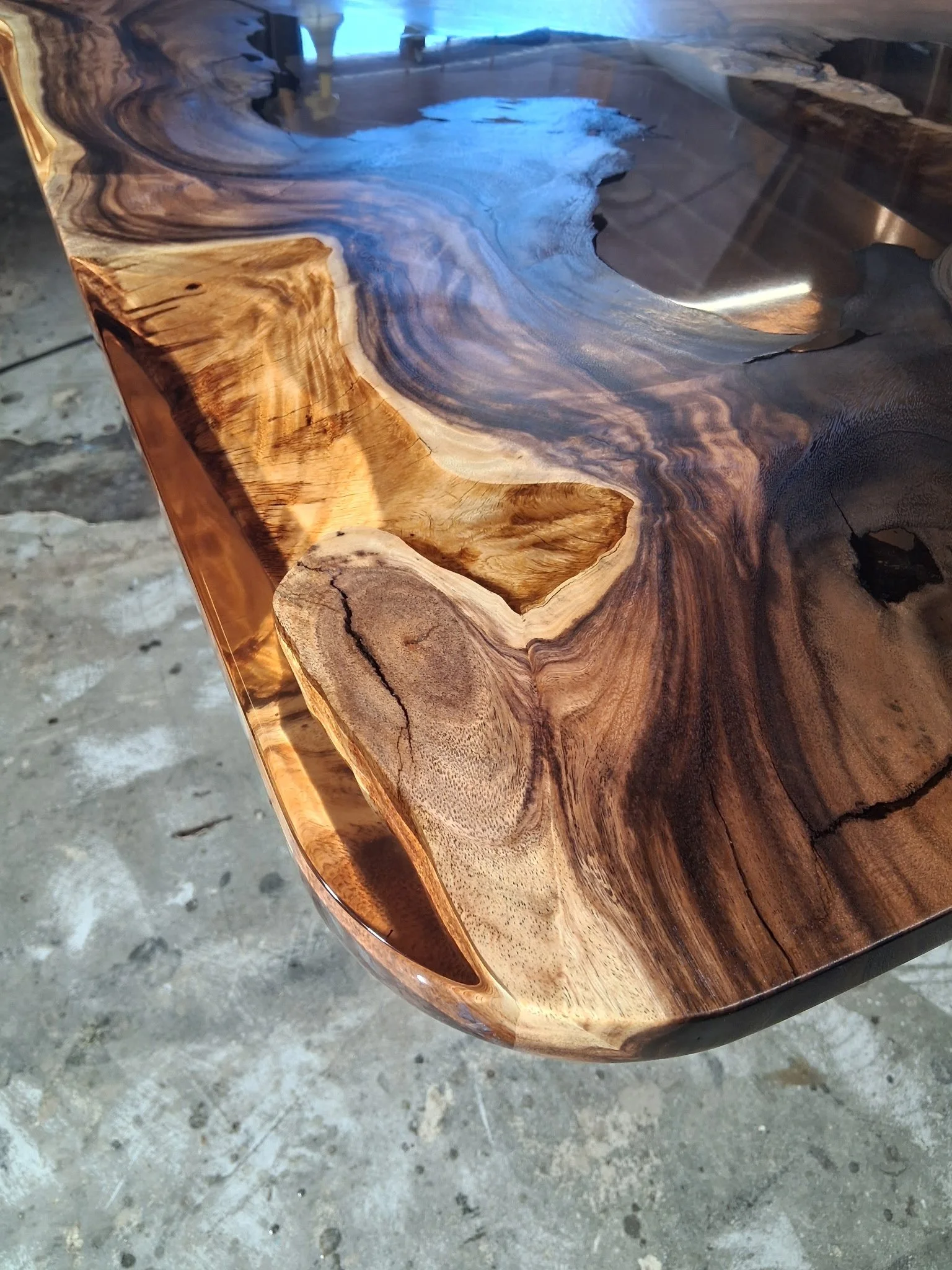
3. Decide How Natural You Want the Table to Feel
Live edge furniture can range from highly organic to very refined.
Some clients want dramatic natural edges and visible characteristics in the wood. Others prefer a cleaner silhouette with subtle live edges and a sophisticated finish.
Resin can also be incorporated selectively to stabilize natural voids or become part of the design itself.
The goal isn't to make every slab look perfect. It's to highlight what makes that particular piece of wood extraordinary.
4. Select a Base That Complements the Slab
The base dramatically changes the personality of a live edge table.
A simple architectural metal base can create a clean contemporary look, while a sculptural wood or organic base can turn the entire table into a statement piece.
We often design the base after selecting the slab so the two elements feel intentional together.
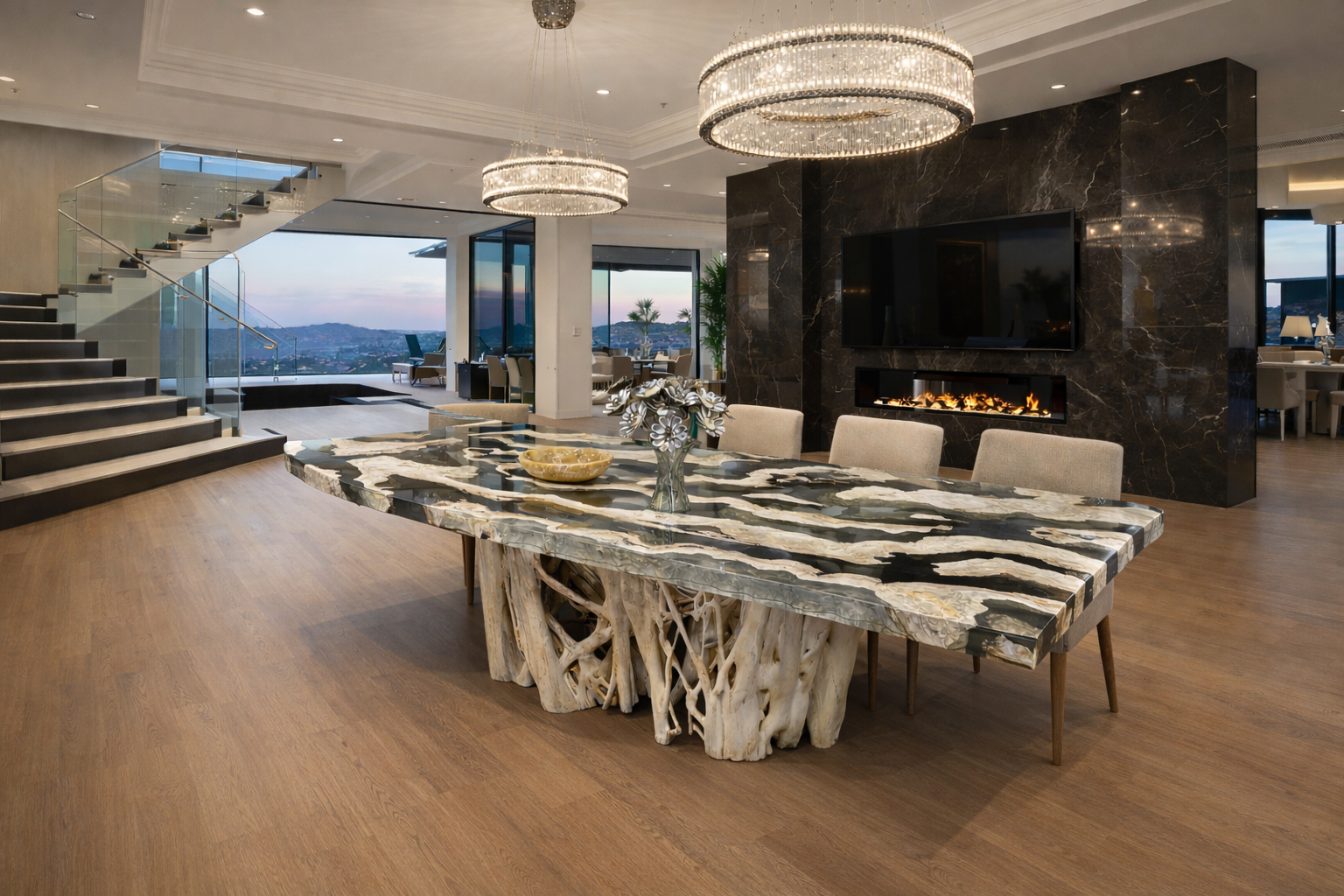
5. Think About the Rest of the Room
A dining table is often one of the largest pieces of furniture in a home.
Before finalizing a design, consider the flooring, cabinetry, lighting, chairs and surrounding furniture.
This is especially important in contemporary and coastal San Diego homes, where natural materials can add warmth without making a space feel heavy.
6. See the Materials in Person When Possible
Photographs are helpful, but seeing natural wood in person is different.
The depth of the grain, variations in color and scale of a large slab can be difficult to appreciate on a screen.
Our San Diego-area clients can explore our custom furniture in San Diego and available materials through Indigenous by La Rue and work with us to develop a table specifically for their home.
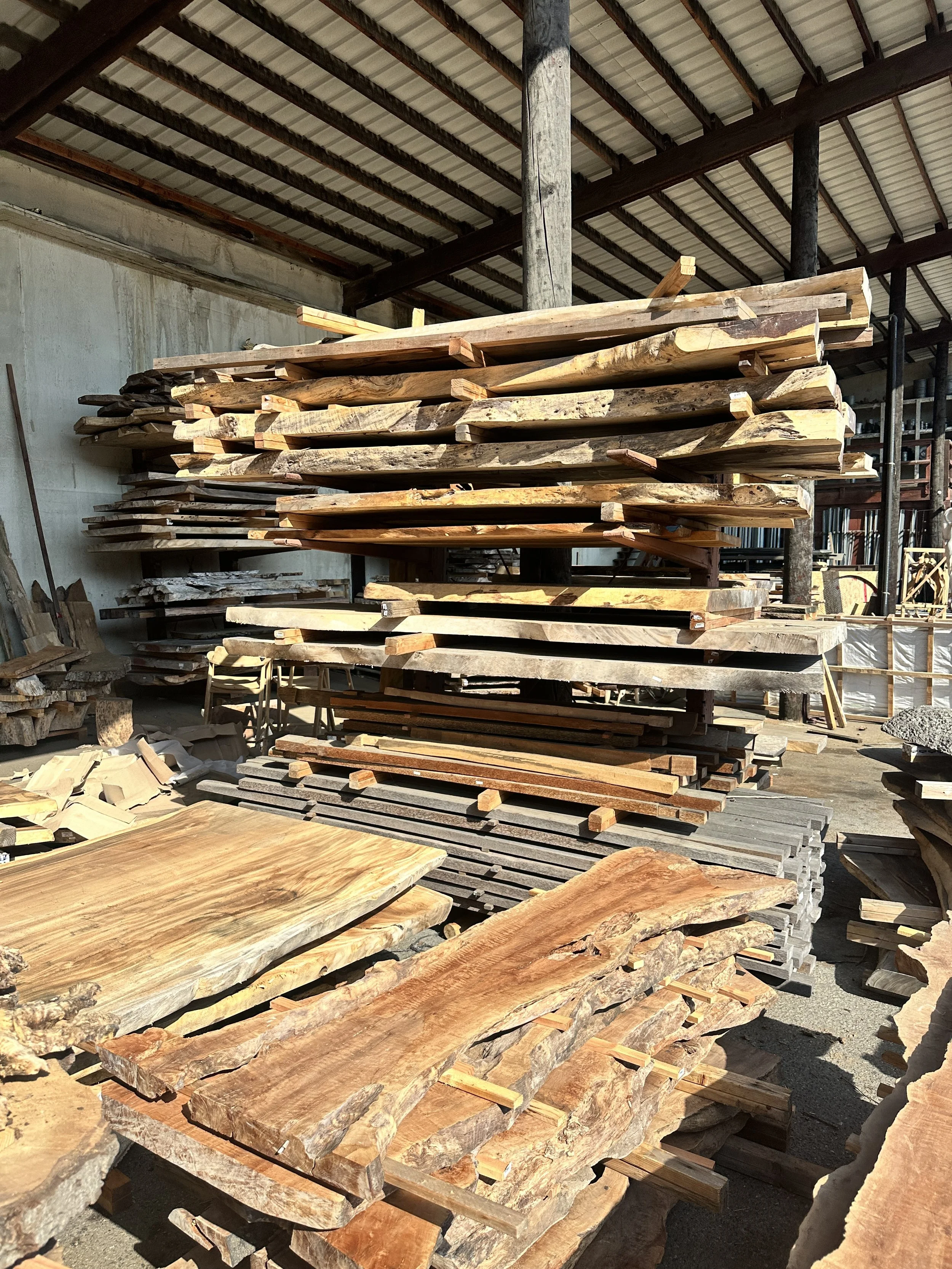
Custom Live Edge Tables Made in San Diego
A truly custom live edge table begins with the wood and evolves around the client, the home and the way the table will be used.
At Indigenous by La Rue, each table is individually designed and handcrafted rather than mass produced. From selecting the slab to determining dimensions, finish and base design, we create pieces intended to become permanent parts of the homes they were made for.
If you're considering a custom dining table, explore our Custom Live Edge Tables in San Diego collection or contact Indigenous by La Rue to begin selecting the right piece for your space.
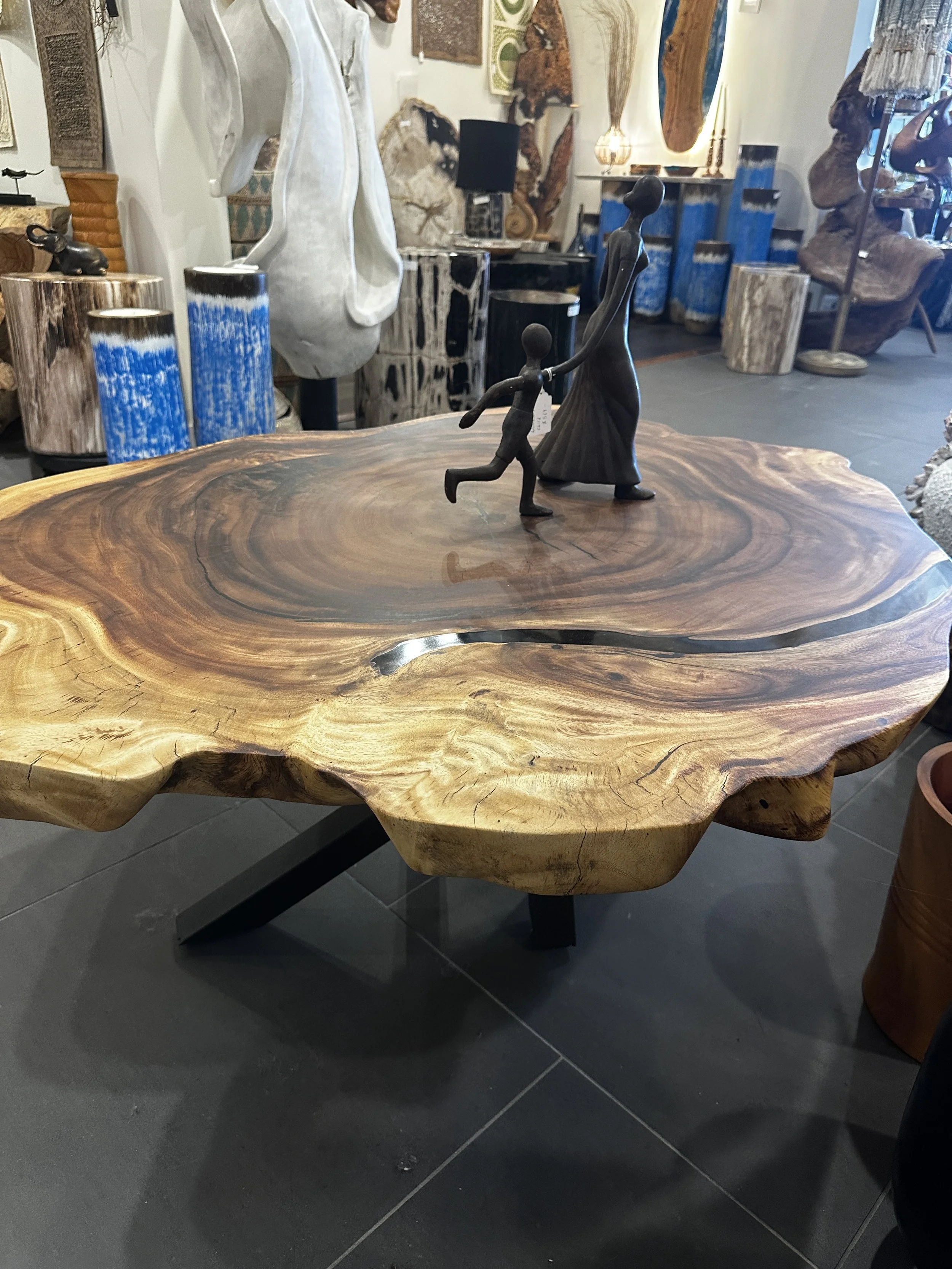
Why Everything’s Coming Full Circle: The Rise of Round Furniture in 2025
Hand crafted and made in the USA. Our Acacia crosscut coffee table is sure to make a statement in your home. The natural round shape is only enhanced by the crystal clear accent of resin following the natural ring of the Acacia slice.
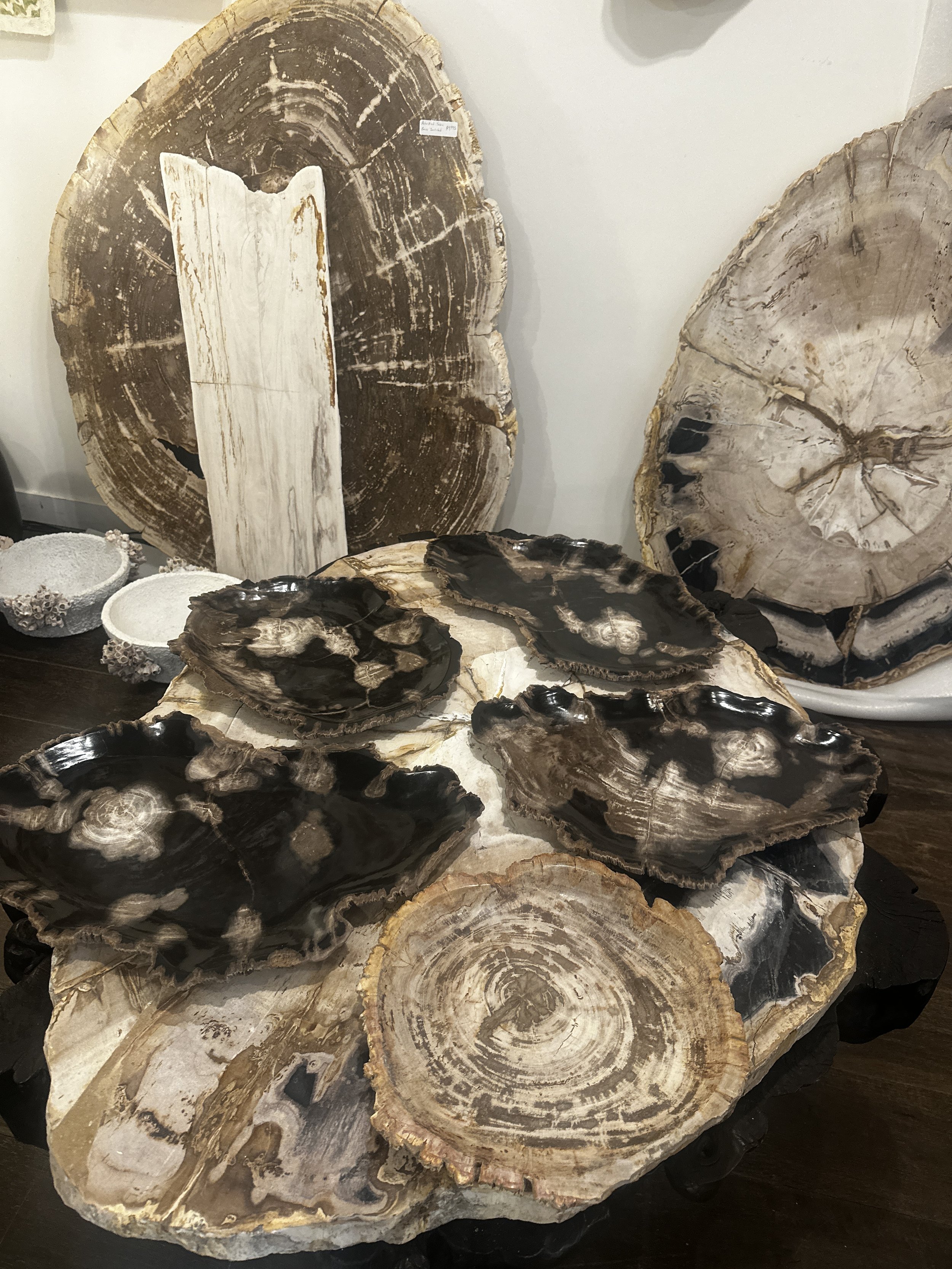
There’s something happening in design right now—furniture is softening, edges are melting, and spaces are embracing the beauty of the curve. At Indigenous by LaRue, we’ve always believed that nature doesn’t do sharp corners, and this season, the world of interiors is finally catching up. Circular and rounded shapes are having a major moment, and let me tell you… it’s about time.
From round dining tables that bring people together in sacred symmetry to arched benches and organically-shaped coffee tables, this trend is more than just aesthetic—it’s emotional. Round furniture makes a space feel held. There’s a sense of flow, of softness, of ease. And after the last few years, who isn’t craving a little more peace in their home?
Why Round Is the New Bold
Rounded forms are a quiet rebellion against the clinical lines of past decades. They speak to comfort, to movement and uniqueness. In fact, designers and trendsetters are calling it the “soft modern” look—a perfect blend of contemporary and cozy.
And while minimalism is still in play, curves make it feel human again. Think: sculptural stools, pebble-shaped side tables, and circular mirrors that reflect light (and love) back into your space.
Rooted in Culture, Not Just Trend
For us, this isn’t just about what’s “in.” Rounded shapes connect deeply to Indigenous philosophies, too—many of our ancestors built with circles, gathering in them, cooking in them, dancing in them. Circles represent cycles, unity, and eternity. When you bring a round piece into your home, you’re not just following a trend—you’re honoring a history that’s been here all along.
Our Take
At Indigenous by LaRue, we’re leaning into this revival with intention. Our handcrafted pieces highlight natural curves and soft edges, Seeking to highlight the beauty of nature in a new modern way with inlaid resin or keeping it organic and open either choice is up to you and your esthetic.
Closing the Loop
So if you’re redesigning your home or just want to add one fresh, intentional piece—go round. Go soft. Go bold. This is the year to embrace curves, in your furniture and in your life.
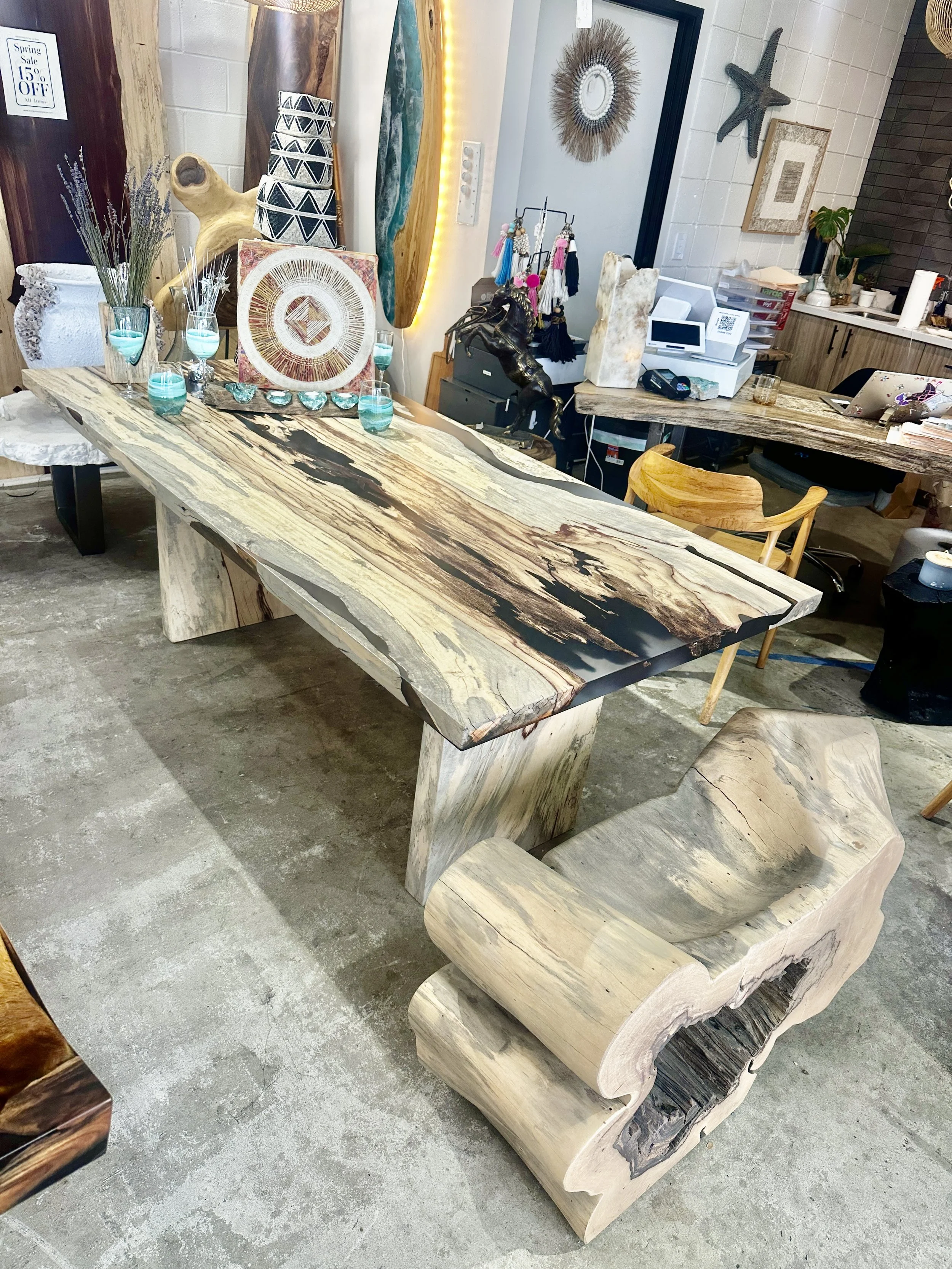
Handcrafted Custom made Furniture for your Home
When quality and design are what you’re looking for, we at Indigenous by La Rue are ready to help.
Specializing in custom handcrafted solid wood furniture. We make it here in Sunny San Diego to the specs for your home out of the most durable and exotic sustainably sourced wood finished with the highest quality finishes.
Come design with us and you’re sure to see the difference.
Custom Wood Slab Furniture: Handcrafted Elegance for Your Home or Office
Looking to elevate your space with something timeless, sustainable, and uniquely beautiful? Custom wood slab furniture offers a stunning alternative to mass-produced pieces. Each live edge table or handcrafted wood slab is a one-of-a-kind creation—rich in character, texture, and story.
What Is Wood Slab Furniture?
Wood slab furniture is made from large, single sections of hardwood, often featuring natural edges known as live edges. These slabs retain the raw, organic shape of the tree, showcasing unique grain patterns, knots, and color tones. Common species include walnut, maple, cherry, and oak—each offering its own signature look.
Whether you’re furnishing a dining room, office, or entryway, custom slab tables are bold, natural statement pieces that blend rustic charm with modern design.
Why Choose Custom Wood Furniture?
Custom-designed wood furniture allows you to tailor each detail to your style and space. From choosing the perfect slab to selecting the base design, finish, and size, you’re involved every step of the way. This ensures your table, bench, or desk fits your aesthetic—and your lifestyle—perfectly.
Benefits of going custom include:
Uniqueness: No two slabs are the same.
Quality: Crafted by hand for lasting durability.
Personalization: Designed to your exact specifications.
Sustainability: Responsibly sourced or reclaimed materials.
The Craftsmanship Behind Every Piece
Our process begins with sourcing premium hardwood slabs, often from locally salvaged trees. After proper drying and flattening, each piece is shaped, sanded, and finished with expert care. Whether you want a modern live edge dining table, a rustic conference table, or a floating wood slab shelf, we bring craftsmanship and attention to detail to every project.
A Sustainable & Ethical Choice
Unlike factory-made furniture, custom wood slab pieces are made with sustainability in mind. We use eco-friendly finishes and responsibly harvested wood, often reclaiming material that would otherwise go to waste. By investing in a custom piece, you’re also supporting local artisans and ethical craftsmanship.
Popular Custom Wood Slab Furniture Options
Live Edge Dining Tables
Custom Coffee Tables
Executive Wood Slab Desks
Console and Entryway Tables
Benches and Countertops
Floating Shelves and Bar Tops
Let’s Bring Your Vision to Life
If you’re ready to invest in custom wood slab furniture that brings natural beauty and unmatched craftsmanship into your home or office, we’re here to help. From concept to completion, we work with you to create something that’s not just furniture—but a conversation piece.
Contact us today to start designing your handcrafted wood slab table.
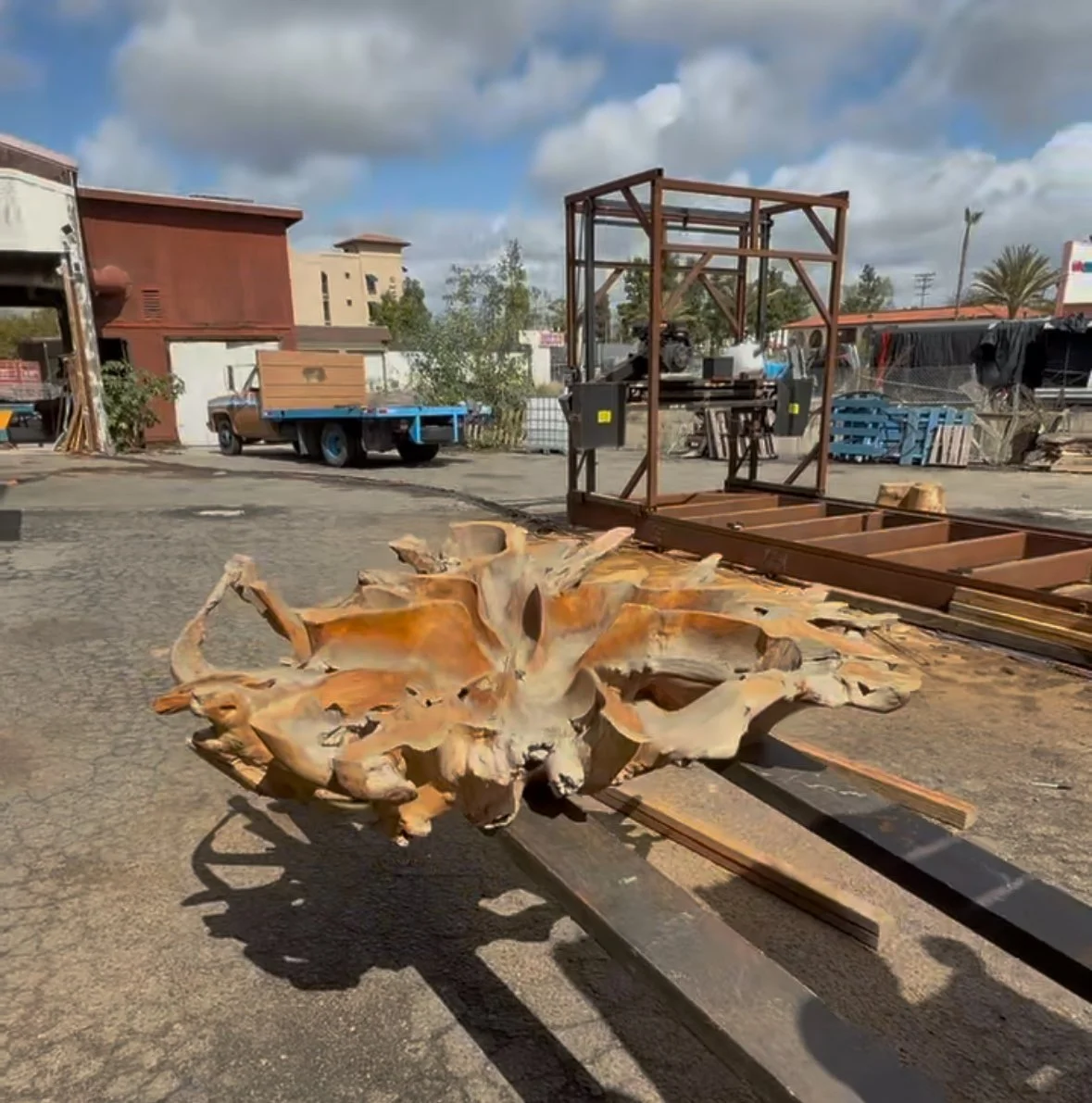
Kiln Drying, Custom Milling, Slab Flattening & Resin Pours – Pro Wood Services
Kiln Drying, Custom Milling, Slab Flattening & Resin Pours – Pro Wood Services
Looking for professional wood services? We’ve got you covered!
Looking for professional wood services? We’ve got you cover !
We offer:
Kiln Drying – Properly dried wood for stable, high-quality projects. We have three wood kilns that can properly dry slabs up to 8’ wide.
Custom Milling – We mill logs with our custom 60” bandsaw mill for large, custom cuts.
Slab Flattening & Surfacing – Handling slabs up to 72” wide and 20’ + long.
Resin Pours – High-end epoxy work for contractors, designers, and homeowners.
We work with builders, woodworkers, designers, and homeowners to bring your wood projects to life. Whether you need raw slabs milled, stabilized, or turned into finished pieces, we provide expert craftsmanship and reliable service.
Located in Vista, California– Serving San Diego, Orange County, Palm Springs and Los Angeles
Contact us at 760-214-8119
Message for quotes and availability!
Let’s create something amazing with your wood!
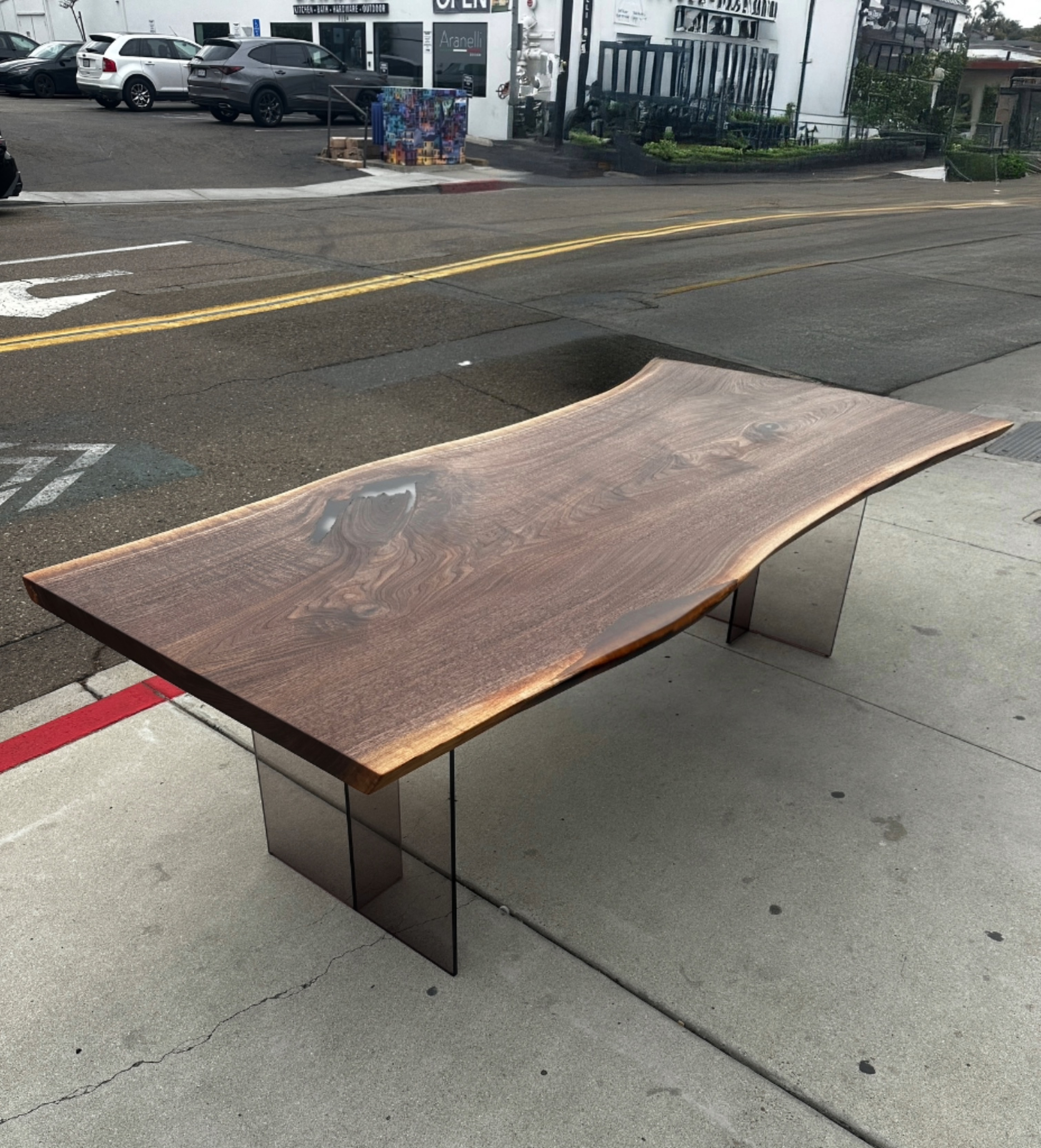
Why Live Edge Furniture is a Sustainable and Timeless Investment
In a world of fast furniture and fleeting design trends, live edge furniture stands apart as a lasting statement of craftsmanship, sustainability, and natural beauty. Whether you’re furnishing a modern home, a rustic retreat, or a luxury space, live edge pieces offer a unique blend of elegance and authenticity. But beyond aesthetics, they also represent an eco-friendly and long-term investment.
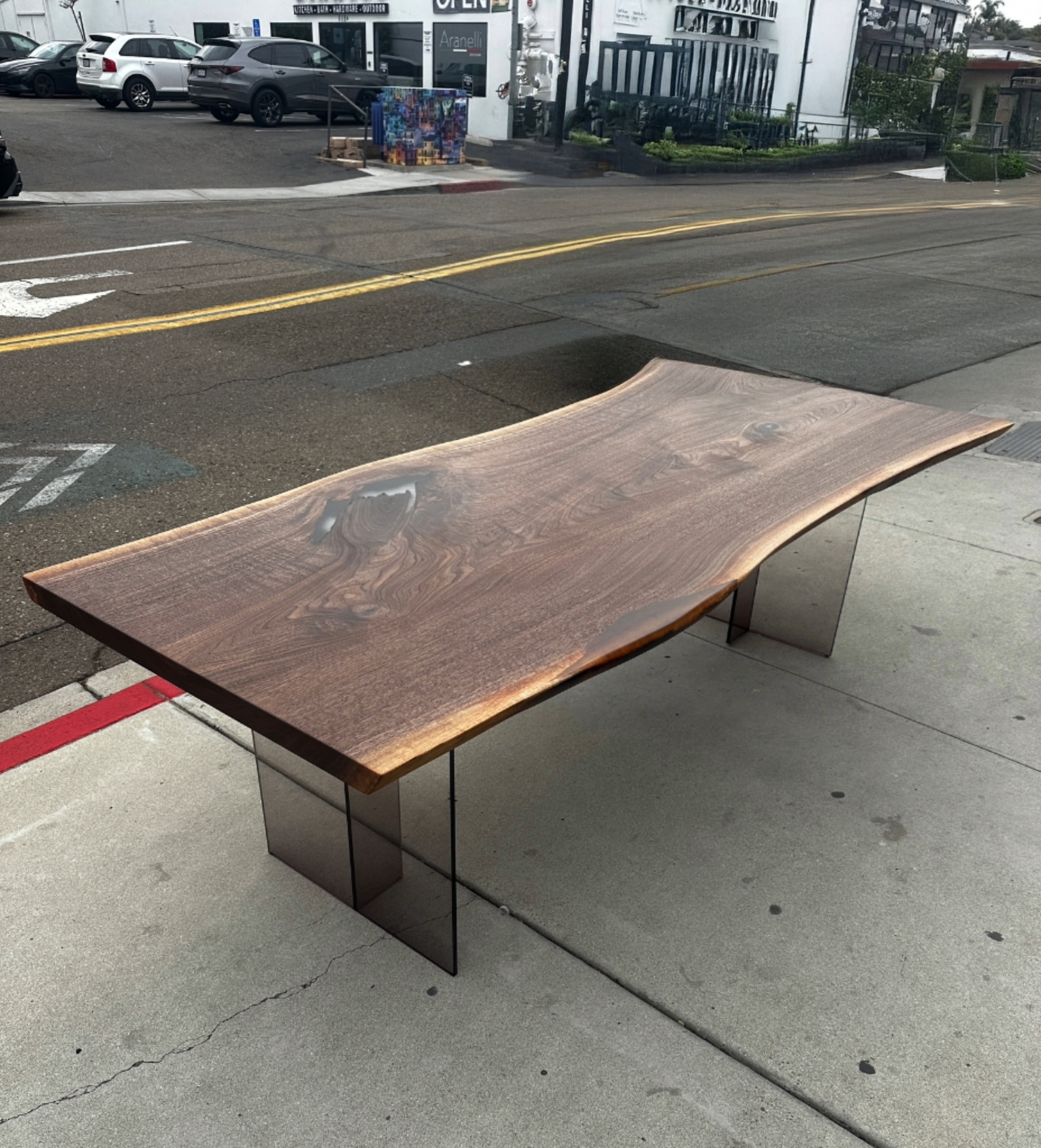
In a world of fast furniture and fleeting design trends, live edge furniture stands apart as a lasting statement of craftsmanship, sustainability, and natural beauty. Whether you’re furnishing a modern home, a rustic retreat, or a luxury space, live edge pieces offer a unique blend of elegance and authenticity. But beyond aesthetics, they also represent an eco-friendly and long-term investment.
At INDIGENOUS by La Rue, we create functional art that brings nature into your home. Here’s why live edge furniture is a sustainable and timeless choice.
1. Sustainability: A Responsible Choice
Unlike mass-produced furniture that often contributes to deforestation and waste, live edge pieces are made from responsibly sourced wood. We prioritize:
• Salvaged and Reclaimed Wood: Many of our slabs come from fallen trees or responsibly harvested sources, reducing environmental impact.
• Minimal Waste: Live edge designs embrace the tree’s natural form, using more of the wood compared to conventional furniture-making methods.
• Non-Toxic Finishes: Our tables are finished with eco-friendly, plant-based oils and resins that are safe for both you and the planet.
By choosing live edge furniture, you’re investing in a piece that respects nature rather than depleting it.
2. Built to Last: A Long-Term Investment
Unlike cheap, mass-produced furniture that wears out within a few years, live edge furniture is built for longevity. A well-crafted live edge table can last for generations with proper care. Here’s why:
• Solid Wood Construction: No veneers, no particleboard—just solid, high-quality hardwood that stands the test of time.
• Handcrafted Durability: Every piece is carefully designed to withstand daily use while maintaining its natural beauty.
• Aging Gracefully: Wood develops a rich patina over time, making it even more beautiful as the years go by.
Rather than replacing furniture every few years, live edge pieces become heirlooms that tell a story over time.
3. Aesthetic Versatility: Works in Any Space
One of the reasons live edge furniture remains timeless is its ability to blend seamlessly with different styles. Whether your home leans modern, rustic, bohemian, or minimalist, a live edge piece adds warmth and character.
• For Contemporary Homes: Pair a live edge dining table with sleek metal or resin accents for a striking contrast.
• For Rustic or Farmhouse Styles: Let the natural grain and raw edges shine alongside organic textures like stone and leather.
• For Luxury Interiors: Custom resin details, polished finishes, and exotic wood species create a truly one-of-a-kind statement.
Because no two slabs are alike, your piece is always unique—never a mass-market replica.
4. Supporting Artisans and Local Craftsmanship
At INDIGENOUS by La Rue, we believe in craftsmanship over mass production. Every table we create is handcrafted with care, preserving the artistry of woodworking. By choosing live edge furniture, you are:
• Supporting local artisans who pour skill and passion into each piece.
• Investing in authentic, handmade furniture, rather than factory-made products.
• Contributing to a more sustainable economy that values quality over quantity.
5. A Piece of Nature in Your Home
In a world dominated by synthetic materials, live edge furniture reconnects us to nature. The organic shapes, knots, and grain patterns tell a story that machine-made furniture simply can’t replicate. Whether it’s a live edge dining table, coffee table, or console, each piece carries the raw beauty of the natural world into your home.
Final Thoughts: A Wise and Beautiful Investment
Live edge furniture isn’t just a trend—it’s a timeless investment that enhances your home’s style while aligning with sustainable values. When you choose a handcrafted, solid wood piece, you’re not just buying furniture; you’re acquiring a piece of nature, history, and artistry that will last for generations.
If you’re ready to invest in a live edge table that’s as unique as your home, visit our showrooms in La Jolla and Solana Beach or explore our collection online. Let’s create something extraordinary together.
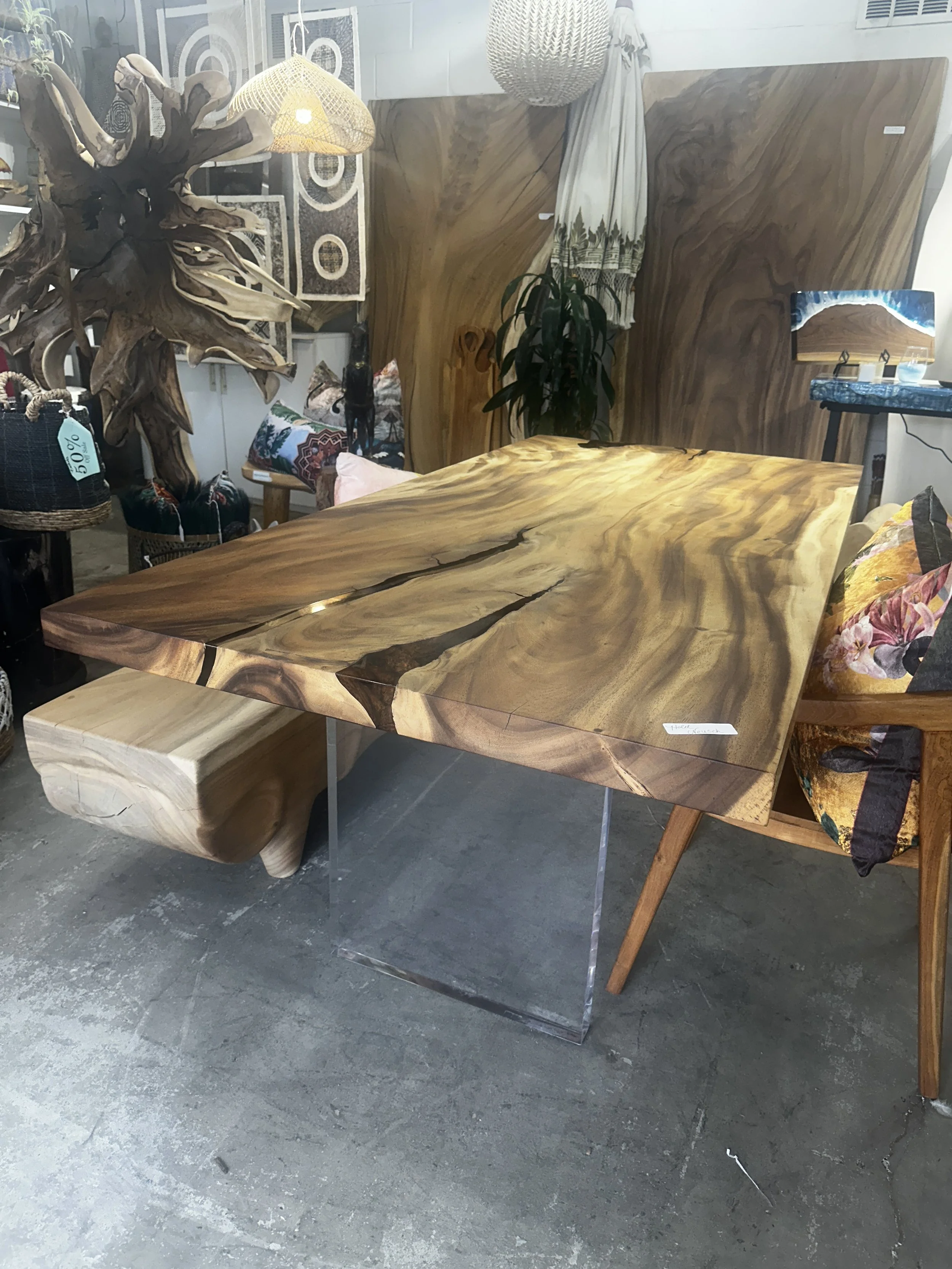
How to Pick the Perfect Custom Dining Table for Your Home
A custom dining table is more than just a place to eat—it’s the heart of your home. Whether you’re looking for a live edge table, a modern dining table, or a completely custom table tailored to your style, choosing the right one can be overwhelming. In this guide, we’ll walk you through everything you need to consider to find the perfect centerpiece for your dining space.
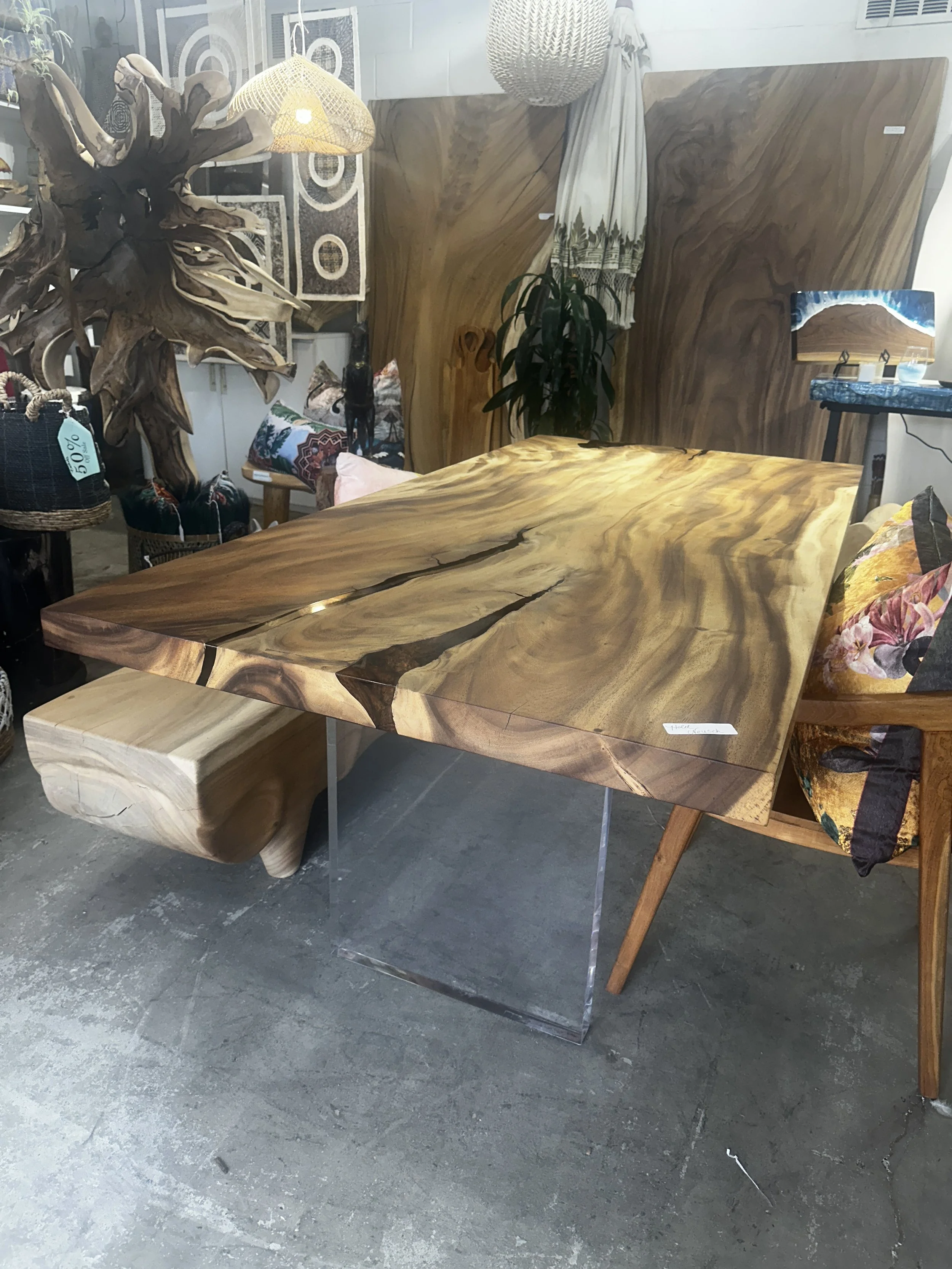
Acacia Table with 4K Resin on Lucite Base
How to Pick the Perfect Custom Dining Table for Your Home
A custom dining table is more than just a place to eat—it’s the heart of your home. Whether you’re looking for a live edge table, a modern dining table, or a completely custom table tailored to your style, choosing the right one can be overwhelming. In this guide, we’ll walk you through everything you need to consider to find the perfect centerpiece for your dining space.
1. Choose the Right Table Size for Your SpaceBefore you fall in love with a design, make sure your custom dining table fits comfortably in your space. Here are some general guidelines:
• Allow at least 36 inches between the table and the nearest wall or furniture for easy movement.
• Each person needs about 24 inches of table width to sit comfortably.
• A 72-inch table seats 6 people, while a 96-inch table can accommodate 8-10 guests.
Pro Tip: If you entertain often, consider an extendable custom table to add more seating when needed.
2. Pick the Right Table Shape
The shape of your table affects both functionality and style.
• Rectangular Dining Table – The most popular choice, perfect for large families and open-concept spaces.
• Round Dining Table – Encourages conversation and works well in smaller rooms.
• Oval Dining Table – A softer alternative to a rectangle, great for narrow spaces.
• Live Edge Table – Brings an organic, natural feel to any dining area, with unique, one-of-a-kind edges.
Modern Dining Table Trends:
Live edge tables for a bold, rustic look.
Resin river tables for a contemporary, artistic feel.
Minimalist wood slab tables for sleek, modern aesthetics.
3. Select the Best Material for Your Custom Table
A custom dining table should be durable and complement your home’s design. Here are some top materials to consider:
Solid Wood (Best for Timeless Durability) A handcrafted solid wood table offers warmth and longevity.
Popular choices include:
• Walnut – Rich, dark tones perfect for a modern dining table.
• Oak – Strong, durable, and ideal for a farmhouse or traditional style.
• Maple – Light, smooth, and versatile for modern and Scandinavian designs.
Live Edge Wood (Best for Unique Beauty)
A live edge table showcases the natural shape of the tree, making each piece one-of-a-kind. This is perfect for homeowners who love organic, statement furniture.
Resin & Wood (Best for Contemporary Designs)
For a bold statement, a resin river table combines wood and resin for a modern, artistic effect. Customize it with colors like deep blue, emerald green, or smoky black for a striking look.
4. Decide on a Table Base Style
The base of your custom dining table affects both aesthetics and stability.
Wooden trestle bases for a classic farmhouse feel.
Metal legs for an industrial modern look.
X-shaped or U-shaped bases for maximum legroom.
Pedestal bases for small round tables, allowing flexible seating.
Pro Tip: A sturdy steel base pairs beautifully with a live edge table, balancing rustic and modern styles.
5. Customize Your Dining Table for a One-of-a-Kind Look
The beauty of a custom table is that you can personalize every detail:
• Choose your finish: Matte, satin, or glossy polyurethane for durability.
• Add resin inlays: Perfect for incorporating color or even preserving natural cracks.
• Select a unique edge: Live edge for an organic look or straight-cut for modern appeal.
Bonus: Matching Your Dining Chairs
To complete your custom dining table, pair it with the right seating:
Upholstered chairs for comfort and elegance.
Wooden or metal chairs for a cohesive, modern look.
Bench seating for a casual, space-saving option.
Why Choose a Custom Dining Table?
Investing in a custom dining table means getting a unique, handcrafted piece that fits your home perfectly.
Here’s why it’s worth it: One-of-a-kind design – No two tables are the same.
Higher quality craftsmanship – Built to last for generations.
Perfect fit – Designed specifically for your space.
Sustainable choice – Many custom furniture makers use responsibly sourced wood.
Order Your Custom Dining Table Today
At INDIGENOUS by La Rue, we specialize in live edge tables, resin river tables, and modern dining tables that are handcrafted to perfection. Whether you’re looking for a custom wood table or a stunning statement piece, we’ll help you design the perfect fit for your home.
Ready to Create Your Dream Dining Table?
Visit our La Jolla or Solana Beach showroom or contact us today to start your custom design process!
Serving San Diego, Orange County, Palm Springs, and Los Angeles
Browse Our Custom Tables | Contact Us

Why a Custom Live Edge Table is the Perfect Statement Piece for your Home
When it comes to creating a one-of-a-kind dining experience, nothing compares to a custom live edge table. Whether you’re looking for a custom dining table that highlights natural wood grain or an epoxy resin table that blends organic beauty with modern design, a handcrafted piece can elevate your space like no other.
What is a Custom Live Edge Table?
A custom live edge table is made from solid wood slabs that retain the natural edge of the tree, preserving its unique shape and character. Each table tells a story, showcasing the wood’s knots, grain patterns, and organic imperfections—making it a true piece of functional art.
Why Choose a Custom Dining Table?
A custom dining table allows you to tailor the size, shape, and finish to perfectly suit your home. Unlike mass-produced furniture, each handcrafted table is made with premium materials and expert craftsmanship. Whether you prefer walnut, maple, oak, or exotic hardwoods, you can create a statement piece that complements your interior.
Epoxy Table Designs: A Fusion of Nature and Art
For a bold, artistic touch, many homeowners are opting for an epoxy table. These tables combine natural wood with epoxy resin, filling gaps, cracks, or even entire sections with vibrant, glass-like resin. The result? A stunning balance between rustic warmth and contemporary elegance.
Epoxy Resin Table: A Durable and Unique Choice
An epoxy resin table isn’t just visually striking—it’s also durable and resistant to moisture and scratches. You can choose from a variety of resin colors, from classic clear finishes to bold blues, greens, or even metallics. These tables work beautifully as dining tables, conference tables, or statement coffee tables.
Why Invest in a Custom Live Edge or Epoxy Table?
• Uniqueness – No two tables are ever the same.
• Quality Craftsmanship – Handcrafted from the finest materials.
• Longevity – Built to last for generations.
• Sustainability – Many live edge and epoxy tables use reclaimed or responsibly sourced wood.
Create Your Custom Dining Table Today
At INDIGENOUS by La Rue, we specialize in crafting custom live edge tables, epoxy tables, and unique dining furniture tailored to your vision. Whether you’re in San Diego, Orange County, Los Angeles, or Palm Springs, we’ll help you design the perfect statement piece for your home.
Looking for a Custom Table? Let’s Talk!
Contact us today to start designing your own custom live edge or epoxy resin table and bring a piece of nature into your home.
When it comes to creating a one-of-a-kind dining experience, nothing compares to a custom live edge table. Whether you’re looking for a custom dining table that highlights natural wood grain or an epoxy resin table that blends organic beauty with modern design, a handcrafted piece can elevate your space like no other.
What is a Custom Live Edge Table?
A custom live edge table is made from solid wood slabs that retain the natural edge of the tree, preserving its unique shape and character. Each table tells a story, showcasing the wood’s knots, grain patterns, and organic imperfections—making it a true piece of functional art.
Why Choose a Custom Dining Table?
A custom dining table allows you to tailor the size, shape, and finish to perfectly suit your home. Unlike mass-produced furniture, each handcrafted table is made with premium materials and expert craftsmanship. Whether you prefer walnut, maple, oak, or exotic hardwoods, you can create a statement piece that complements your interior.
Epoxy Table Designs: A Fusion of Nature and Art
For a bold, artistic touch, many homeowners are opting for an epoxy table. These tables combine natural wood with epoxy resin, filling gaps, cracks, or even entire sections with vibrant, glass-like resin. The result? A stunning balance between rustic warmth and contemporary elegance.
Epoxy Resin Table: A Durable and Unique Choice
An epoxy resin table isn’t just visually striking—it’s also durable and resistant to moisture and scratches. You can choose from a variety of resin colors, from classic clear finishes to bold blues, greens, or even metallics. These tables work beautifully as dining tables, conference tables, or statement coffee tables.
Why Invest in a Custom Live Edge or Epoxy Table?
• Uniqueness – No two tables are ever the same.
• Quality Craftsmanship – Handcrafted from the finest materials.
• Longevity – Built to last for generations.
• Sustainability – Many live edge and epoxy tables use reclaimed or responsibly sourced wood.
Create Your Custom Dining Table Today
At INDIGENOUS by La Rue, we specialize in crafting custom live edge tables, epoxy tables, and unique dining furniture tailored to your vision. Whether you’re in San Diego, Orange County, Los Angeles, or Palm Springs, we’ll help you design the perfect statement piece for your home.
Looking for a Custom Table? Let’s Talk!
Contact us today to start designing your own custom live edge or epoxy resin table and bring a piece of nature into your home.
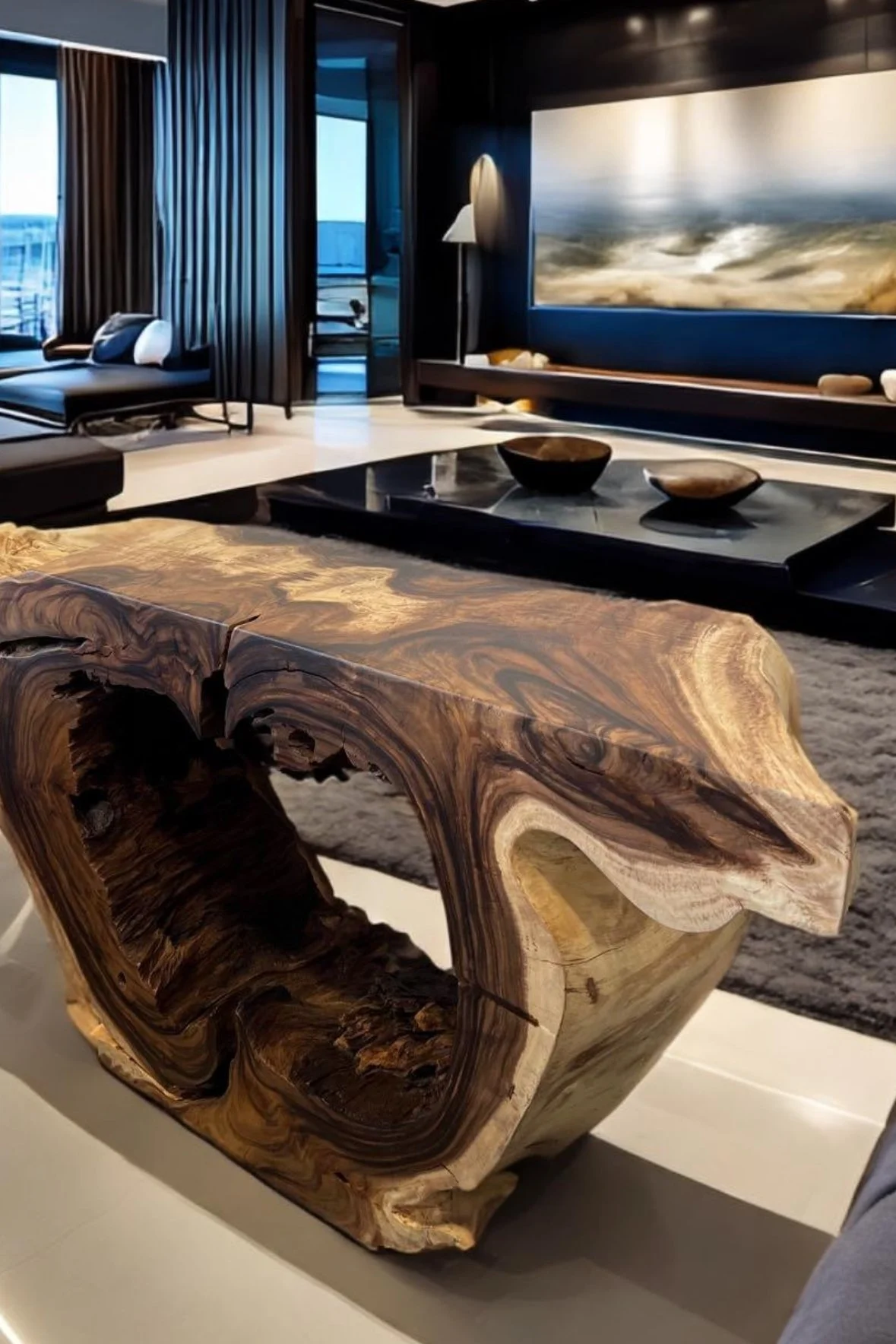
The Art of Live Edge Dining Tables: Bringing Nature into Your Hom
The Art of a Live Edge Table
In a world where mass-produced furniture dominates, live edge dining tables stand out as a refreshing and timeless alternative. These one-of-a-kind pieces celebrate the natural beauty of wood, blending rustic charm with modern elegance. At Indigenous by La Rue, we pride ourselves on crafting functional art that transforms dining spaces across San Diego, Orange County, Palm Springs, Los Angeles, and beyond.
What Makes Live Edge Dining Tables Unique?
Unlike conventional furniture, live edge tables retain the raw, organic shape of the wood, showcasing its natural imperfections, knots, and grain patterns. Each table tells its own story, preserving the essence of the tree it came from. No two tables are ever alike, making them a perfect fit for those seeking exclusivity and authenticity in their home décor.
Handcrafted in San Diego with Sustainable Practices
Our live edge dining tables are handcrafted locally in San Diego, using sustainably sourced hardwoods. We carefully select each slab to ensure it meets our standards for durability and aesthetic appeal. By prioritizing sustainability, we create furniture that is not only beautiful but also environmentally responsible.
Custom Designs to Suit Your Style
Whether you’re drawn to the timeless appeal of a classic live edge design or intrigued by the modern flair of a resin river table, we can bring your vision to life. Choose from a variety of wood species, finishes, and customizations to create a table that complements your space perfectly.
Perfect for Any Setting
A live edge dining table is more than just furniture—it’s a conversation starter, a centerpiece for family gatherings, and a testament to your unique taste. Whether you’re designing a cozy dining nook or a statement-making dining room, a live edge table adds warmth, character, and elegance to any setting.
Visit Us in La Jolla or Solana Beach
Experience the beauty of live edge tables firsthand at our showrooms in La Jolla and Solana Beach. Our team of skilled artisans is here to guide you through the process, ensuring you find or create the perfect piece for your home.
Serving Southern California and Beyond
At Indigenous by La Rue, we’re proud to serve customers across San Diego, Orange County, Palm Springs, Los Angeles, and beyond. From delivery to installation, we’re committed to providing a seamless experience for our clients.
Discover the beauty of nature in every detail with a live edge dining table from Indigenous by La Rue. Contact us today or visit one of our showrooms to start your journey toward owning a piece of functional art.
[Explore Our Collection] | [Request a Custom Design]
#LiveEdgeDiningTables #FunctionalArt #SustainableFurniture #HandcraftedInSanDiego #ResinRiverTables #SanDiegoFurniture