The years of preparation behind an INDIGENOUS by La Rue table
Two slab tables can look similar in a photograph and carry very different prices. The wood species, size, and finish may appear comparable. Both may even be described as “kiln dried.”
What a photograph cannot show is how the wood was prepared: how thoroughly it was dried, what moisture remains inside its thickest sections, and what happened between leaving the kiln and becoming a finished table.
At INDIGENOUS by La Rue, that preparation takes years. It is a significant part of the investment behind our furniture—and an important reason the finished piece costs what it does.
What “kiln dried” actually tells you
Kiln drying uses controlled conditions to remove moisture from wood. Done properly, it is an essential part of preparing many hardwoods for indoor furniture.
But the words “kiln dried” alone do not tell you the final moisture content, whether the center was checked, how uniform the drying was, or whether residual drying stresses were addressed.
A thick slab requires a drying approach appropriate to its species, thickness, and starting moisture. A dry surface does not establish that the center is ready.
If excessive moisture remains when a slab becomes furniture, the wood can continue shrinking after delivery. That can contribute to cracks, cupping, twisting, uneven surfaces, or problems around joints and filled areas. These changes may develop gradually, long after the table first arrives.
What our own air-drying tests taught us
Our approach is informed by firsthand experience.
In our own air-drying tests in Indonesia, we have kept slabs air drying for as long as eight years and still measured moisture content above 20%.
Those results describe the slabs and storage conditions we tested. They are not a claim that every slab from Indonesia has the same moisture content. They illustrate an important point: years of air drying do not, by themselves, establish that wood is ready for indoor furniture.
In a humid environment, wood can remain well above the moisture level appropriate for its eventual use. Outdoor storage conditions, airflow, and exposure to moisture also affect the result. Simply waiting longer does not necessarily achieve the desired dryness.
That experience reinforced our decision to control our drying and preparation in-house.
Our process continues long after the kiln
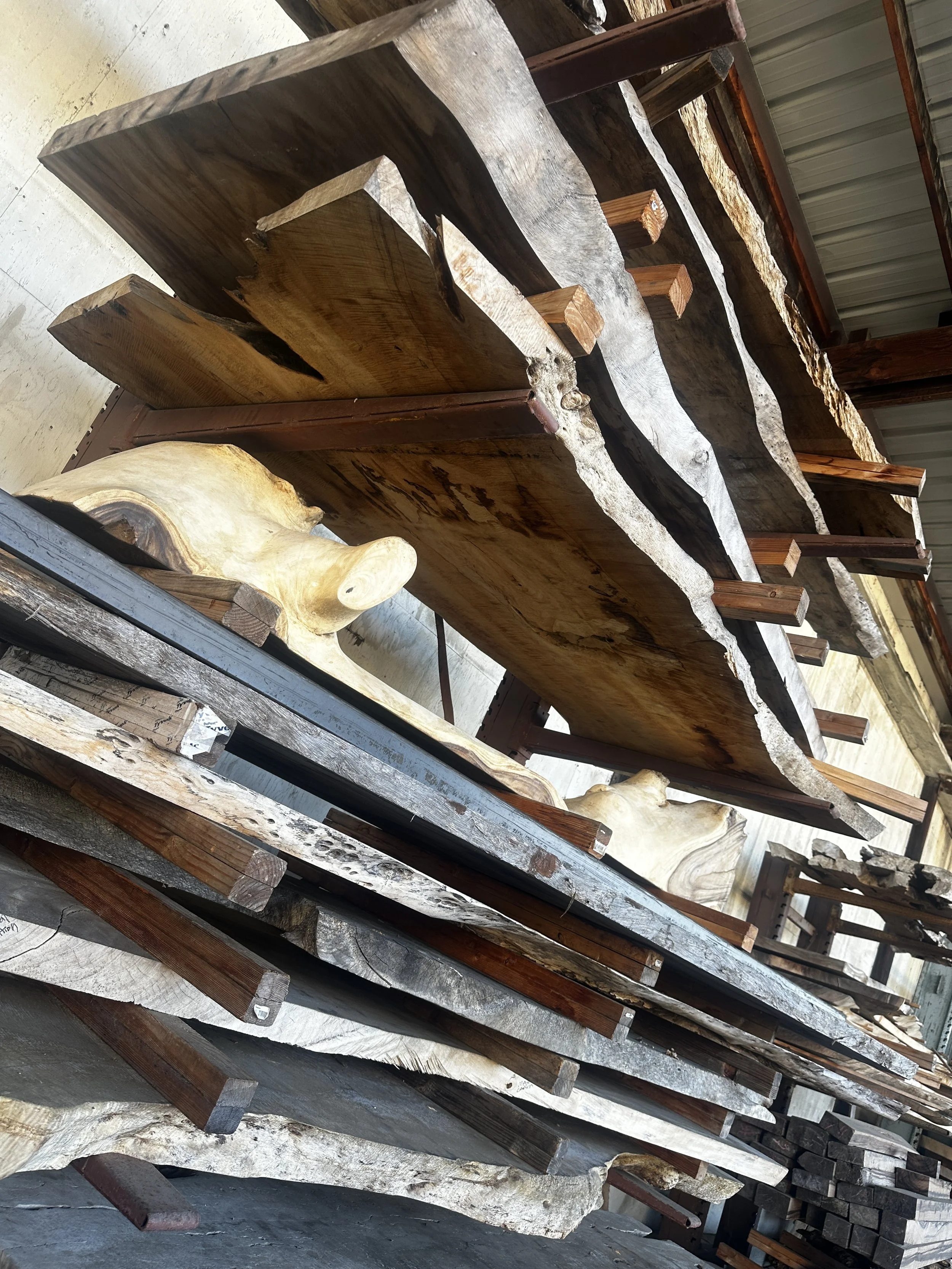
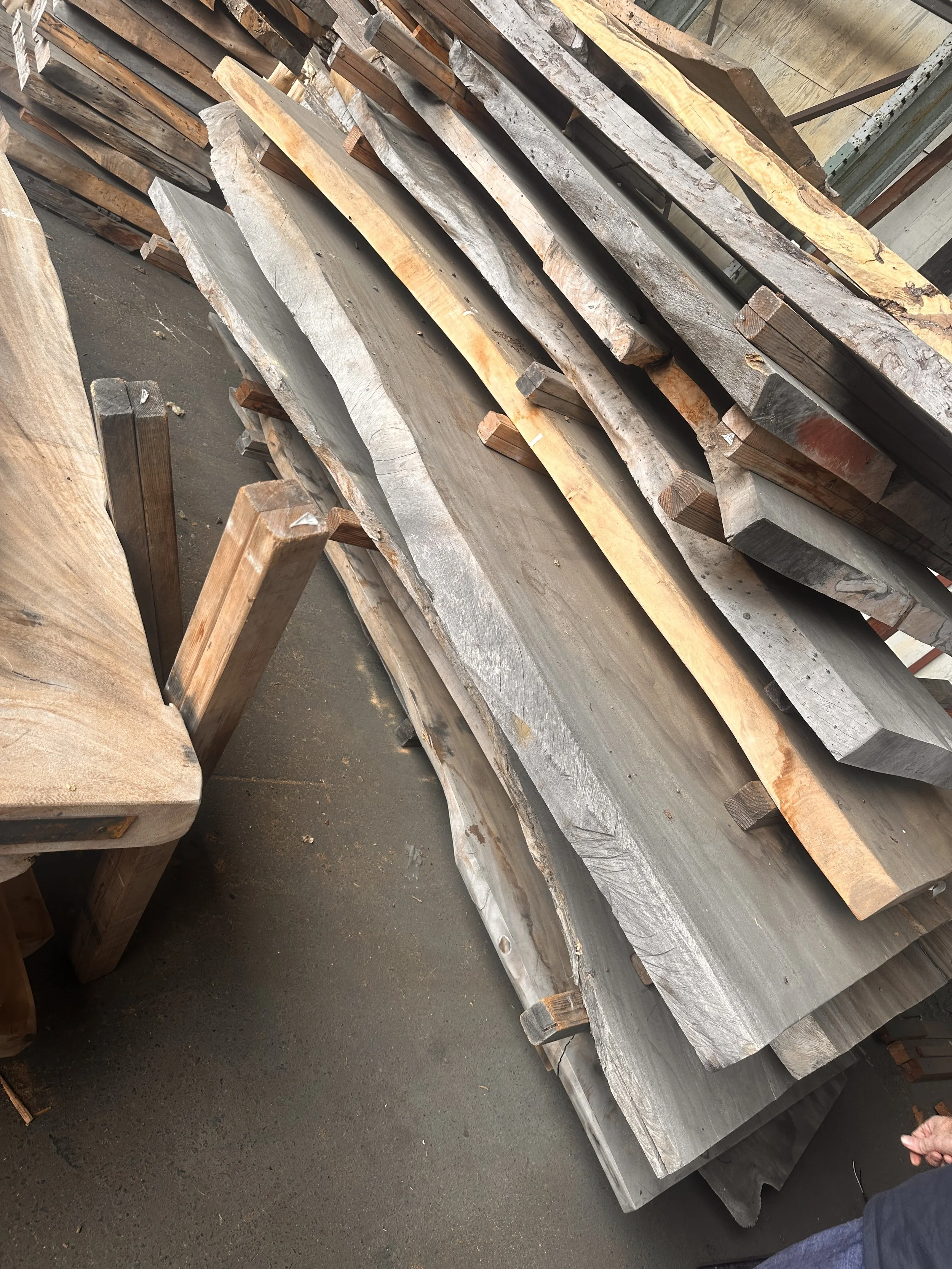
1. An average of three years of air drying
Our slabs air dry for an average of three years before entering our kiln.
This begins the preparation well ahead of a customer’s order. It means investing in wood, storage space, and handling for years before that material becomes a finished table.
2. Slow, in-house kiln drying
After air drying, the slabs typically spend another three to four months in our low-temperature dehumidification kiln.
For most species in our process, the kiln cycle begins around 80°F and gradually reaches approximately 150°F. These figures describe our typical process; temperature and elapsed time alone do not establish that a slab is ready.
We target 8–10% core moisture and take readings in the center of the slab’s thickest section. Looking beneath the surface matters because the outside and center can dry at different rates.
The appropriate final moisture content depends on the environment in which the furniture will be used. No single percentage makes wood immune to future changes in humidity.
3. Initial planing, followed by months of rest
After kiln drying, we plane away the rough outer surfaces. We then allow the slabs to rest and acclimate for additional months.
This stage gives us time to observe how the wood responds after machining, before it becomes a finished piece. Planing is not a cure for every internal stress; its value in our process comes together with the time we allow afterward.
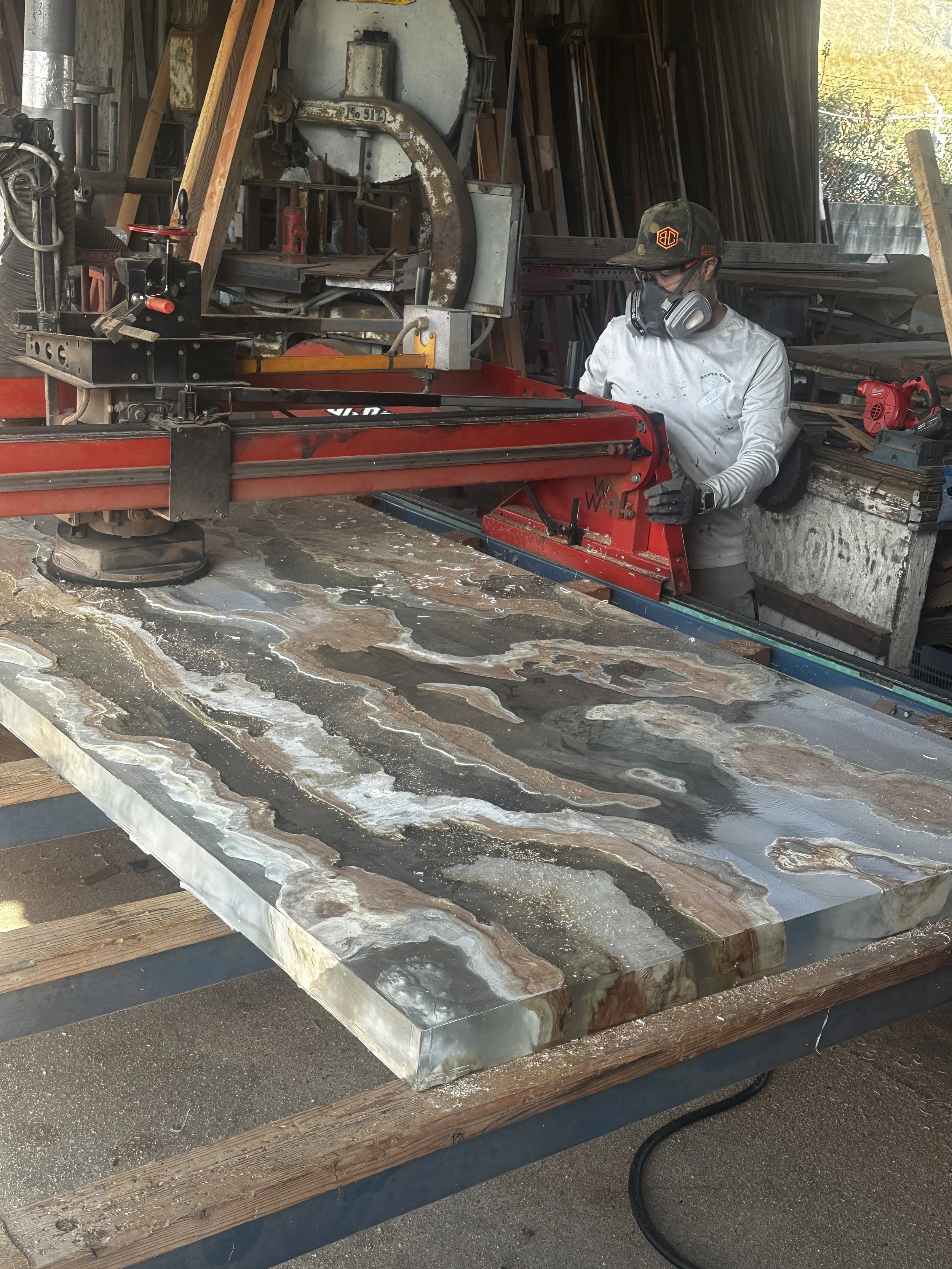
4. Replaning after a slab is purchased
Once a customer purchases a slab, we plane it again.
This gives us another opportunity to address changes in flatness that developed during the resting period and prepare the surface for the next stage of production.
5. Further workshop acclimation before finishing
Following that additional planing, we allow another period of acclimation inside our workshop before finishing.
The sequence is deliberate: air dry, kiln dry, plane, rest, replane, and acclimate again. Each stage adds time and handling. Together, they create opportunities to observe and address movement before delivery.
Internal drying stresses: what customers should know
Excess moisture is not the only potential problem.
Drying can also leave residual internal stresses, commonly called casehardening. This is different from simply having a wet center. Wood can reach its target moisture content and still contain drying stresses that cause distortion when it is cut or planed.
Low heat and a long drying period do not automatically guarantee stress-free wood. Managing and checking drying quality matters alongside the moisture reading.
For the customer, the practical question is whether the maker looks beyond a smooth surface and a “kiln dried” label to the condition of the wood itself.
Why a thick finish cannot replace proper preparation
A thick, film-forming finish can slow the exchange of moisture between wood and the surrounding air. It does not permanently prevent that exchange.
It also cannot correct an incompletely dried center or eliminate internal drying stresses. A finished slab can look smooth and beautiful while underlying problems have yet to become apparent.
That does not make thick finishes inherently poor choices. Different finishes serve different purposes. It means the finish and the drying process must be judged separately.
Preparation has to happen before the coating goes on.
What this means for the price of your table
Careful preparation carries costs that are easy to overlook when comparing finished furniture.
Our process involves years of inventory, extended storage, months of kiln operation, deep moisture measurements, repeated planing, and additional resting periods before finishing.
These steps do not always show up in a product photograph. They represent time, space, equipment, and skilled labor invested in the piece.
Our goal is to reduce the risk of excessive cracking, warping, and twisting by giving the wood careful preparation and giving ourselves time to observe its behavior during production.
Country of origin alone does not establish quality, and neither does the type of kiln. The meaningful distinction is the process behind the individual slab and the care taken before it reaches your home.
Natural wood, thoughtfully prepared
Solid wood remains responsive to its surroundings. Seasonal humidity changes can cause movement even in properly dried, well-made furniture. Responsible craftsmanship accounts for that behavior rather than promising that wood will never move.
At INDIGENOUS by La Rue, our commitment begins long before the finish is applied. It begins with the years we invest in preparing the material.
Part of the value of your table is the work you can see. Part is the years of preparation you cannot.
Explore our available slabs and custom tables, or visit our showrooms to learn about the preparation behind your piece.
Technical references
The process descriptions and Indonesia air-drying observations above are supplied by INDIGENOUS by La Rue. General wood-science explanations are supported by:
● USDA Forest Products Laboratory, Drying Hardwood Lumber: moisture measurement, drying schedules, and residual drying stresses.
● USDA Forest Products Laboratory, Wood Handbook, Chapter 13: Drying and Control of Moisture Content: moisture targets, storage, dimensional changes, and the limitations of protective coatings.
● Oregon State University Extension, Wood and Moisture Relationships: equilibrium moisture and humidity.