How Long Does a Custom Live Edge Table Last? What Determines Heirloom Quality
A well-made live edge table shouldn’t be something you replace in a few years. It should be a piece that becomes part of your home, your family, and eventually your family’s story.
At Indigenous by La Rue, we believe a truly custom table should be built with that kind of longevity in mind.
But not every live edge table is built the same way.
Two tables can look beautiful in photographs and be made from the same species of wood, yet perform very differently over time. The difference often comes down to what happened to the wood long before the table entered the showroom: how it was dried, stabilized, prepared, finished, and—when resin is involved—how carefully that resin was mixed and poured.
So how long should a quality live edge table last?
When it is properly built and cared for, a solid wood live edge table can last for generations. The more important question is: what makes one table worthy of becoming an heirloom while another begins cracking, warping, separating, or failing?
It Starts With the Slab
For us, the process doesn't begin when we start building the table. It begins with the wood.
Wood is a natural material, and even after a tree has been cut, the wood continues responding to moisture, temperature, and its environment.
That is why we don't believe in rushing this part of the process.
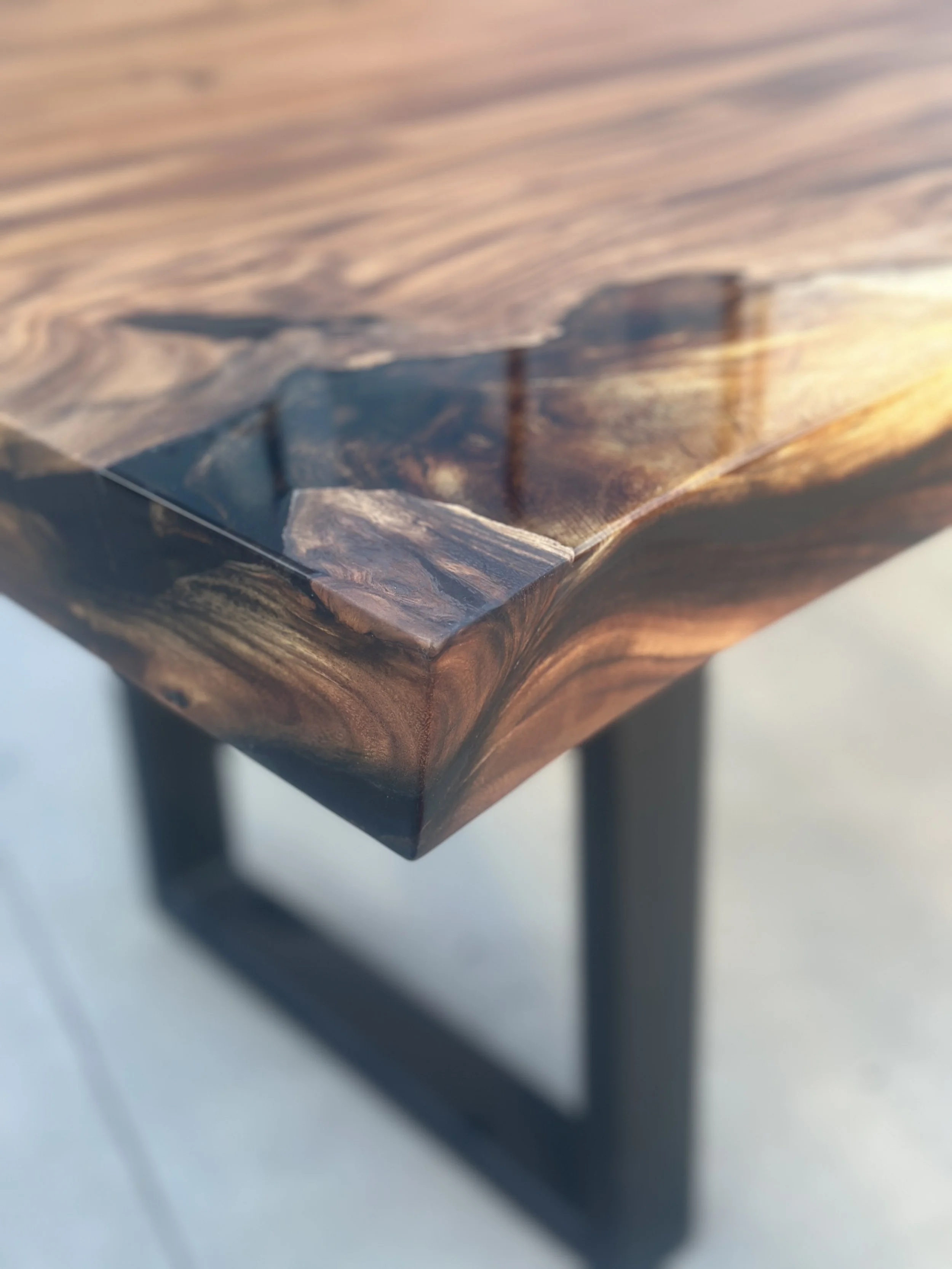
Many of our slabs are allowed to dry and stabilize for approximately three to five years, depending on the species, thickness, environment, and individual piece. Even at a minimum, our slabs may spend around a year and a half drying and stabilizing before becoming finished furniture.
Why so long?
Because bringing wood down too quickly can create problems inside the slab that aren't always immediately visible. A table may look beautiful when it leaves the shop, but improperly prepared wood can reveal those problems later through movement, cracking, checking, twisting, or warping.
We would rather give the wood the time it needs.
Wood Will Always Move—The Goal Is to Understand It
One of the misconceptions about solid wood furniture is that properly dried wood will never move again.
That's simply not how natural wood works.
Wood responds to its environment throughout its life. Seasonal humidity changes, indoor heating, air conditioning, and climate can all affect it.
The goal isn't to turn wood into something it isn't.
The goal is to understand the material and build with its natural characteristics in mind.
That includes evaluating moisture, stability, grain, existing checks and movement before deciding how a particular slab should be used.
This is also why we don't treat every slab exactly the same. Each piece of wood has its own history and personality, and part of craftsmanship is knowing how to work with it rather than forcing it into a standardized process.
The Difference Between a Table That Looks Good and One That's Built Well
Some of the most important steps in building a custom live edge table are the ones you'll never see in the finished photographs.
Proper slab preparation matters.
Sanding matters.
Moisture matters.
Joinery and structural support matter.
The products used on the wood matter.
The finish matters.
And the amount of time given to each stage matters.
Shortcuts can save time during production, but the consequences may not become obvious until months or years later.
For us, quality isn't simply about how beautiful a table looks on the day it is delivered. It's about how it performs as it becomes part of someone's home.
Resin Tables Require Another Level of Precision
Resin can create extraordinary possibilities with natural wood.
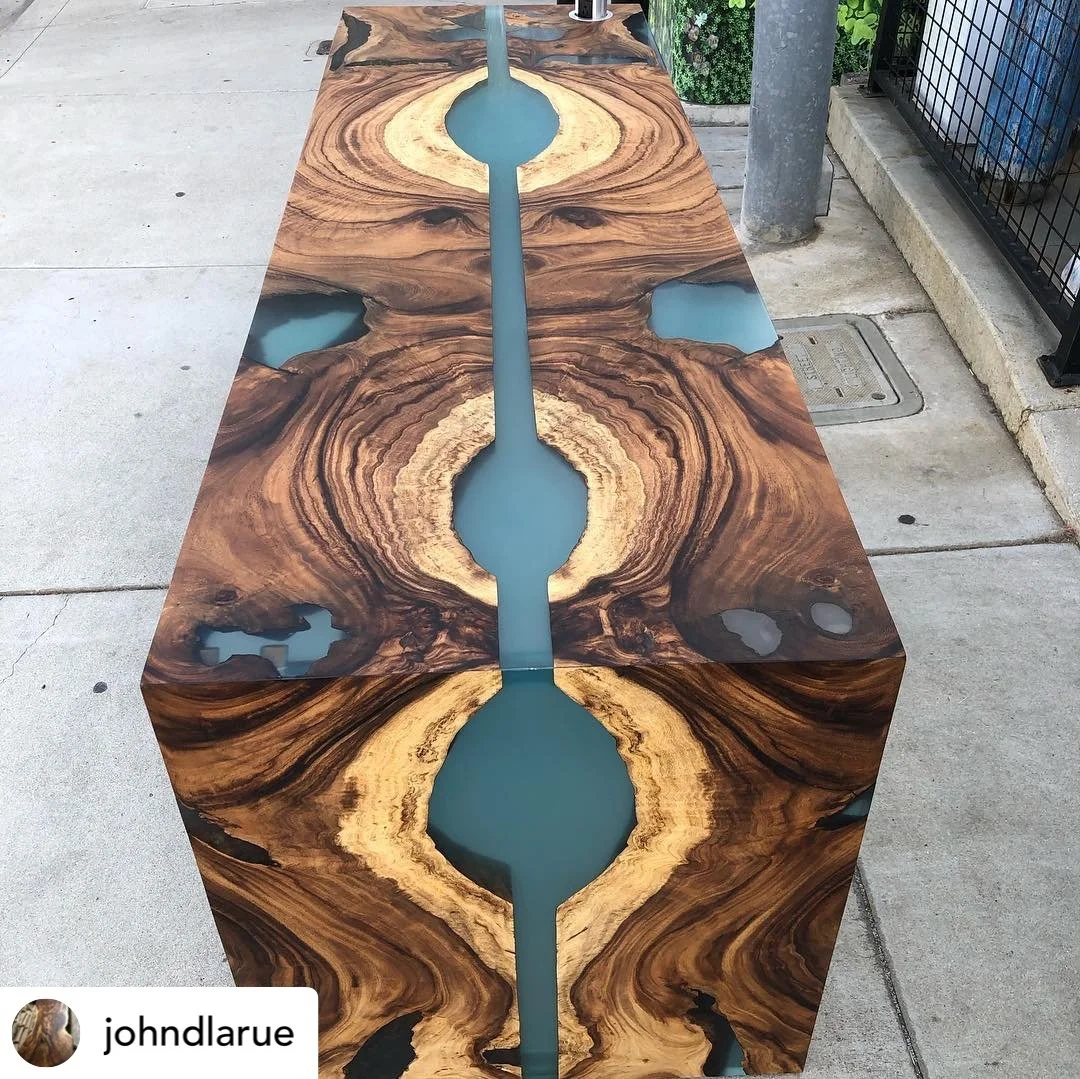
We use it to fill natural voids, stabilize certain areas, create river-style designs, and sometimes preserve elements that tell the history of a piece.
But resin isn't simply something you pour into wood and wait for it to harden.
The environment matters.
Our resin pouring rooms are temperature and humidity controlled because both conditions can affect how resin cures and how well it adheres to the wood.
The ratio between resin and hardener also needs to be precise.
If the hardener is measured incorrectly, the ratio can be compromised. The resin may remain soft, cure inconsistently, or fail to maintain the strength and form expected from a properly produced table.
These are the kinds of problems a buyer may not recognize when looking at a brand-new piece.
They become important later.
Professional Finishes Protect the Wood
The finish on a live edge table isn't simply there to make the grain look beautiful.
It is part of the table's protection.
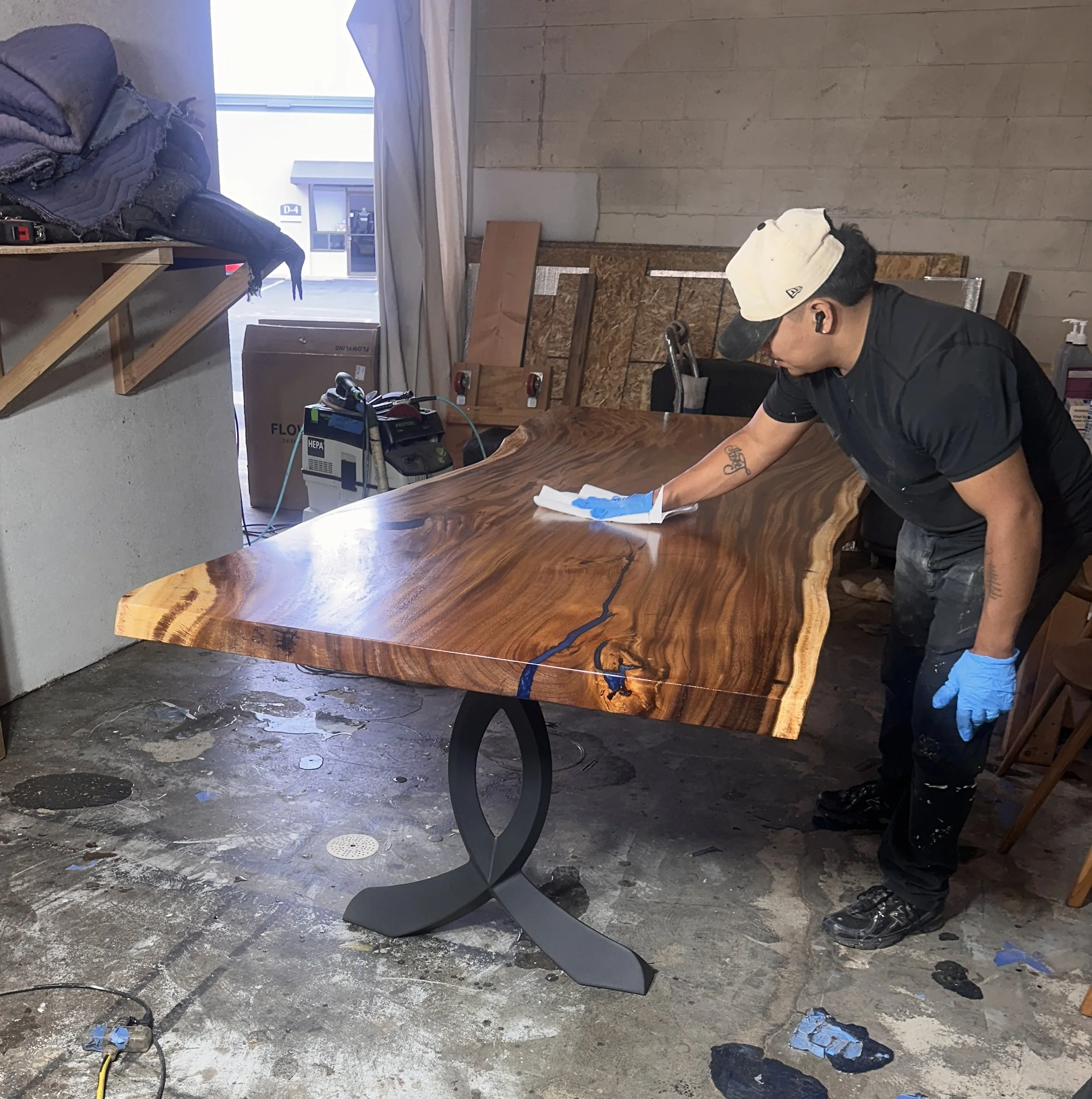
A professionally applied finish helps protect the surface from normal use while allowing the character of the wood to remain the focus.
At Indigenous by La Rue, most of the finishes we use are zero-VOC, with the remaining finishes and resins selected as low-VOC options whenever appropriate for the project.
We choose finishing systems based on the piece itself and how it will actually be used.
A dining table that will become the center of everyday family life has different demands than a sculptural console or occasional table.
The goal is always the same: preserve the natural beauty of the material while creating furniture designed for real life.
Why Some Live Edge Tables Crack or Warp
Seeing a small natural check in solid wood doesn't automatically mean something is wrong. Natural movement is part of owning real wood furniture.
Significant warping, twisting, separation, or structural cracking, however, can sometimes point to problems earlier in the process.
Potential causes can include wood that wasn't adequately dried or stabilized, improper moisture conditions, rushed production, insufficient structural preparation, dramatic environmental changes, or a construction method that didn't account for the natural movement of the slab.
This is why shopping for a live edge table based only on appearance or price can be misleading.
The most important questions are often about the process behind it.
What Should You Ask Before Buying a Live Edge Table?
If you're investing in a custom live edge dining table, conference table, or statement piece, ask where the wood came from and how it was prepared.
Ask how long the slab was allowed to dry and stabilize.
Ask whether moisture and movement were evaluated before fabrication.
If resin is involved, ask how the pouring environment is controlled and what steps are taken to ensure the resin cures correctly.
Ask what type of finish is being used and why it was selected for your particular table.
And perhaps most importantly, ask who is actually building it.
Luxury furniture should have a story beyond its price tag.
A Table Should Become Part of Your Family's Story
We don't look at a slab and see something that needs to be made perfect.
We look at its grain, edges, spalting, knots, voids, color variations, and natural movement and ask how we can preserve what makes that particular piece extraordinary.
Sometimes that means leaving the slab almost entirely natural.
Sometimes resin allows us to preserve something that otherwise couldn't have become functional furniture.
Sometimes a base is designed specifically around the proportions and movement of one individual slab.
That's what makes custom furniture different.
There may never be another table exactly like yours.
And years from now, the marks of family dinners, holidays, celebrations, conversations, and everyday life become part of its history too.
Custom Live Edge Tables in San Diego
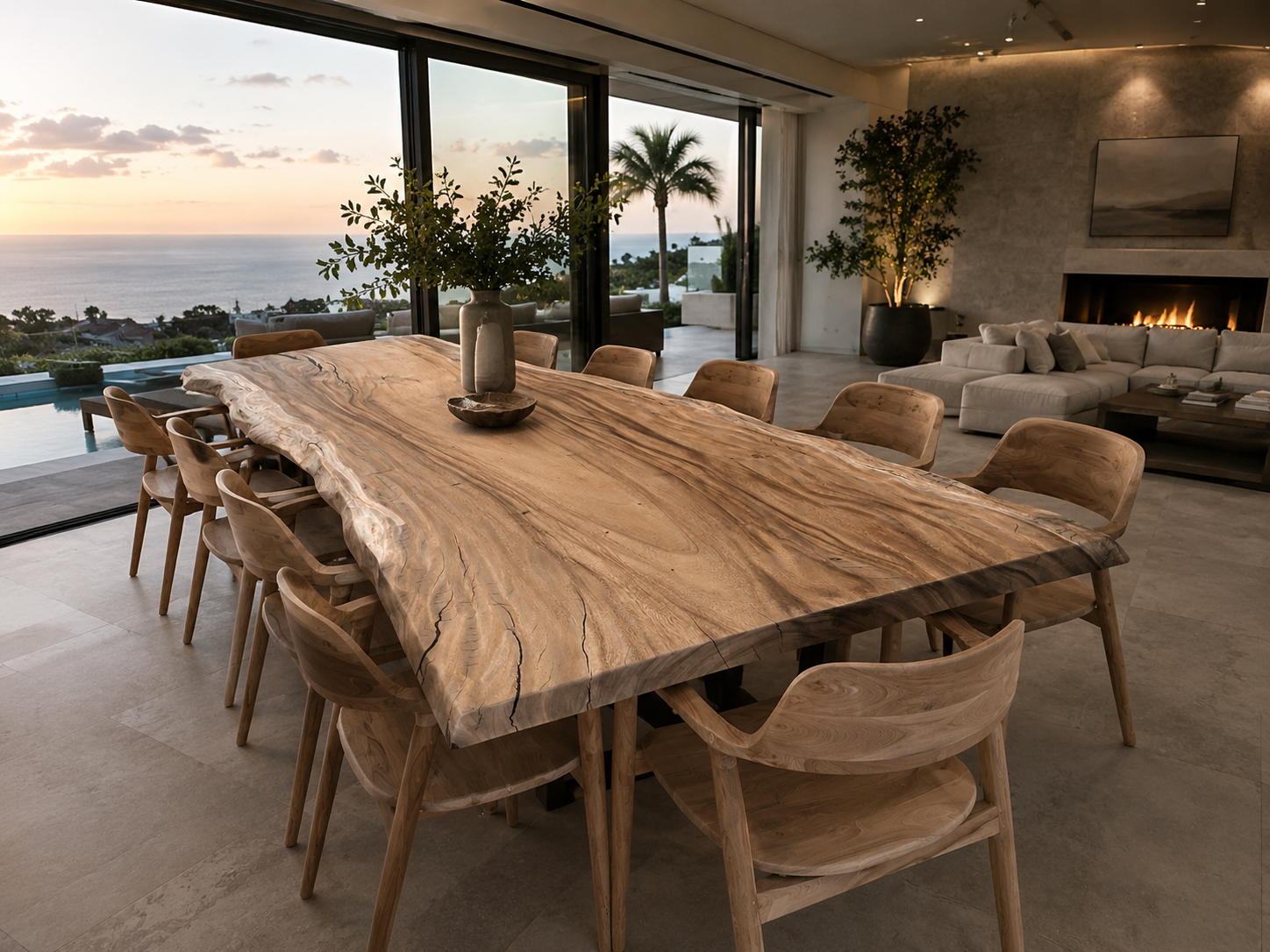
Indigenous by La Rue designs and builds custom live edge tables and luxury wood furniture in San Diego for clients locally and throughout the country.
From selecting the slab to determining dimensions, resin, base design, and finish, each table is created around both the material and the home it will eventually live in.
Clients can explore our finished pieces in our La Jolla and Solana Beach showrooms or work with us to select a slab and create something completely custom.
Because the goal isn't simply to build a table that looks beautiful today.
It's to build one worth keeping.