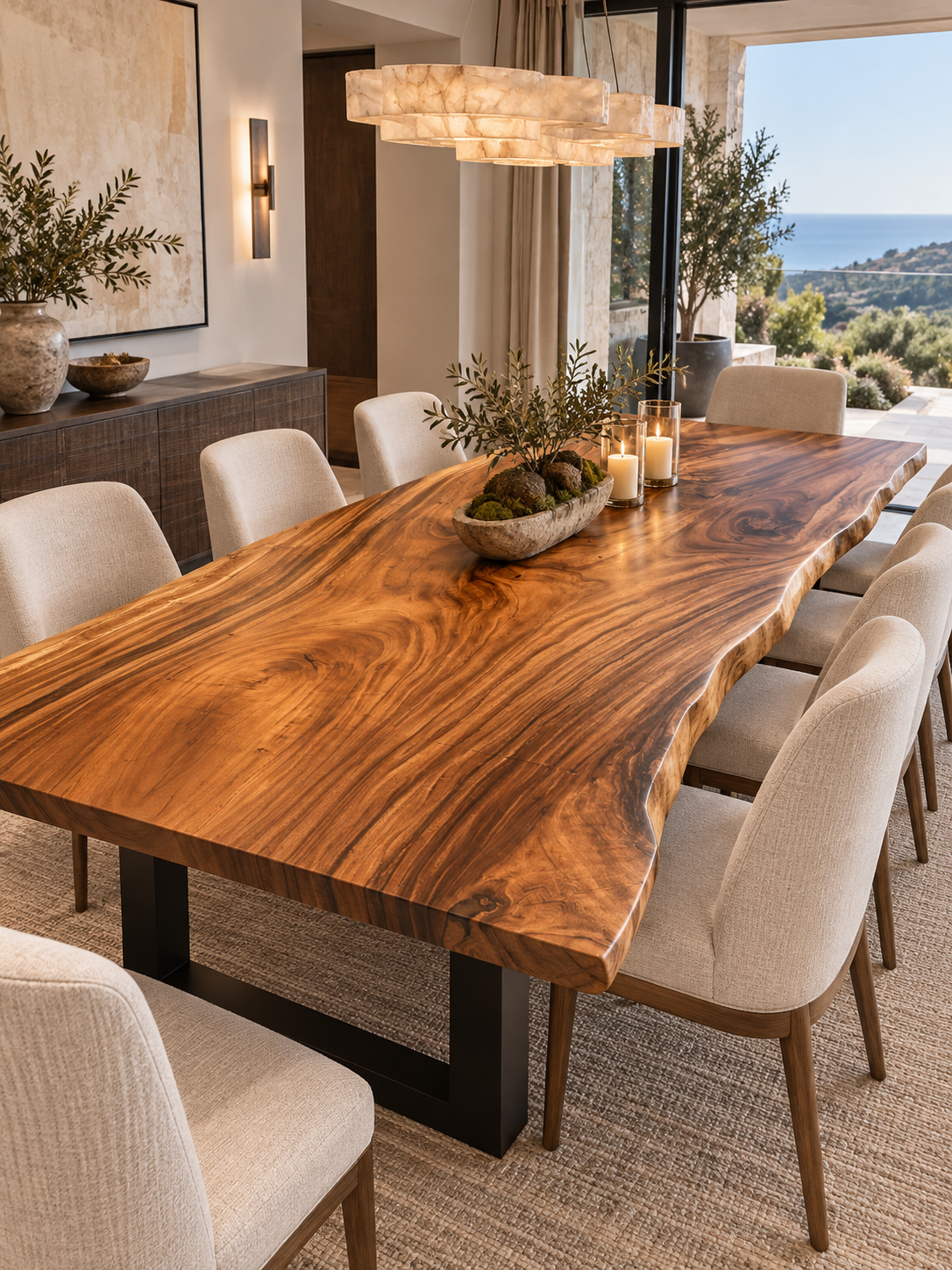
Why Properly Dried Wood Matters: The Secret to a Live Edge Table That Lasts
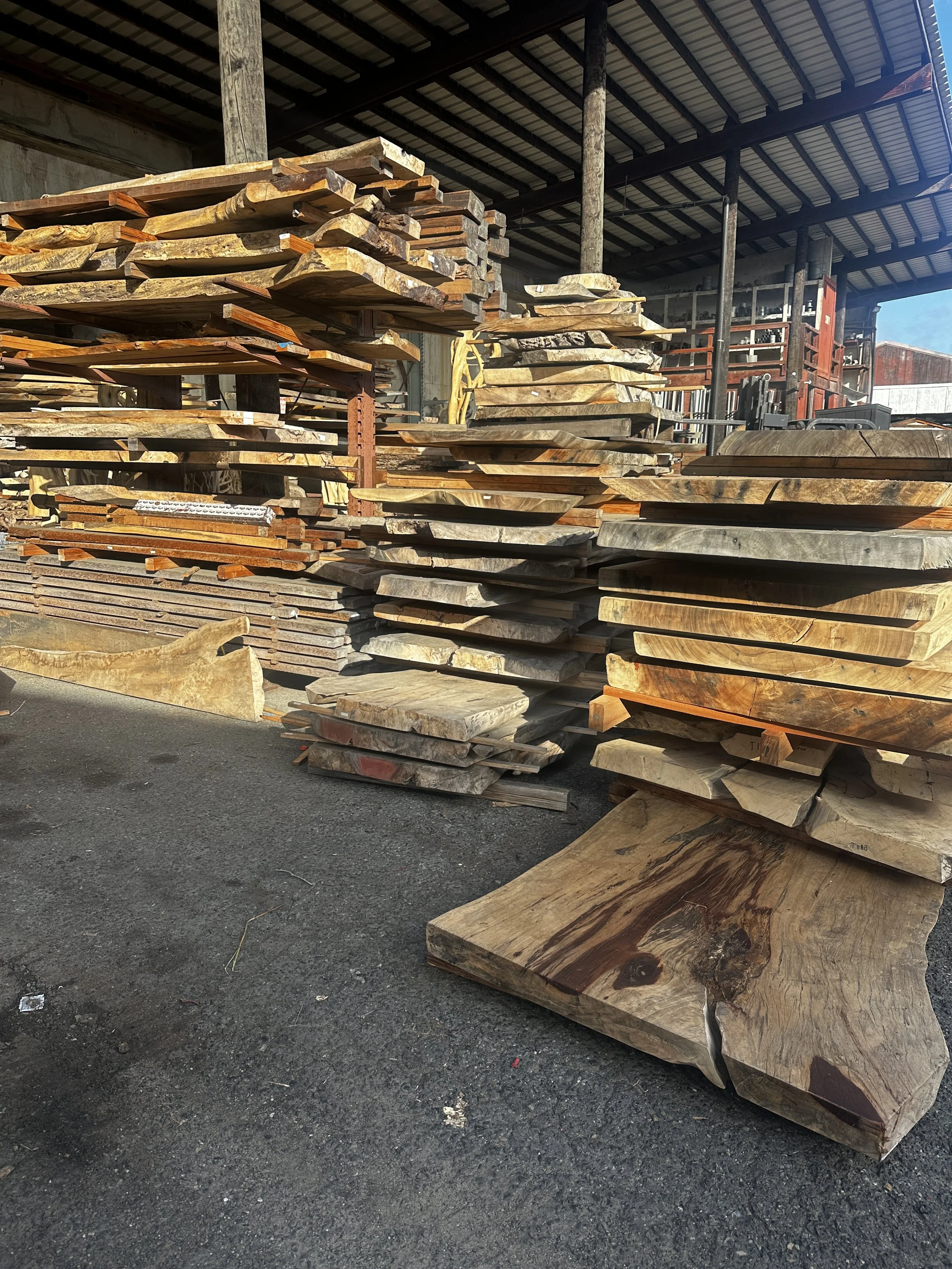
A beautiful slab of wood can catch your attention immediately. The grain, movement, natural edge and character may be exactly what you’ve been looking for.
But there is something you cannot see in a photograph that may be far more important to the life of your table:
How that wood was dried and stabilized before the table was ever built.
At Indigenous by La Rue, we believe the quality of a live edge table begins long before sanding, finishing or choosing a base. It begins with the slab itself—and giving that wood the time it needs.
Wood Is Always Responding to Its Environment
Even after a tree has been cut into slabs, wood continues to respond to moisture and changes in its environment.
A thick live edge slab can hold a tremendous amount of moisture. As that moisture leaves the wood, the slab can move, shrink, check, twist or develop cracks.
That doesn't mean something is wrong with natural wood. Movement is part of working with a natural material.
The goal of proper drying and stabilization is to allow as much of that movement as possible to occur before the slab becomes furniture, rather than after it enters your home.
And that takes time.
Why We Don't Rush Our Slabs
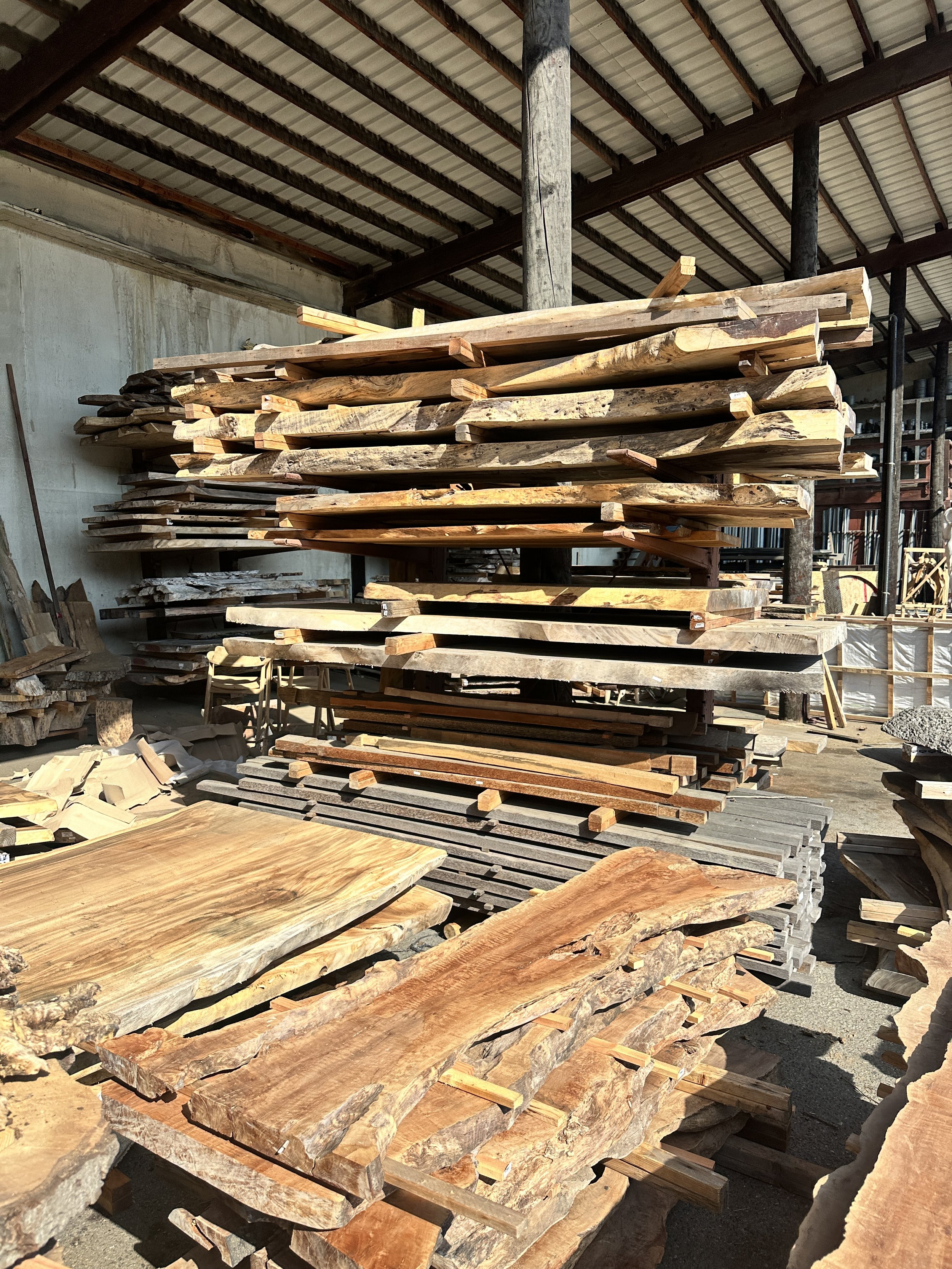
At Indigenous by La Rue, our slabs are allowed to dry for a minimum of approximately a year and a half, while many of our slabs are given three to five years to dry and stabilize before becoming finished furniture.
There is a reason we're willing to wait.
When you are creating a piece intended to last for generations, speed should never be more important than stability.
Wood needs time to adjust. Trying to force that process too quickly can create stresses within a slab, particularly with the large, thick pieces of wood we use for our dining and conference tables.
For us, patience isn't an inconvenience in the furniture-making process. This careful preparation is part of (how we build a live edge table) from raw slab to finished furniture.
It's part of the craftsmanship.
Kiln-Dried Doesn't Automatically Mean Ready
“Kiln-dried” sounds reassuring—and kiln drying can be an important part of preparing wood for furniture.
But those two words alone don't tell you the entire story.
The thickness and species of the slab, its starting moisture level, how it was dried, and what happened to the wood before and after the kiln all matter.
A massive live edge slab isn't the same thing as a thin piece of lumber.
That is why we look at drying as a process of stabilization, rather than simply a box that needs to be checked.
What Can Happen When a Slab Is Rushed?
If too much moisture remains within a slab when furniture is built, the wood may continue changing significantly afterward.
That can contribute to problems such as cracking, excessive checking, cupping, twisting, warping or movement that affects the overall structure of the table.
Some natural movement should always be expected with real wood. In fact, many of the characteristics people love most about live edge furniture come from the fact that it is a natural material rather than something manufactured to be perfectly uniform.
But there is an important difference between natural character and preventable instability.
That distinction is one of the things an experienced furniture maker learns to recognize.
San Diego Makes Wood Stability Especially Interesting
Here in San Diego, a table can ultimately live in very different environments.
We create furniture for coastal homes in areas such as La Jolla and Solana Beach, where humidity and ocean air can influence the environment, as well as homes farther inland where conditions can be considerably warmer and drier.
And because we ship our furniture throughout the country, a slab may eventually live in an environment completely different from where it began.
That makes proper preparation even more important.
A custom table should be built with an understanding that wood will continue interacting with its environment throughout its life.
Drying Is Only the Beginning
Properly preparing a slab doesn't end when the drying process is complete.
Before a piece becomes one of our finished tables, we evaluate the individual slab and determine what it needs.
From slab preparation and sanding to filling, resin work when appropriate, base design and professional finishing, every step affects the finished piece.
Our finishes are primarily zero-VOC, with the remainder of our finishing products and resins selected as low-VOC options. When we create resin pieces, our resin pouring rooms are temperature- and humidity-controlled to help create the conditions necessary for proper adhesion and a high-quality pour.
Because quality isn't one step.
It is the accumulation of dozens of decisions that most people will never see.
The Parts You Can't See Often Matter Most
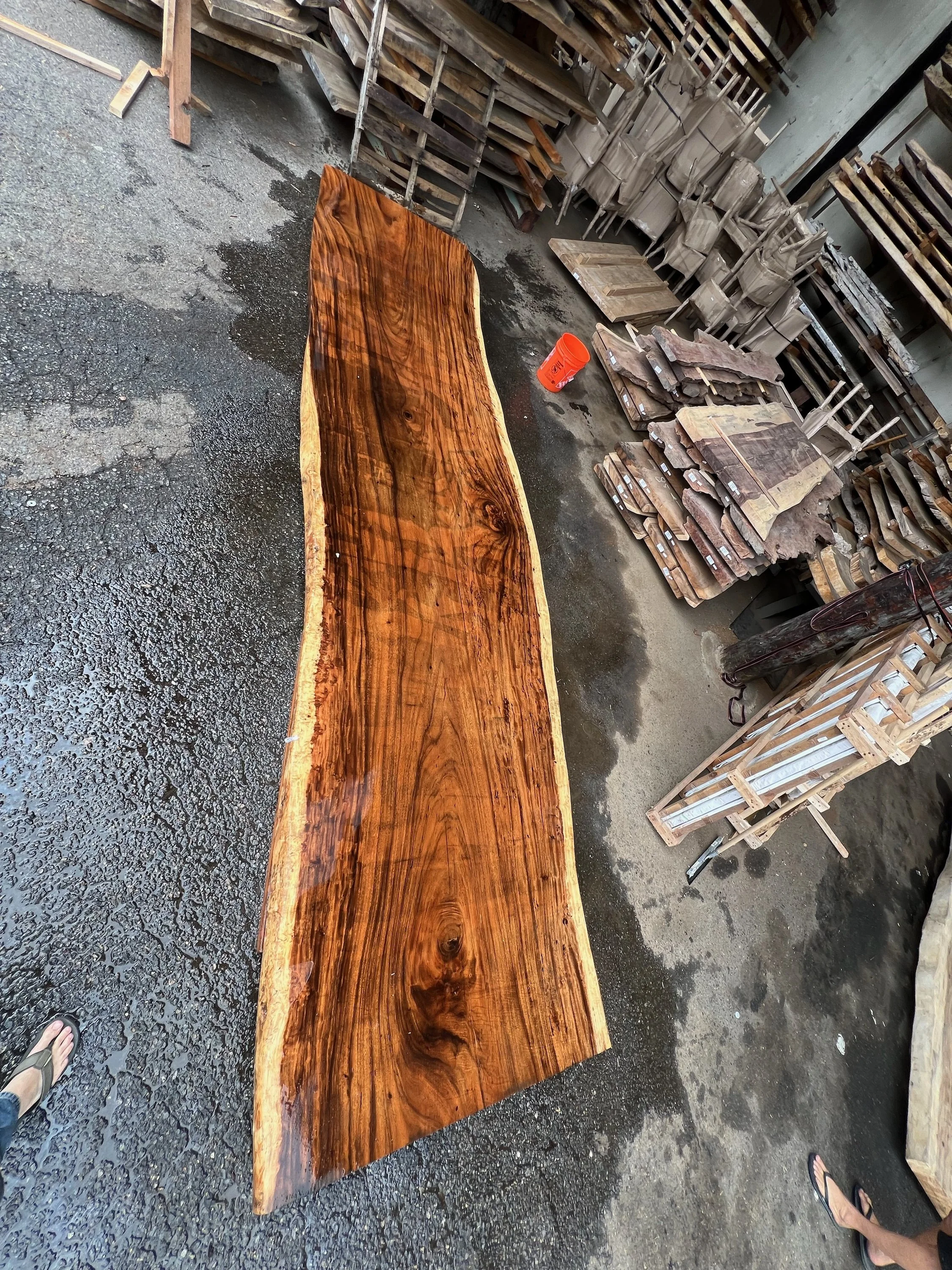
When you're comparing two live edge tables online, they may both look beautiful in photographs.
One may even cost considerably less.
But a photograph cannot tell you how long the slab was allowed to stabilize. It cannot show you how carefully moisture was managed, how the wood was prepared beneath the finish or whether shortcuts were taken during construction.
Those invisible decisions often determine how a piece performs years from now.
That is why we encourage people shopping for a custom live edge table to ask questions—not only about the species of wood and the dimensions, but about how the slab was prepared before the furniture-making process began.
We Build Furniture for the Life It Will Have
When we select a slab, we don't simply see a tabletop.
We think about the home it will live in, the people who will gather around it and how that piece will change over time.
A dining table may become the place where your family celebrates birthdays, shares holidays, works, talks, laughs and eventually gathers with another generation.
That is a very different philosophy from building something simply to look beautiful on the day it leaves the workshop.
At Indigenous by La Rue, our goal is to create custom furniture worthy of becoming part of a home for generations.
And sometimes, one of the most important ingredients in creating that kind of furniture is also the simplest:
time. Explore our custom dining tables or work with us to create a piece specifically for your home.