
Single-Slab vs. Multi-Slab Live Edge Tables: Which Is Right for Your Space?
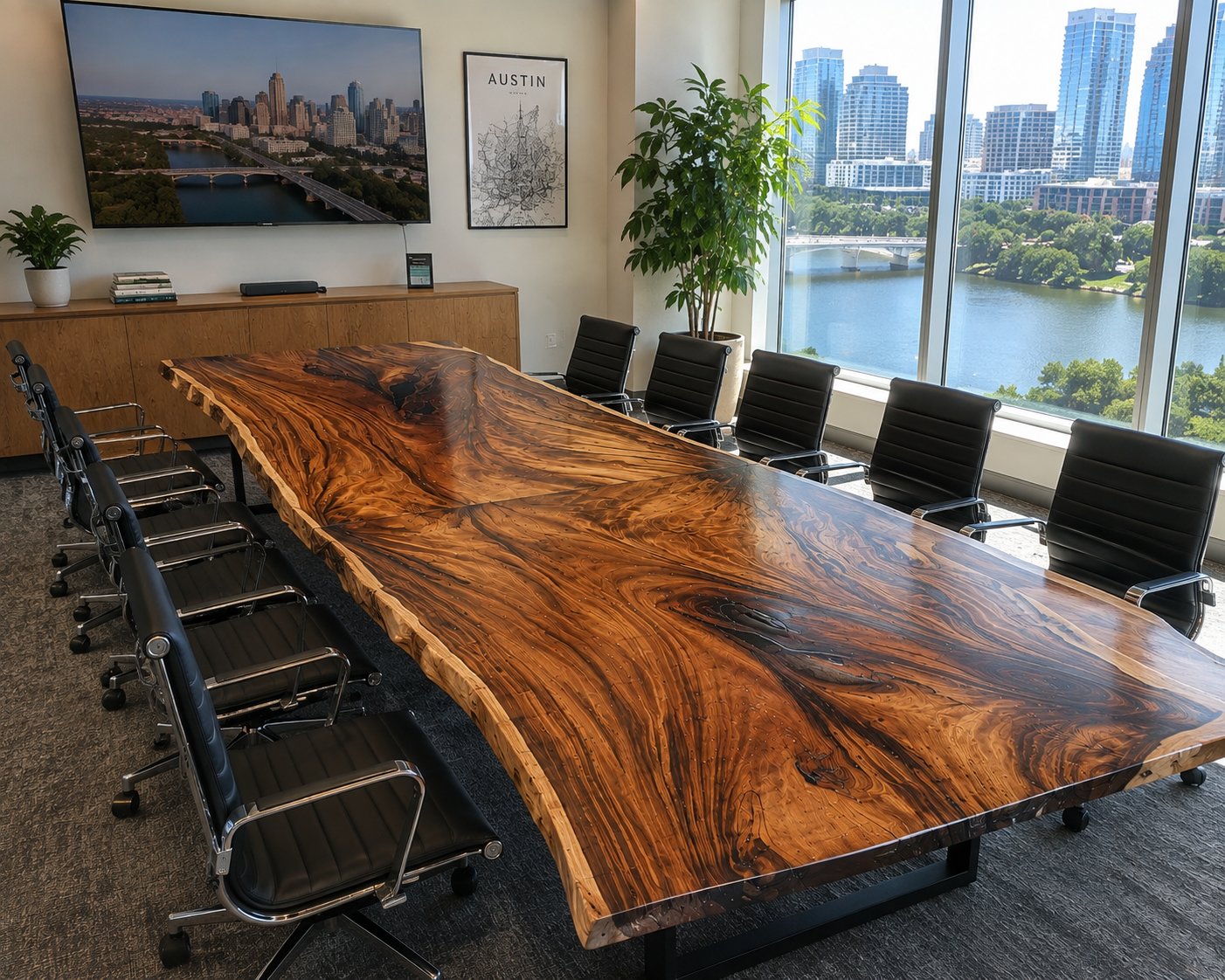
When choosing a custom live edge table, one of the first decisions is whether the tabletop should be created from one extraordinary slab of wood or from multiple carefully selected slabs.
At first glance, a single-slab table may seem like the obvious choice. There is something remarkable about seeing the uninterrupted grain, natural edge and history of one tree stretching across an entire dining table.
But single-slab construction is not automatically better.
At Indigenous by La Rue, we believe the best live edge table begins with the wood, the dimensions of the finished table, the intended use and the space where it will ultimately live.
For homeowners, interior designers and businesses searching for custom live edge tables in San Diego, understanding the difference between single-slab and multi-slab construction can help you choose a table that is both beautiful and appropriately built for your space.
What Is a Single-Slab Live Edge Table?
A single-slab live edge table is made from one continuous piece of wood rather than multiple boards joined together to create the tabletop.
The natural grain travels uninterrupted through the length of the table, while the organic edges preserve much of the character of the original tree.
Exceptional slabs can contain dramatic figuring, spalting, color variation, natural voids and other characteristics that make the finished table completely unique.
For many of our custom live edge dining tables, preserving that natural character is one of the most important parts of the design.
When the right slab exists for the dimensions of the project, a single slab can create an extraordinary statement piece.
Are Single-Slab Live Edge Tables Better?
Not necessarily.
A beautiful piece of wood is only the beginning of a well-made table.
The quality of a live edge wood table also depends on factors including how the wood was dried, its moisture content, the preparation of the slab, structural considerations, fabrication, finishing and the way the table will be used.
A poorly prepared single slab does not become a superior table simply because it came from one tree.
Likewise, a thoughtfully designed table made from multiple complementary slabs can be an exceptional piece of custom furniture.
The goal should not simply be to find the largest slab possible.
The goal is to choose the right wood and construction method for the table you are creating.
When Does a Single Slab Make Sense?
Single slabs are particularly compelling when the wood itself is intended to become the focal point of the room.
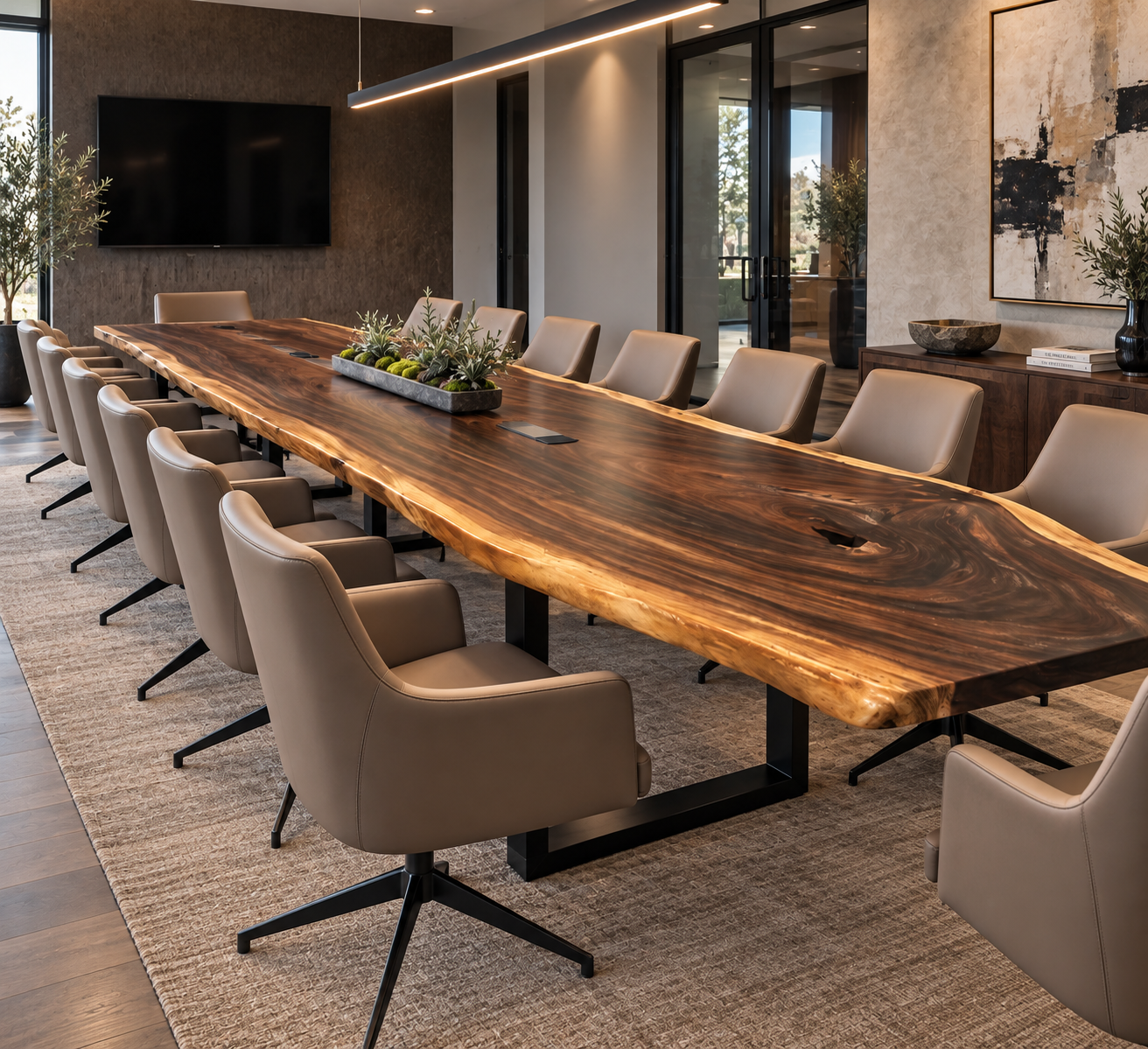
For a live edge dining table, a wide natural slab can showcase uninterrupted grain from one end of the table to the other.
Single slabs can also work beautifully for console tables, desks, coffee tables and certain conference tables.
But dimensions matter.
A table designed to seat six people has very different requirements from a 10-foot dining table, a 12-foot statement table or an oversized conference table.
As tables become larger, slab availability becomes more limited and proper preparation becomes increasingly important.
This is one reason we prefer to begin a custom project by understanding the space rather than starting with a predetermined tabletop.
What Is a Multi-Slab Live Edge Table?
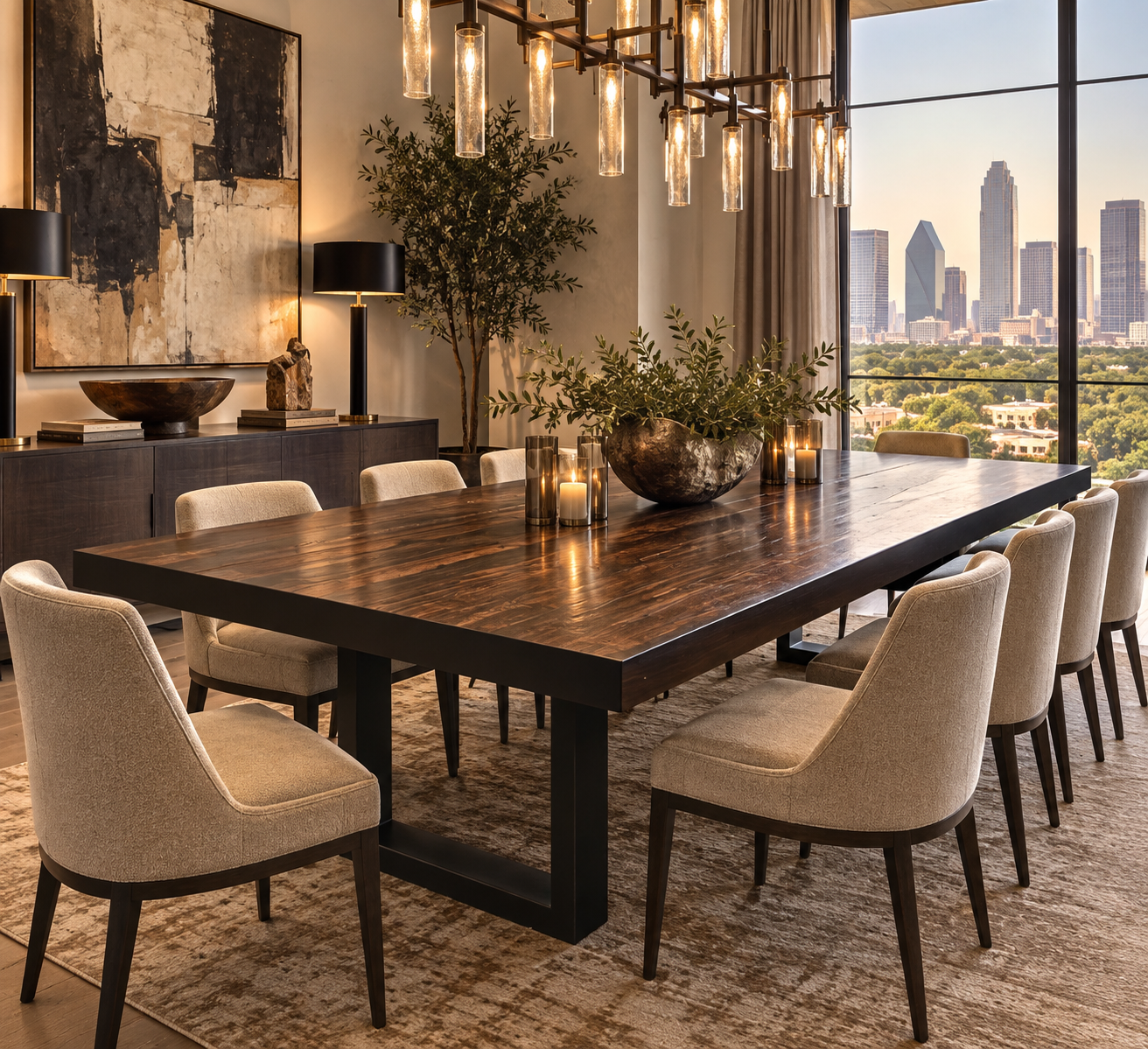
A multi-slab table uses two or more pieces of wood to create the finished tabletop.
That doesn't mean simply joining random pieces of lumber together.
For a high-quality custom table, slabs can be selected according to their grain, coloration, dimensions and natural characteristics so that they work together visually.
Depending on the design, the pieces may create a more symmetrical composition, allow for greater finished width or make a very large table possible when an appropriate single slab isn't available.
Natural openings between slabs can also provide opportunities to incorporate resin when it complements the design.
Single Slab vs. Multi-Slab: The Grain Matters
One of the greatest advantages of a single slab is visual continuity.
There are no interruptions in the grain created by joining separate pieces of wood.
But visual continuity isn't the only way to create a beautiful tabletop.
When multiple slabs are thoughtfully selected, their grain patterns can complement one another and create an entirely different composition.
This is where custom furniture should truly be custom.
Instead of deciding that one construction method is universally superior, we look at the individual wood and determine what allows its natural character to become the strongest part of the finished design.
Properly Dried Wood Matters More Than the Number of Slabs
Whether a table is made from one slab or several, the preparation of the wood is critical.
Wood naturally contains moisture, and its relationship with moisture continues after the tree has been milled.
Proper drying helps prepare a slab for an interior environment and reduces the amount of movement that can occur after fabrication.
This is especially important with thick slabs and large-format live edge tables.
At Indigenous by La Rue, the beauty of a slab is only one consideration. How the material has been prepared matters too.
That's why shoppers comparing live edge furniture should ask more than:
“Is this a single slab?”
They should also ask:
“How was this wood prepared before the table was built?”
What About Resin?
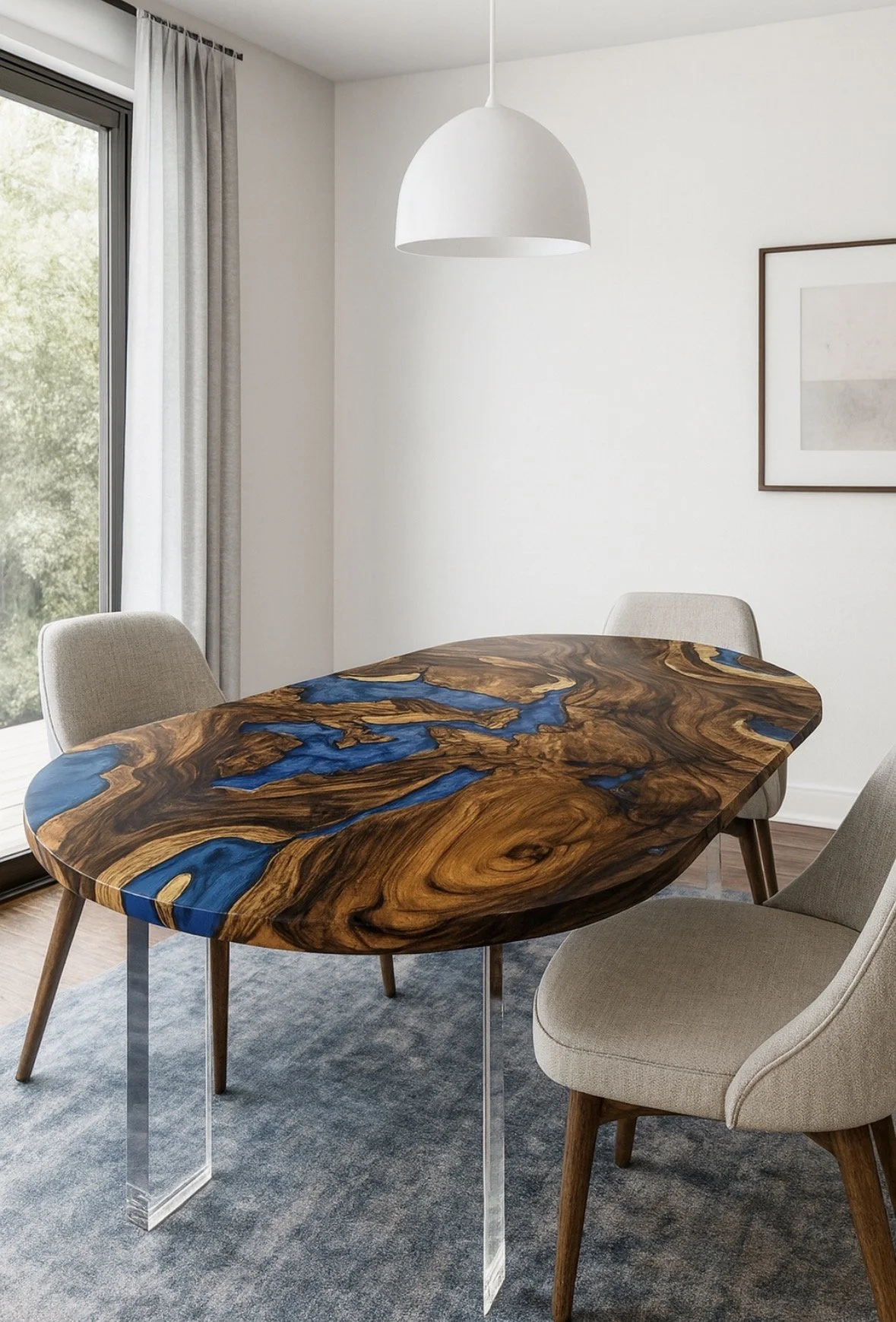
Resin can serve both a functional and an aesthetic role in a custom table.
Natural voids, cracks and openings are part of what makes live edge wood distinctive. Depending on the slab and the desired design, resin can be incorporated into these areas while allowing the original character of the wood to remain visible.
With multi-slab designs, resin can also be used between carefully positioned slabs to create a larger tabletop.
But we don't believe every piece of wood needs resin.
Sometimes the most beautiful choice is simply allowing an exceptional slab to speak for itself.
The decision should be driven by the wood and the design—not by a trend.
Large Live Edge Tables Require More Than a Large Piece of Wood
The difference becomes especially important when designing large custom live edge tables.
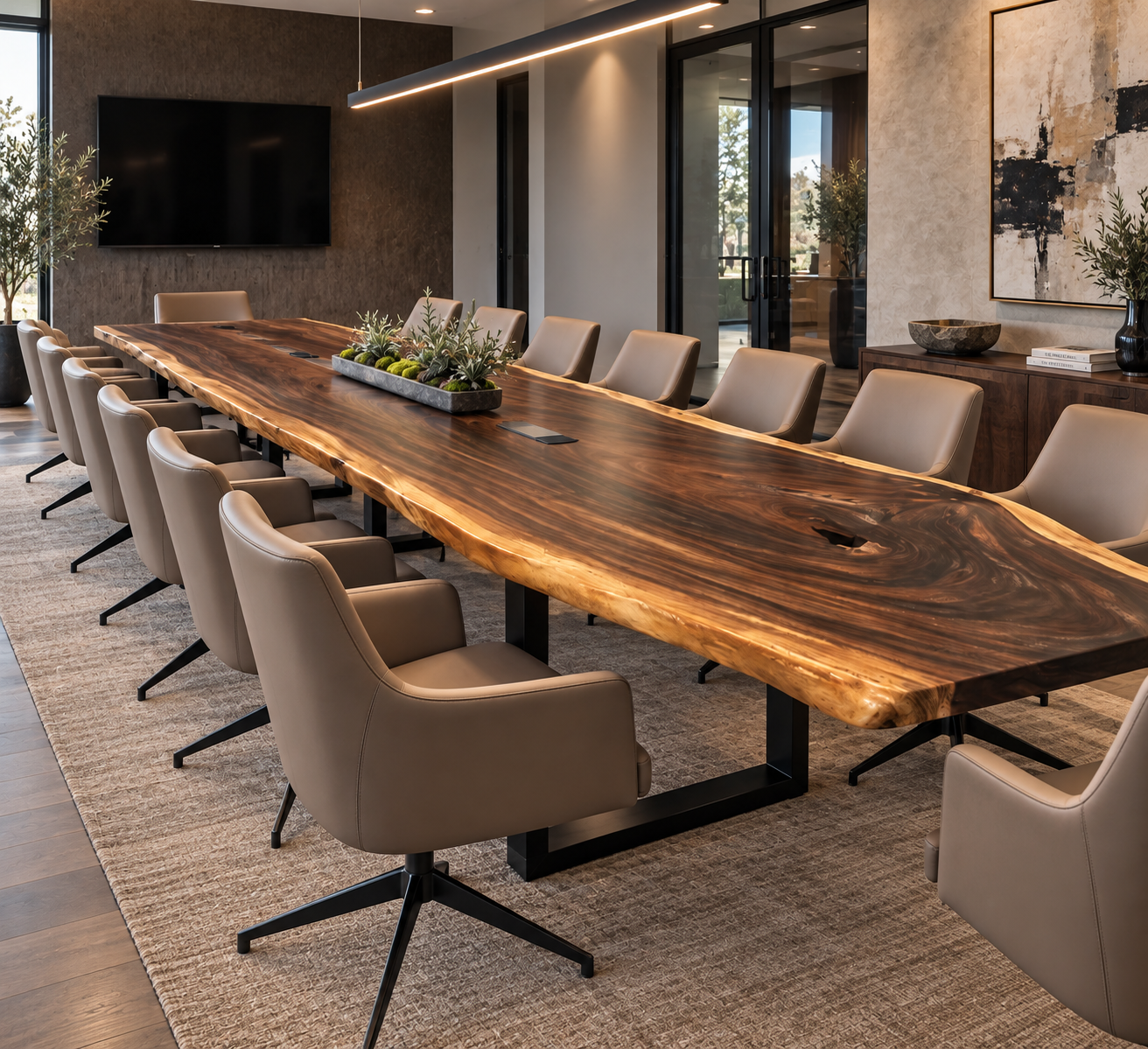
A 10-foot or 12-foot dining table must be considered differently from a standard dining table. Conference and boardroom tables can become substantially larger still.
At those dimensions, we consider the proportions of the slab, tabletop width, base placement, structural support, room dimensions, seating requirements and intended use.
A table should look substantial without overwhelming its environment.
It also needs to function properly once people actually sit around it.
For oversized projects, the best construction method is the one that allows us to achieve the appropriate proportions and performance while preserving the character of the wood.
The Finish Is Part of the Construction
A custom table is not finished when fabrication ends.
The finishing system affects the appearance, feel and everyday usability of the surface.
We use professional-grade finishes selected according to the application, including commercial-grade finishes when the project requires them.
That becomes especially important for dining tables, conference tables and hospitality or commercial installations where the surface may experience frequent use.
Our objective is to protect the table appropriately while allowing the natural grain and character of the wood to remain the visual focus.
Choosing a Live Edge Dining Table for a San Diego Home
San Diego architecture gives us an enormous range of environments in which to design.
A sculptural live edge dining table in a contemporary La Jolla residence may call for a very different slab and base than a large dining table for a Rancho Santa Fe home.
Coastal homes may benefit from lighter, more restrained designs, while larger interiors can accommodate exceptionally wide slabs and substantial table proportions.
That's one of the reasons we don't believe in designing every table according to the same formula.
When creating a custom live edge dining table in San Diego, we consider the room, architecture, seating requirements and client's personal style alongside the wood itself.
The table should feel as though it belongs in the home—not as though it was selected from a catalog and placed there afterward.
From Wood Slab to Finished Table
At Indigenous by La Rue, our involvement extends beyond designing the finished piece.
We work directly with the materials and oversee the process that transforms a raw wood slab into finished furniture.
That connection between material, fabrication and design allows us to make decisions based on the individual piece of wood rather than forcing every slab into a standardized product.
It's part of what we mean when we talk about going from tree to table.
For us, craftsmanship isn't simply what happens at the final stage.
It begins with the wood.
Custom Live Edge Tables in San Diego
So, should you choose a single-slab or multi-slab live edge table?
There isn't one answer.
If an extraordinary single slab has the dimensions, character and stability appropriate for your project, preserving it as one continuous tabletop can produce an exceptional piece.
For other projects, carefully selected multiple slabs may allow us to achieve dimensions, proportions or design details that wouldn't otherwise be possible.
What matters most is that the construction serves the wood, the space and the way the table will be used.
At Indigenous by La Rue, we create custom live edge tables in San Diego for dining rooms, residences, offices, conference rooms and commercial spaces. Clients can work with us to select the wood, determine dimensions, explore base designs and finishes, and create a table specifically for their space.
Because when you're investing in a custom table, the question shouldn't simply be whether it was made from one slab or two.
The question is whether it was made well.