
How to Tell if a Live Edge Table Is High Quality: 10 Things to Look For Before You Buy
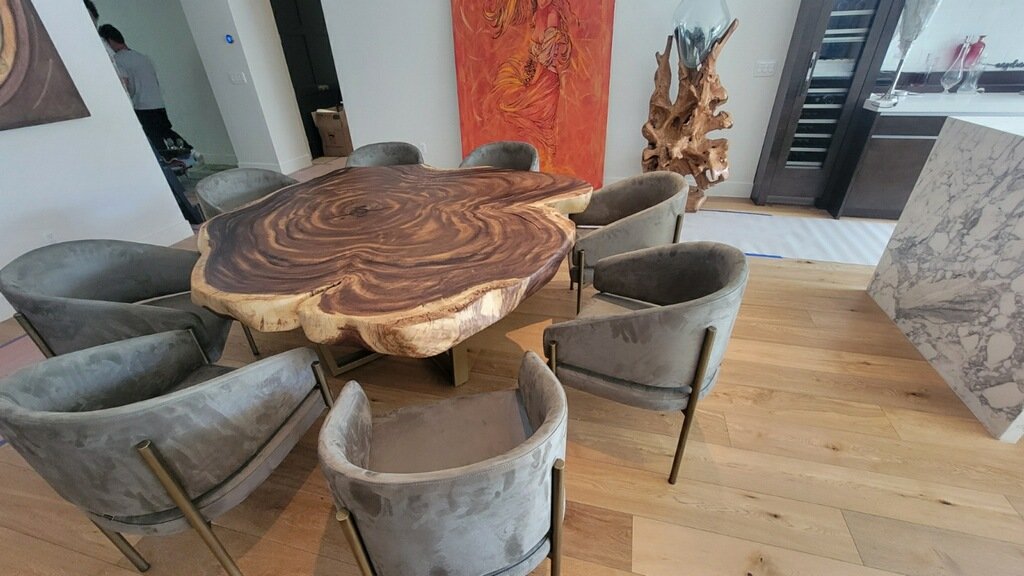
Not all live edge tables are created equally.
Two tables can look remarkably similar in a photograph and be completely different in how the wood was dried, prepared, flattened, filled, finished, and ultimately built.
When you're investing in a custom live edge dining table, it's natural to focus first on what you can see. Do you love the grain? Is it the right size? Does the base work with your home? Do you want natural wood or resin?
Those things matter.
But after years of working with natural slabs, I've learned that some of the most important indicators of quality are the things you can't see in the finished photograph.
Before you invest in a live edge table, these are 10 things I believe every buyer should look for—and questions worth asking the person who made it.
1. Ask How Long the Wood Was Allowed to Dry
This would be one of my first questions.
Wood is a natural material, and even after a tree is cut, the slab still contains moisture. As that moisture leaves, the wood can continue to move.
Trying to dry a large hardwood slab too aggressively can contribute to unwanted movement, including warping, checking, splitting, or twisting.
That's why we believe time matters.
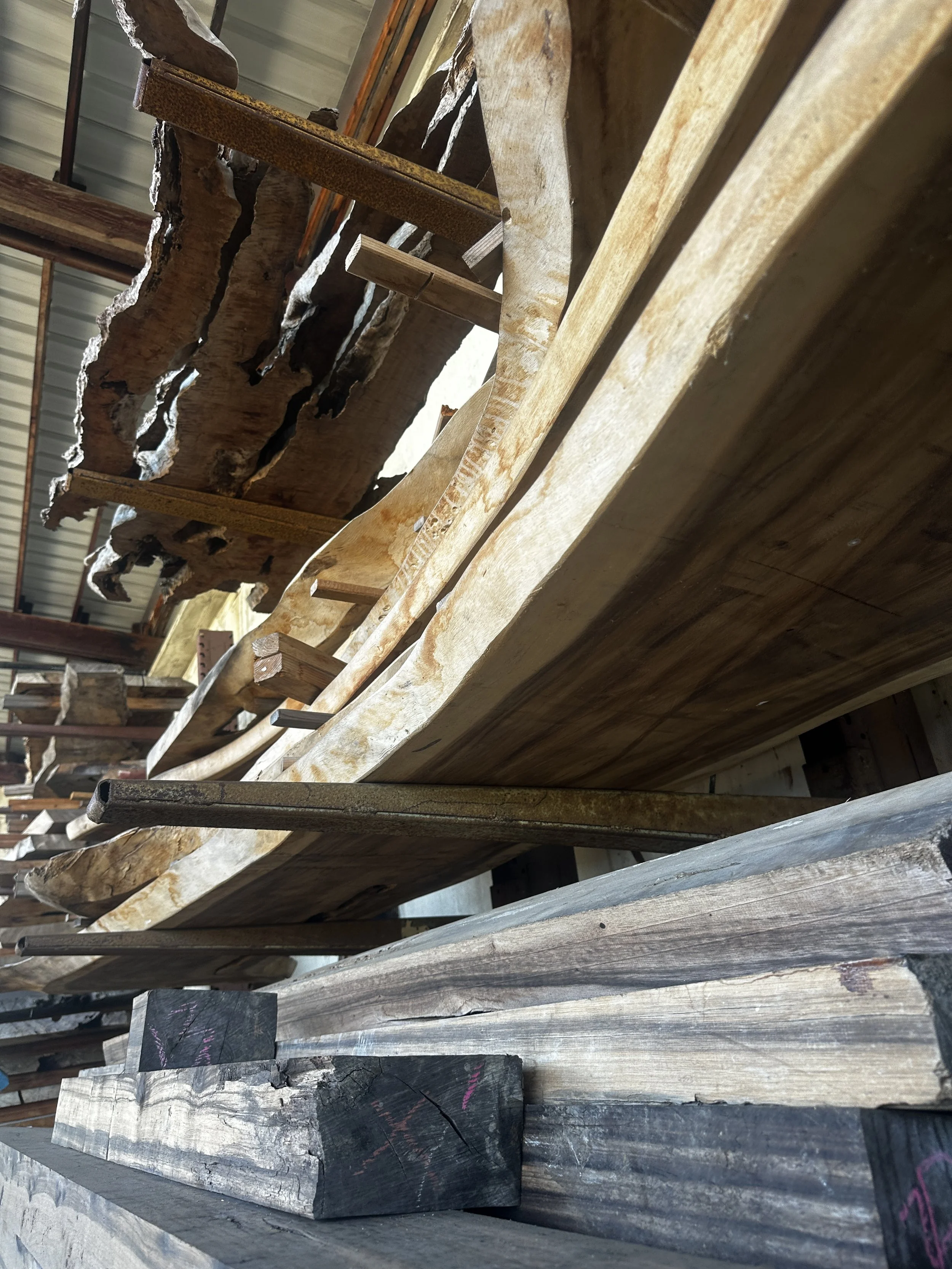
At Indigenous by La Rue, our slabs are allowed to dry for a minimum of approximately a year and a half. For most of our slabs, the process is considerably longer—typically three to five years of drying and stabilization before they go into production. You can see more about how we build our live edge tables from raw slab to finished furniture.
We slowly dry and prepare the wood rather than trying to rush a newly cut slab straight into a kiln.
When you're shopping for a live edge table, ask:
How long has this particular slab actually been drying?
2. Ask About the Kiln-Drying Process
Hearing that a slab is "kiln dried" is a good start.
But I would ask what that actually means.
At Indigenous by La Rue, our slabs are gradually prepared for their final kiln cycle. Once they're ready, they typically undergo a final kiln-drying cycle of approximately three to four months before production.
Why don't we simply put a freshly cut slab into a kiln and dry it as quickly as possible?
Because we're working with massive pieces of natural hardwood. We want to slowly prepare and stabilize that material rather than subject it to a sudden drying process that could contribute to unwanted movement or splitting.
For us, kiln drying isn't about making the wood ready to sell as quickly as possible.
It's about preparing it for its next life as furniture. Clients can select their own live edge wood slab from our available inventory.
3. Find Out Whether the Wood Was Sanitized
This is something many furniture buyers never think to ask.
A live edge slab came from a tree, and trees live outdoors. Natural wood can potentially contain insects or larvae.
Our kiln process therefore serves another important purpose: sanitation to eliminate wood-eating insects that may be within the slab.
And our process doesn't end after that first sanitation.
If a fully prepared slab isn't immediately selected for a project, it goes into our ready stack, where clients can choose from wood that has already gone through our drying process.
While it waits, every year it returns to the kiln for approximately one week for another sanitation cycle.
By the time one of our clients selects a slab, that piece of wood may have already spent three, four, or five years being dried, stabilized, maintained, and prepared.
So before bringing a natural slab into your home, I think it's perfectly reasonable to ask:
How was this wood sanitized?
4. Make Sure the Table Is Actually Flat
This sounds obvious.
It's a table. Of course it should be flat.
But a large natural slab doesn't begin as a precision-flat surface. It has to be made that way.
At Indigenous by La Rue, we use our 26-foot-long by 6-foot-wide planer to machine-plane our slabs flat on both sides.
You may hear furniture makers emphasize that their slabs are hand planed. Hand craftsmanship absolutely has an important place in furniture making, but when we're establishing the geometry of an enormous tabletop, our standards require precision.
A variation approaching 3/4 of an inch isn't acceptable by our standards.
Why am I so particular about this?
Because eventually someone needs to eat dinner on it.
No one wants a wobbling plate, glass, cup, or saucer.
A dining table isn't only a piece of art. It needs to function beautifully too.
5. Look at How Cracks, Knots & Natural Voids Were Handled
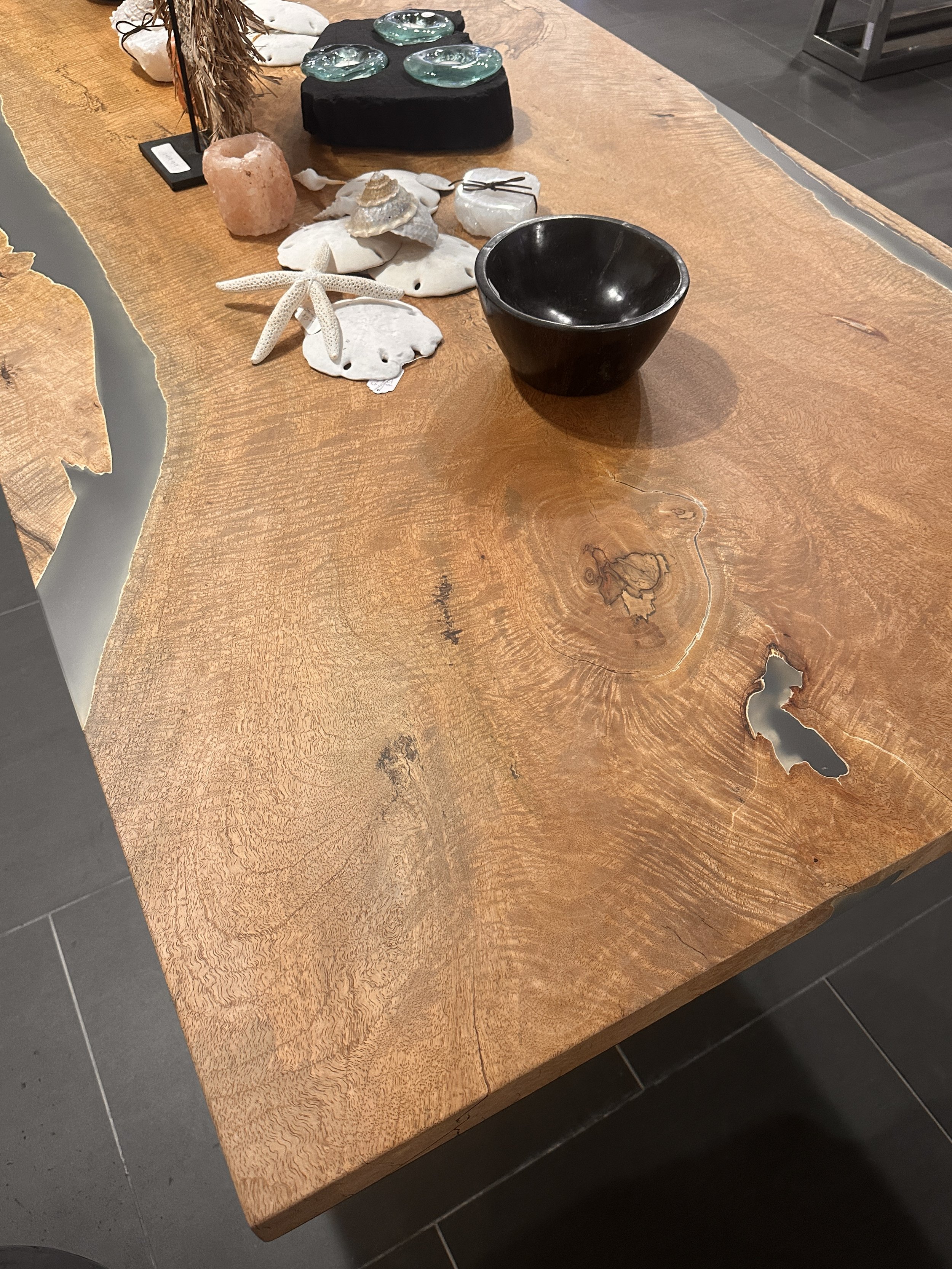
Cracks, knots, spalting, voids, and irregular natural edges don't automatically mean there's something wrong with a slab.
In fact, they can be some of the reasons we choose one slab over another.
The important question is how those characteristics were handled.
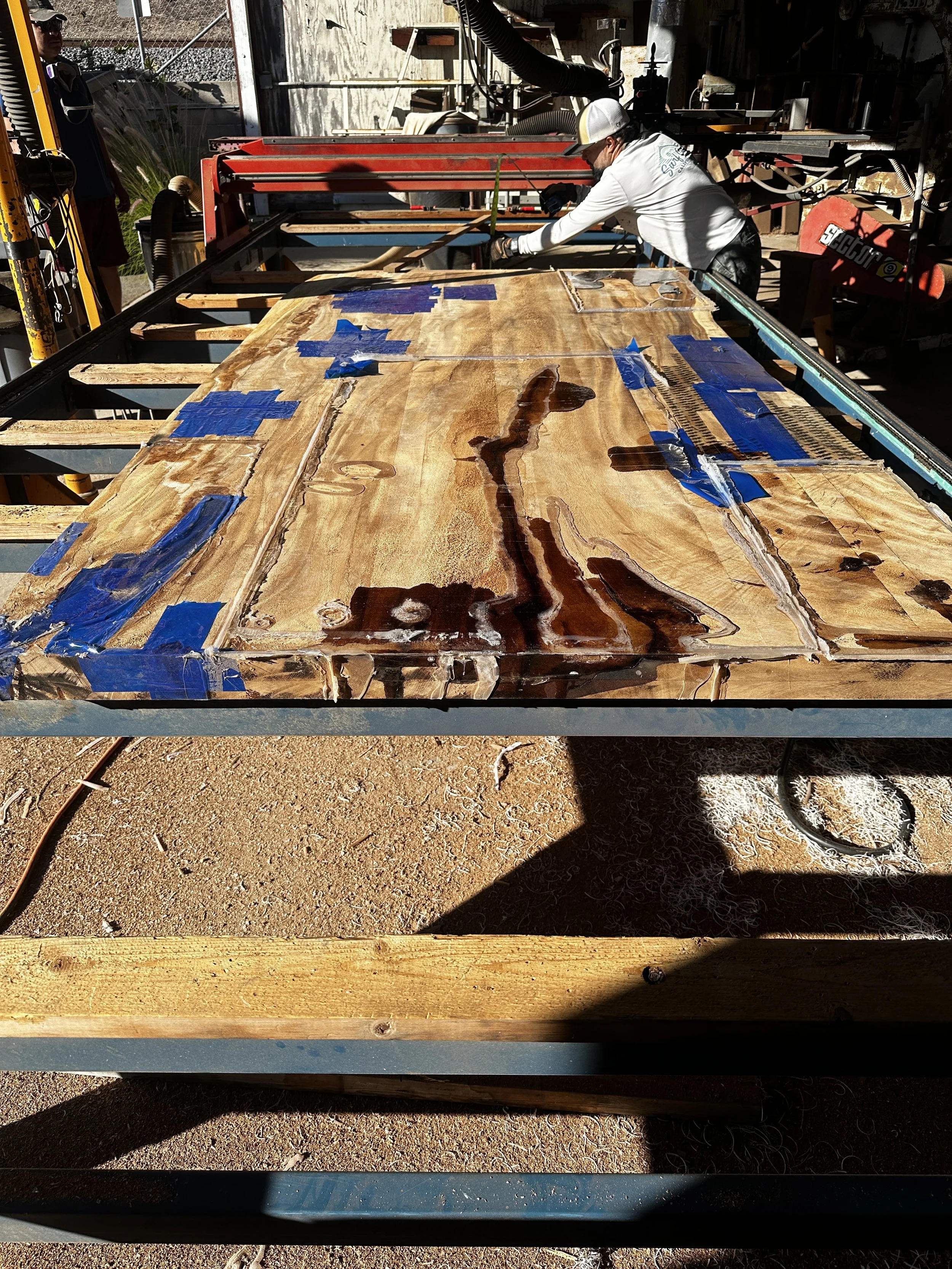
Once our wood is flattened, we evaluate the individual slab and determine what needs stabilization and what should remain part of its natural character.
Smaller cracks and voids can be carefully filled by hand.
Larger openings or dramatic natural edges may make a slab appropriate for resin.
The goal isn't to erase every indication that this material came from a tree.
I don't want our wood to look manufactured.
I want to preserve what made us fall in love with the slab while transforming it into functional furniture.
6. If It Has Resin, Ask How the Resin Was Mixed and Poured
This is a big one.
A beautiful resin table depends on much more than choosing the right resin color.
The resin-to-hardener ratio, temperature, humidity, pouring conditions, and curing time all matter.
Resin systems require the components to be measured according to the manufacturer's specified ratio.
This isn't a place for guessing.
If the resin and hardener aren't measured in the proper proportions, the material may not cure as intended. Depending on the system and error involved, improperly cured resin can remain soft, tacky, overly flexible, or fail to maintain the hardness and form expected of the finished table.
And that's something you may not recognize from a photograph taken immediately after a table was made.
At Indigenous by La Rue, we carefully measure our resin systems according to their required ratios.
We also have temperature- and humidity-controlled resin pouring rooms.
Why?
Because the environment surrounding the pour matters.
Controlling those conditions gives us a more consistent environment during pouring and curing and helps us achieve the quality of adhesion and pour we're looking for between the resin and wood.
Depending on the resin system and amount being poured, curing can take approximately one day to a week.
We give it the time it requires.
After curing, excess resin is removed. Depending on the project, we may sand it down or flatten the tabletop again so the resin and hardwood return to the same precise plane.
If you're considering a resin table, ask the maker:
How do you measure your resin and hardener?
Do you follow the manufacturer's required ratio?
Are temperature and humidity controlled during pouring?
How long is the resin allowed to cure?
Those questions tell you much more about a resin table than simply asking what color it is.
7. Run Your Hand Across the Table
Photographs can hide a lot.
Your hands don't.
If you have the opportunity to see a live edge table in person, touch it.
Run your hand across the wood.
Feel the live edge.
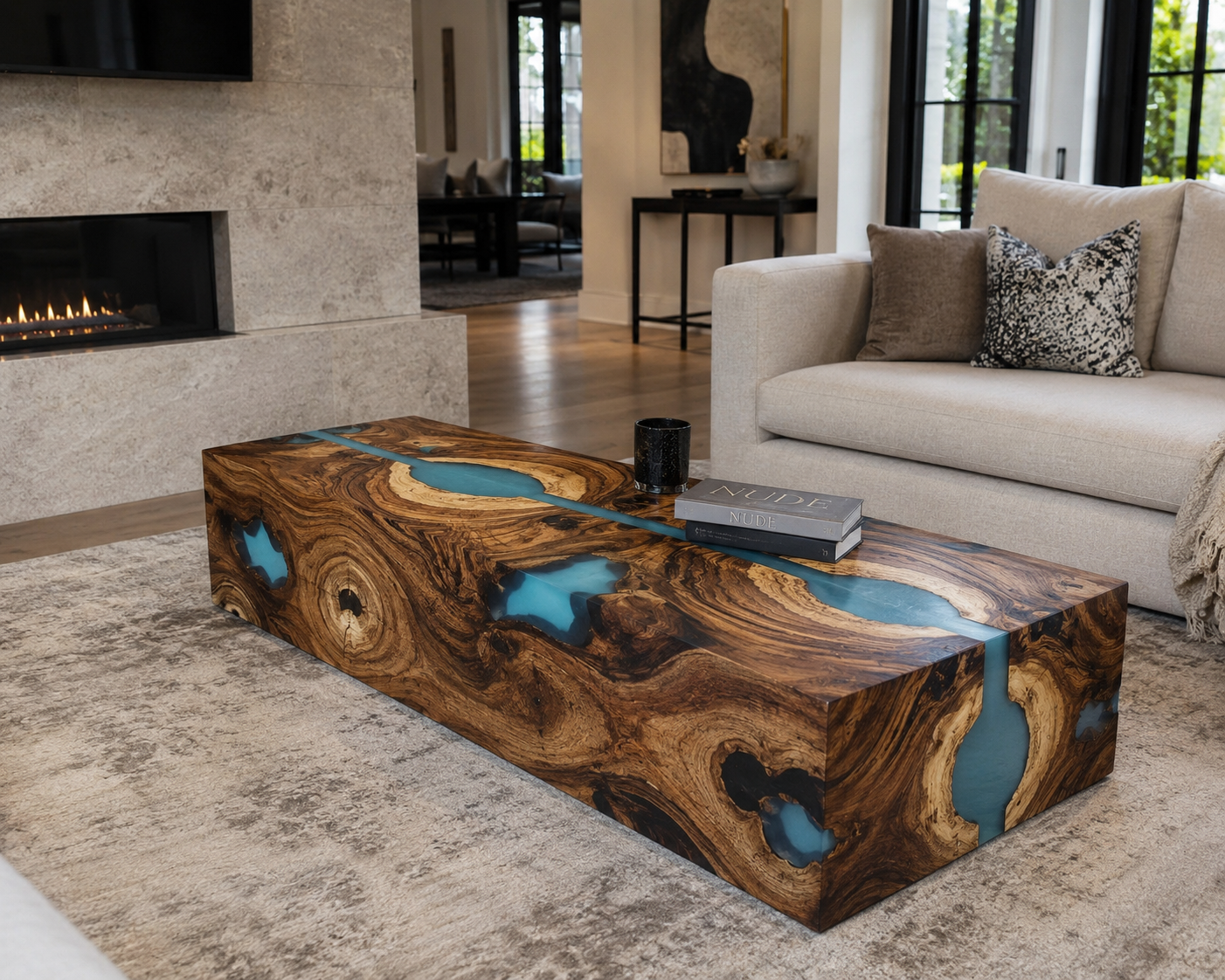
Feel where the wood transitions into resin.
Look across the tabletop as light moves over the surface.
Flattening establishes the geometry of our tables, but progressive sanding creates the refinement.
A beautifully made table shouldn't become less impressive when you get closer.
I believe it should become more impressive. See more of our custom resin tables and available designs.
8. Ask What Finish Was Used
The finish is one of the most overlooked parts of a dining table.
It's also the part your family actually lives with.
Hands touch it.
Plates and glasses sit on it.
Food is served over it.
Spills happen.
The table gets cleaned.
Sunlight reaches it.
That's why we're particular about the finishing products we use.
At Indigenous by La Rue, most of our finishes are zero-VOC, while the remaining finishes—as well as our resin systems—are low-VOC.
We choose high-quality professional finishing products with both performance and the materials being used in the process in mind.
But being zero- or low-VOC isn't enough by itself.
A finish still has to perform.
It needs to protect the wood while allowing the grain, coloration, figuring, spalting, and natural character of the slab to remain the focus.
Our goal isn't to build a table that looks fantastic only on delivery day.
We're building it for everything that happens after delivery.
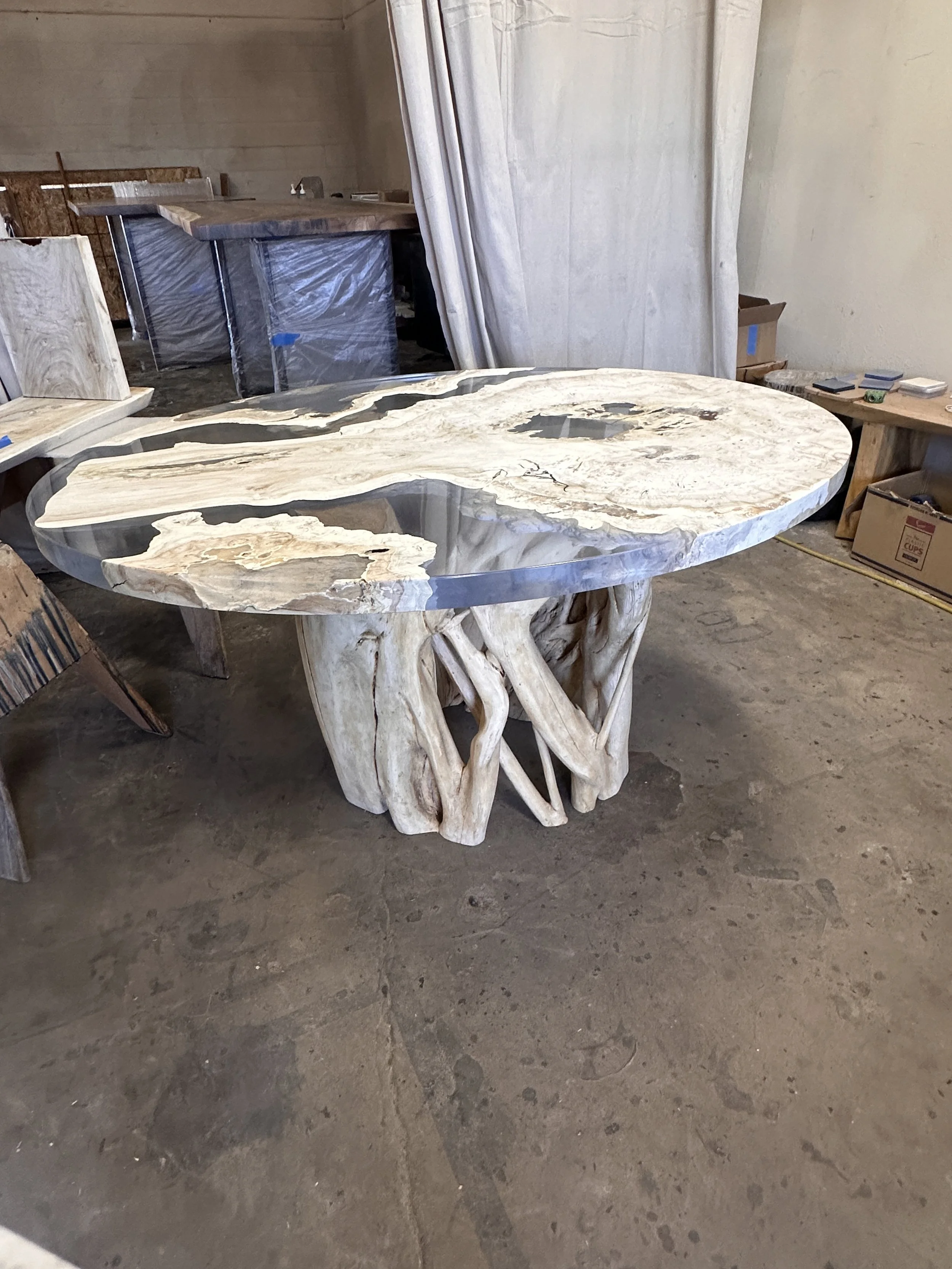
9. Look Underneath the Table
Yes, really.
Get underneath it.
The tabletop gets all the attention, but the base is part of both the design and engineering of the table.
Large hardwood and resin slabs can be extremely heavy.
The base needs to provide appropriate support while remaining proportional to the top.
Placement matters too.
Can chairs sit comfortably around it?
Will guests hit their knees against the base?
Does the table feel stable?
Does the base look as though it was designed for that particular slab?
A spectacular piece of wood sitting on an inadequate base doesn't make a spectacular table.
The base should feel like part of the design from the beginning—not something selected as an afterthought.
10. Ask Who Actually Made the Table
This may be the most revealing question of all.
Who dried the slab?
Who kiln-dried and sanitized it?
Who flattened it?
Who performed the resin work?
Who sanded and finished it?
Who designed the base?
And if you ever have a question after purchasing it, who stands behind the finished piece?
At Indigenous by La Rue, the final stages of our furniture are completed at our San Marcos workshop in San Diego County.
This is where years of preparation finally come together—the slab, flattening, filling, resin, sanding, finishing, base, and final details.
Knowing who is responsible for those steps helps distinguish a genuinely custom piece of furniture from something that simply looks custom online. Our custom furniture in San Diego is created around the individual slab, space, and client.
Don't Compare Live Edge Tables on Price Alone
Of course price matters.
But if you're comparing two live edge tables, make sure you're actually comparing the same thing.
One slab may have spent years drying and stabilizing before undergoing months of final kiln preparation.
Another may not have.
One may receive continuing sanitation while waiting to be selected.
One tabletop may have been precision-flattened using specialized large-format equipment.
One resin system may have been precisely measured and poured in a temperature- and humidity-controlled environment.
One piece may have undergone extensive sanding and been protected with professional-quality finishing products.
You can't necessarily see those differences in an Instagram photo.
Some of the things that determine the quality of a live edge table happened years before you ever saw the finished piece.
What Makes a Live Edge Table Worth the Investment?
For me, it comes down to three things:
The wood. The craftsmanship. And the story.
The wood should be extraordinary enough that you want to live with it.
The craftsmanship should respect the material and properly prepare it for life as furniture.
And the finished piece should feel personal enough that you can't imagine replacing it when the next furniture trend arrives.
A truly custom table isn't something I believe you should buy simply because live edge furniture happens to be popular.
You should choose it because that particular piece of wood belongs in your home.
Buying a Custom Live Edge Table in San Diego
Indigenous by La Rue creates custom live edge dining tables, resin tables, conference tables, coffee tables, and one-of-a-kind furniture in San Diego County.
We work with clients throughout San Diego, La Jolla, Del Mar, Rancho Santa Fe, Solana Beach, Encinitas, Coronado, and throughout the United States.
Our clients can participate in selecting the actual slab that becomes their table and customize its dimensions, resin, base, and overall design around their home or project.
If you're shopping for a custom live edge table in San Diego, I encourage you to look beyond the finished photograph.
Look at the slabs.
Ask about the drying process.
Ask about the kiln.
Ask how the table was flattened.
Ask how the resin was measured and poured.
Ask what finishing products were used.
Ask who actually made it.
When you're investing in a piece of furniture intended to become part of your family's home for decades, you deserve to understand exactly how it was made.
Ready to Find Your Slab?
For me, this is still the most exciting part.
Every tree produces something different.
The grain, live edge, knots, spalting, figuring, coloration, and natural movement belong to that particular piece of wood.
Come see the slabs, learn about how they've been prepared, and find the one that speaks to you.
Then we'll build the table around it.